
A Brook at Le puits noir, near Ornans — History & Facts
Can paint confess what words never could? In A Brook at Le puits noir, near Ornans, the essence of grief is woven into the tranquil fabric of nature, whispering secrets to those who pause and listen. Look to the left at the gentle curve of the brook as it meanders through the lush landscape, its surface reflecting dappled sunlight. The soft greens and earthy browns create a harmonious palette, drawing the eye towards the convergence of land and water. Notice how the brushstrokes vary from precise to loose, capturing the fluid movement of the water and the solidity of the trees, suggesting a delicate balance between stability and change. Beneath the surface, contrasts emerge between light and shadow, solitude and connection.
The solitary tree stands sentinel over the brook, its roots gripping the earth, while the tranquil water reminds us of the passage of time—the impermanence of life. This interplay evokes a sense of longing, as if the viewer must confront their own reflections hidden within the landscape, the grief lying just beneath the surface. Courbet painted this work around 1864 in the serene countryside of Ornans, a place steeped in personal reflection. At this time, he was deeply entrenched in the Realist movement, striving to portray the raw truth of ordinary life.
The world of art was shifting away from Romantic ideals, and here, amidst his formative years, he transformed his surroundings into an emotional canvas, allowing nature to speak where words could not.
More Artworks by Gustave Courbet
Browse all →
Marine
Gustave Courbet
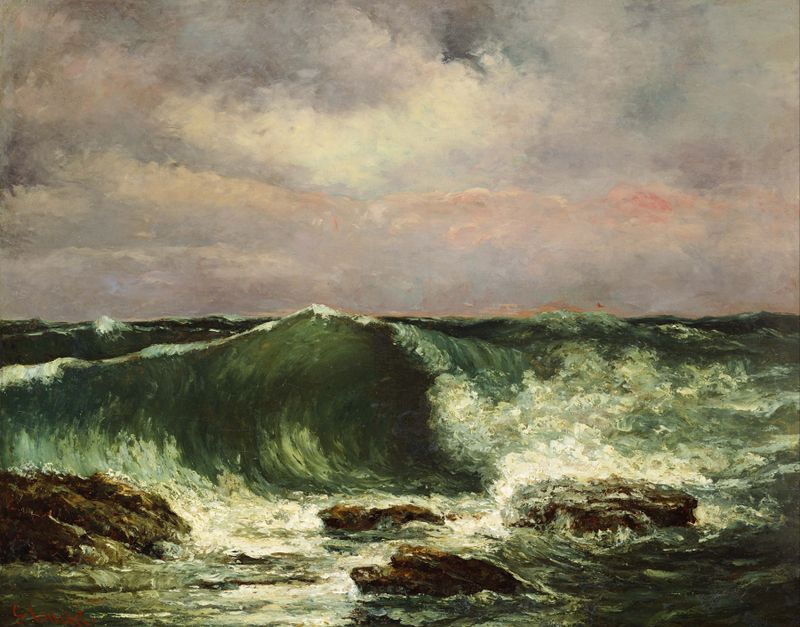
Waves
Gustave Courbet

Étretat; Les Falaises
Gustave Courbet
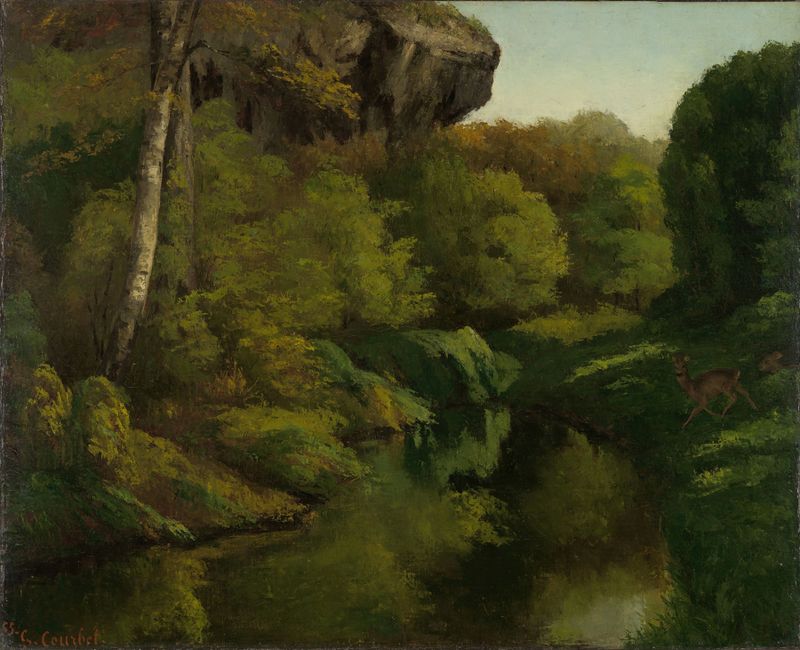
View in the Forest of Fontainebleau
Gustave Courbet
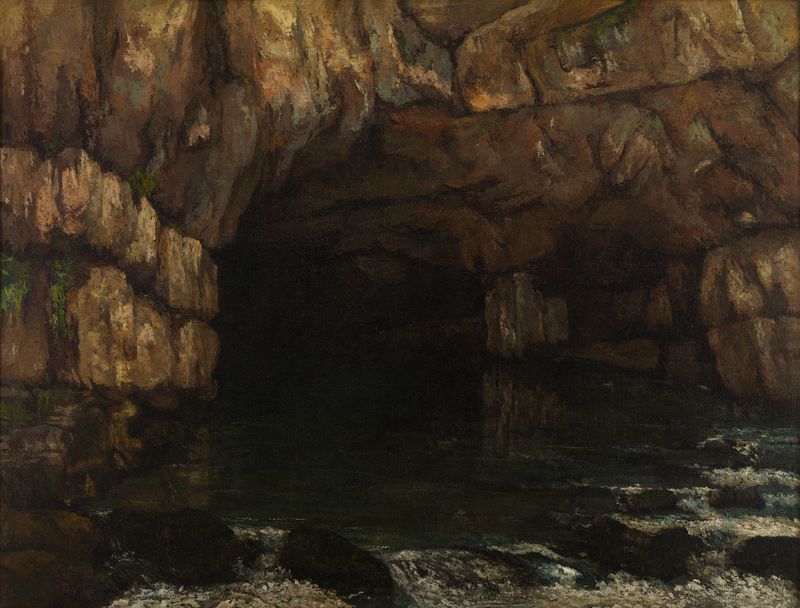
La source de la Loue (The Source of the Loue)
Gustave Courbet

Low Tide at Trouville
Gustave Courbet
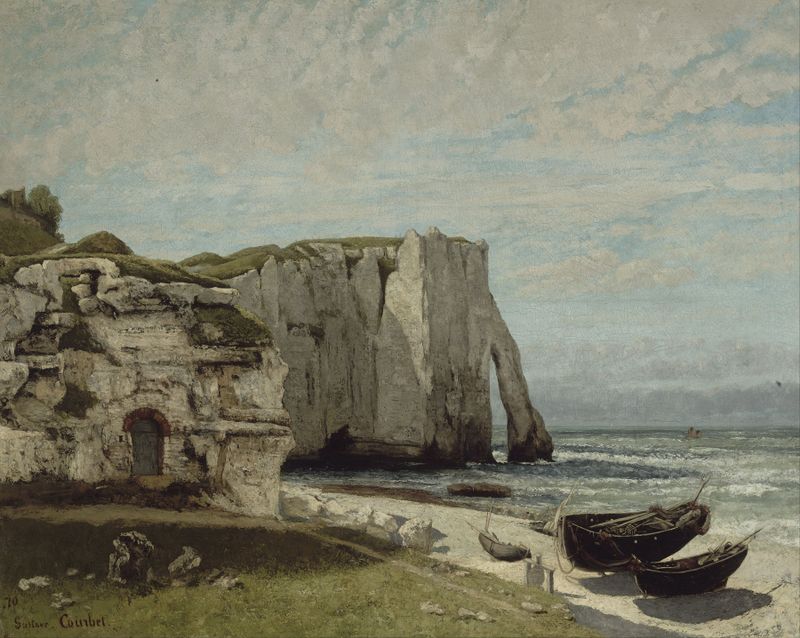
The Etretat Cliffs after the Storm
Gustave Courbet
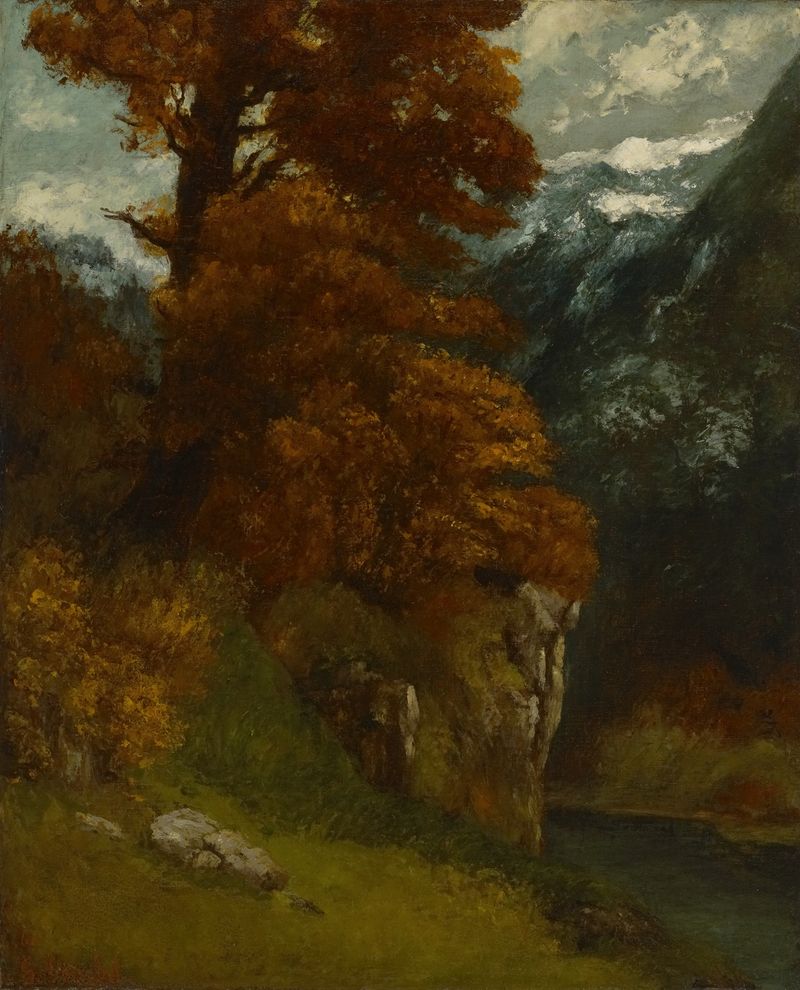
The Glen at Ornans (Bords du Doubs; Effet d’Automne)
Gustave Courbet
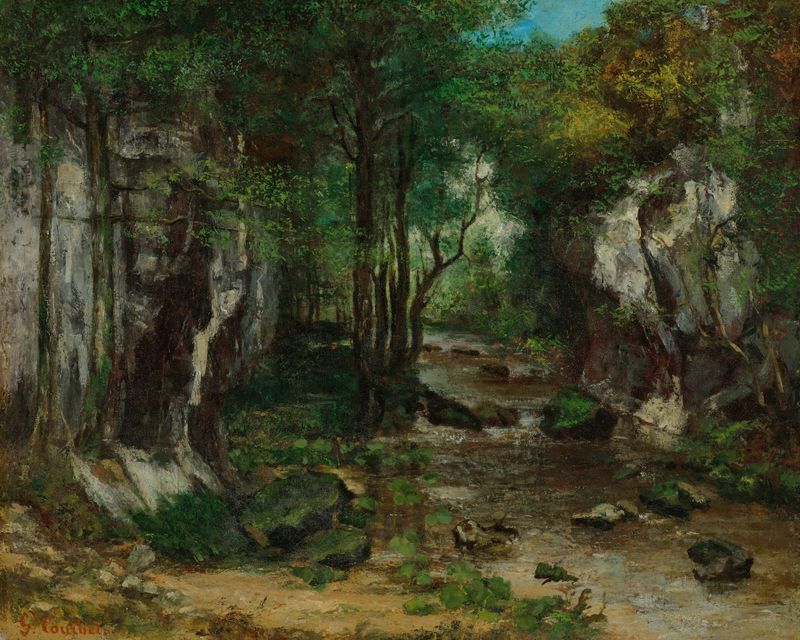
Le Ruisseau de Puits Noir
Gustave Courbet
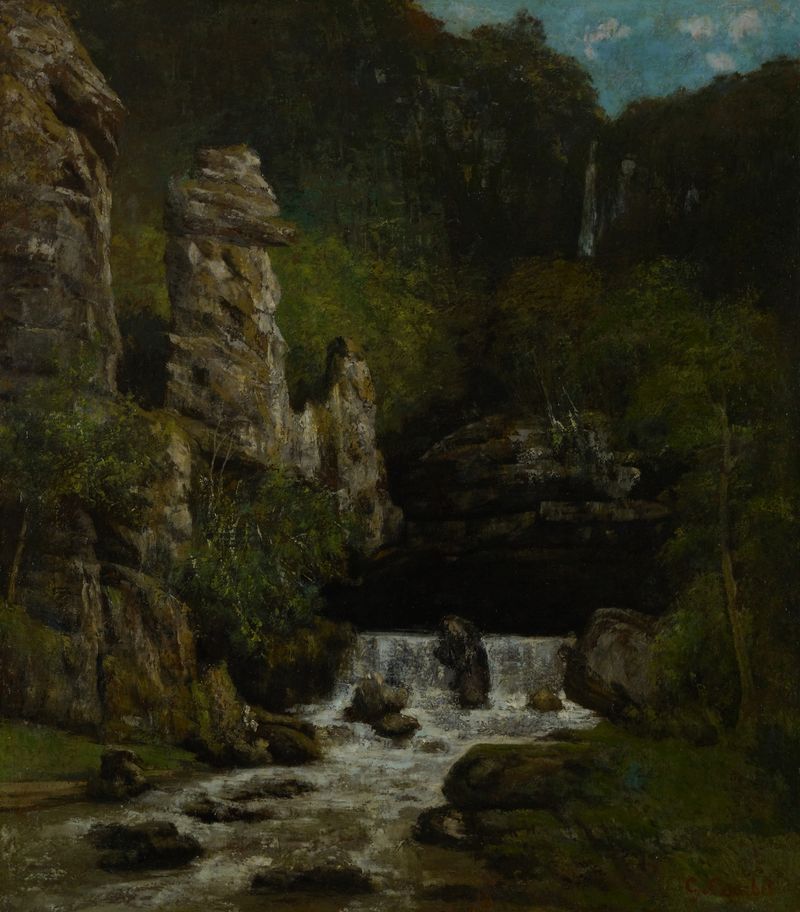
Landscape with a Waterfall
Gustave Courbet





