
A Castle Above an Estuary — History & Facts
Is this a mirror — or a memory? The ethereal interplay between land and sky evokes a sense of transcendence, as if the viewer stands on the precipice of both reality and reverie, gazing into the depths of time. Look to the foreground and notice the gently undulating hills, draped in lush greens and soft browns that guide your gaze toward the grand castle perched majestically above the estuary. The artist’s deft brushwork creates a shimmering reflection in the water below, where blues and silvers dance in harmony, amplifying the castle's regal presence. The sky, a symphony of clouds and light, envelops the scene, inviting you to explore the delicate balance between the natural world and human ingenuity. Yet, within this picturesque landscape lies a profound emotional tension.
The fortress represents the resilience of human ambition, while the tranquil waters suggest the fleeting nature of existence. The contrast between the solid, imposing structure and the fluid, ephemeral reflections urges contemplation of what endures versus what fades away. The painting captures a moment of quiet serenity yet whispers the stories of those who once inhabited this space, reminding us that every monument harbors a deeper narrative. In 1831, while Müller painted this work in England, he was navigating the transitional tides of Romanticism.
This period was marked by a growing interest in nature and the sublime, as artists moved away from classical ideals. Müller, often associated with the Pre-Raphaelite movement, sought to imbue his landscapes with emotional depth, and A Castle Above an Estuary reflects both his personal artistic journey and the broader cultural currents of his time.
More Artworks by William James Müller
Browse all →
Cleeve, Somerset, with Bridgewater Bay in the Distance
William James Müller

The Bridge at Llangollen
William James Müller

Cairo Bazaar
William James Müller
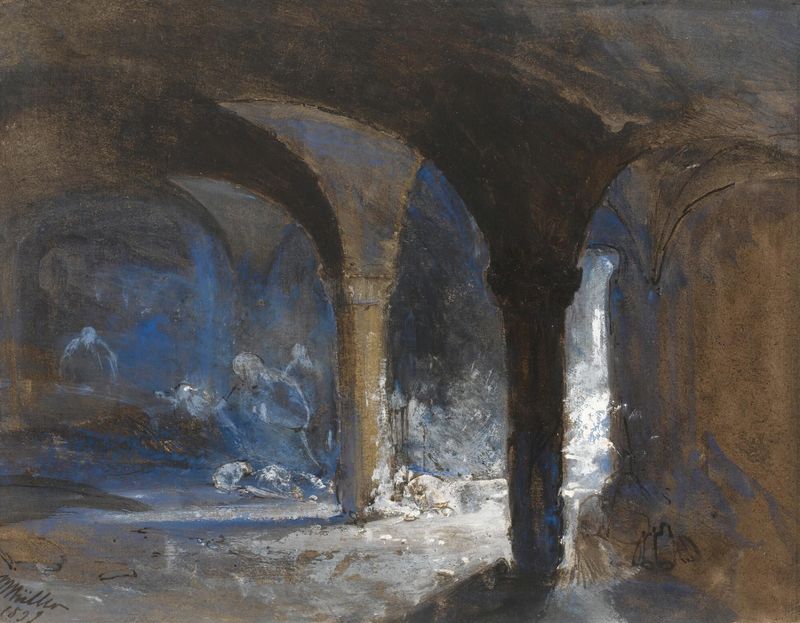
Crypt of the bishop’s palace during the Bristol riots
William James Müller

Near the Caravan Bridge, Smyrna
William James Müller
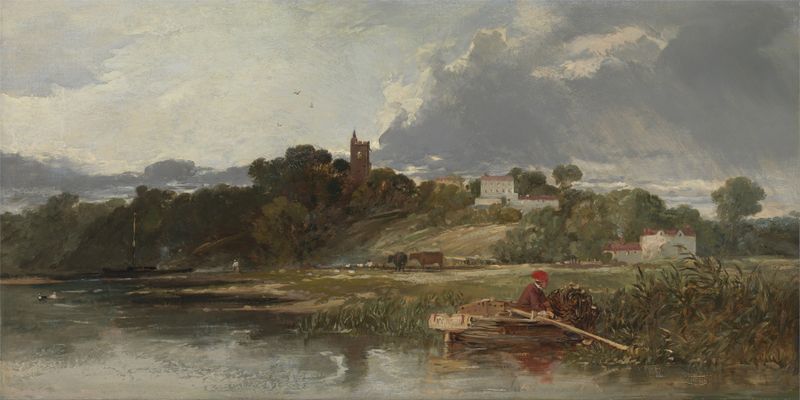
Gillingham on the Medway
William James Müller

The Church of the Holy Sepulchre
William James Müller

A View of Eton and the Fellows Eyot
William James Müller

Tripoli
William James Müller

A Mountain Torrent
William James Müller





