
A Cat in Gothic Style — History & Facts
The first thing to seize the viewer in A Cat in Gothic Style is the hypnotic gaze: two golden eyes, wide and unblinking, seem to hover on a sea of blue, their intensity heightened by the intricate white tracery that radiates outward like frost on a windowpane. Every inch of the cat’s face is alive with pattern—delicate lines, loops, and dots that recall the filigree of medieval manuscripts or the stained glass of a cathedral. The artist, Louis Wain, transforms fur into architecture, whiskers into arabesques, and ears into miniature vaults, all under a deep, saturated blue that pushes the feline forward with almost electric energy.
The smile is ambiguous—part mischief, part mystery—inviting the viewer to linger, searching for the logic behind the ornament. This work belongs to the world of early twentieth-century Britain, a time when Louis Wain’s cats were both household companions and windows into the imagination. Between 1925 and 1939, as modern art explored abstraction and psychology, Wain’s gouache cats grew ever more fantastical, their forms dissolving into pattern and color. The “gothic” style here is not just a nod to medieval design, but a playful reimagining, turning the familiar pet into an icon of visual delight.
History has kept few traces of the circumstances behind this specific painting, now preserved in the Wellcome Collection, but its exuberance and strangeness speak to a moment when art, science, and fantasy all mingled freely. Let your eye wander the maze of lines and see how many cats, or cathedrals, you can find within.
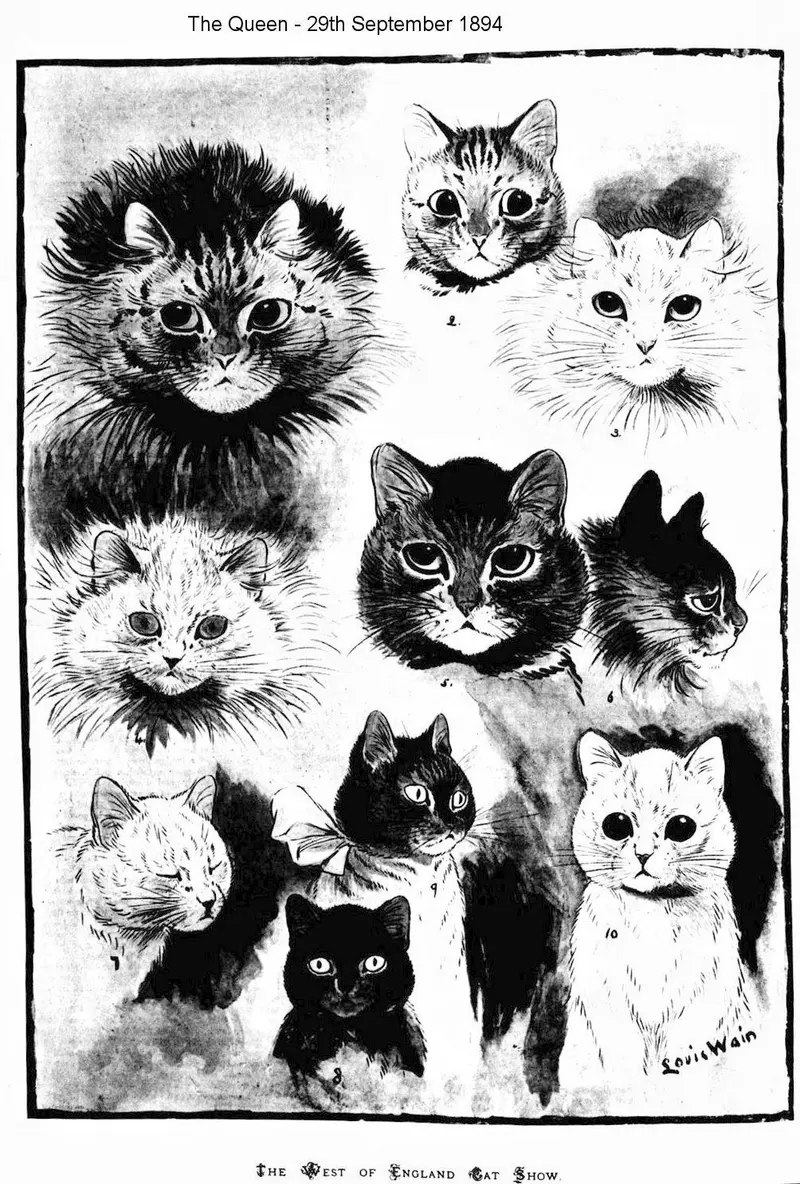
More Artworks by Louis Wain
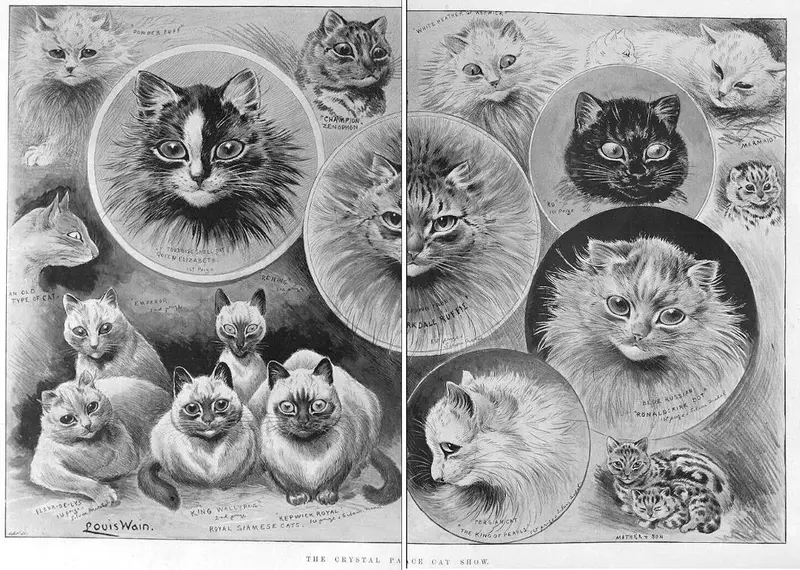
The Crystal Palace Cat Show
Louis Wain

Cats' Christmas
Louis Wain
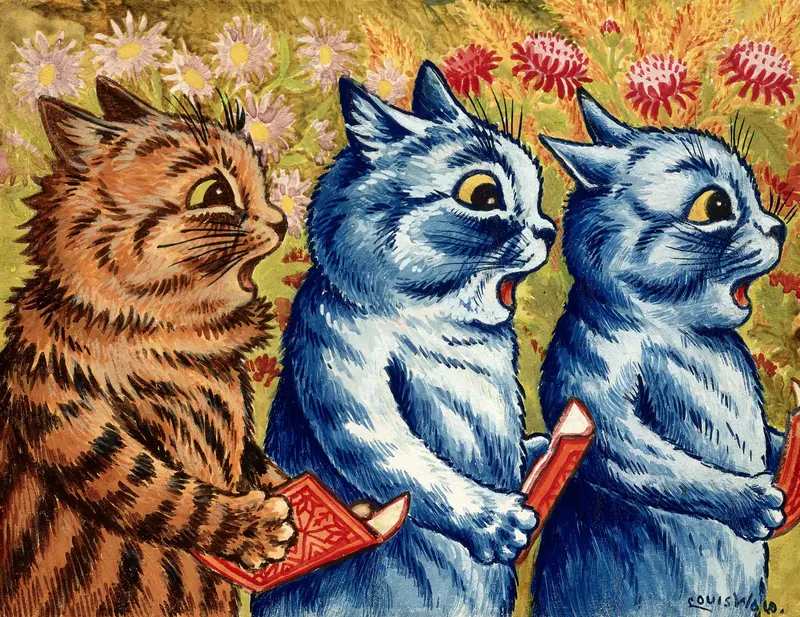
Three Cats Singing
Louis Wain
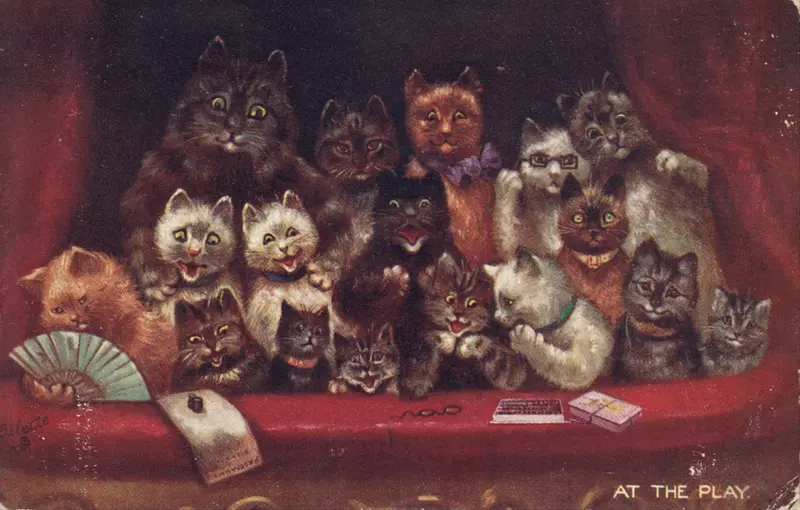
Cats at the Play
Louis Wain
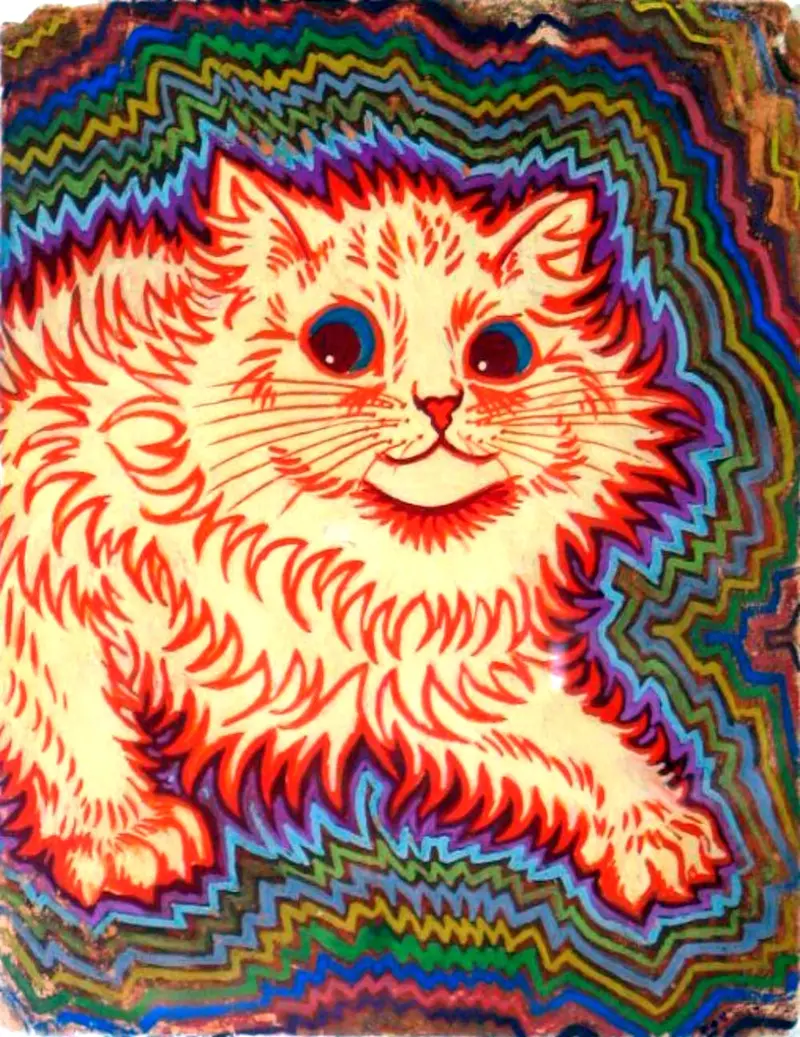
Psychedelic Cat
Louis Wain
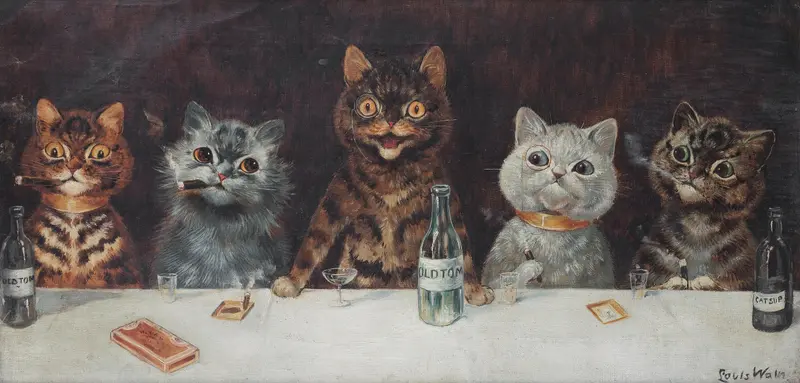
The Bachelor Party
Louis Wain
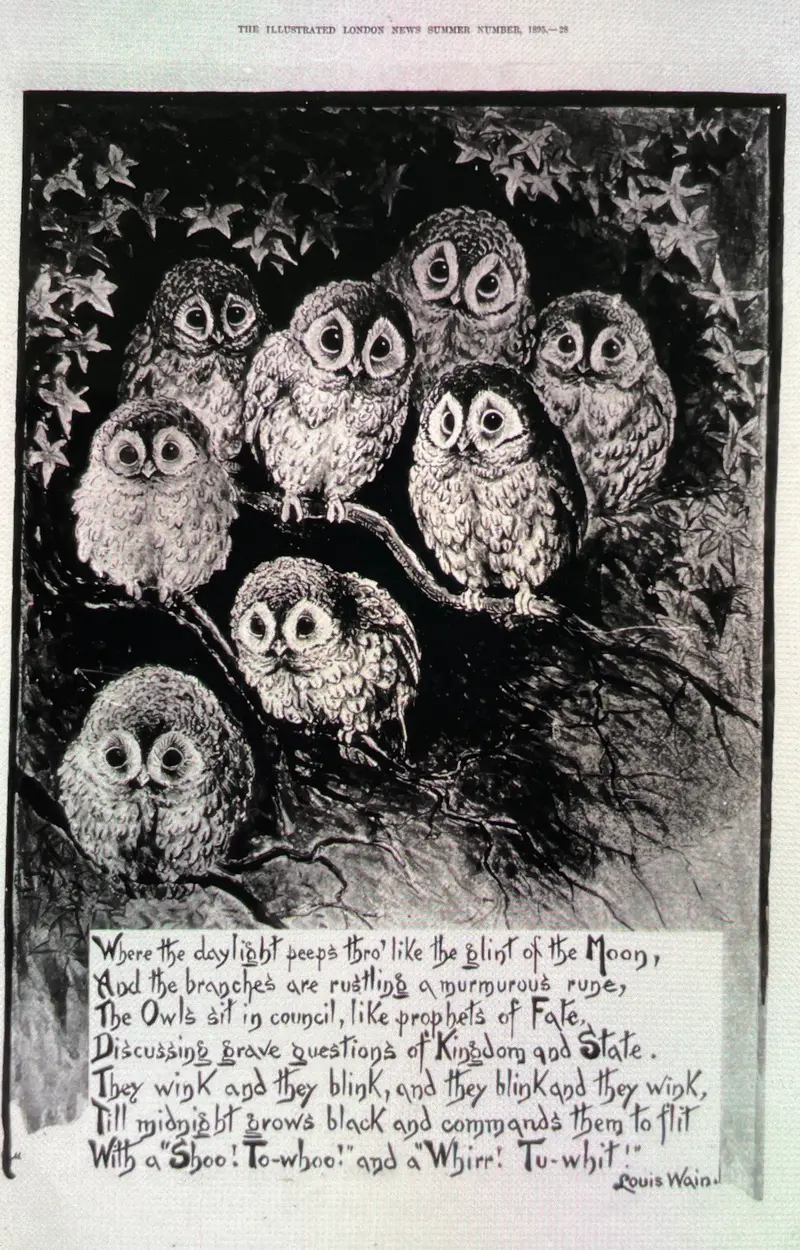
Owls
Louis Wain
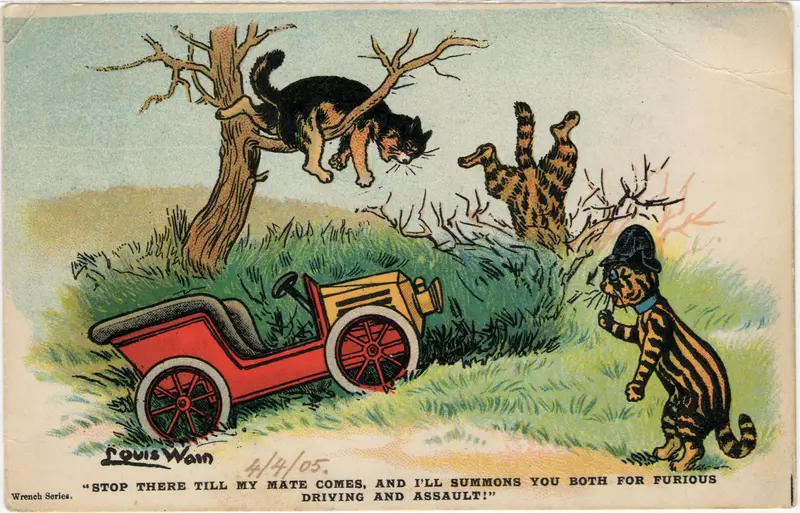
The Cat Car Crash
Louis Wain
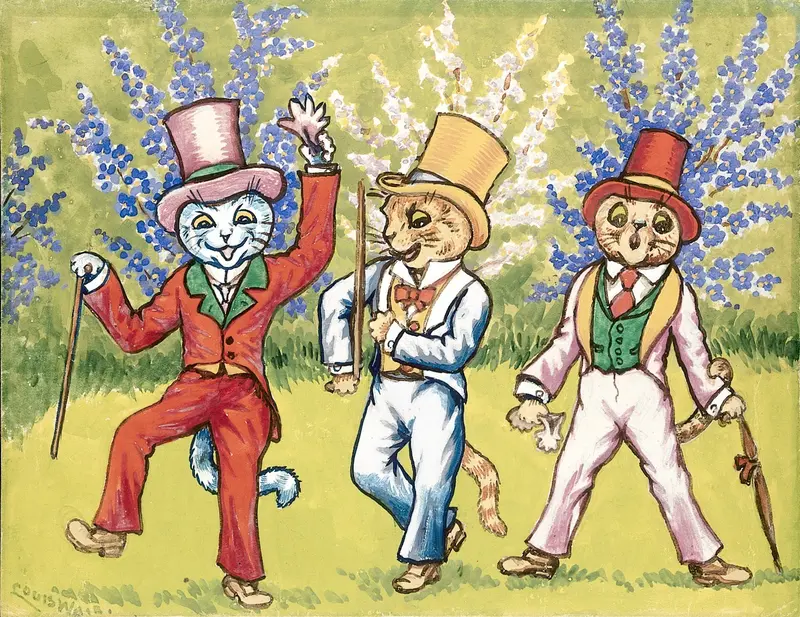
Three Cats Performing a Song and Dance
Louis Wain
Poster for the National Cat Show, 1894
Louis Wain





