
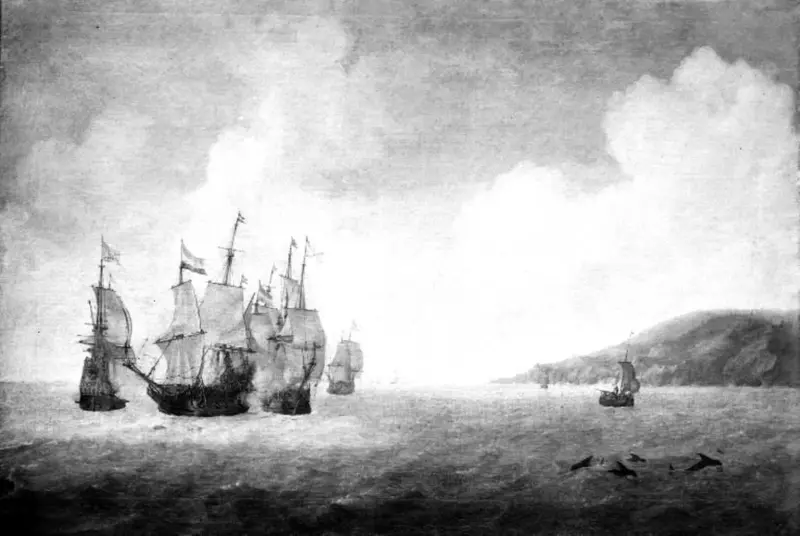
A Dutch and an English Ship off a Harbour — History & Facts
A crisp flag snaps in the wind above the Dutch ship, its red, white, and blue stripes unmistakable against the pale sky, while the English vessel nearby answers with its own bold cross. The two ships, each bristling with masts and rigging, seem to pause in a moment of wary proximity, their crews visible on deck, caught between routine and rivalry. The artist, Abraham de Verwer, sets this encounter not in the open sea but just off a bustling harbor, where the low horizon and gentle haze draw the viewer’s gaze toward the distant spires and windmills of a coastal town.
The water churns darkly in the foreground, flecked with foam, while smaller boats dart between the great ships, reminders of the everyday commerce and danger that defined these waters. Painted in 1625, this scene belongs to a world where maritime power meant national survival, and the harbors of northern Europe thrummed with both opportunity and tension. Dutch and English ships often crossed paths as trading rivals and uneasy allies, and paintings like this—whether destined for a merchant’s home or a city hall—celebrated both the pride and the anxiety of seafaring life. Abraham de Verwer was part of a generation of painters who transformed the seascape from mere backdrop to a stage for national identity, capturing the light, the labor, and the constant negotiation of power on the water.
Little is recorded about the specific journey of this painting, now in the Art UK collection, but its careful balance of ships and shore invites us to look closer, to imagine the stories that unfolded just beyond the frame.
More Artworks by Abraham de Verwer

An Amsterdam East Indiaman
Abraham de Verwer
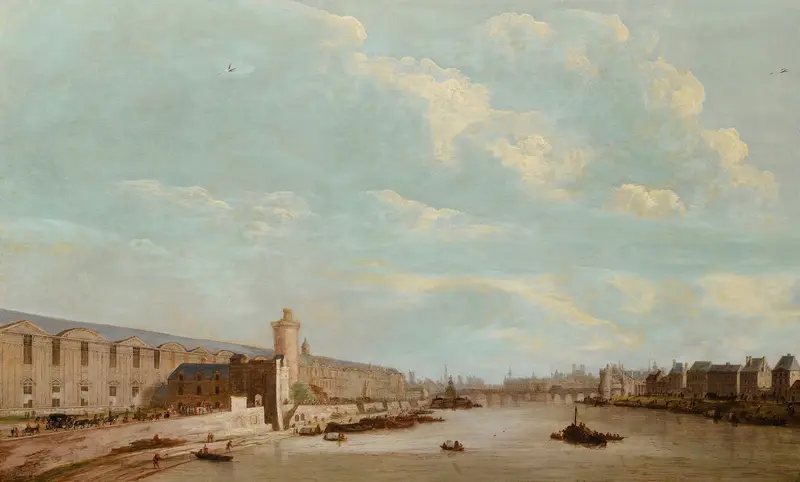
View of Paris from the Pont-royal with the Grande galerie du Louvre, the Pont-Neuf and the Nesle tower
Abraham de Verwer
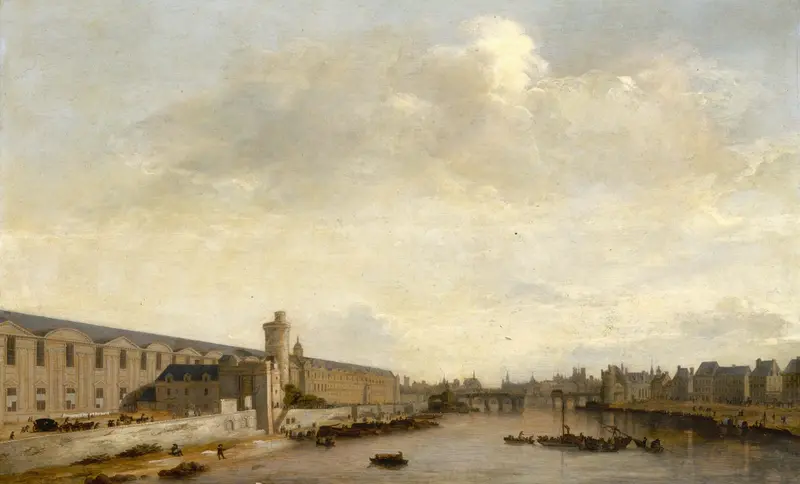
La Grande Galerie du Louvre, avec la porte Neuve et la tour de Bois
Abraham de Verwer
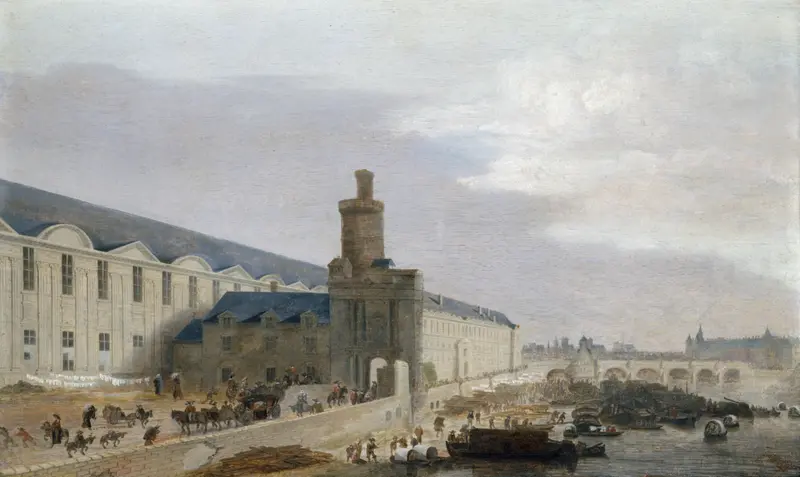
La Grande Galerie du Louvre avec la porte Neuve et la tour de Bois
Abraham de Verwer
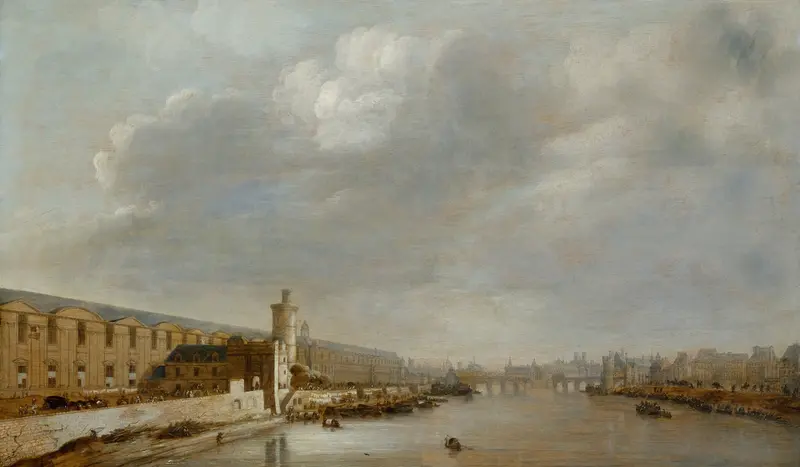
La Grande Galerie du Louvre avec la porte Neuve et la tour de Bois
Abraham de Verwer
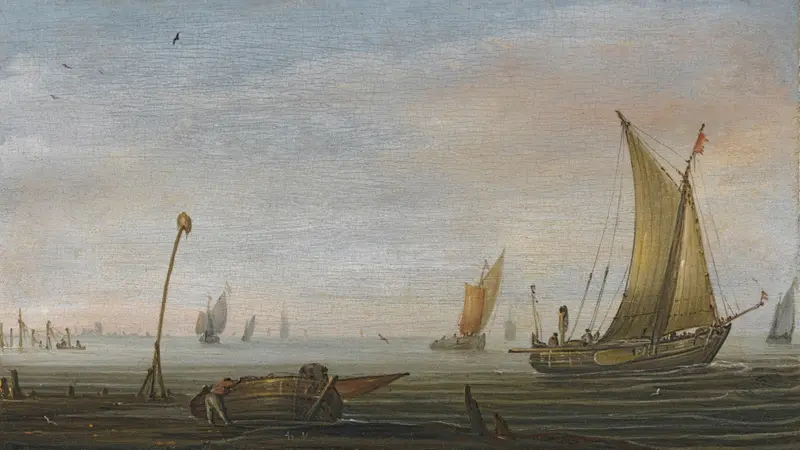
Small Vessels On The Zuider Zee
Abraham de Verwer
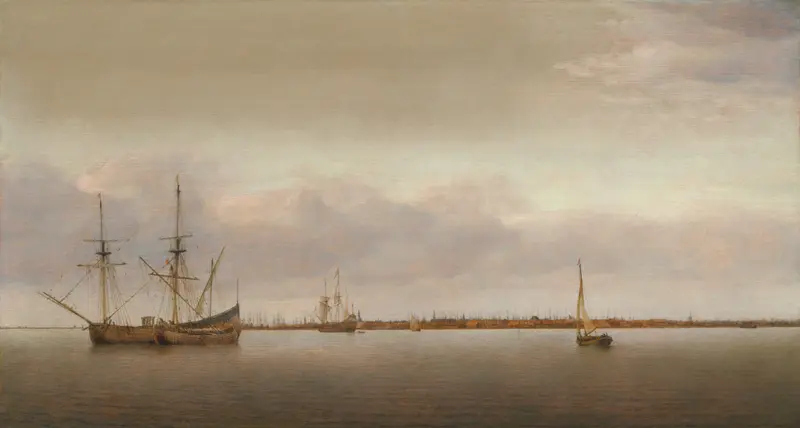
View of Hoorn
Abraham de Verwer
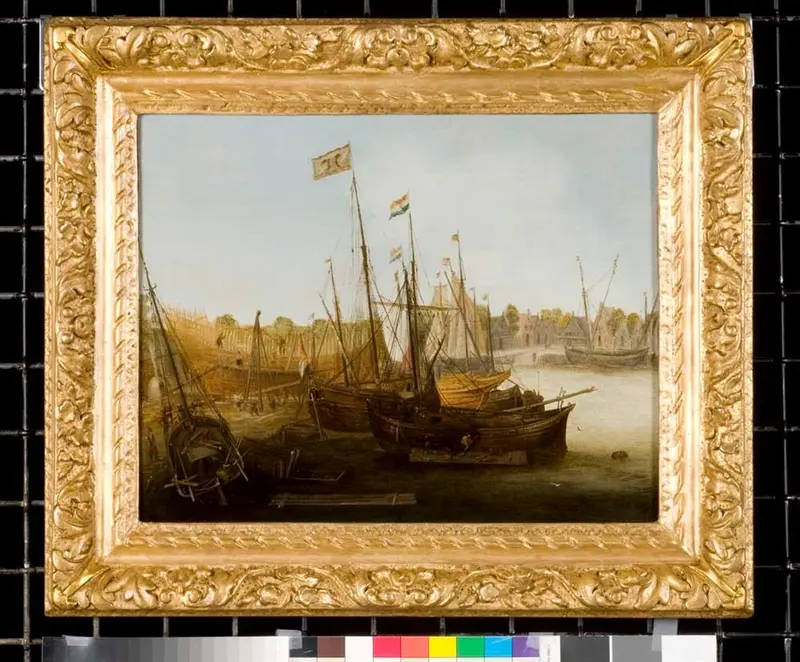
A shipyard with vessels being built
Abraham de Verwer
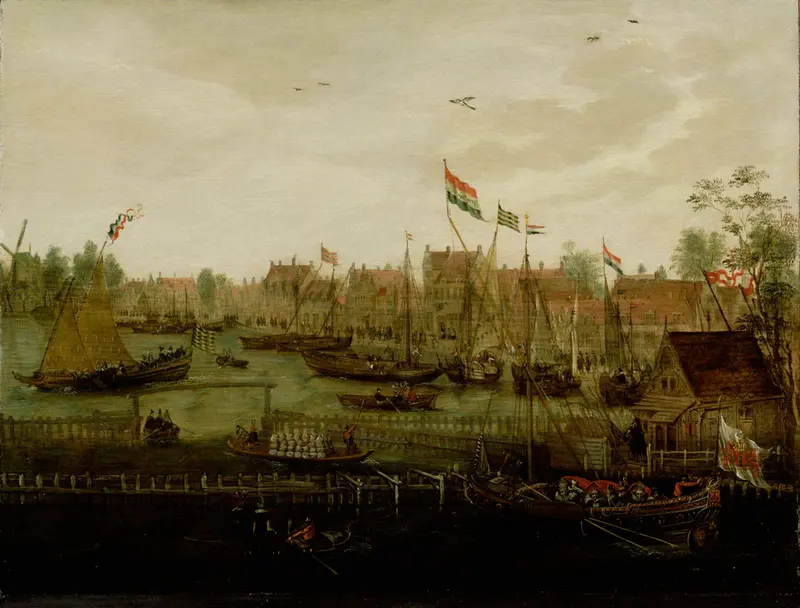
Gezicht vanaf de Blauwbrug over de Amstel-Schepen op de Amstel-View across the river Amstel from the Blauw Bridge
Abraham de Verwer
Naval Battle between Dutch and Spanish Ships of the Line
Abraham de Verwer





