
A Dutch Ship Entering a Mediterranean Port — History & Facts
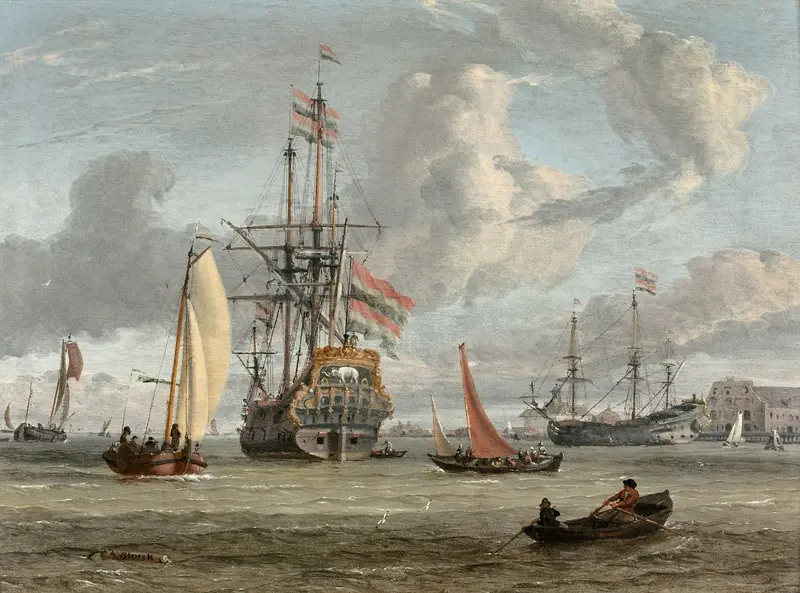
What draws the eye first in A Dutch Ship Entering a Mediterranean Port is the proud sweep of the Dutch tricolor, taut in the wind above the ship’s stern, a signal of national identity and maritime ambition. The vessel itself dominates the foreground, sails full and hull angled as if caught in the very moment of arrival—an instant before anchor drops and the journey ends. Storck’s brushwork animates the water with a restless energy, while the mountainous coastline and bustling port beyond suggest a world both foreign and welcoming.
Light pours in from the left, catching the billow of clouds and the white of the sails, guiding the viewer’s gaze from the ship to the distant horizon and back again, always returning to the drama of arrival. This painting belongs to the late 17th century, an era when Dutch maritime power was at its height and scenes like this were both commercial boasts and souvenirs for merchants and shipowners. Artists such as Abraham Storck specialized in these port views, blending accurate ship portraiture with imagined Mediterranean settings that spoke to the dreams and realities of global trade. The National Maritime Museum’s collection preserves this work as a testament to that age of expansion, though history has kept few traces of its own journey.
Look again at the ship’s crew, the distant fortifications, the interplay of cloud and canvas—each detail a fragment of a world built on wind, water, and the promise of distant shores.
More Artworks by Abraham Storck

The Muscovite legation visiting Amsterdam, 29 August 1697
Abraham Storck
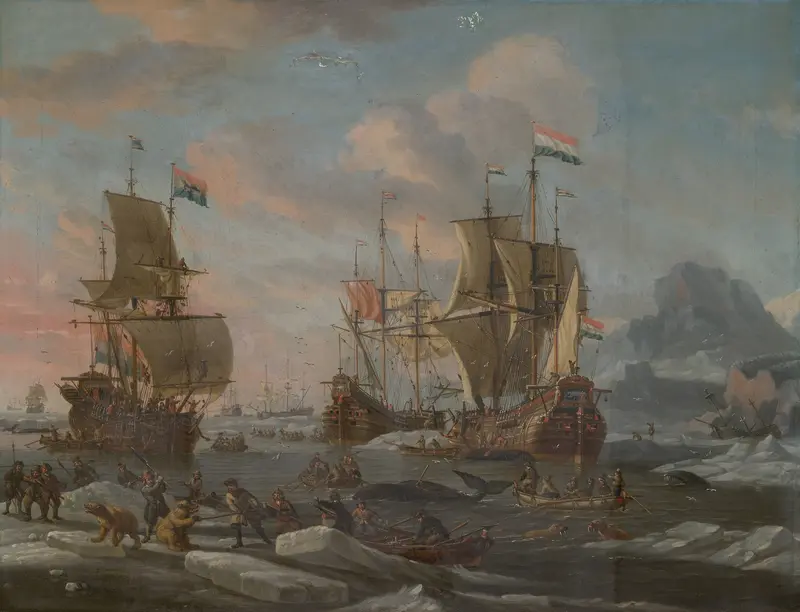
The Dutch Whaling Fleet
Abraham Storck
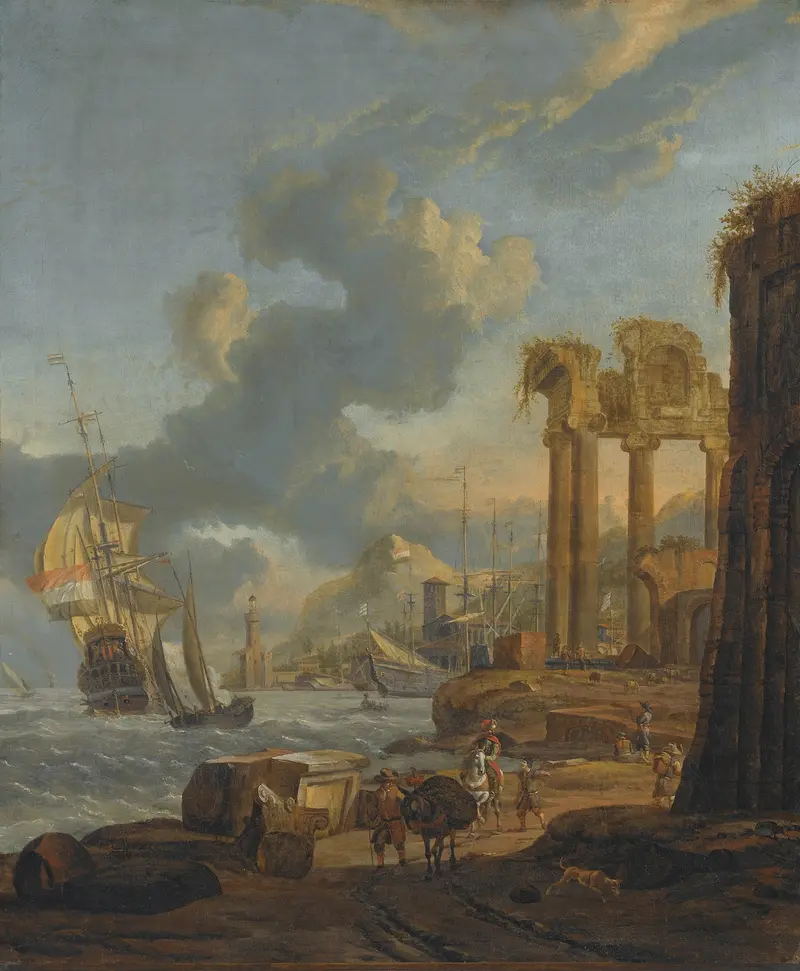
A Mediterranean Harbour Scene With Travellers On The Shore, A Dutch Man-Of-War On The Left
Abraham Storck
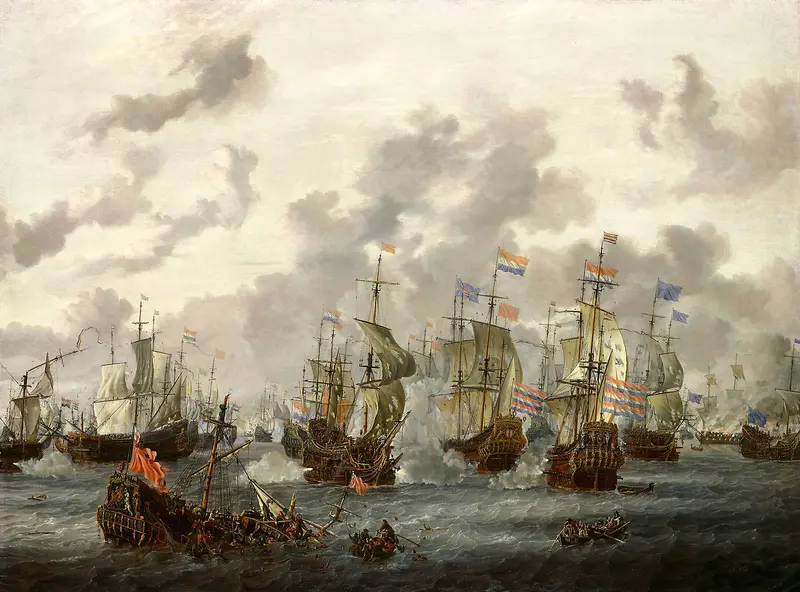
The Four Days’ Battle
Abraham Storck
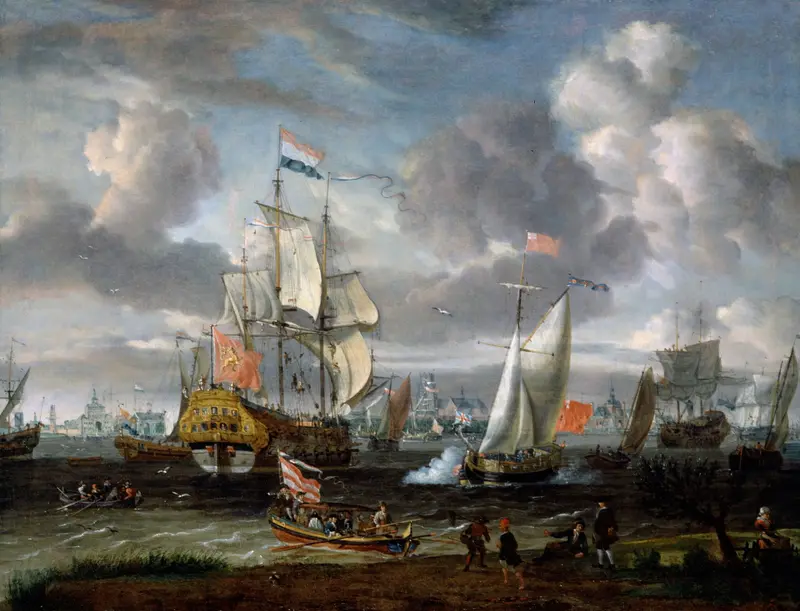
An English Yacht saluting a Dutch Man-of-War in the port of Rotterdam
Abraham Storck
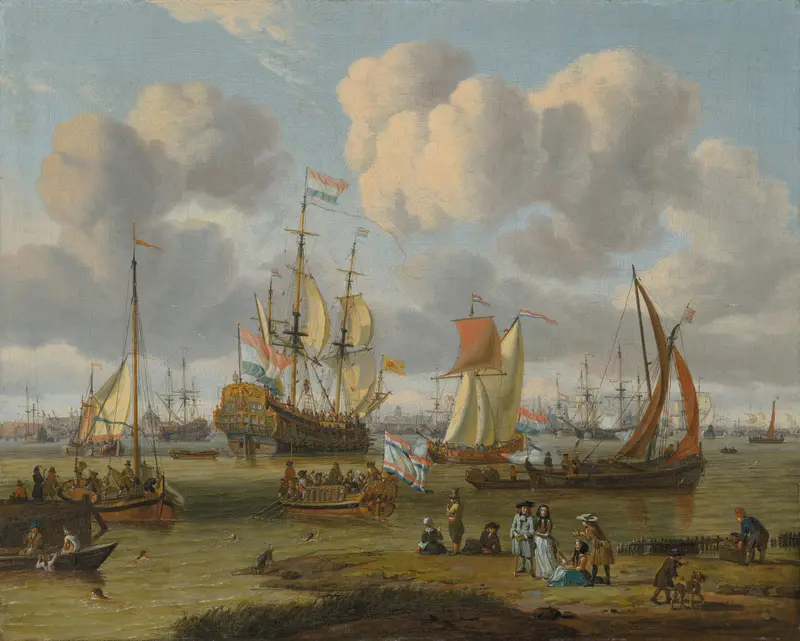
Shipping off Amsterdam with figures on a quay
Abraham Storck
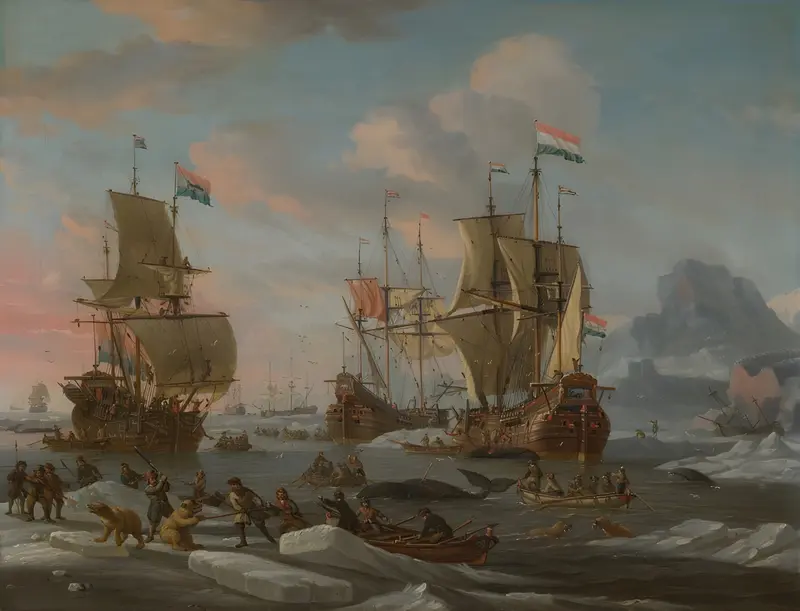
The Dutch Whaling Fleet
Abraham Storck
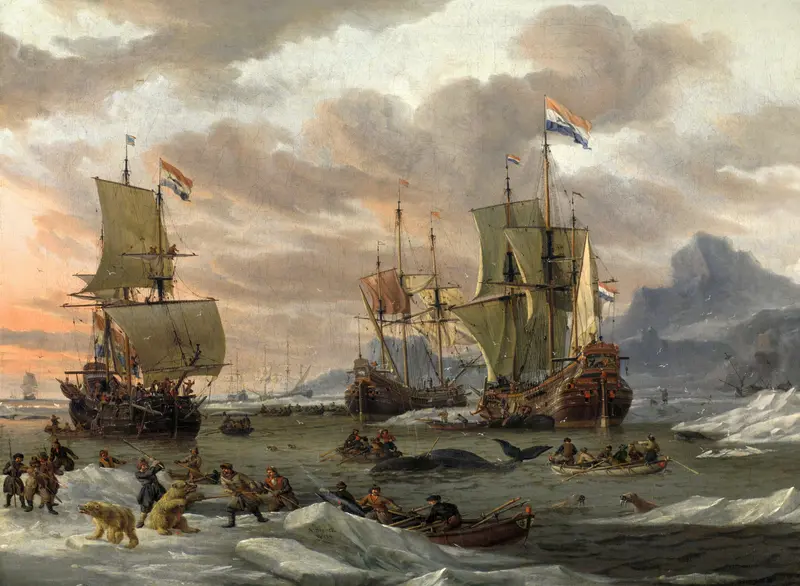
Whaling Grounds in the Arctic Ocean
Abraham Storck
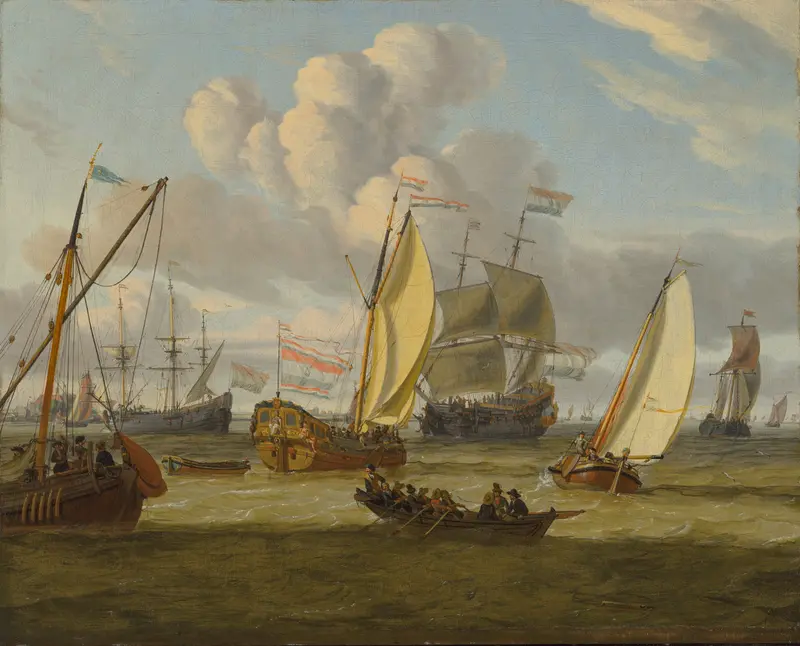
Shipping in an estuary
Abraham Storck
Grand navire de la couronne du Danemark près d’un littoral
Abraham Storck





