
A Dutch Yacht on the River Y — History & Facts
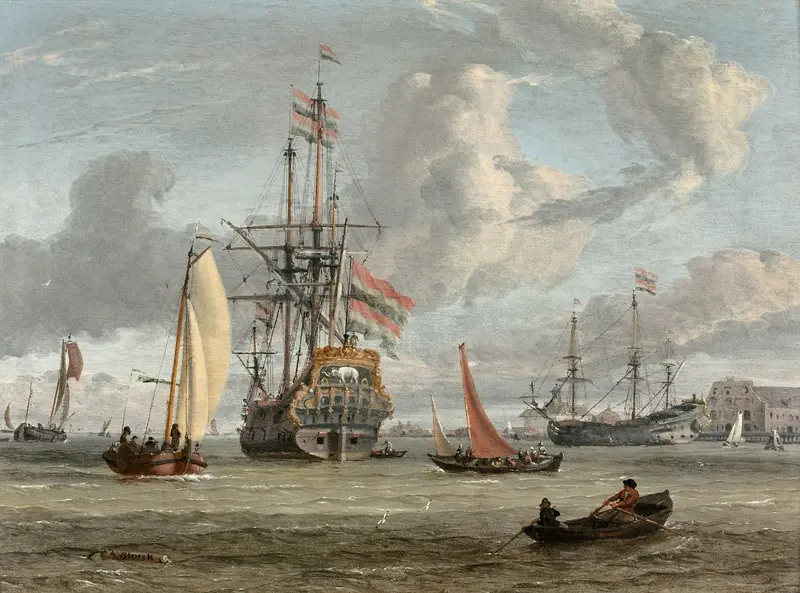
What first seizes the eye in A Dutch Yacht on the River Y is the proud sweep of sails and flags, their crisp geometry set sharply against a sky alive with golden, swelling clouds. The artist, Abraham Storck, orchestrates a busy pageant on the water, where vessels of every size jostle for space and attention. The Dutch tricolour flutters from the stern of the largest ship, a signal of national pride and maritime ambition, while smaller boats bustle alongside, their crews intent on unseen errands.
The light, low and honeyed, glances off the water and picks out the crisp whites of canvas and the deep shadows of hulls, guiding the viewer’s gaze from the wooded riverbank on the left to the stately flagship on the right. Every figure, every ripple, seems to play a part in this moment of shared purpose and calm before the next tide. This painting belongs to the world of the Dutch Golden Age, when the rivers and harbours around Amsterdam thronged with merchantmen, yachts, and fishing boats, and artists like Storck found eager patrons among the city’s wealthy burghers and shipping magnates. Marine paintings such as this, now preserved in the National Maritime Museum, were prized not only as records of Dutch naval power but as celebrations of the bustling, ordered world that trade had built.
The genre flourished in a time when the Netherlands’ fortunes were tied to the sea, and the River Y—Amsterdam’s watery front door—became a stage for daily spectacle. Little is recorded about the journey of this particular work, but its scene invites us to linger, tracing the play of wind and water, and to imagine the world of commerce and confidence that shaped its making.
More Artworks by Abraham Storck

The Muscovite legation visiting Amsterdam, 29 August 1697
Abraham Storck
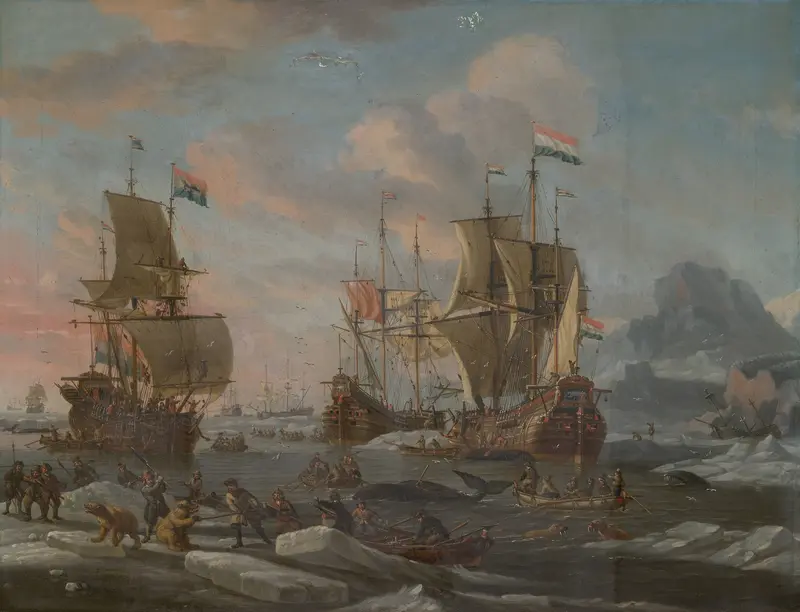
The Dutch Whaling Fleet
Abraham Storck
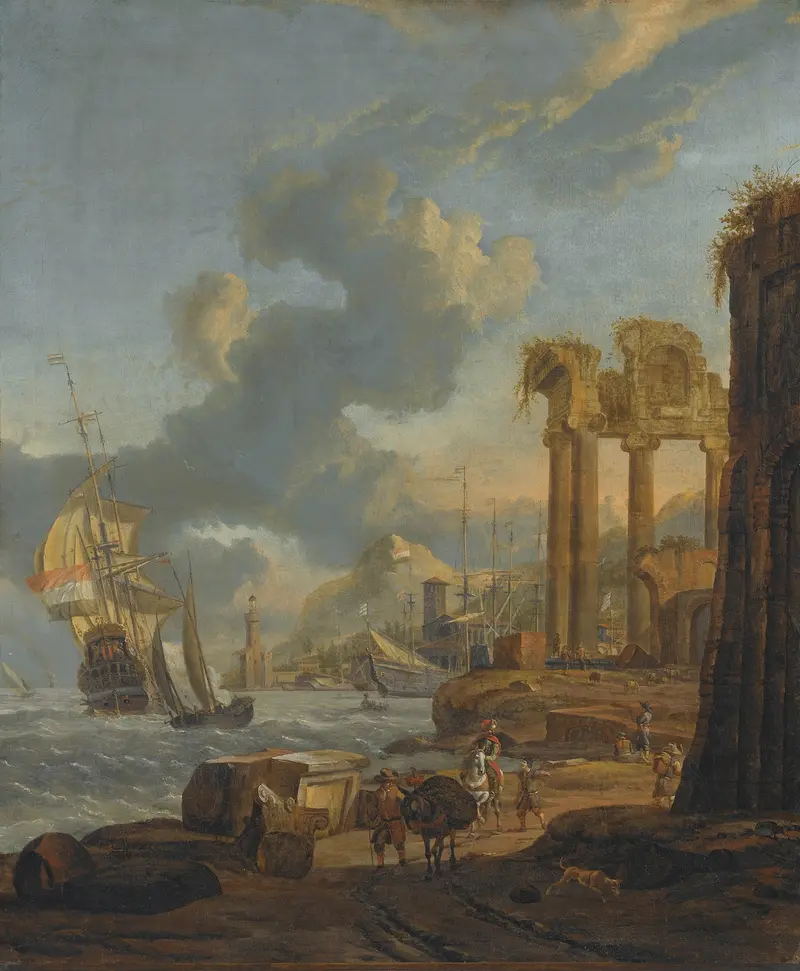
A Mediterranean Harbour Scene With Travellers On The Shore, A Dutch Man-Of-War On The Left
Abraham Storck
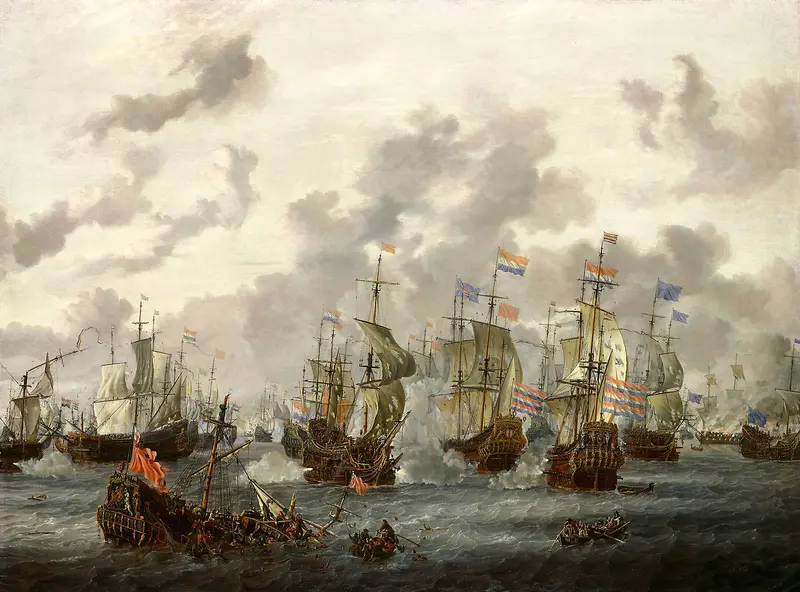
The Four Days’ Battle
Abraham Storck
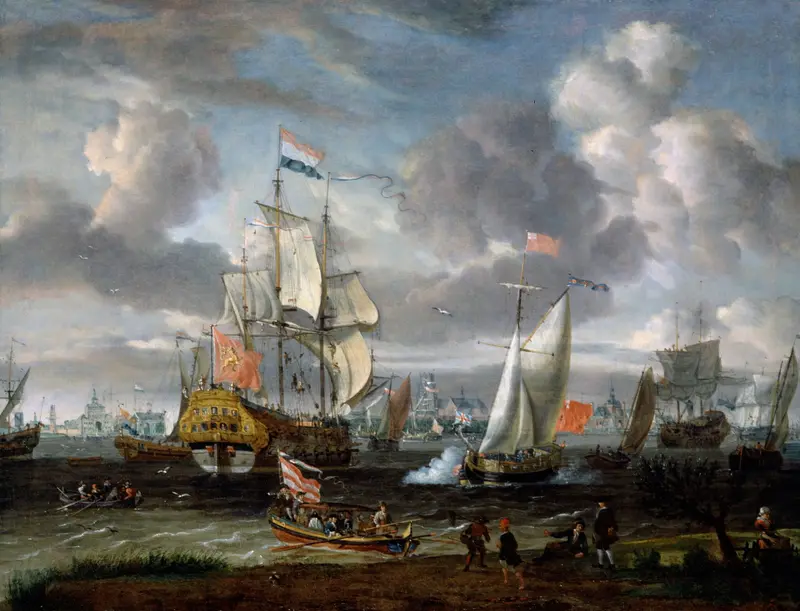
An English Yacht saluting a Dutch Man-of-War in the port of Rotterdam
Abraham Storck
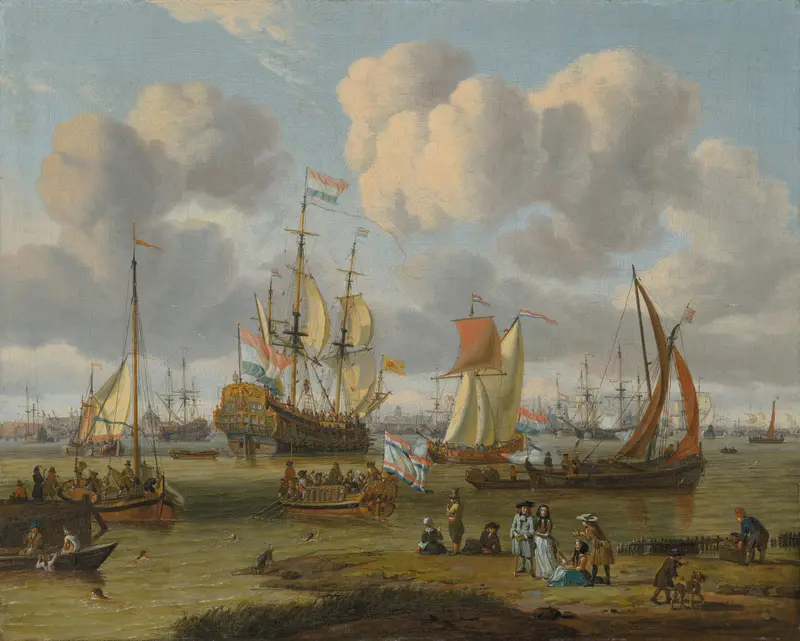
Shipping off Amsterdam with figures on a quay
Abraham Storck
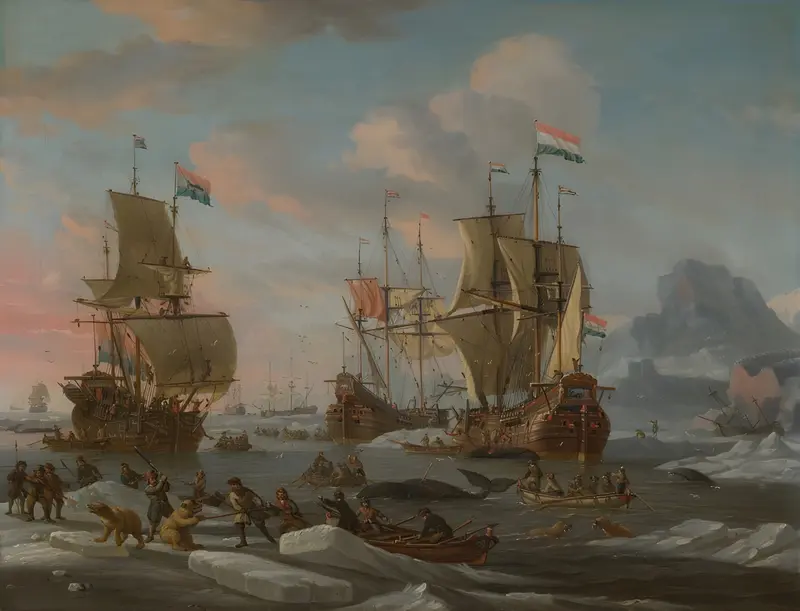
The Dutch Whaling Fleet
Abraham Storck
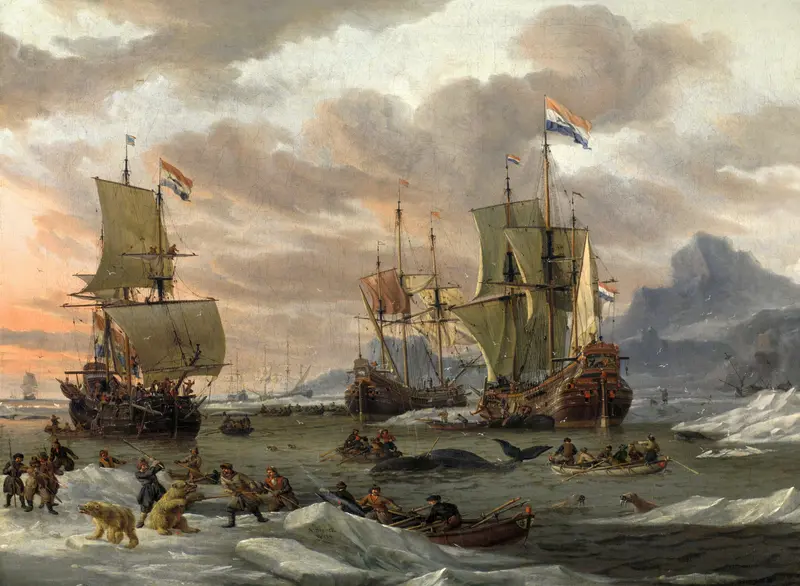
Whaling Grounds in the Arctic Ocean
Abraham Storck
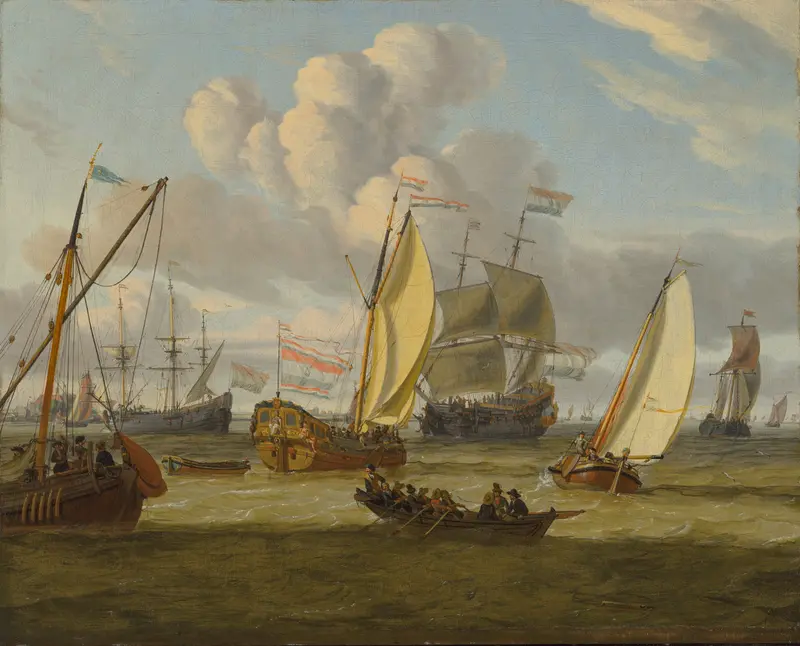
Shipping in an estuary
Abraham Storck
Grand navire de la couronne du Danemark près d’un littoral
Abraham Storck





