
A House in a Clearing — History & Facts
In John Atkinson Grimshaw's A House in a Clearing, light emerges as an enigmatic force that both illuminates and conceals the fragility of existence. The painting invites contemplation on how we perceive beauty, particularly in nature’s embrace of human creation. Look to the left, where the soft glow of a setting sun filters through the trees, casting long shadows that dance upon the clearing. The house, nestled within a riot of lush greens and browns, stands proud yet vulnerable under the canopy of an encroaching twilight.
Grimshaw’s meticulous brushwork captures the intricate textures of leaves and bark, while the warm yellows and deep blues create a striking contrast, evoking the duality of peace and solitude. In this serene landscape, a palpable tension simmers between the natural and the manmade. The house is both an anchor and a reminder of isolation, hinting at stories untold within its walls. The soothing light merges with the encroaching darkness, suggesting a fleeting moment of warmth that will soon yield to the chill of night.
Here lies the paradox of comfort in solitude, where beauty hints at deeper emotional currents that resonate with the viewer. Grimshaw painted A House in a Clearing in 1870, during a period when the Pre-Raphaelite movement was shifting the art world’s focus towards realism and nature. Living in Leeds, he was influenced by the industrial changes around him, capturing moments of tranquility amidst the chaos of modernity. This work reflects his deep engagement with light and atmosphere, marking a significant evolution in his artistic journey.
More Artworks by John Atkinson Grimshaw
Browse all →
Under the Silvery Moonbeams
John Atkinson Grimshaw
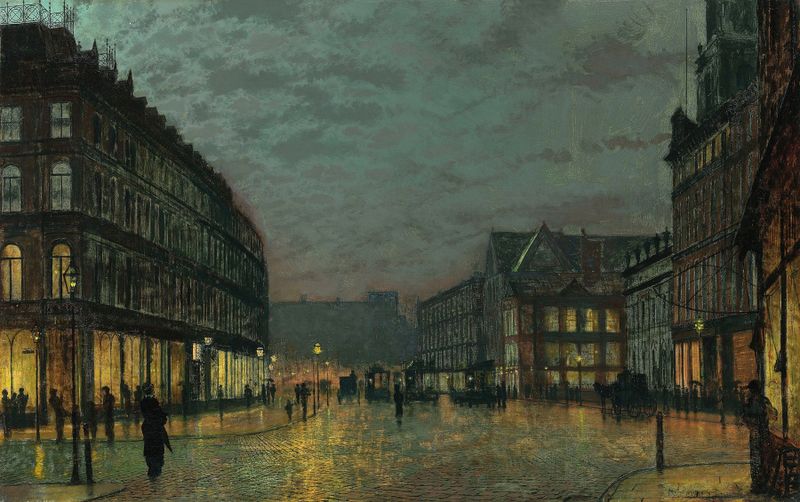
Boar Lane, Leeds by lamplight
John Atkinson Grimshaw
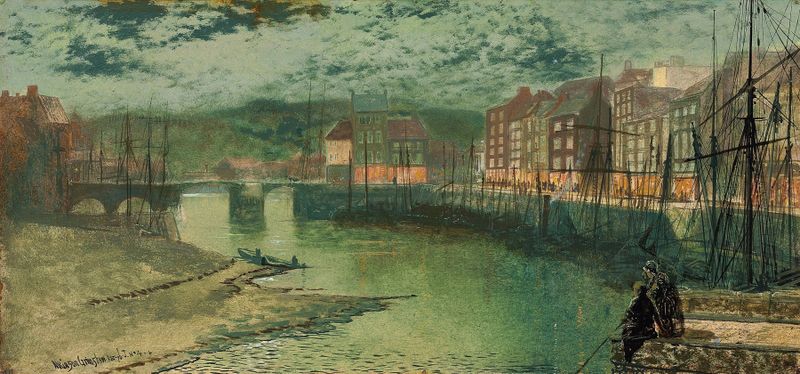
Whitby docks
John Atkinson Grimshaw

Old Chelsea
John Atkinson Grimshaw

Late October
John Atkinson Grimshaw
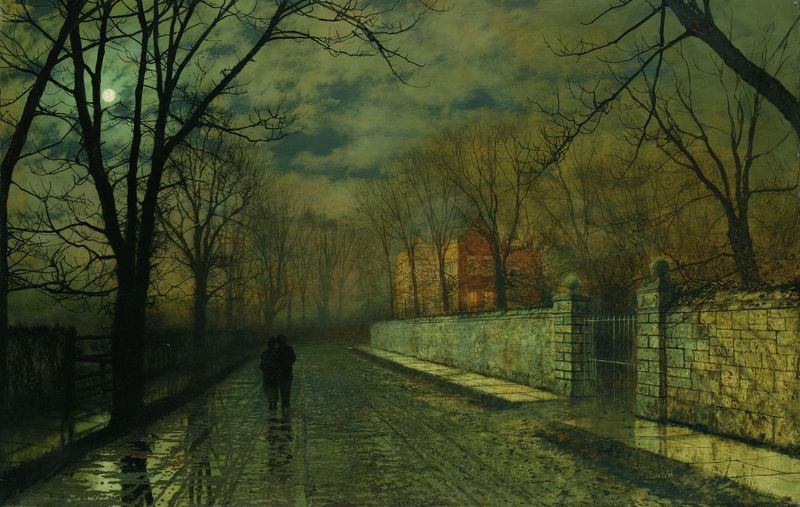
Figures In A Moonlit Lane After Rain
John Atkinson Grimshaw

Liverpool Lights
John Atkinson Grimshaw
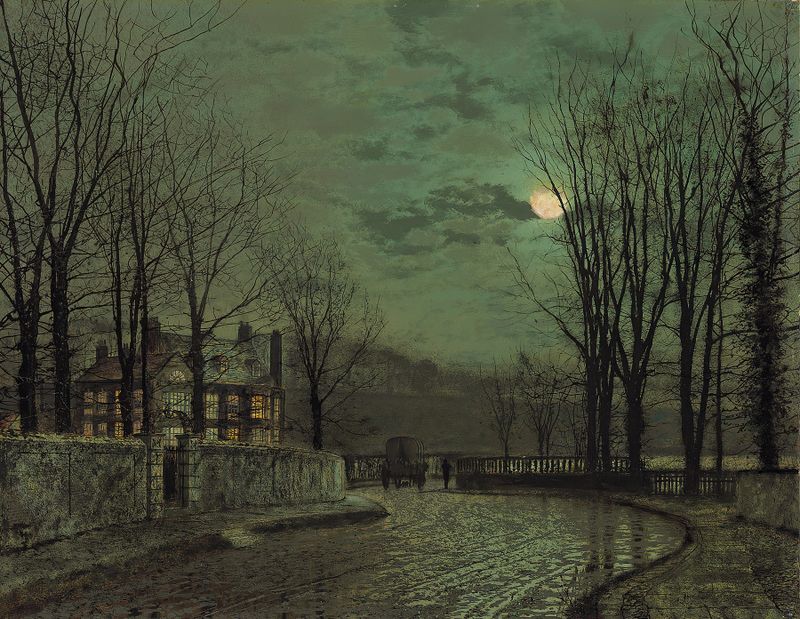
November Moonlight
John Atkinson Grimshaw
Southwark Bridge from Blackfriars by Moonlight
John Atkinson Grimshaw

Whitby From Scotch Head, Moonlight On The Esk
John Atkinson Grimshaw





