
A landscape with a hourse-drawn wagon — History & Facts
What first draws the eye in A landscape with a horse-drawn wagon by Adolf Mackeprang is the gentle pause in the movement of rural life, caught in the dappled light beneath a towering tree. The horses, alert and strong, stand at rest, their harnesses slack, while the driver—his straw hat bright against the shadows—waits with a quiet patience that suggests a moment of shared understanding between man and animal. The wagon, rough-hewn and practical, carries two more figures, their hats and posture hinting at a day’s labor or perhaps a journey home.
The painter’s brush lingers over the textures of bark, mane, and grass, guiding the viewer’s gaze from the sunlit foreground, across the sturdy wheels, and into the cool, leafy depths beyond. Works like this, rooted in the traditions of 19th-century Northern European realism, were often created for patrons who sought to preserve the rhythms of rural life as industrial change swept the countryside. Adolf Mackeprang was known for his sensitive portrayals of horses and landscapes, and this painting—now found in the collection of bruun-rasmussen.dk—belongs to a genre that valued the dignity of everyday labor and the quiet grandeur of the land. History has kept few traces of this specific work’s journey, but its careful composition and attentive detail invite us to linger, to imagine the world just beyond the frame, and to savor the slow unfolding of an ordinary day.
More Artworks by Adolf Mackeprang

Vixen with puppy at the edge of the forest
Adolf Mackeprang
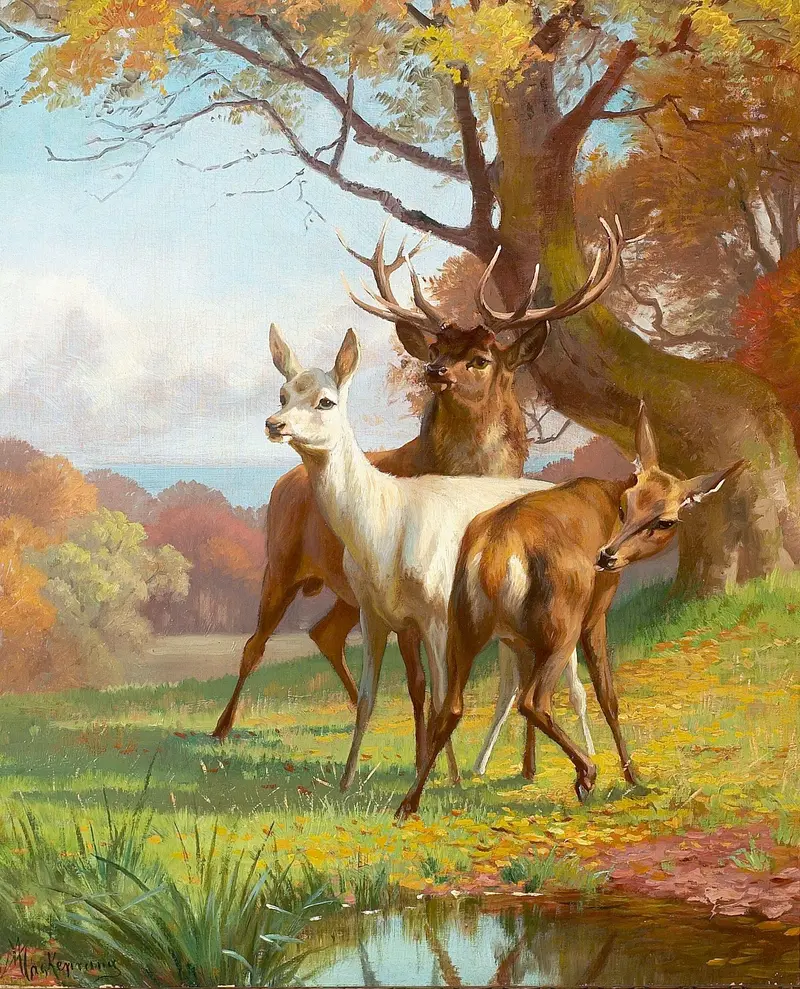
Forest scene with red deer.
Adolf Mackeprang
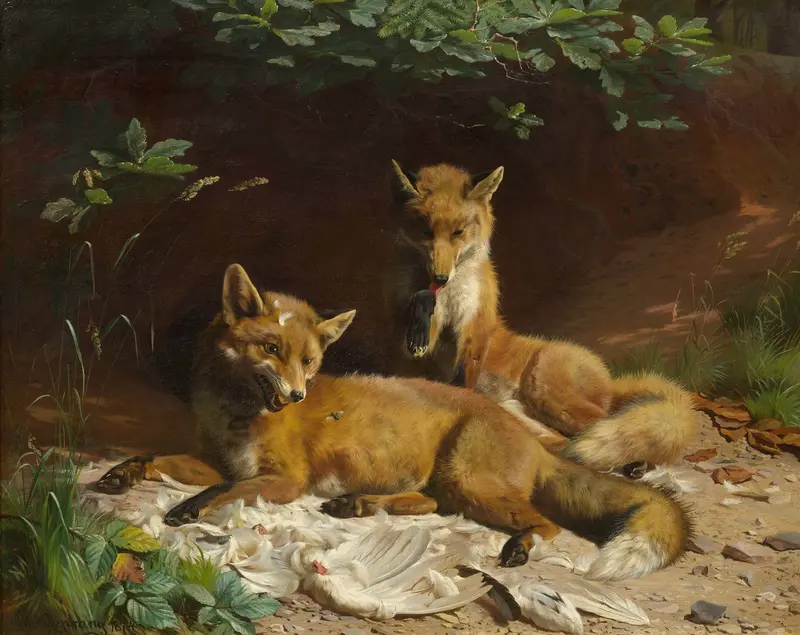
Two foxes
Adolf Mackeprang
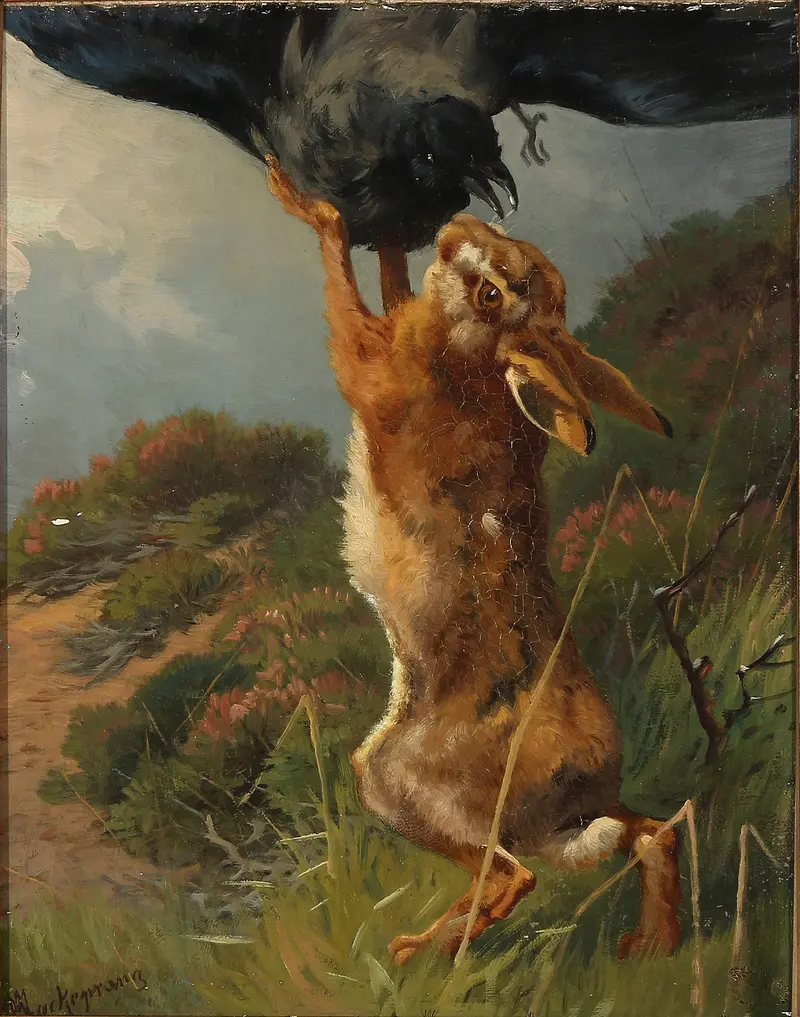
Young hare attacked by a crow
Adolf Mackeprang
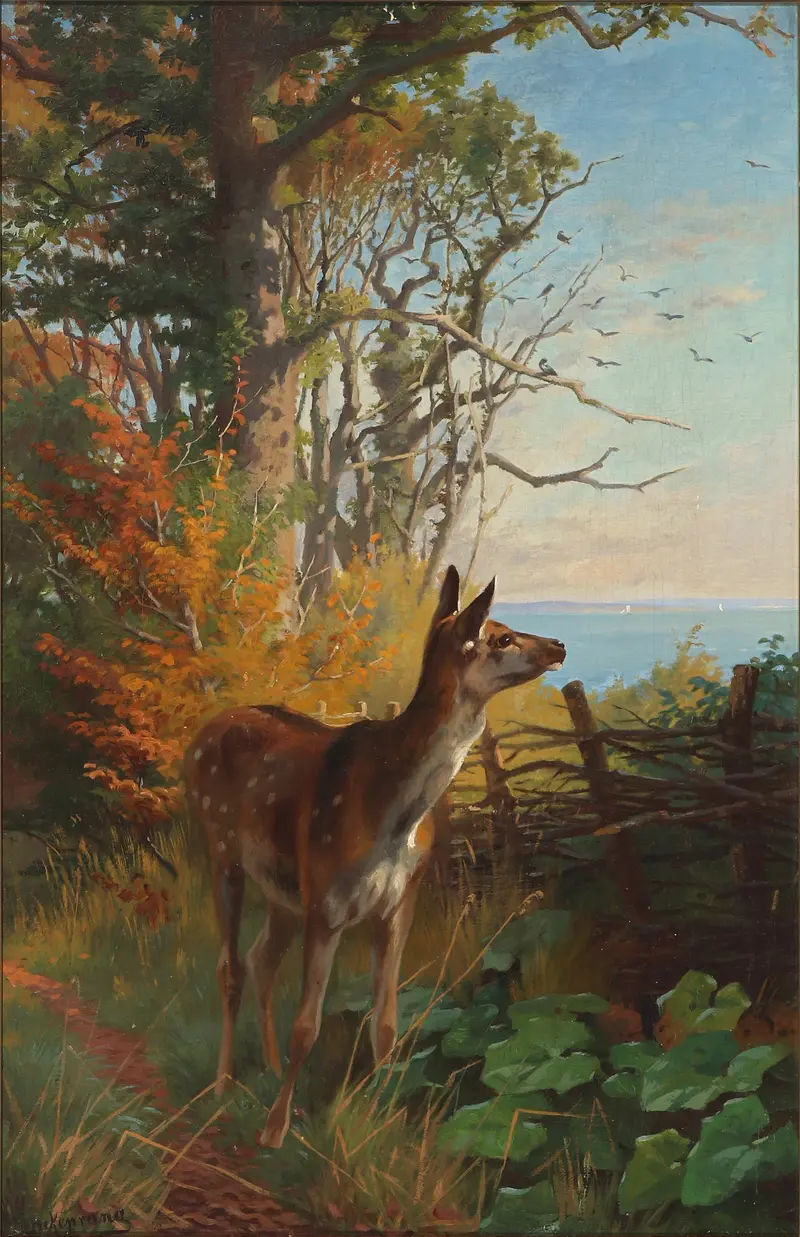
A deer in the forest
Adolf Mackeprang
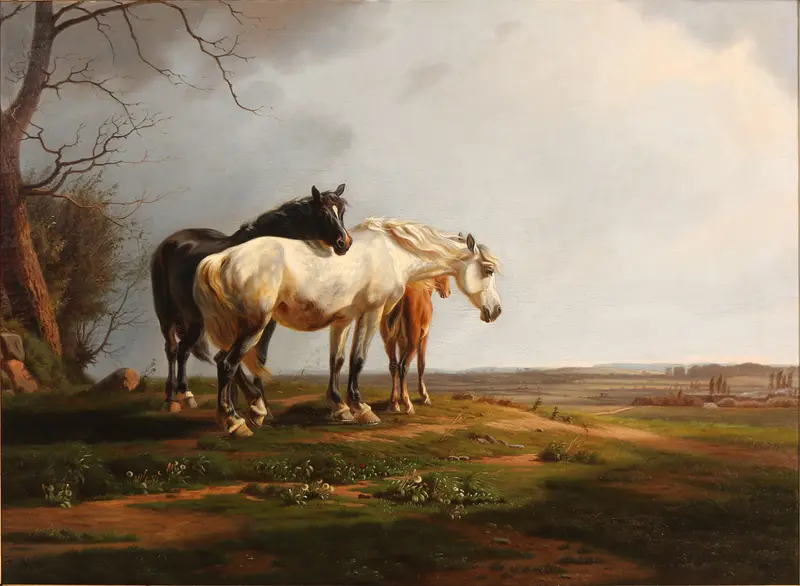
A flock of horses in a field in the sun
Adolf Mackeprang
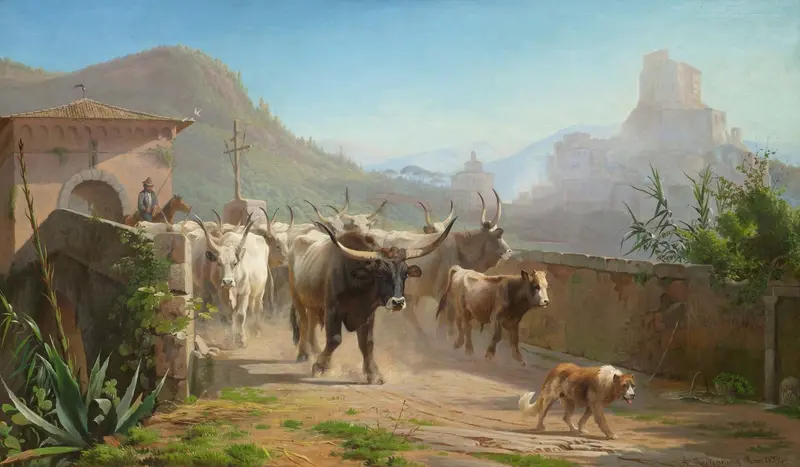
Cattle drive in Italy
Adolf Mackeprang
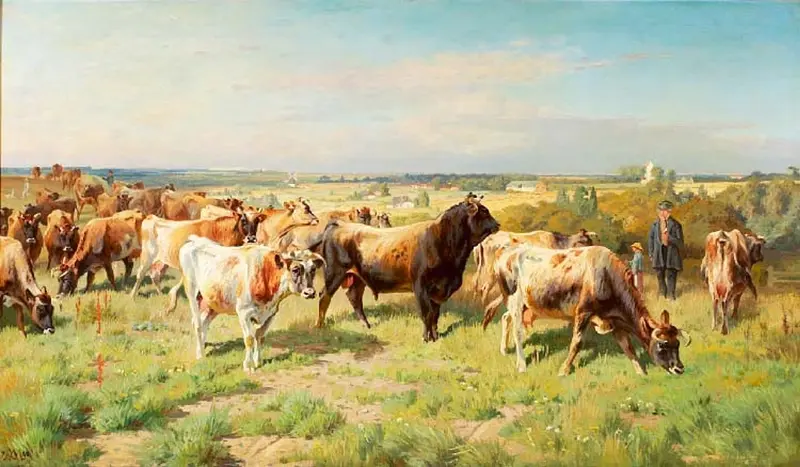
Cattle in the fields.
Adolf Mackeprang

Dogs chasing through a forest.
Adolf Mackeprang
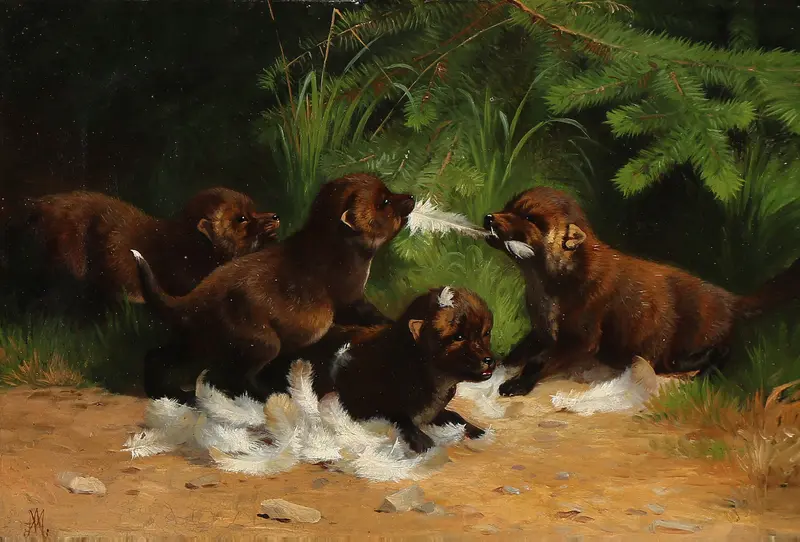
Forest scene with fox pubs fighting over the remains of a bird.
Adolf Mackeprang
More Landscape Art

The Starry Night
Vincent van Gogh

View of Delft
Johannes Vermeer

Water Lilies
Claude Monet

The Grand Canal, Venice, looking north-west from the Ca' Corner to the Ca' Contarini degli Scrigni, with the campanile of Santa Maria della Carità
Canaletto

Windsor Castle
Canaletto

The Grand Canal looking North-East from the Palazzo Dolfin-Manin to the Rialto Bridge
Canaletto