
A marine sham-fight on the Y before Amsterdam — History & Facts
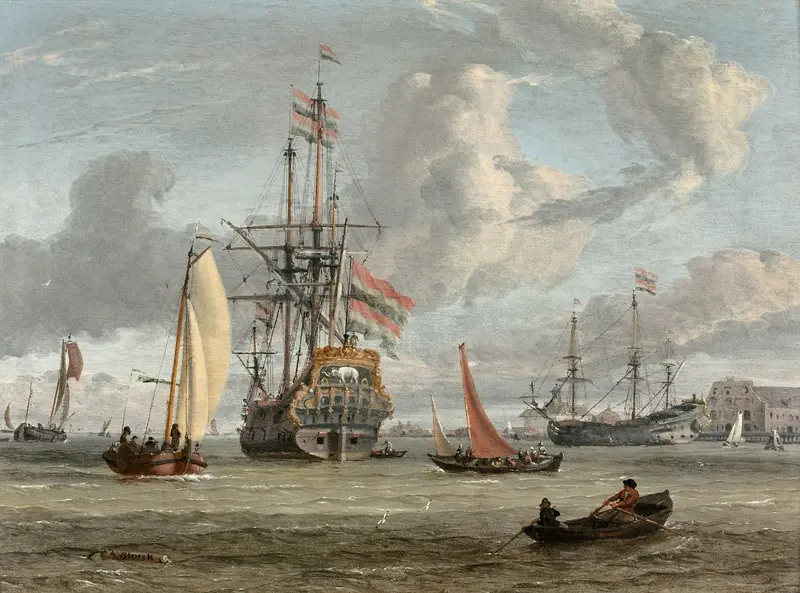
A haze of gunpowder and the flutter of flags catch the eye first, as the ships on the Y before Amsterdam seem to jostle and parade rather than do battle. The water is alive with movement: oared boats dart between the larger vessels, which are crowned with billowing sails and pennants. The artist, Abraham Storck, leads us through a spectacle of order and display, not chaos—each ship’s position carefully orchestrated, the plumes of smoke rising from cannon fire more ceremonial than threatening.
The low horizon gives the sky a commanding presence, its warm, ochre tones bathing the entire scene in the golden light of late afternoon, suggesting celebration rather than conflict. The city itself hovers in the distance, a dense silhouette anchoring the drama to a real and bustling Amsterdam. This kind of marine painting flourished in the Dutch Republic during the late seventeenth century, a period when naval might and mercantile pride were at their height. Works like this, painted between 1659 and 1708, were often commissioned by city officials, naval officers, or wealthy merchants eager to commemorate civic events and the prowess of their fleets.
The “sham-fight” or mock battle was a public spectacle, staged to impress, and paintings of such events served as lasting records of civic pride and maritime power. While history has kept few traces of this specific canvas’s early journey, it now resides in the collection documented by the RKD, a reminder of a world where the sea was both stage and lifeblood. Look again at the flags, the crowds, the careful choreography—each detail a testament to a city that lived by the water.
More Artworks by Abraham Storck

The Muscovite legation visiting Amsterdam, 29 August 1697
Abraham Storck
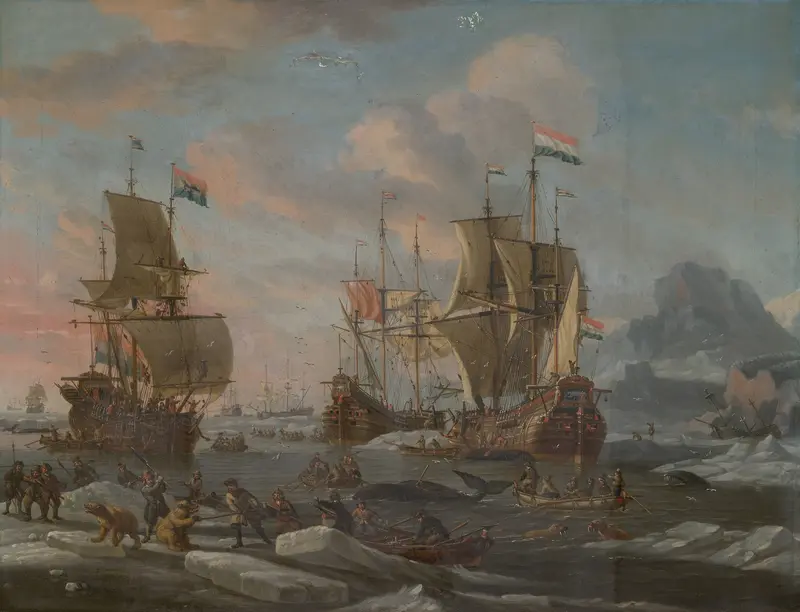
The Dutch Whaling Fleet
Abraham Storck
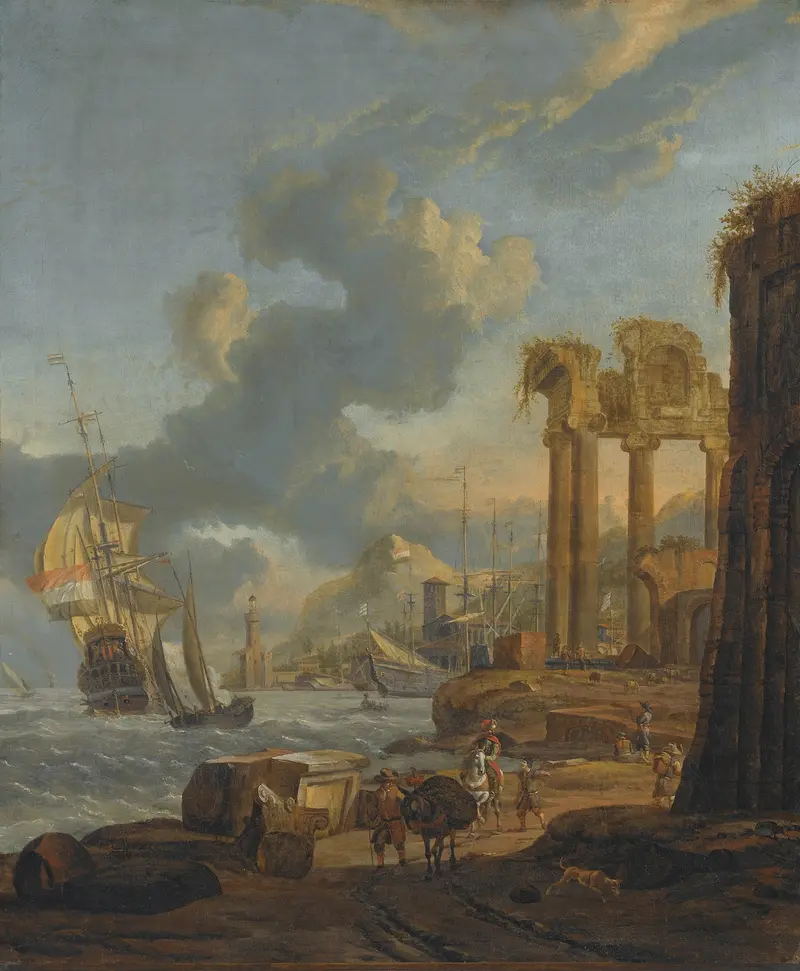
A Mediterranean Harbour Scene With Travellers On The Shore, A Dutch Man-Of-War On The Left
Abraham Storck
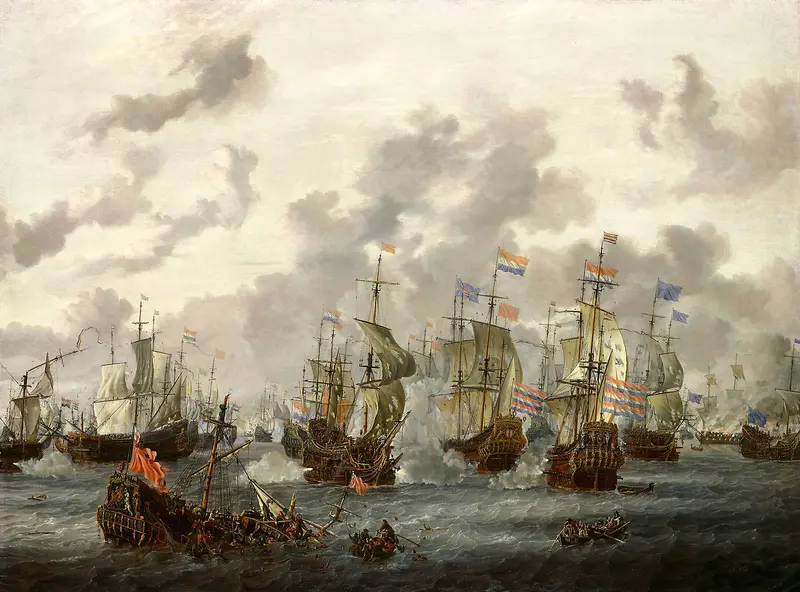
The Four Days’ Battle
Abraham Storck
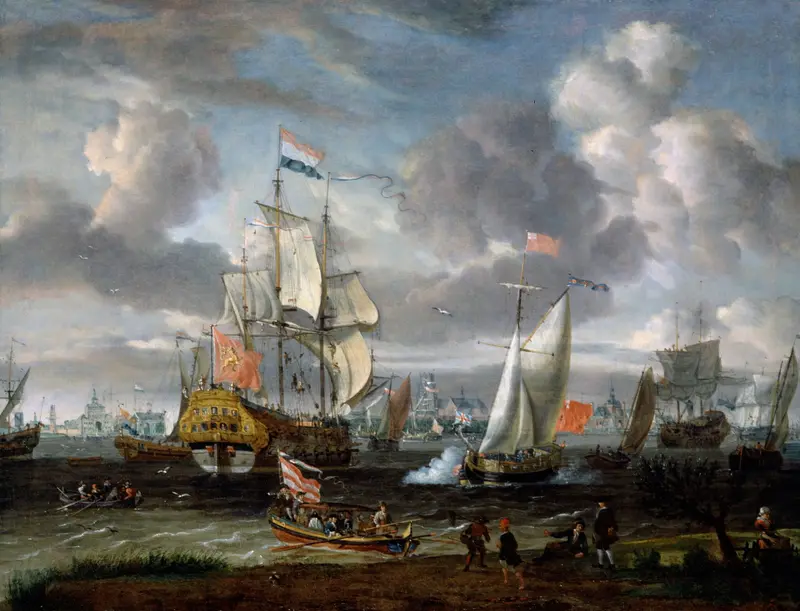
An English Yacht saluting a Dutch Man-of-War in the port of Rotterdam
Abraham Storck
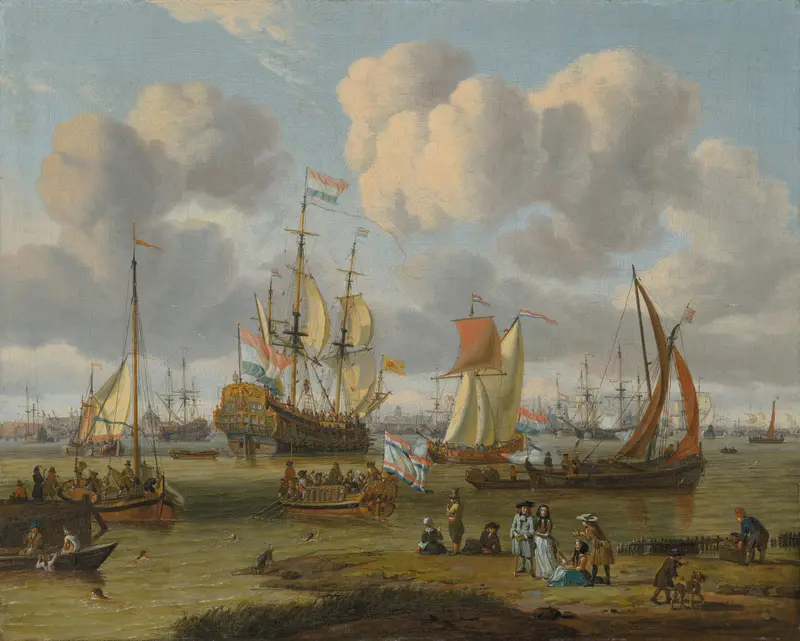
Shipping off Amsterdam with figures on a quay
Abraham Storck
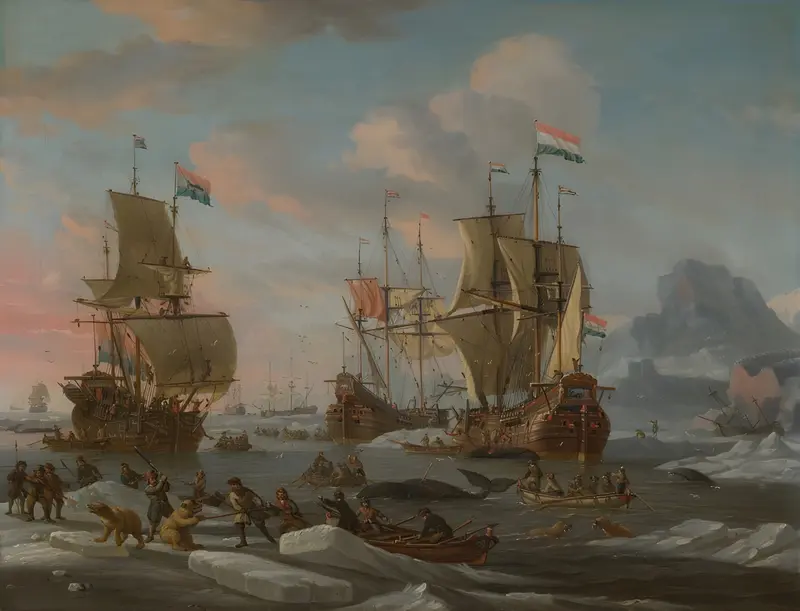
The Dutch Whaling Fleet
Abraham Storck
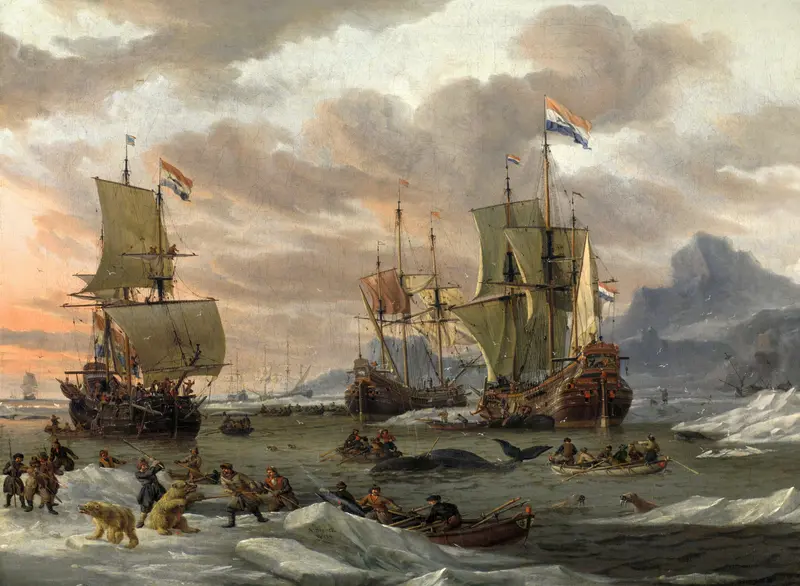
Whaling Grounds in the Arctic Ocean
Abraham Storck
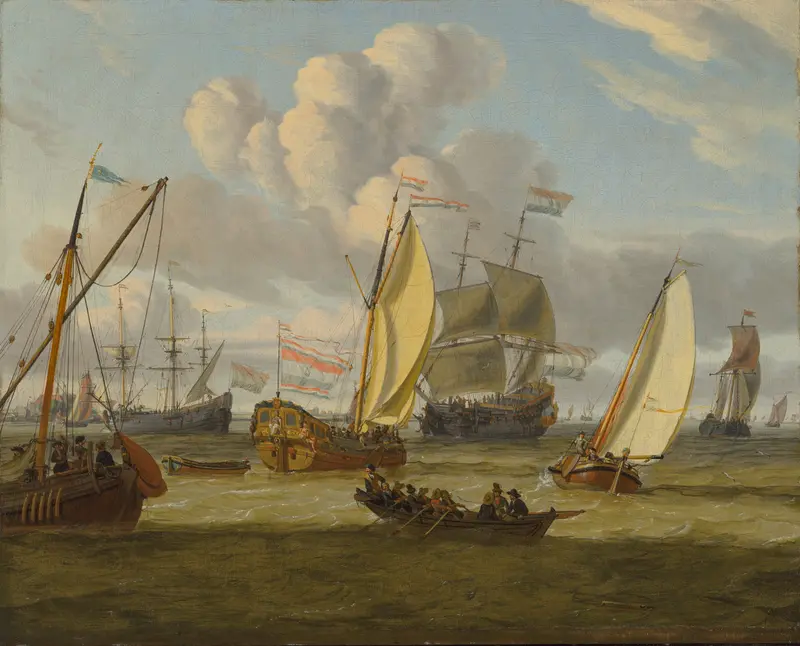
Shipping in an estuary
Abraham Storck
Grand navire de la couronne du Danemark près d’un littoral
Abraham Storck





