
A Mediterranean harbour with figures loading cargo, a mountain beyond — History & Facts
A shaft of Mediterranean light draws the eye first to the busy dockside, where figures in wide-brimmed hats and bright turbans labor around bales and barrels, caught in the act of loading cargo. The ruins of a grand, arched building stand sentinel at the water’s edge, their weathered stone framing the bustle below and hinting at a layered history—trade and empire, past and present, all in one glance. Sails catch the wind, their ochre tones echoing the golden tent on the quay, while a distant mountain rises, cool and blue, anchoring the scene in a sense of place that is both real and imagined.
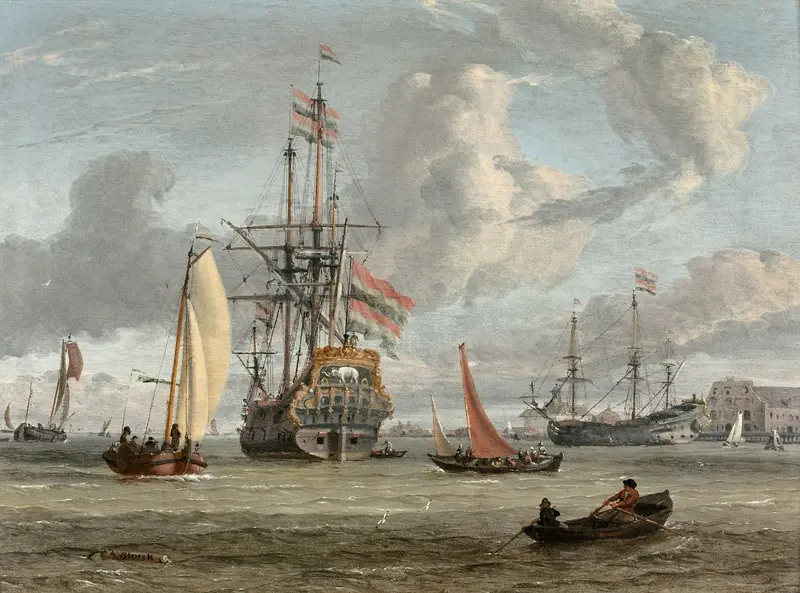
Every gesture—an arm raised, a head bent—signals the choreography of commerce, the daily theatre of arrival and departure. Storck’s composition leads the eye from the shadowed foreground rocks, across the sunlit figures, and out to the ships, inviting the viewer to step into this world of movement and anticipation. Works like this by Abraham Storck belong to a tradition of Dutch marine painting that flourished in the seventeenth century, when the Dutch Republic was a maritime power and its citizens were fascinated by distant ports. Such paintings were often commissioned by merchants or collectors eager to display their connection to the wider world, and they blend topographical detail with a touch of fantasy—Mediterranean harbours rendered through Northern eyes.
The source places this particular work in the orbit of Christie’s, but little else is recorded about its early journey. In the absence of a known date or commission, the painting stands as a testament to the era’s appetite for scenes of trade and travel, and to Storck’s skill in conjuring a harbour where every figure and vessel seems poised on the edge of a new story—one that begins again each time you look.
More Artworks by Abraham Storck

The Muscovite legation visiting Amsterdam, 29 August 1697
Abraham Storck
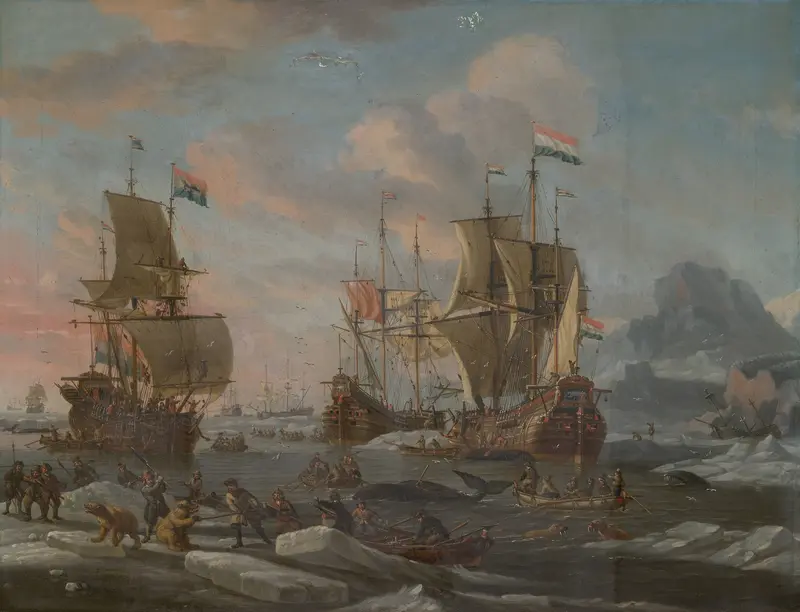
The Dutch Whaling Fleet
Abraham Storck
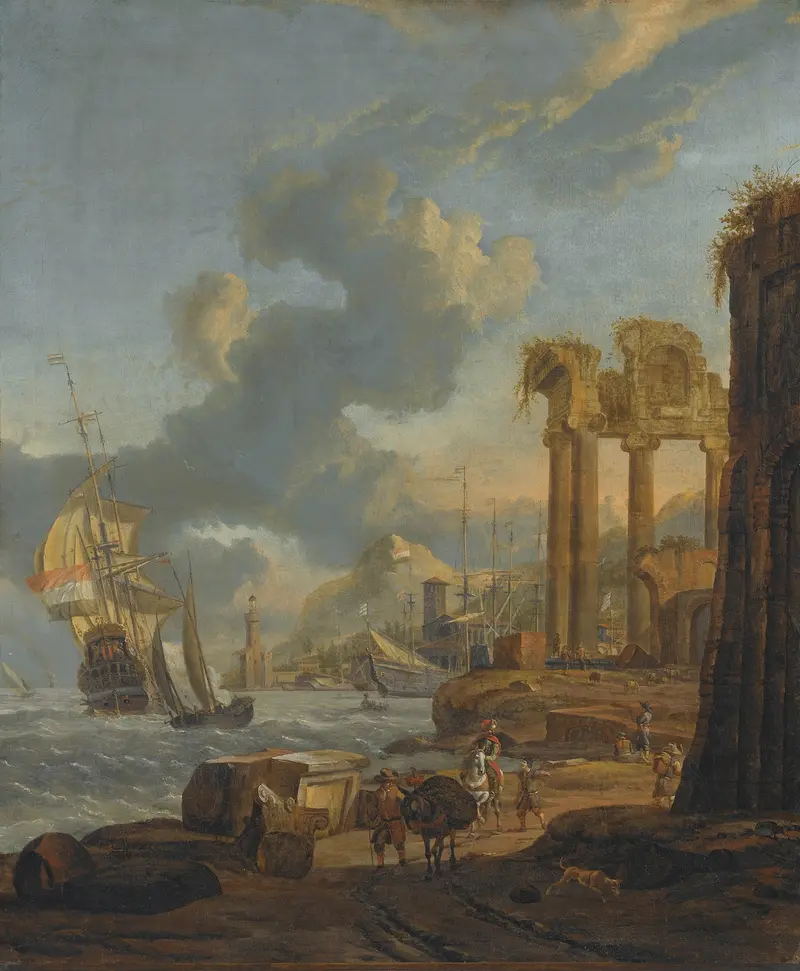
A Mediterranean Harbour Scene With Travellers On The Shore, A Dutch Man-Of-War On The Left
Abraham Storck
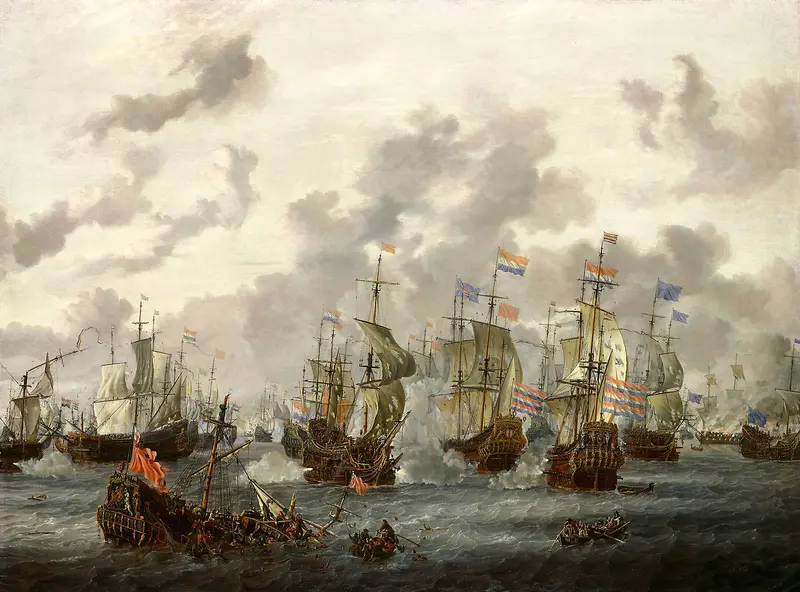
The Four Days’ Battle
Abraham Storck
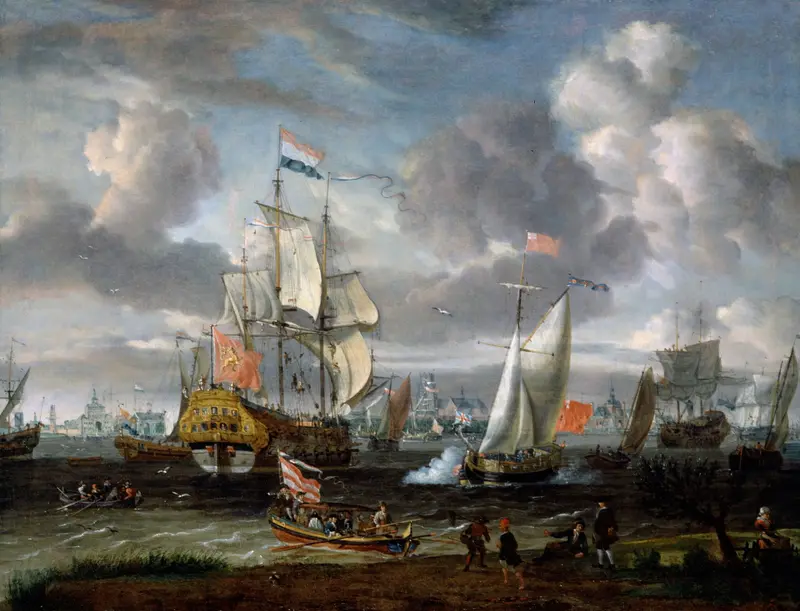
An English Yacht saluting a Dutch Man-of-War in the port of Rotterdam
Abraham Storck
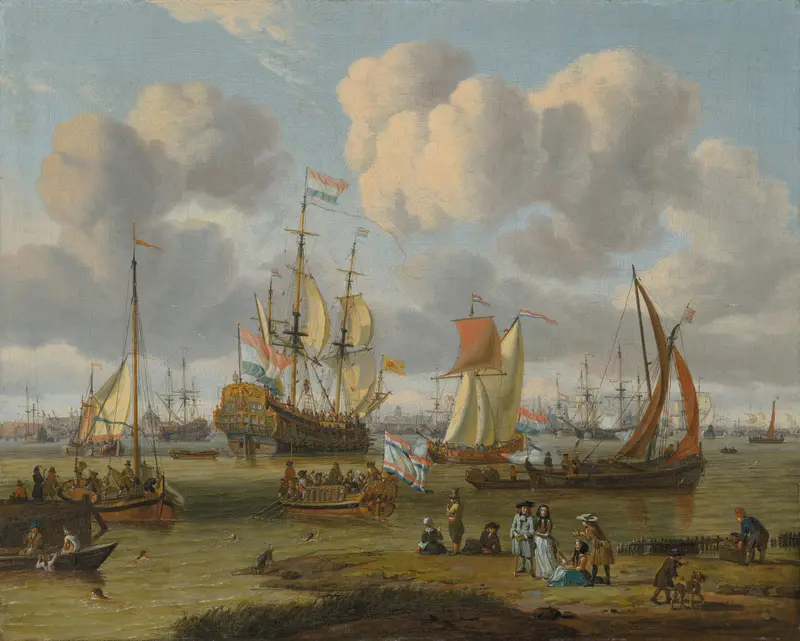
Shipping off Amsterdam with figures on a quay
Abraham Storck
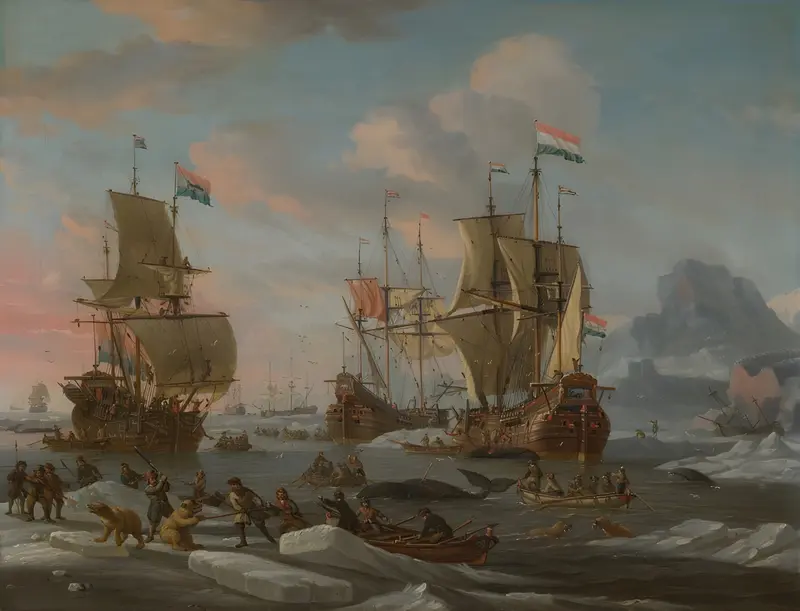
The Dutch Whaling Fleet
Abraham Storck
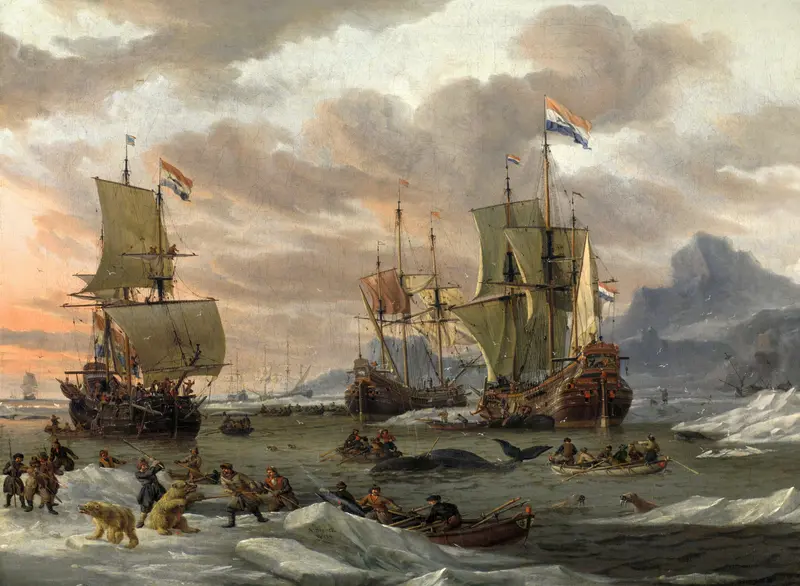
Whaling Grounds in the Arctic Ocean
Abraham Storck
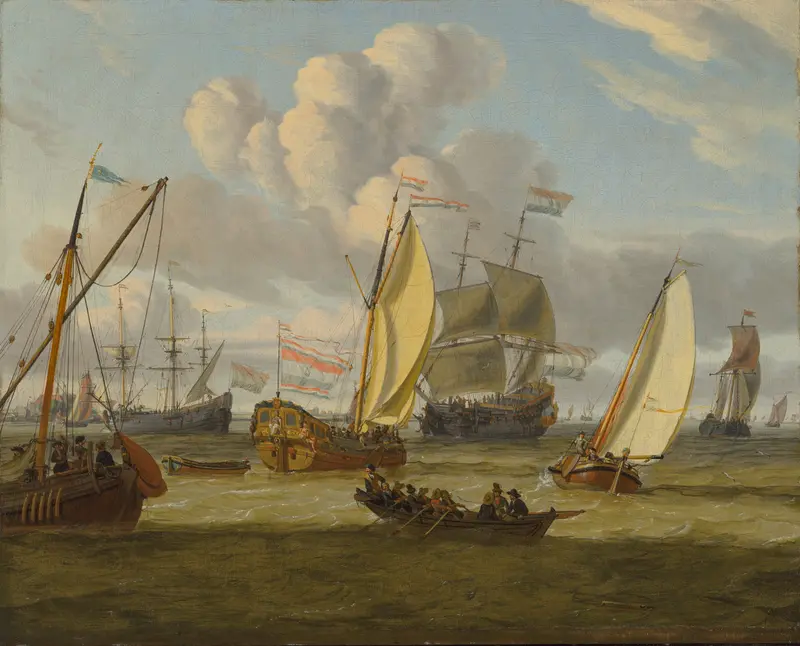
Shipping in an estuary
Abraham Storck
Grand navire de la couronne du Danemark près d’un littoral
Abraham Storck





