
A mediterranean port — History & Facts
What first catches the eye in A mediterranean port is the grand, sunlit dome rising above the bustle of daily life, as if the architecture itself presides over the harbor’s constant movement. The painter, Abraham Storck, orchestrates a lively stage: boats jostle for space, figures in bright attire gather in small knots, and the striped flag flutters crisply against a sky thick with rolling clouds. Light pours in from the left, striking the dome and the church façade, guiding the viewer’s gaze from the busy waterline up to the serene heights of stone and sky.
The palette is earthy and warm, with ochres and browns anchoring the scene, while the cool blue of the flag and the distant sails lend a sense of openness and sea air. Every gesture and grouping of figures hints at commerce, conversation, and the daily rituals of a port city, while the monumental architecture suggests a place where mercantile wealth and civic pride meet. Painted in 1675, this work belongs to the world of late seventeenth-century Dutch and Flemish artists who delighted in imagining Mediterranean harbors—places of exotic encounter, trade, and architectural fantasy. Such scenes were rarely records of real locations; rather, they were visions shaped by the tastes of Northern European patrons, who prized these paintings as windows onto a cosmopolitan, sun-drenched world.
Abraham Storck was known for his harbor views, blending careful observation with invention, and here he conjures a port that is both plausible and idealized. History has kept few traces of this particular painting’s journey, but its survival in a private collection today invites us to linger over the details: the play of sunlight, the sweep of the dome, and the sense of possibility at the water’s edge.
More Artworks by Abraham Storck

The Muscovite legation visiting Amsterdam, 29 August 1697
Abraham Storck
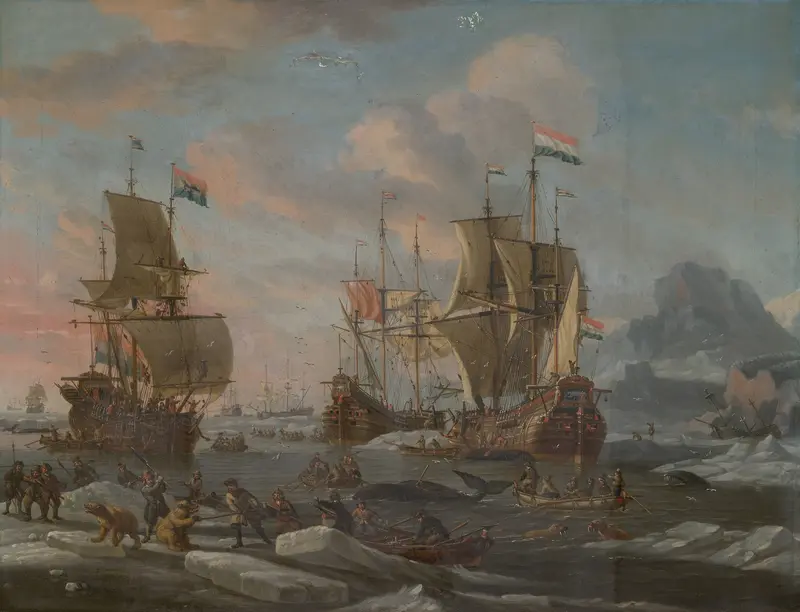
The Dutch Whaling Fleet
Abraham Storck
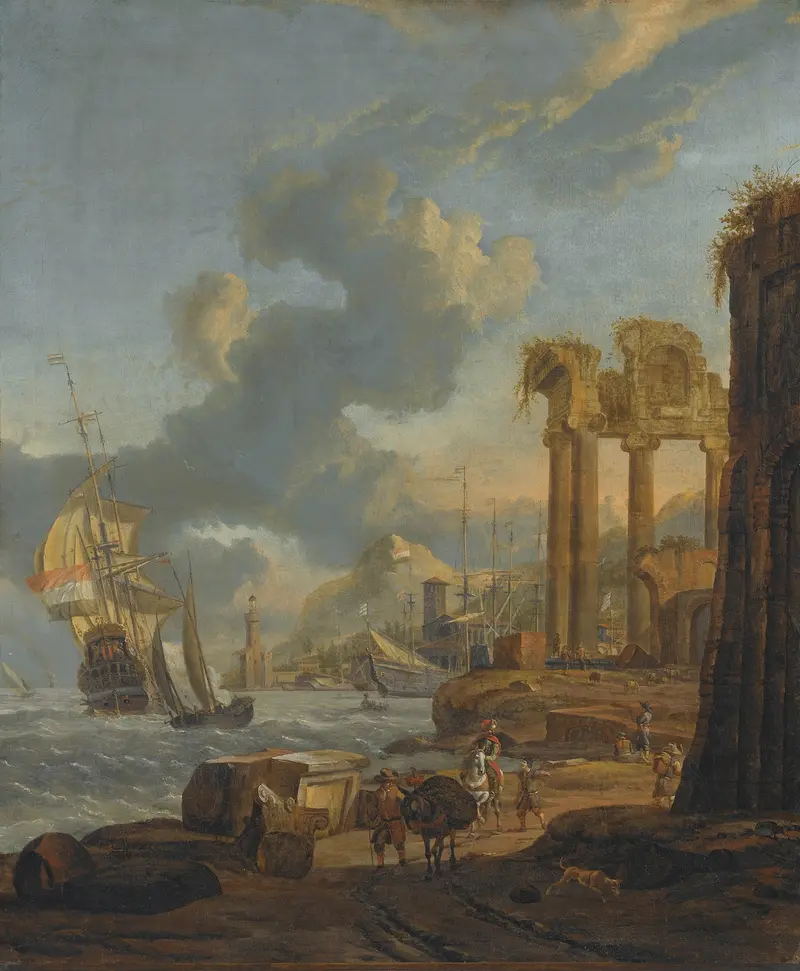
A Mediterranean Harbour Scene With Travellers On The Shore, A Dutch Man-Of-War On The Left
Abraham Storck
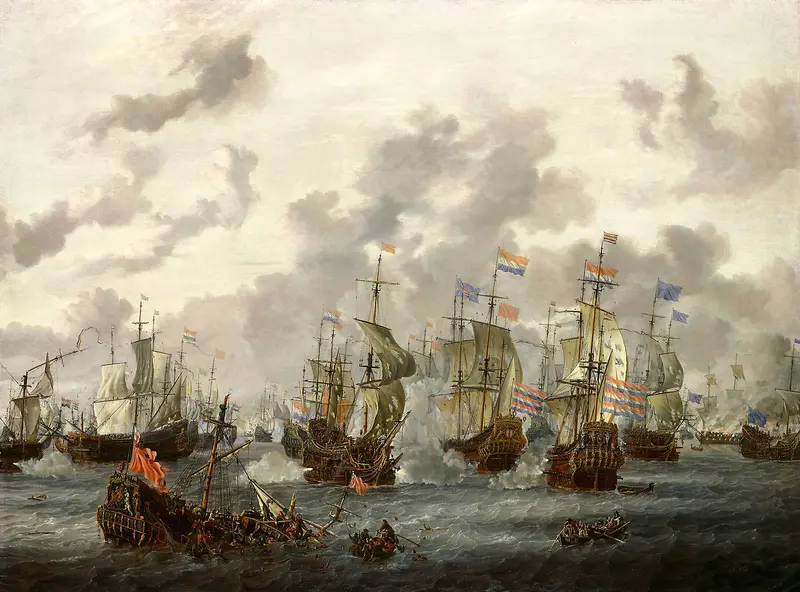
The Four Days’ Battle
Abraham Storck
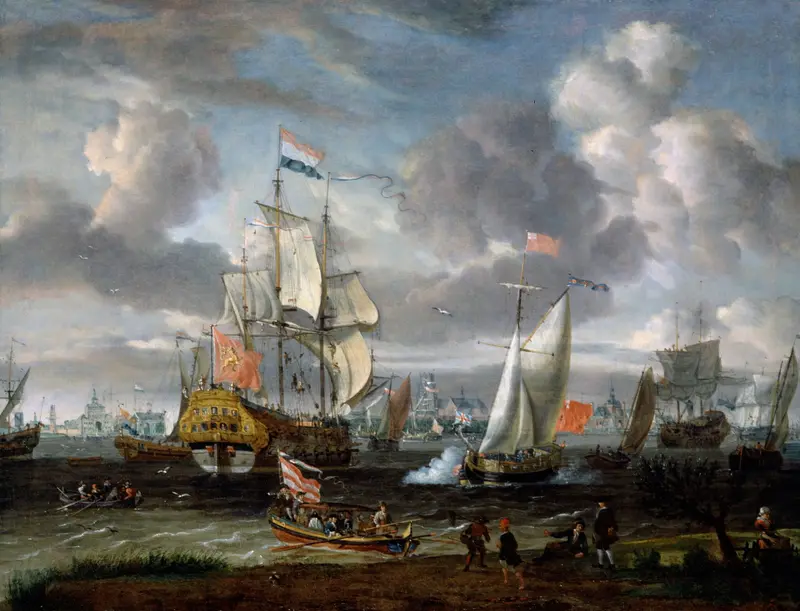
An English Yacht saluting a Dutch Man-of-War in the port of Rotterdam
Abraham Storck
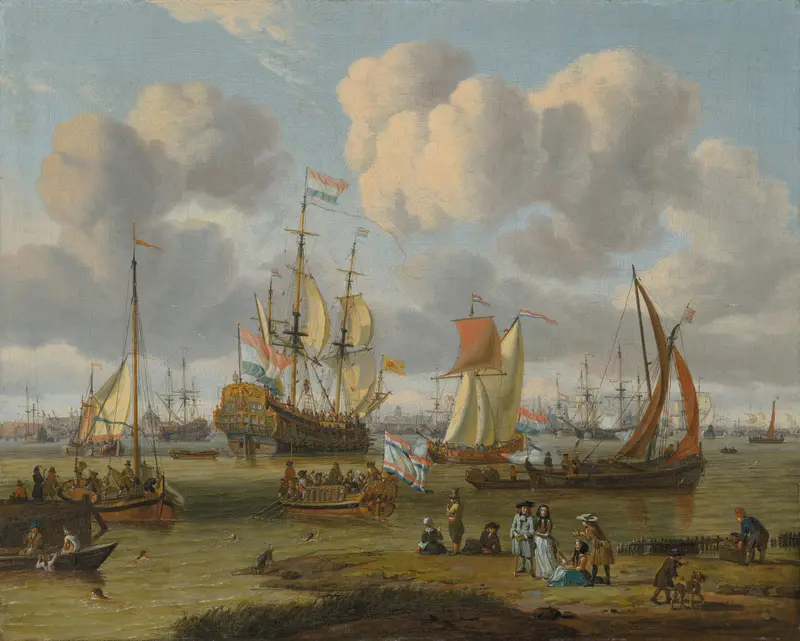
Shipping off Amsterdam with figures on a quay
Abraham Storck
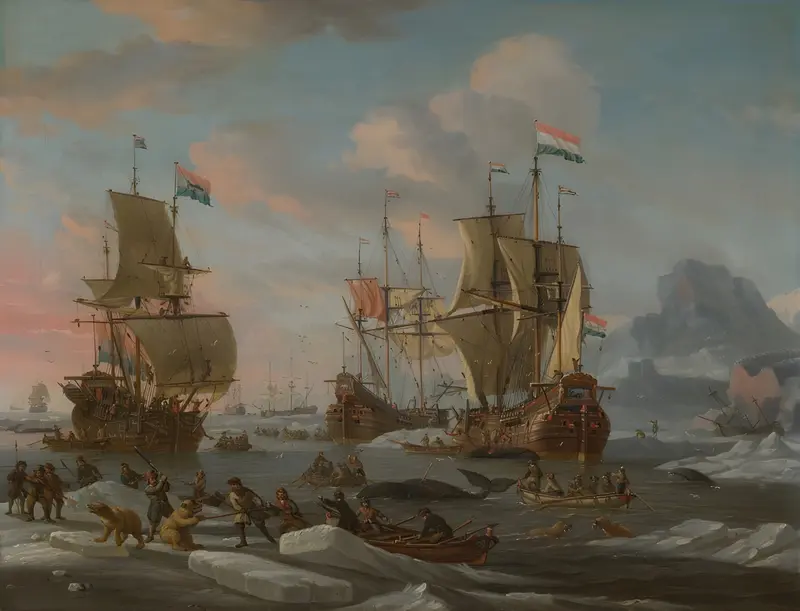
The Dutch Whaling Fleet
Abraham Storck
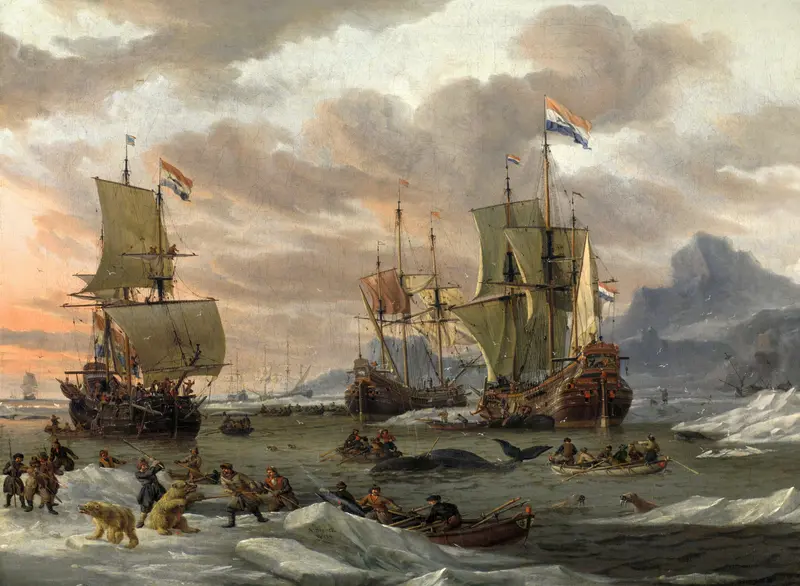
Whaling Grounds in the Arctic Ocean
Abraham Storck
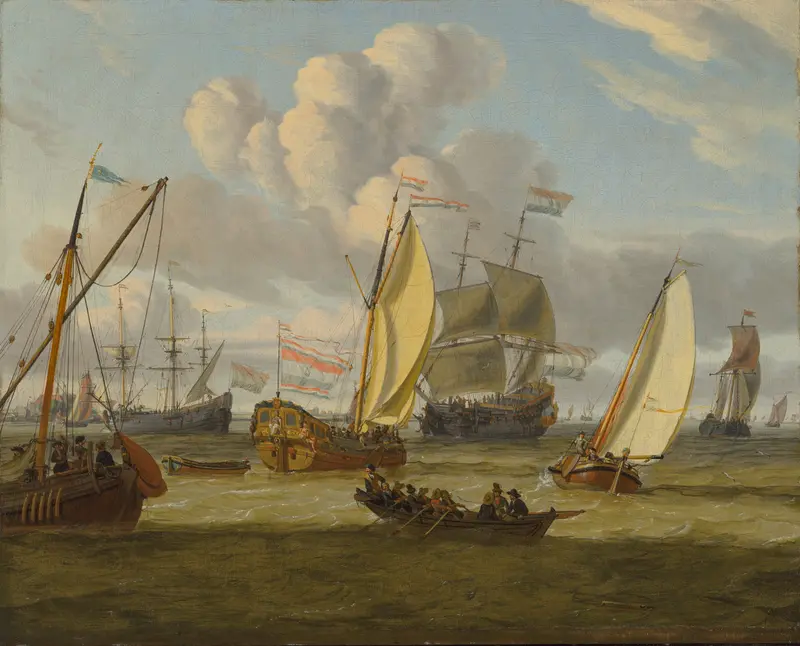
Shipping in an estuary
Abraham Storck
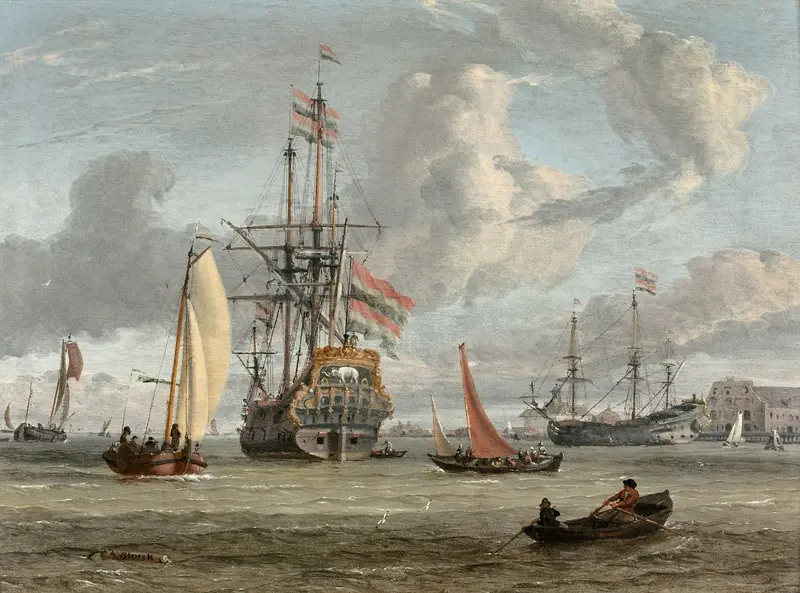
Grand navire de la couronne du Danemark près d’un littoral
Abraham Storck





