
A Moonlit Street — History & Facts
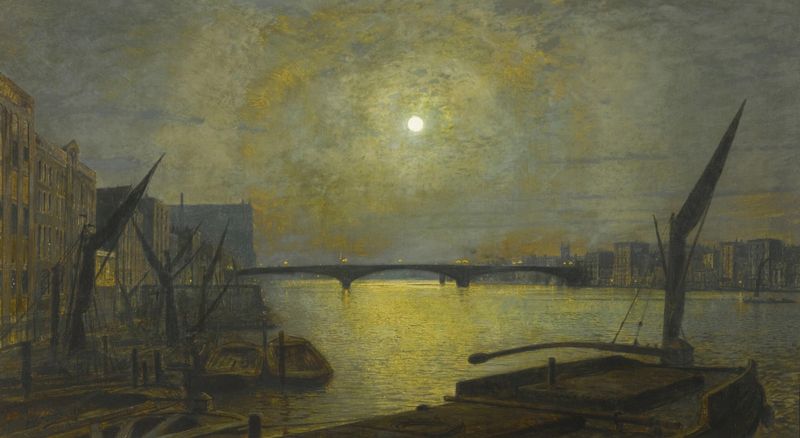
When did color learn to lie? In the depths of night, a street drenched in moonlight reveals secrets both haunting and beautiful. The soft glow beckons us to wander, yet an unsettling void lingers just beneath the surface, whispering of stories untold. Look to the left at the delicate interplay of light and shadow, where the moon casts a silvery sheen on cobblestones. The careful brushwork creates an almost tactile depth, inviting you to feel the chill of the night air.
Notice how the warm yellow light spills from the windows, contrasting sharply against the blue-green tones of the street, creating a visual dialogue that hints at life thriving just beyond the frame. Beneath the tranquil façade, a tension simmers. The solitary figure, shrouded in shadow, walks with a sense of purpose yet exudes an air of melancholy, suggesting a journey toward an uncertain destination. The vibrant reflections in the puddles serve as a reminder of the fleeting nature of this moment, where reality and dreams converge.
This balance of warmth and cold, presence and absence, mirrors the duality of human experiences—each step forward filled with both hope and doubt. In 1880, John Atkinson Grimshaw painted this work while living in Leeds, a time when the industrial revolution was reshaping the English landscape. His focus on nocturnal scenes marked him as a distinct voice in the Pre-Raphaelite movement, blending realism with a poetic sensibility. As he explored urban life under the moon's enchanting gaze, he captured not just a scene, but an emotion deeply rooted in the human condition.
More Artworks by John Atkinson Grimshaw
Browse all →
Under the Silvery Moonbeams
John Atkinson Grimshaw
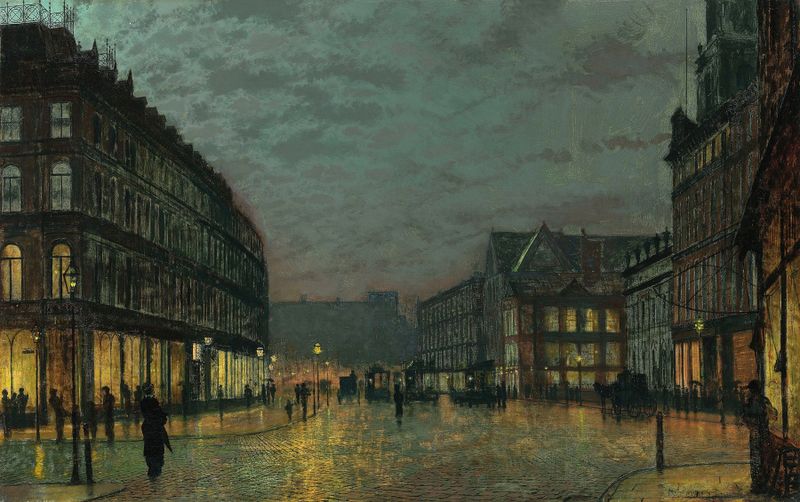
Boar Lane, Leeds by lamplight
John Atkinson Grimshaw
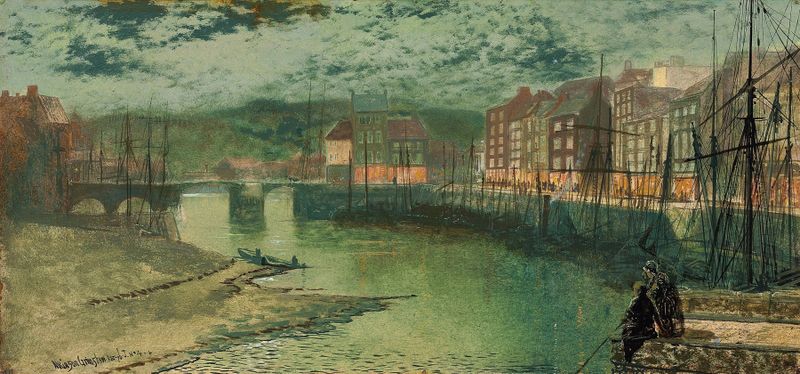
Whitby docks
John Atkinson Grimshaw

Old Chelsea
John Atkinson Grimshaw

Late October
John Atkinson Grimshaw
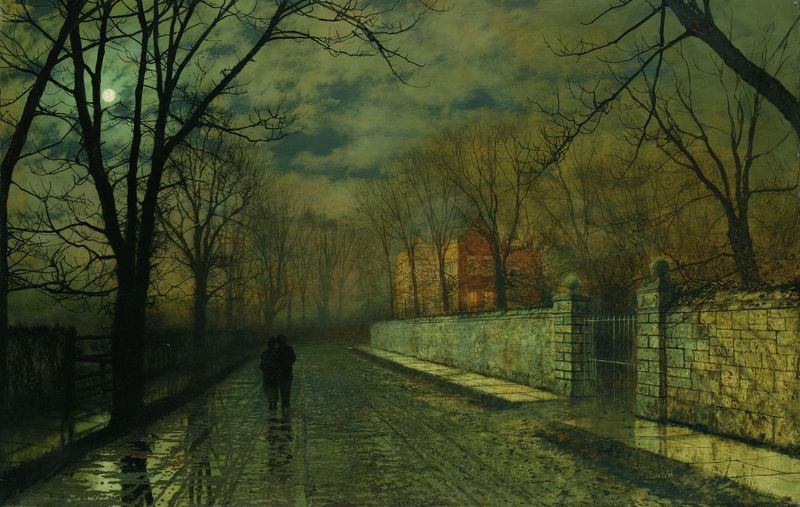
Figures In A Moonlit Lane After Rain
John Atkinson Grimshaw

Liverpool Lights
John Atkinson Grimshaw
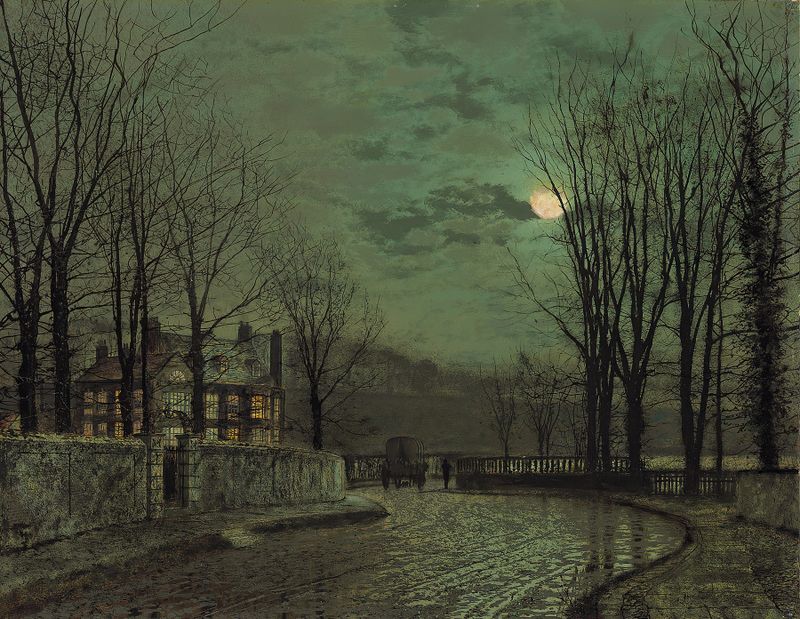
November Moonlight
John Atkinson Grimshaw
Southwark Bridge from Blackfriars by Moonlight
John Atkinson Grimshaw

Whitby From Scotch Head, Moonlight On The Esk
John Atkinson Grimshaw





