
A mountain landscape with creek — History & Facts
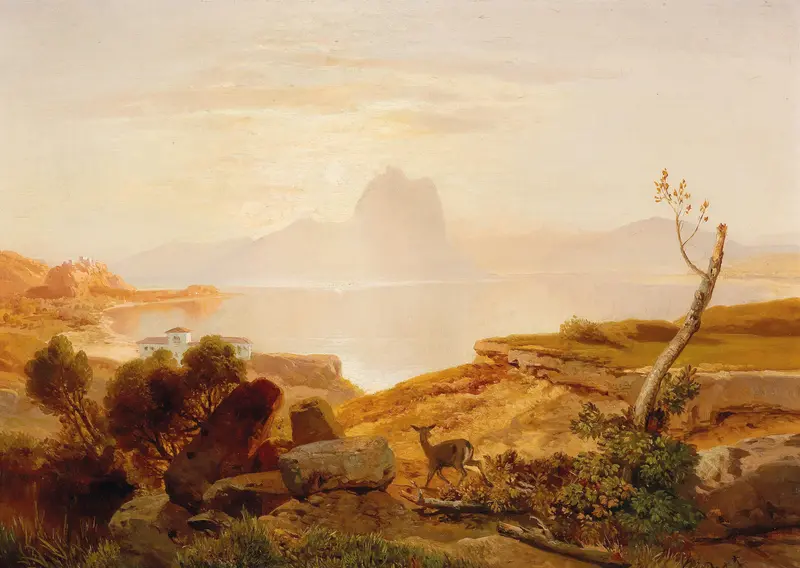
The eye is drawn first to the improbable boulder, perched like a monument at the heart of the landscape, its pale surface catching the morning light. Around it, the creek tumbles over rocks and fallen trunks, its swirling waters rendered with a precision that almost lets you hear their rush. Pines lean at angles shaped by wind and time, their silhouettes sharp against the haze of distant peaks.
The artist’s palette moves from the sunlit golds and greens of the foreground to the cool, receding blues of the mountains, guiding the viewer’s gaze upward and back, deeper into the world of the painting. This careful orchestration of space and color transforms a quiet mountain scene into something quietly dramatic, inviting the viewer to imagine the slow, relentless forces that shaped this place. Painted in 1838 by Albert August Zimmermann, this mountain landscape belongs to a moment when artists across Europe were turning their attention to nature’s grandeur and intricacy. Such works were often commissioned by collectors eager to bring the awe of distant vistas into their homes, or painted for exhibitions that celebrated the beauty of the natural world.
While history has kept few traces of this particular painting’s journey, its presence today in the Dorotheum collection speaks to the enduring appeal of nineteenth-century landscape art. The world it comes from was one of discovery—of mountains newly mapped, of geology and botany coming into their own—and Zimmermann’s careful observation rewards anyone willing to linger before the canvas.
More Artworks by Albert August Zimmermann
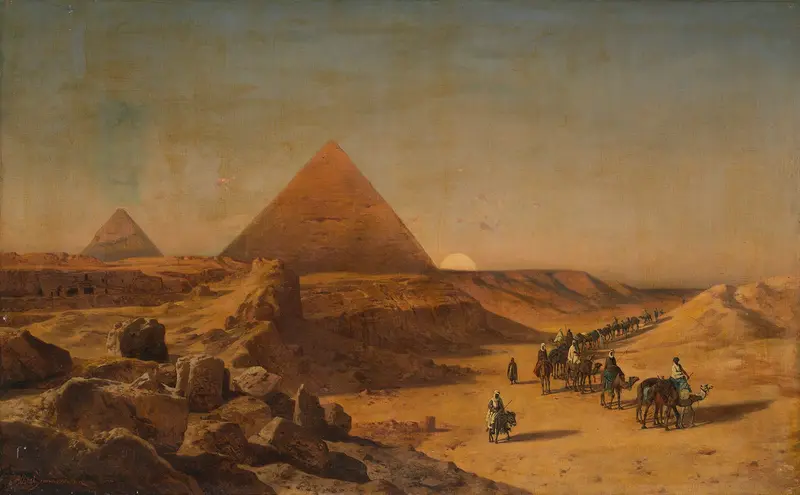
Pyramids
Albert August Zimmermann

Schwäbische Alb
Albert August Zimmermann
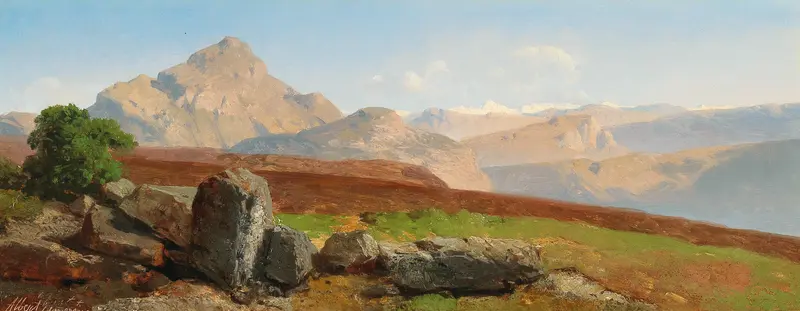
Mountain Landscape
Albert August Zimmermann
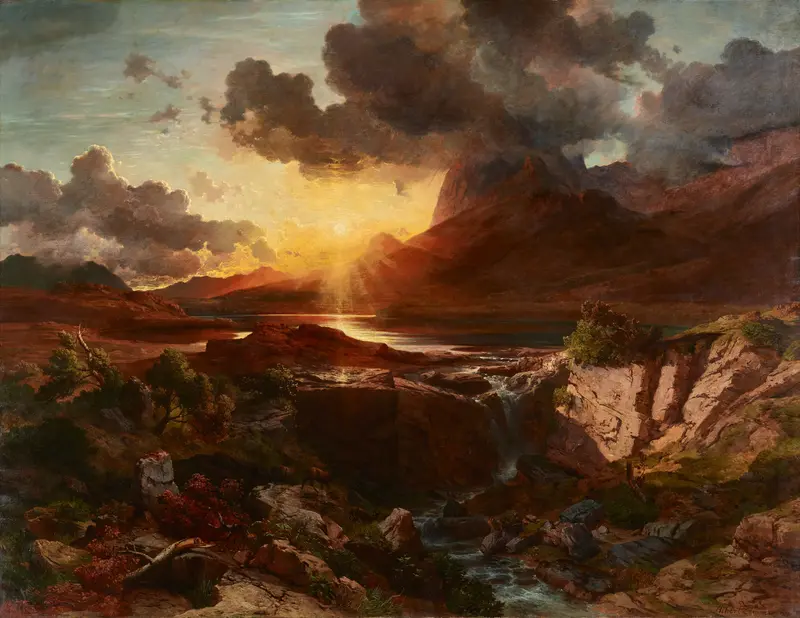
Sonnenuntergang am Hintersee in Berchtesgaden 13 Österreichische Galerie Belvedere
Albert August Zimmermann
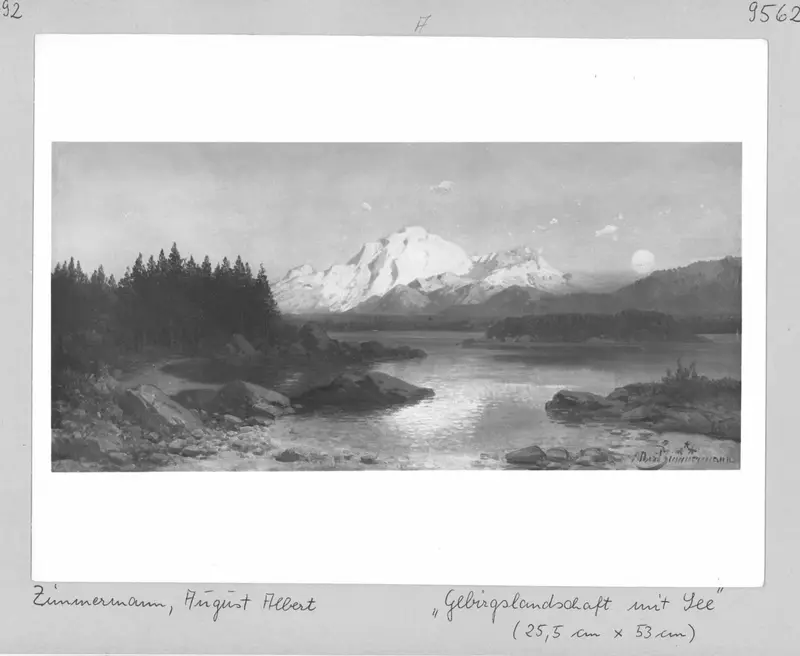
Mountain-landscape with lake
Albert August Zimmermann
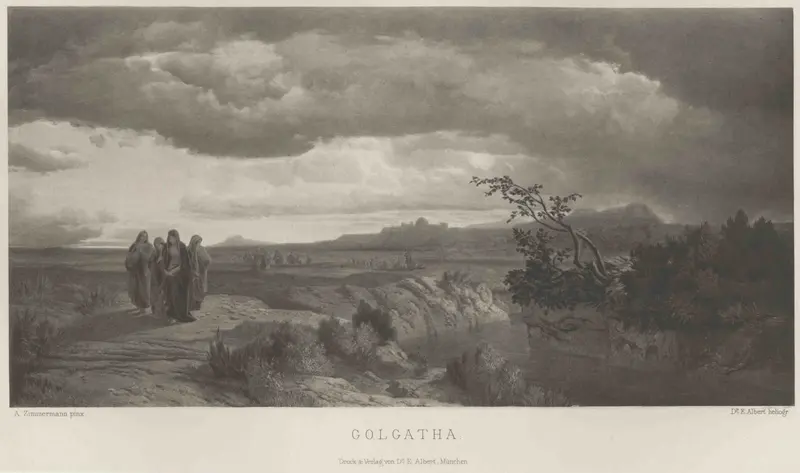
Golgatha
Albert August Zimmermann
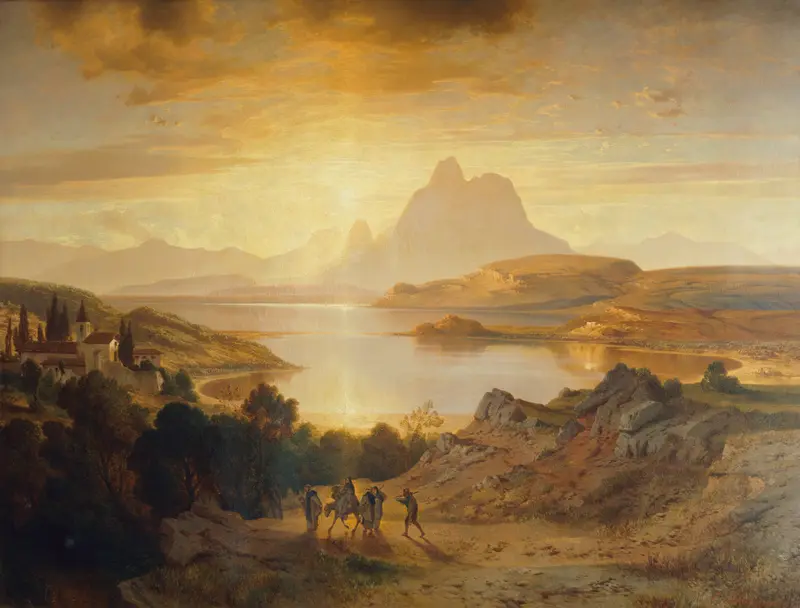
Lago di Lugano 65 Österreichische Galerie Belvedere
Albert August Zimmermann
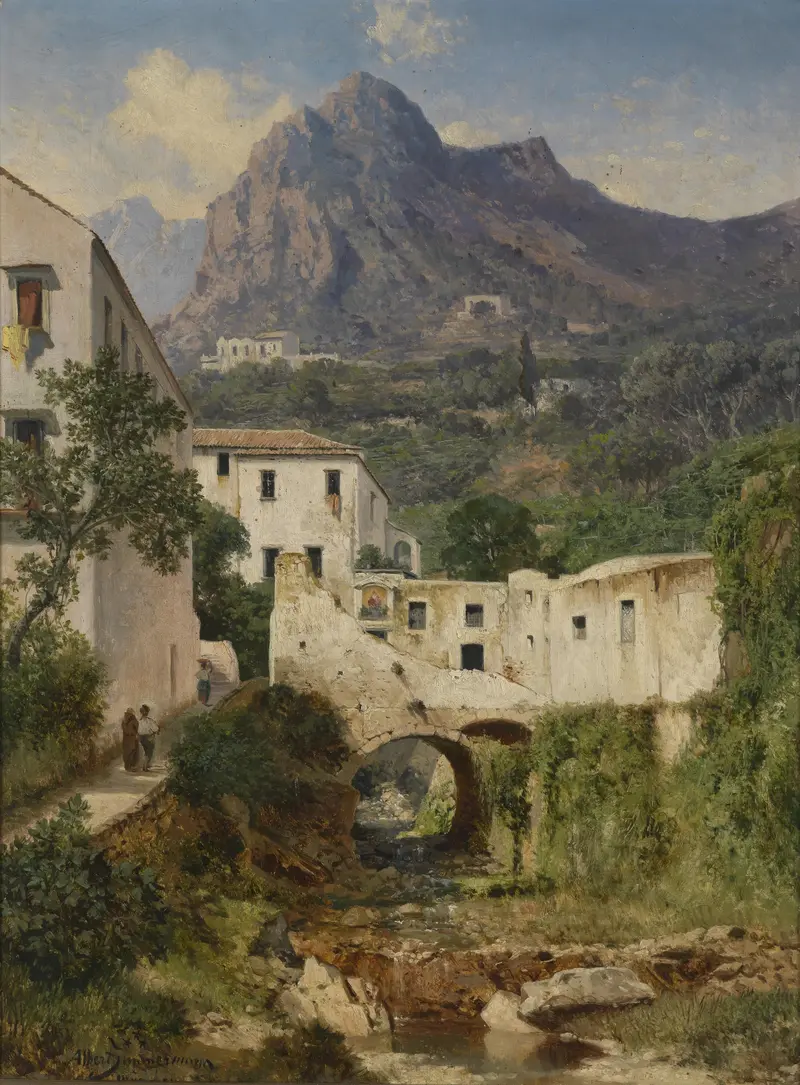
Mühltal bei Amalfi
Albert August Zimmermann
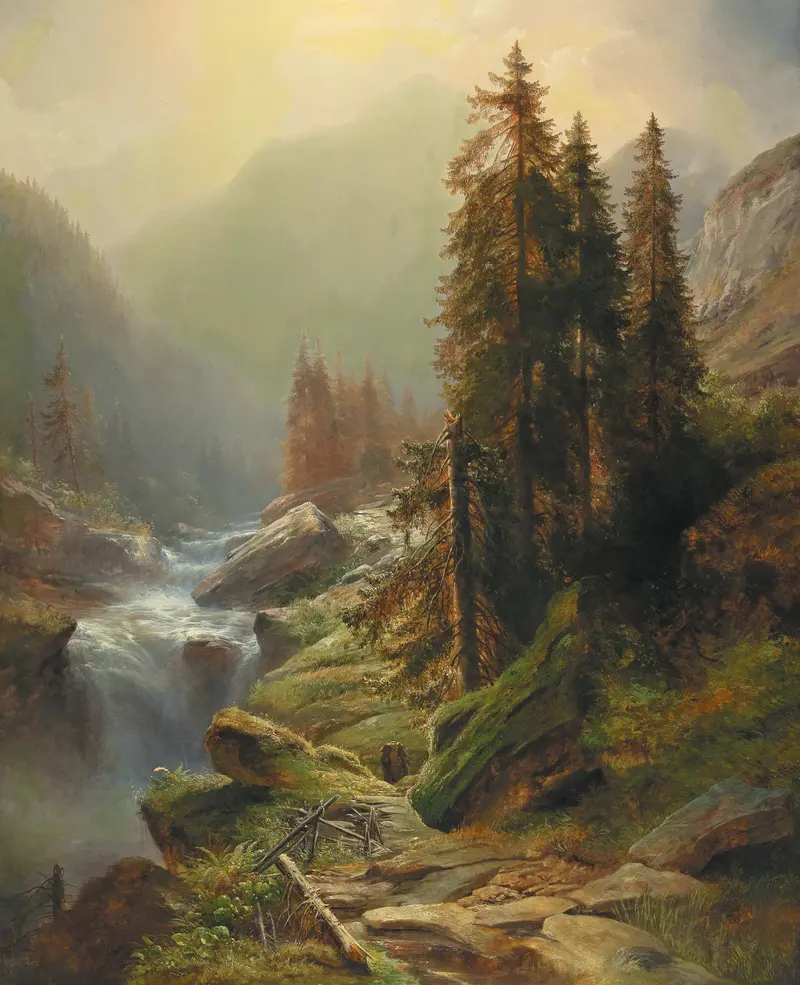
Large Mountain Landscape
Albert August Zimmermann
Partie am Como See
Albert August Zimmermann
More Landscape Art

The Starry Night
Vincent van Gogh

View of Delft
Johannes Vermeer

Water Lilies
Claude Monet

The Grand Canal, Venice, looking north-west from the Ca' Corner to the Ca' Contarini degli Scrigni, with the campanile of Santa Maria della Carità
Canaletto

Windsor Castle
Canaletto

The Grand Canal looking North-East from the Palazzo Dolfin-Manin to the Rialto Bridge
Canaletto