
A Pig Belongs in the Sty — History & Facts
In A Pig Belongs in the Sty, Jan Steen presents a lively domestic scene filled with vibrant colors. The painting features a pig prominently in the foreground, surrounded by figures engaged in daily activities. The warm tones of the interior contrast with the earthy colors of the pig, creating a sense of harmony.
The setting is bustling, reflecting the lively atmosphere of a household in the Dutch Golden Age. The painting is executed in oil on canvas, a common medium during the Dutch Golden Age. Viewers can observe the detailed brushwork that brings texture to the pig's fur and the various objects in the room. The composition is dynamic, with figures arranged in a way that draws the eye throughout the scene.
Steen's use of light enhances the realism, illuminating the characters and their environment. Jan Steen was known for his humorous and often moralistic genre scenes, and A Pig Belongs in the Sty exemplifies this style. Steen often included animals in his works to symbolize human behavior and societal norms. This painting not only entertains but also invites viewers to reflect on the nature of domestic life.
Interestingly, the title suggests a deeper commentary on the roles and responsibilities within a household.
More Artworks by Jan Steen

The Family Concert
Jan Steen

The Fish Market at Leyden
Jan Steen
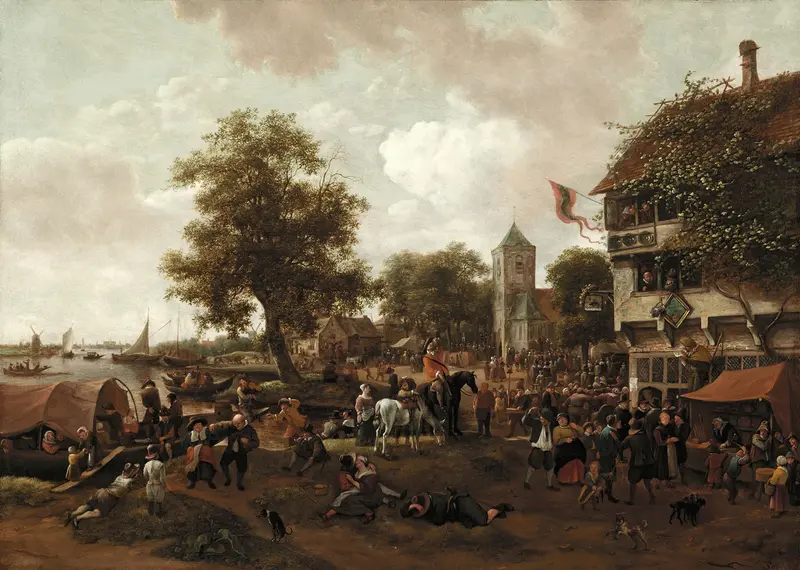
The Fair at Oegstgeest
Jan Steen
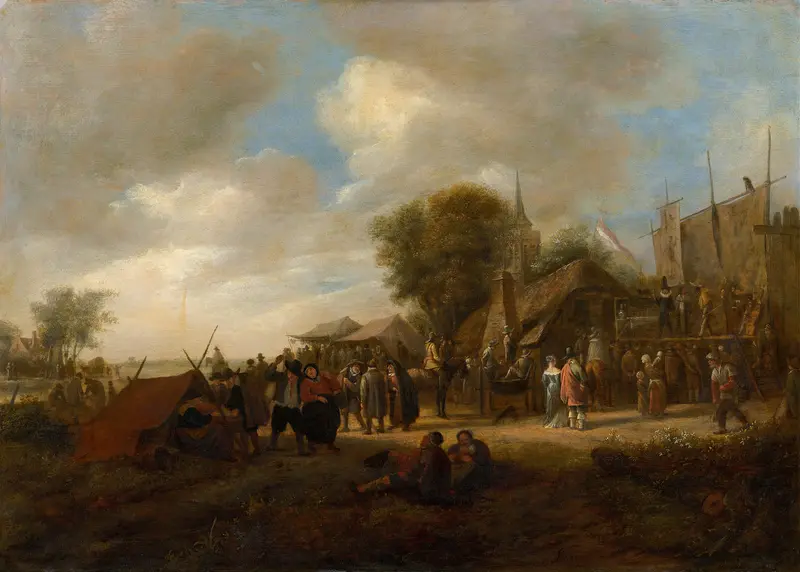
Village Fair
Jan Steen
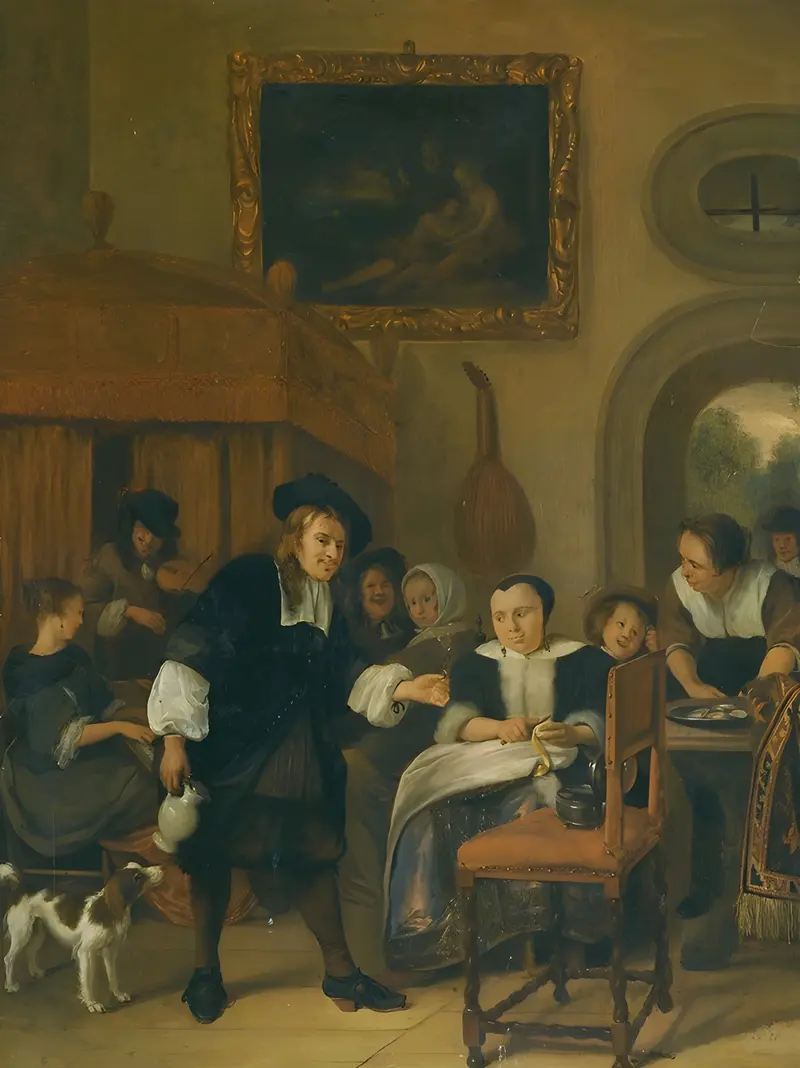
A Gentleman Offering A Lady A Glass Of Wine With A Couple Making Music And Other Townsfolk In An Interior
Jan Steen

The Dancing Lesson
Jan Steen
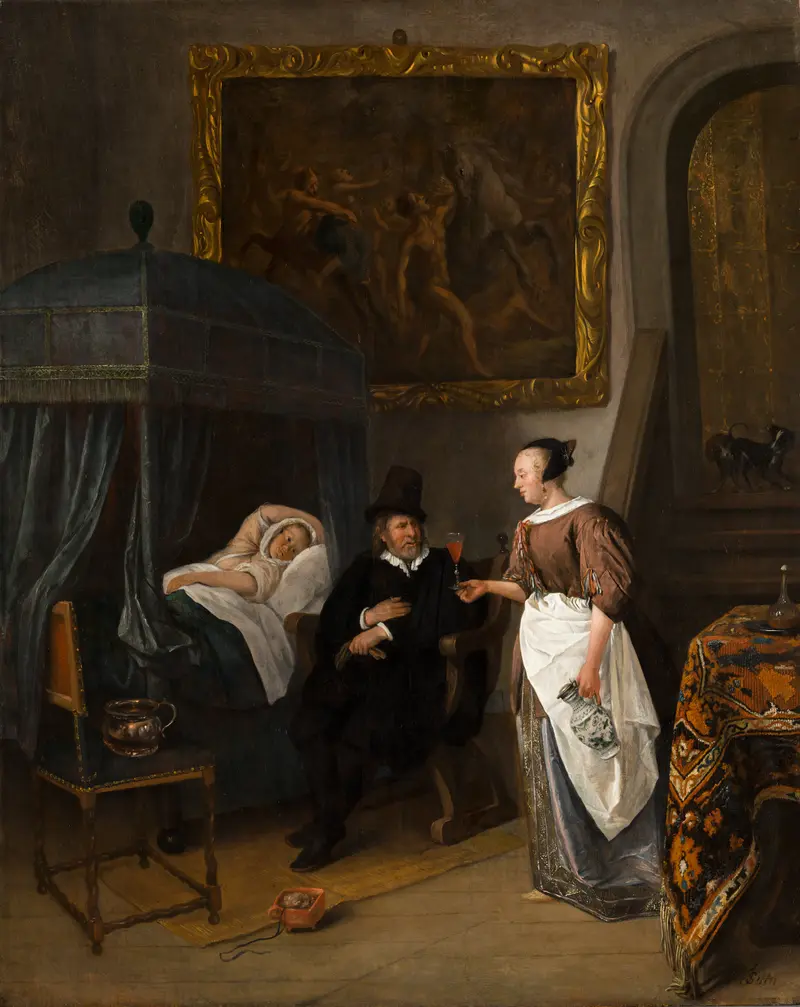
The Doctor’s Visit
Jan Steen
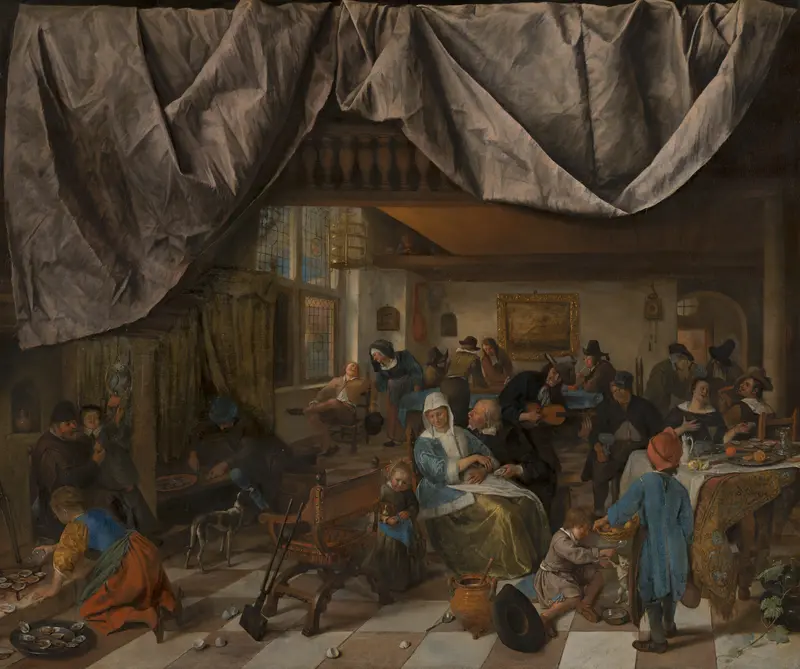
The Life of Man
Jan Steen
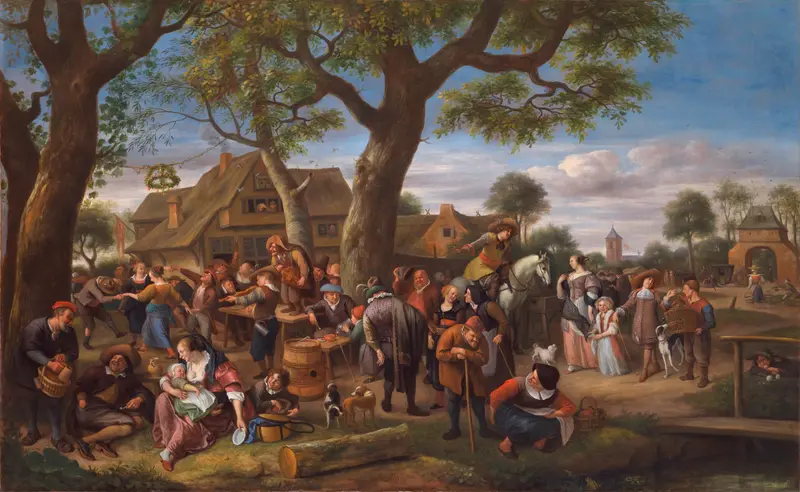
Peasants Merrymaking Outside an Inn
Jan Steen
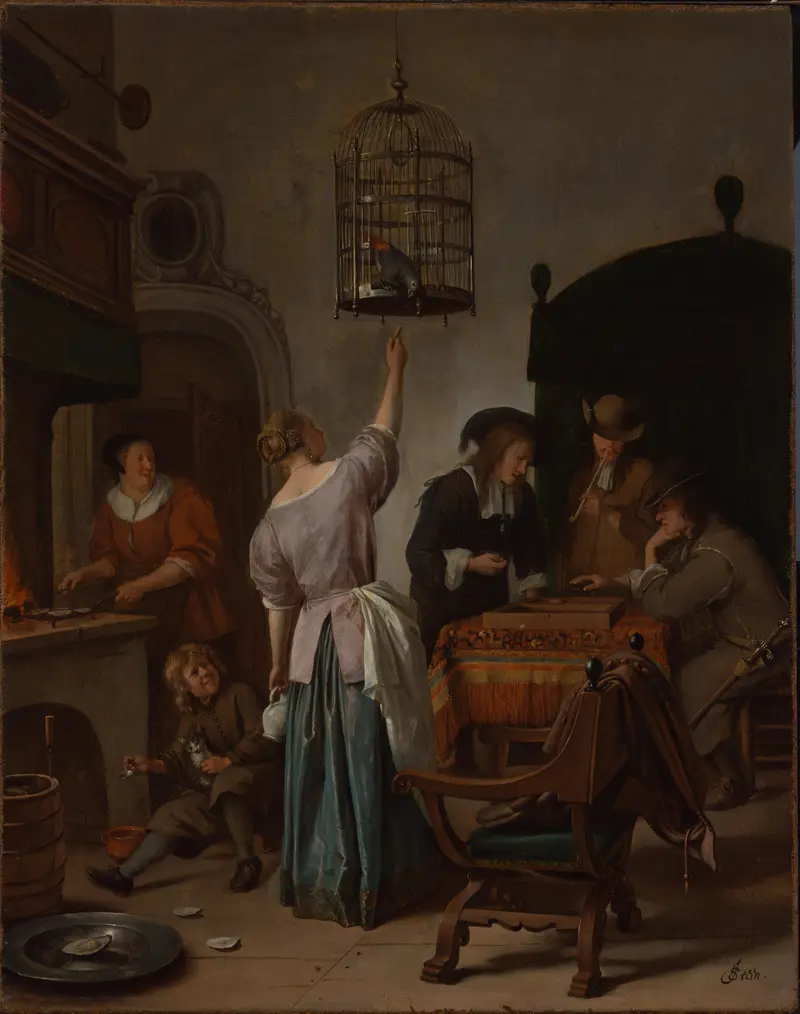
Interior with a Woman Feeding a Parrot, Known as ‘The Parrot Cage’
Jan Steen
More Genre Scene Art

Banquet of the Officers of the St George Civic Guard
Frans Hals

Rembrandt and Saskia in the Scene of the Prodigal Son
Rembrandt van Rijn

Bal du moulin de la Galette
Pierre-Auguste Renoir

Quadrille at the Moulin Rouge
Henri de Toulouse-Lautrec

A Burial at Ornans
Gustave Courbet

When Will You Marry?
Paul Gauguin