A river landscape with elegant travelers and a beggar in a dune landscape — History & Analysis
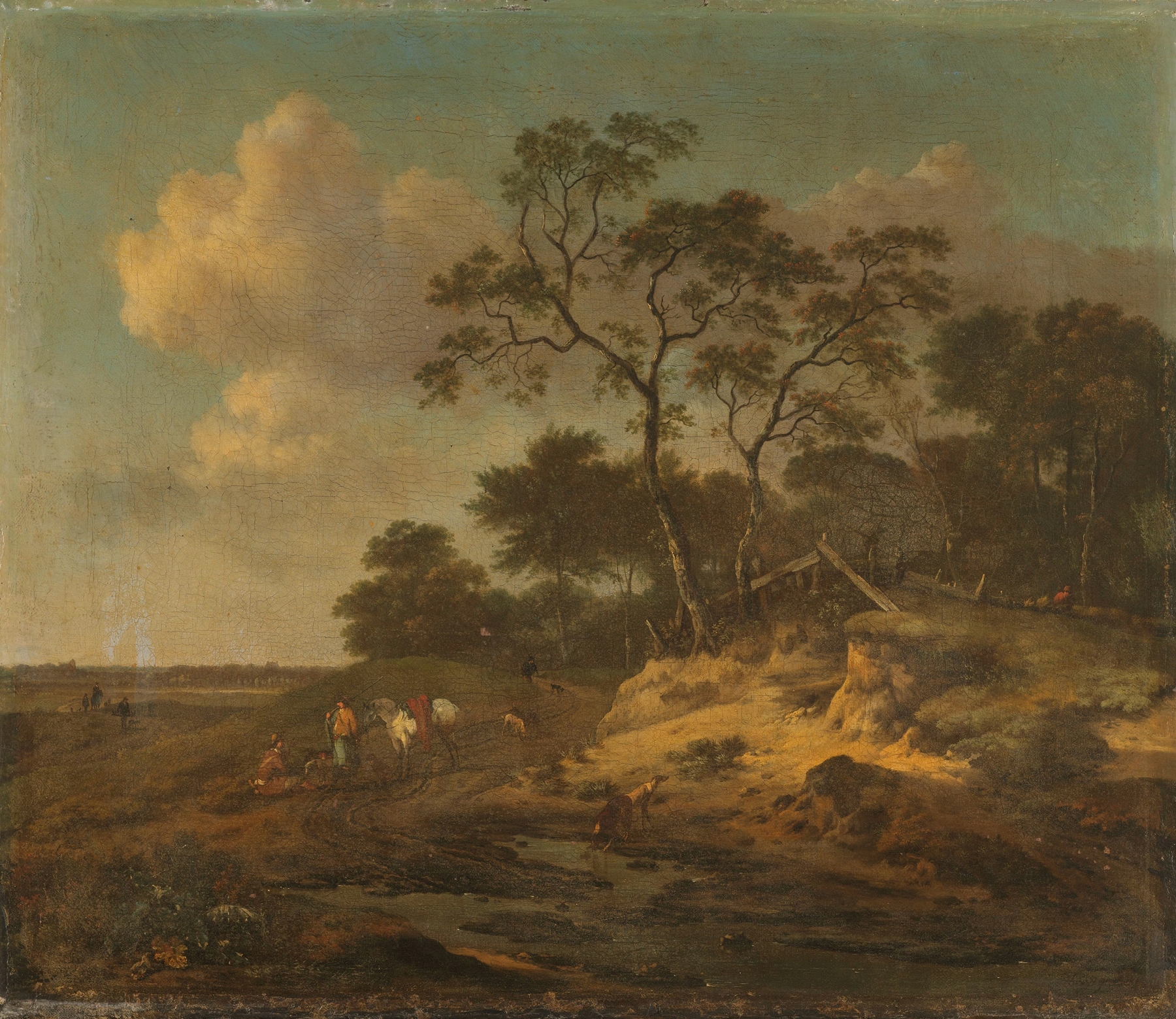
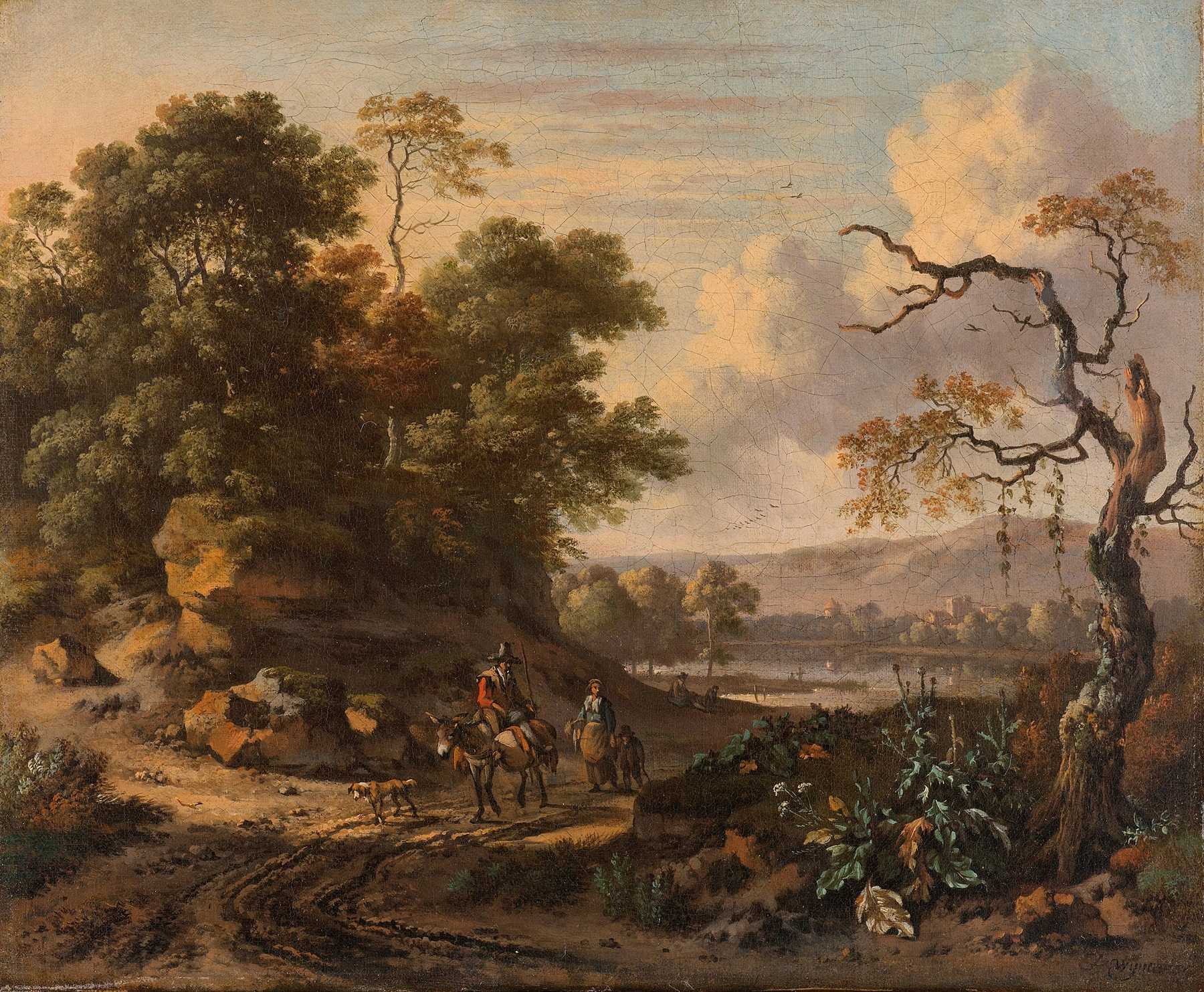
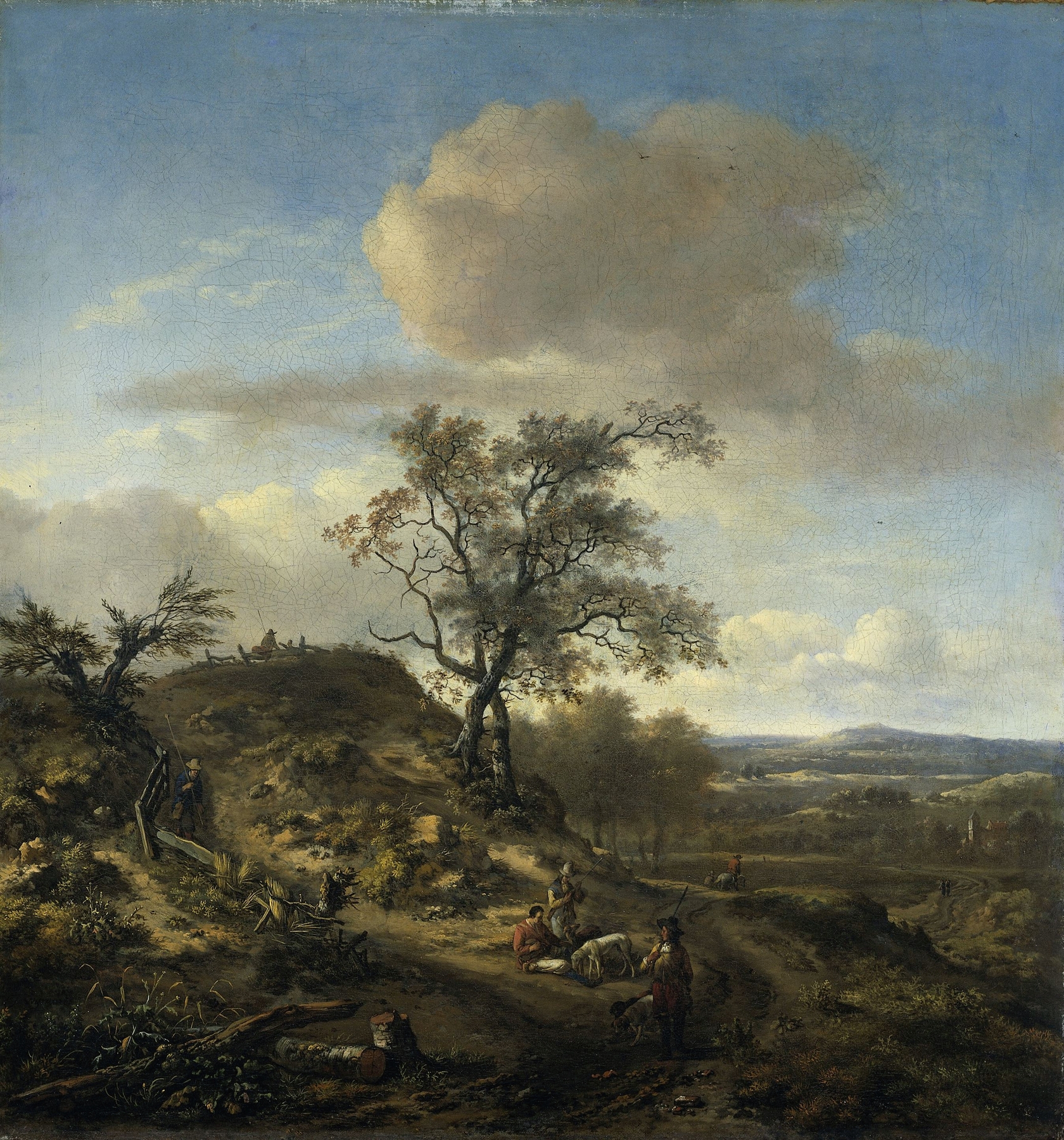
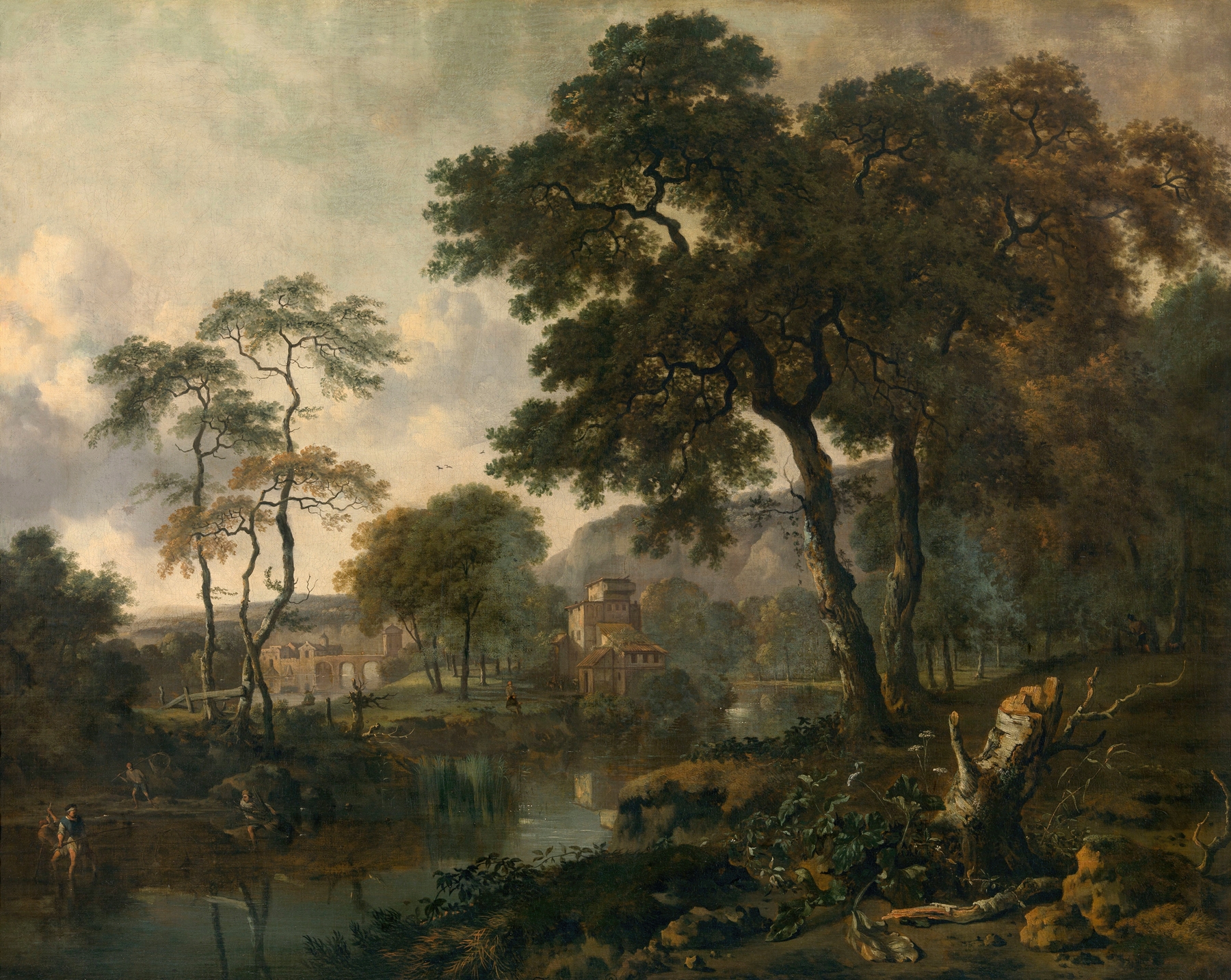
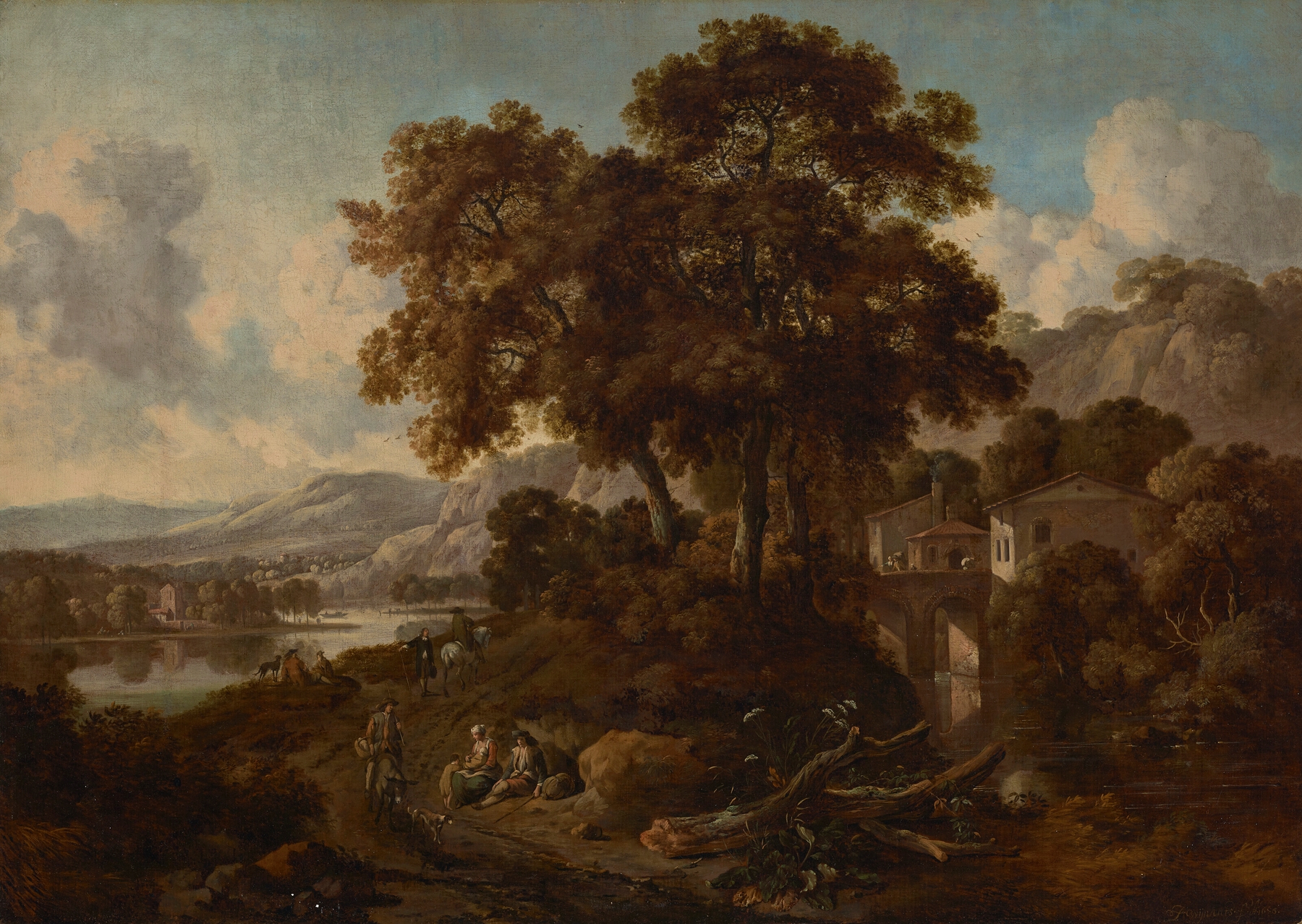
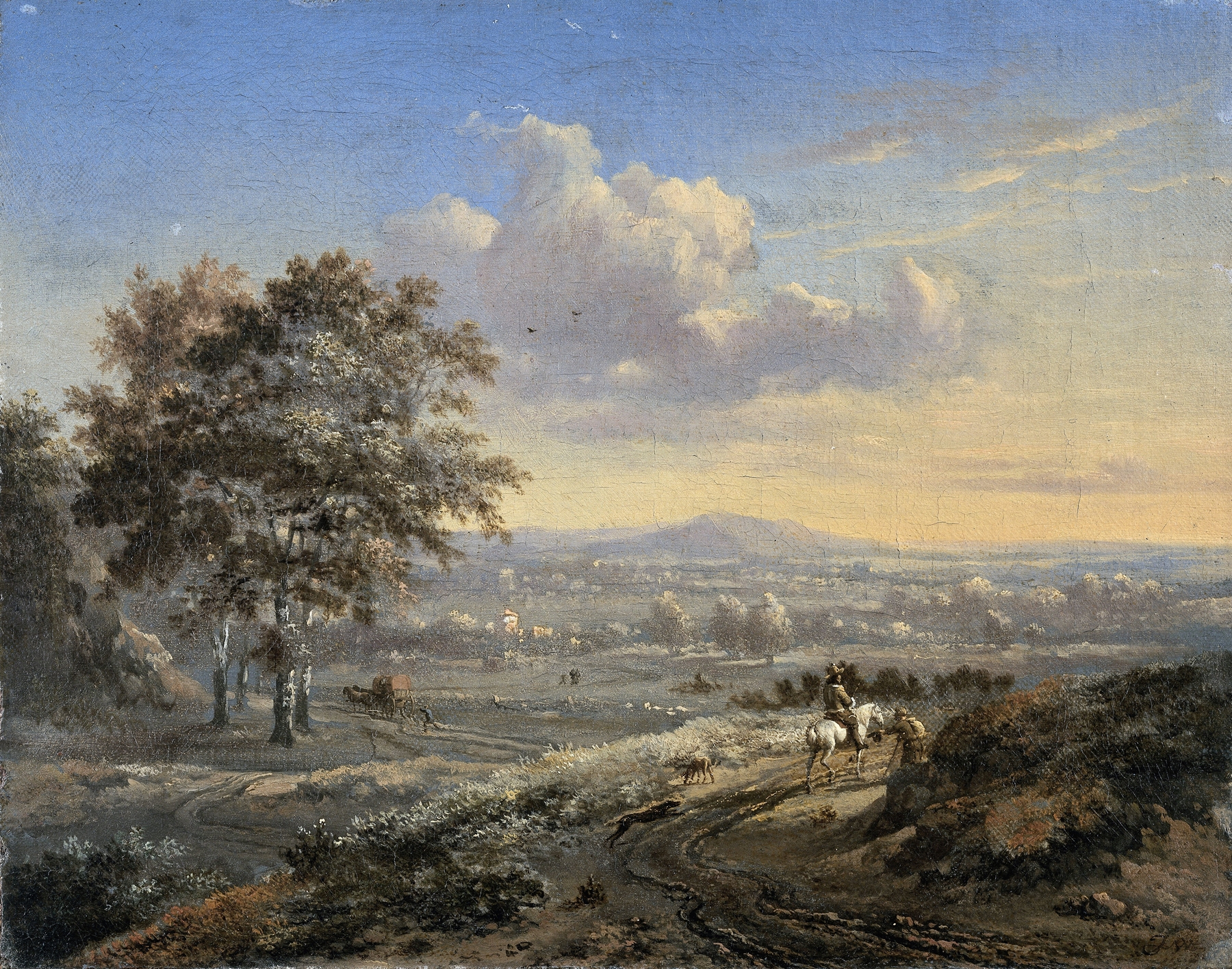
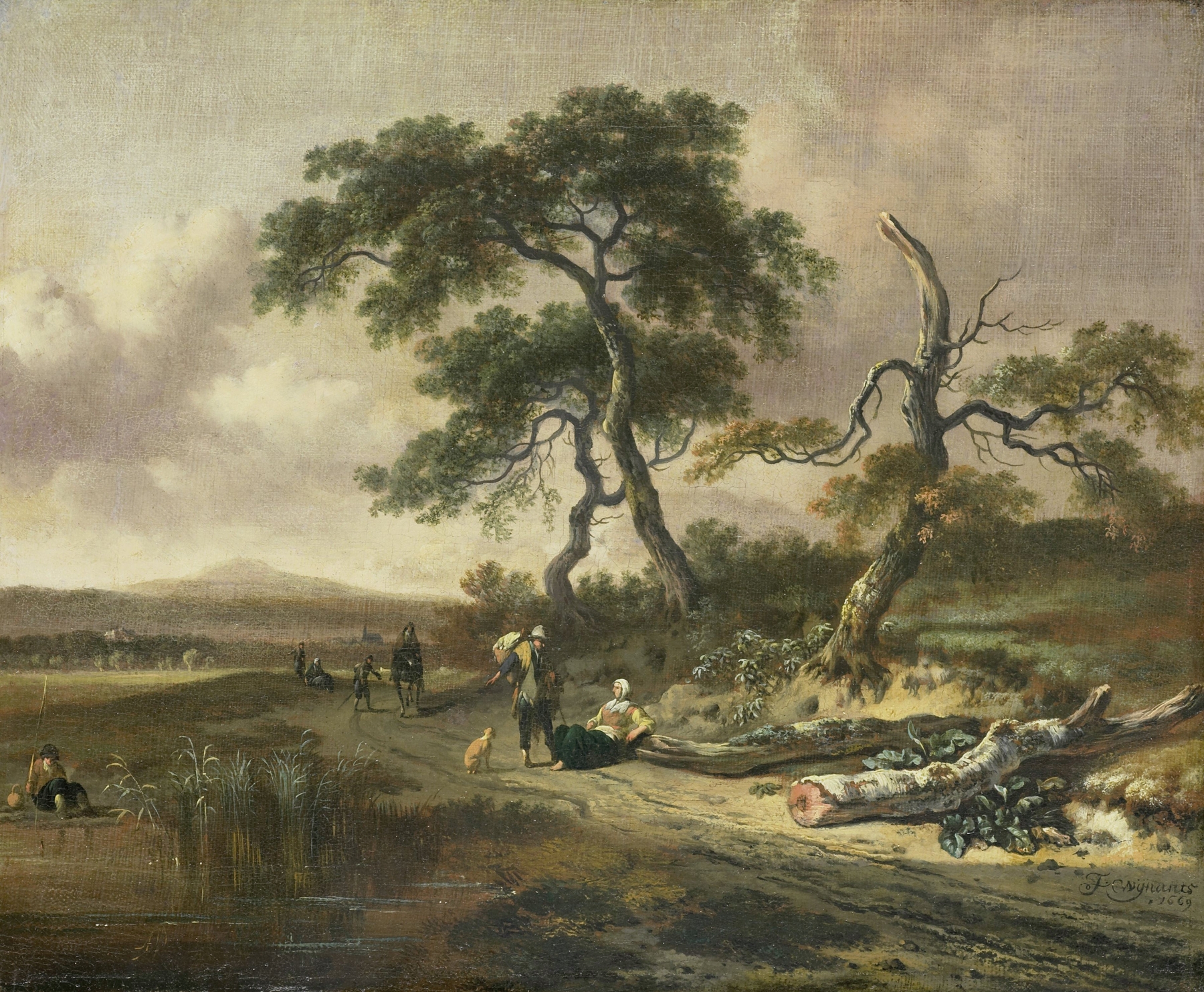
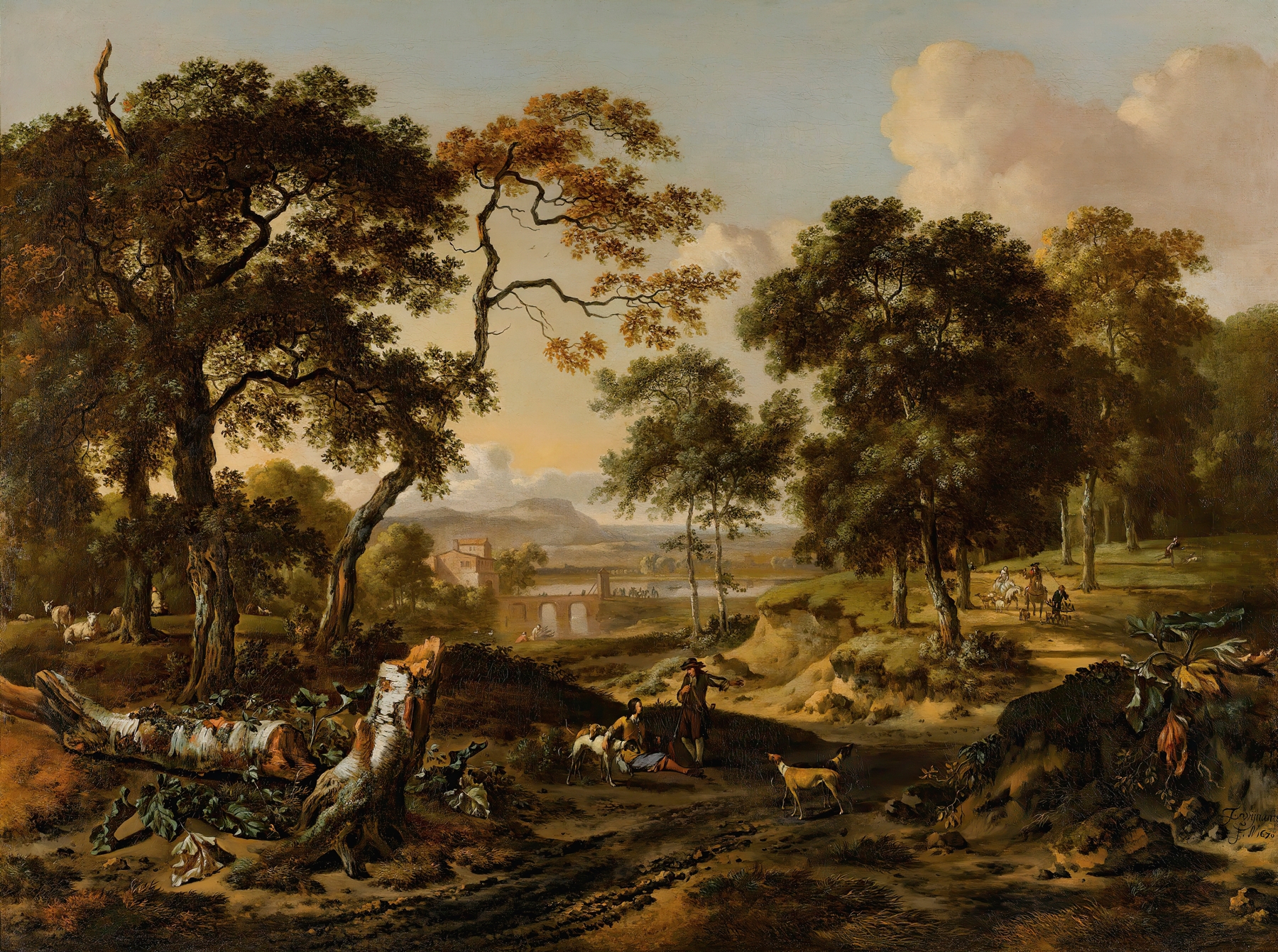
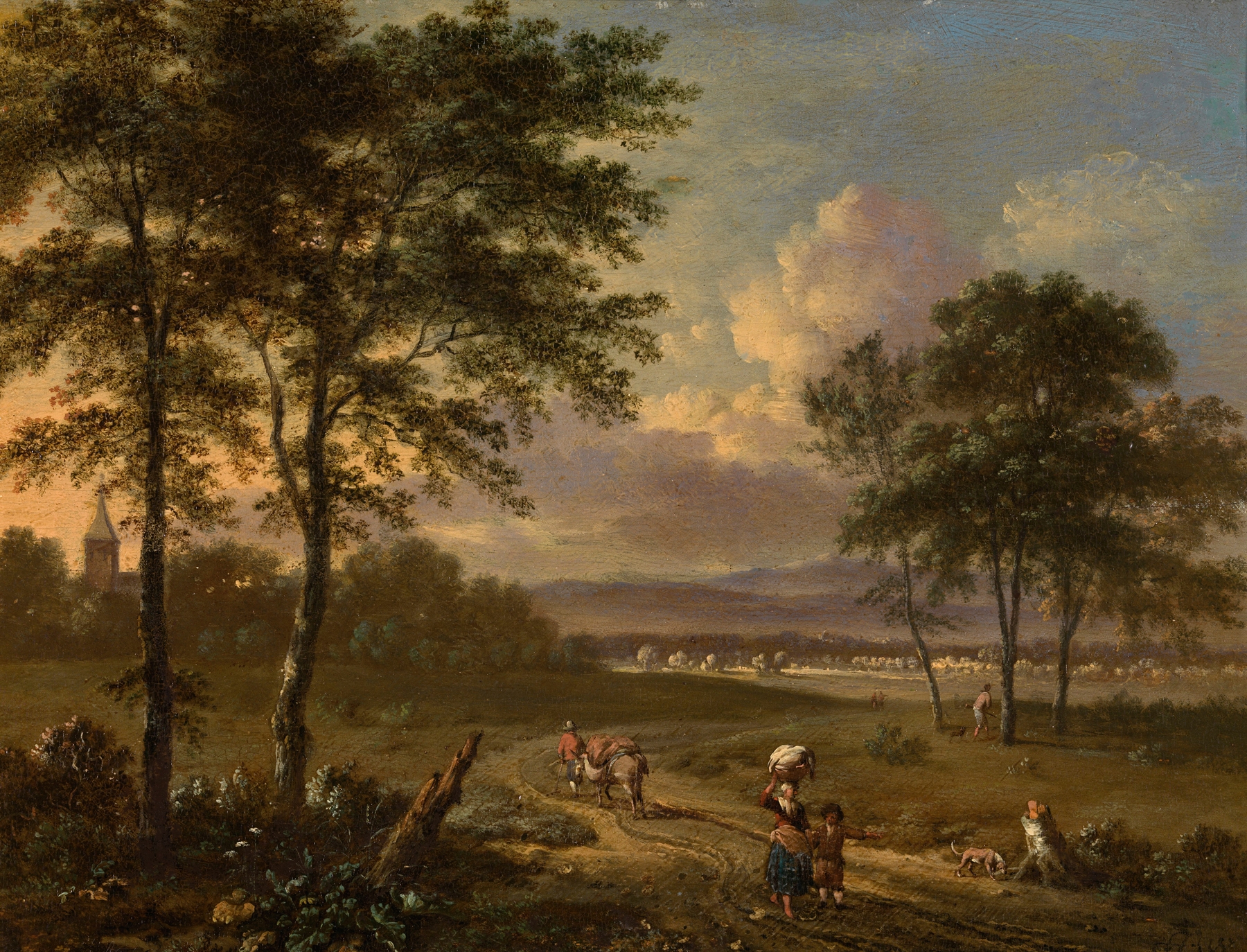
What if silence could speak through light? In the delicate interplay of hues, a divine presence emerges, echoing the intrinsic beauty of nature and the human condition. Look to the right at the elegance of the travelers, their fine garments contrasting starkly with the humble figure of the beggar in the foreground. The soft sunlight filters through the trees, casting dappled shadows on the river’s surface, while the lush greens and earthy browns of the dune landscape create a harmonious backdrop.
Notice how the gentle brushstrokes breathe life into the scene, capturing the essence of leisure and contemplation, as well as the juxtaposition of wealth and destitution. In this work, the dichotomy of fortune stands in sharp relief against the serenity of the river. The travelers, seemingly oblivious to the beggar's plight, represent a world of privilege and opportunity, while the beggar’s stillness evokes compassion and a silent plea for recognition. Each element—the flowing water, the bright sky, and the contrasting figures—works to illustrate the deep emotional tension woven into human existence, prompting a reflection on grace and empathy.
Created in a period marked by the Baroque movement’s exploration of light and shadow, the artist painted this piece while immersed in a rich tapestry of Dutch landscape art. Little is known about the exact date, but it reflects the artist's keen observation of nature's beauty and humanity's complexities. Jan Wijnants, celebrated for his landscapes, captures not just a moment, but an invitation to ponder the divine in both the sublime and the tragic.