
A Road in Louveciennes — History & Facts
In A Road in Louveciennes, the viewer is invited into a tranquil moment where the vibrancy of nature dances with the quietude of a sunlit path. The lush greens and soft blues beckon us to explore the ecstasy of a fleeting summer day, where every brushstroke whispers secrets of joy and serenity. Focus first on the winding road that draws the eye toward the horizon, a serpentine invitation to wander. Notice how the sunlight bathes the path in warm, golden hues, creating a striking contrast with the cool shadows cast by the trees lining the route.
The dappled light filters through the foliage, a masterful technique that imbues the scene with life, while Renoir’s characteristic loose brushwork generates a sense of movement and fluidity. As you delve deeper, observe the contrasting textures of the lush greenery against the smoothness of the road, symbolizing the tension between nature’s wildness and human intervention. The inclusion of distant figures, perhaps a couple strolling, evokes an intimate connection with the viewer, hinting at shared experiences and the joys of companionship. This duality of solitude and togetherness evokes a universal sense of ecstasy, urging us to embrace both the tranquil and the vibrant aspects of life. Painted in 1870, during a time of personal and artistic exploration for the artist, this work emerges from Renoir's period at Louveciennes, a village near Paris that inspired many of his landscapes.
The burgeoning Impressionist movement was challenging traditional conventions, allowing him to experiment with light and color while reflecting the vibrant energy of the world around him.
More Artworks by Pierre-Auguste Renoir
Browse all →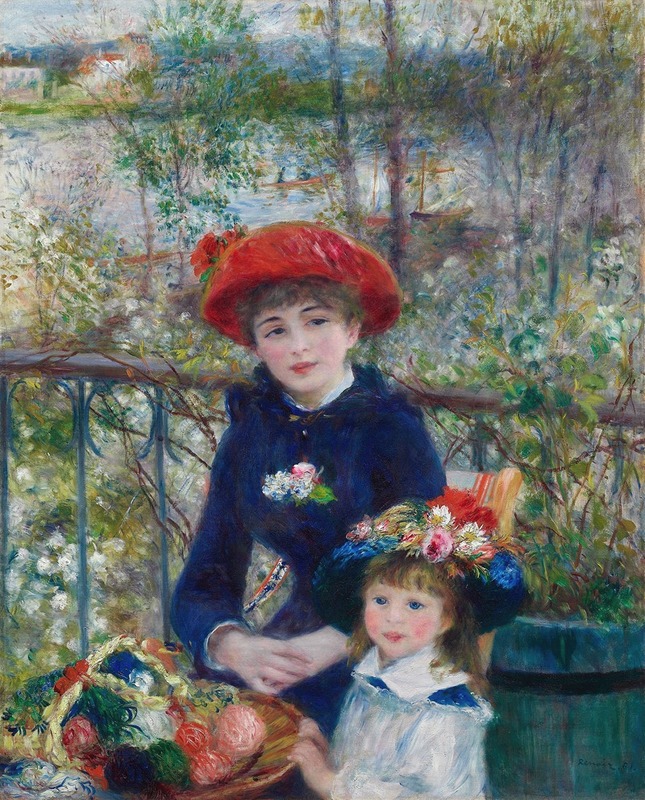
Two Sisters (On the Terrace)
Pierre-Auguste Renoir
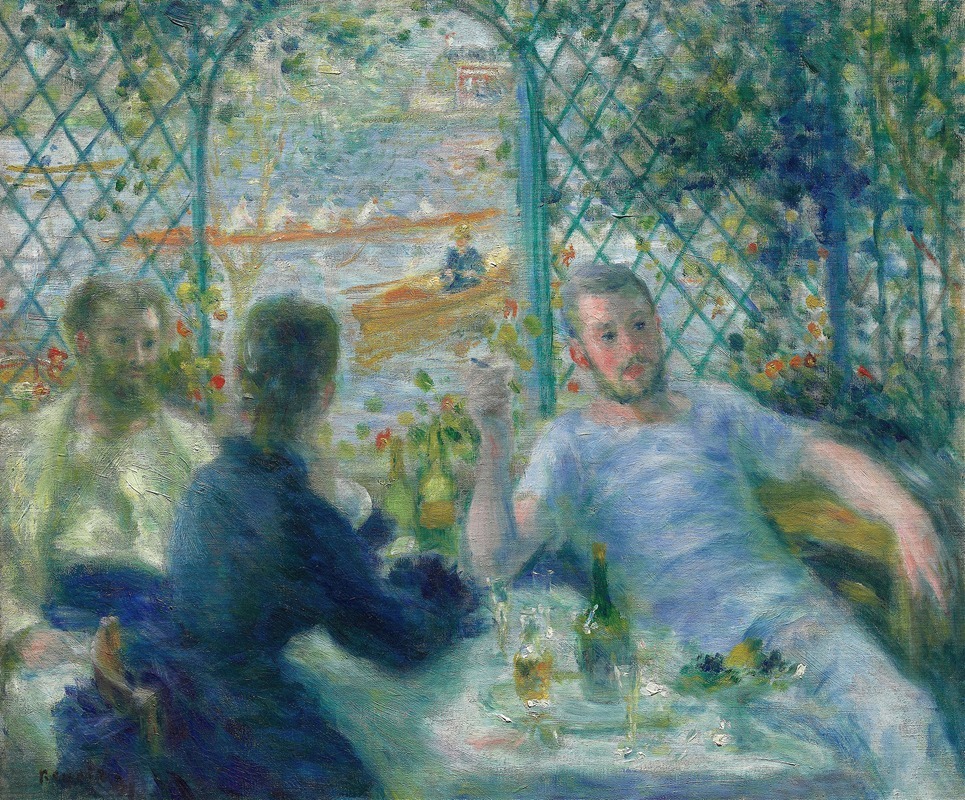
Lunch at the Restaurant Fournaise (The Rowers' Lunch)
Pierre-Auguste Renoir
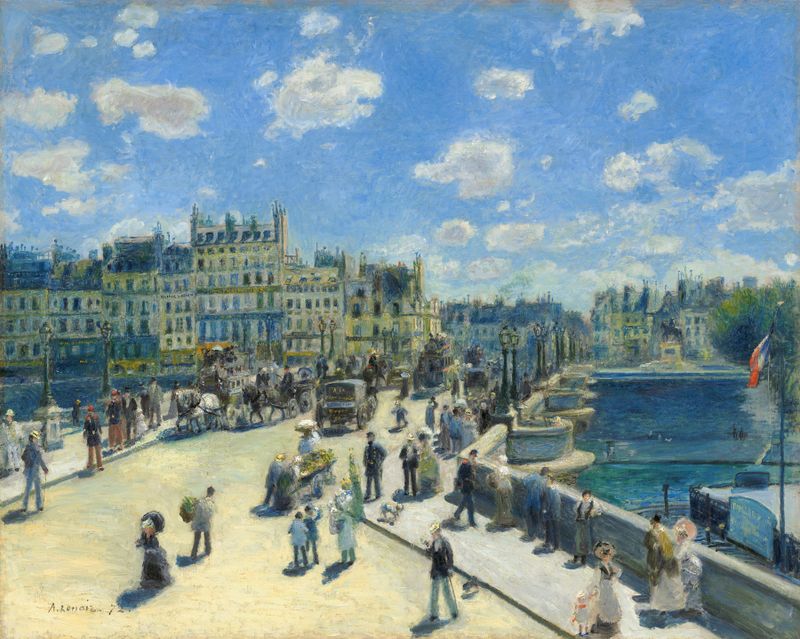
Pont Neuf, Paris
Pierre-Auguste Renoir
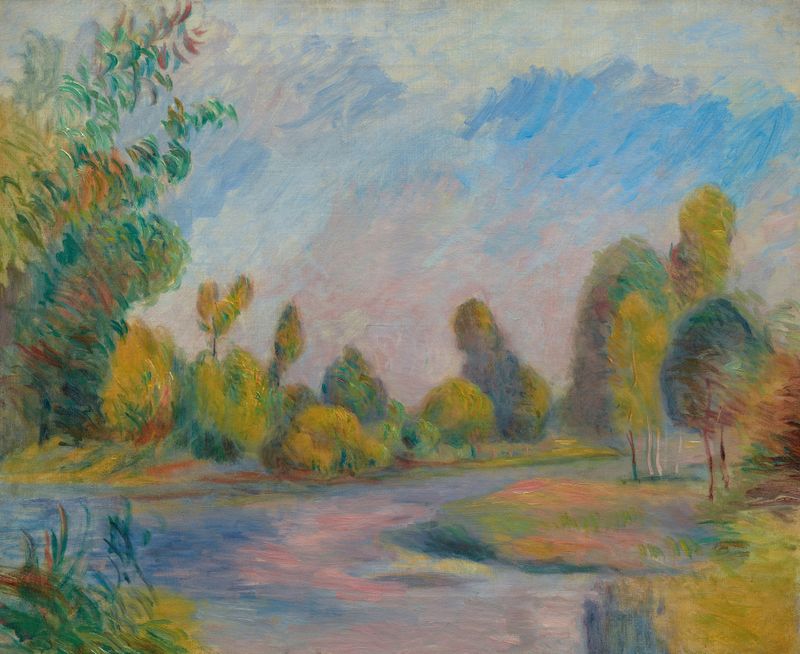
Au bord de la rivière
Pierre-Auguste Renoir

Near the Lake
Pierre-Auguste Renoir
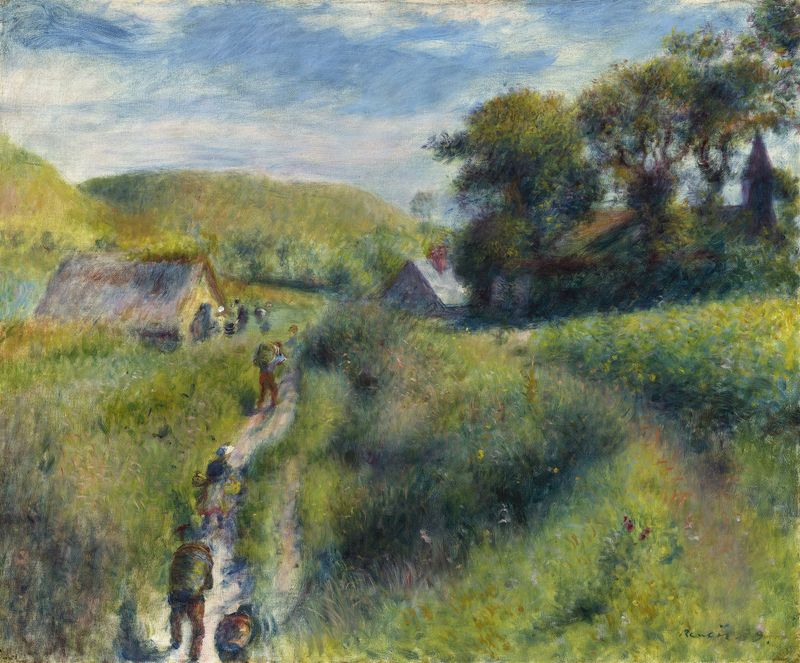
The Mussel Harvest
Pierre-Auguste Renoir

The Seine at Chatou
Pierre-Auguste Renoir
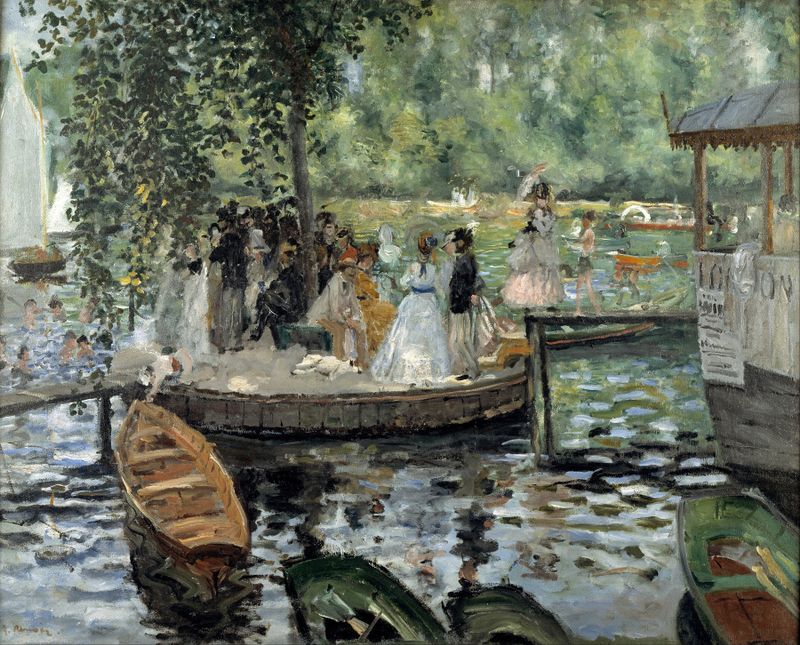
La Grenouillère
Pierre-Auguste Renoir
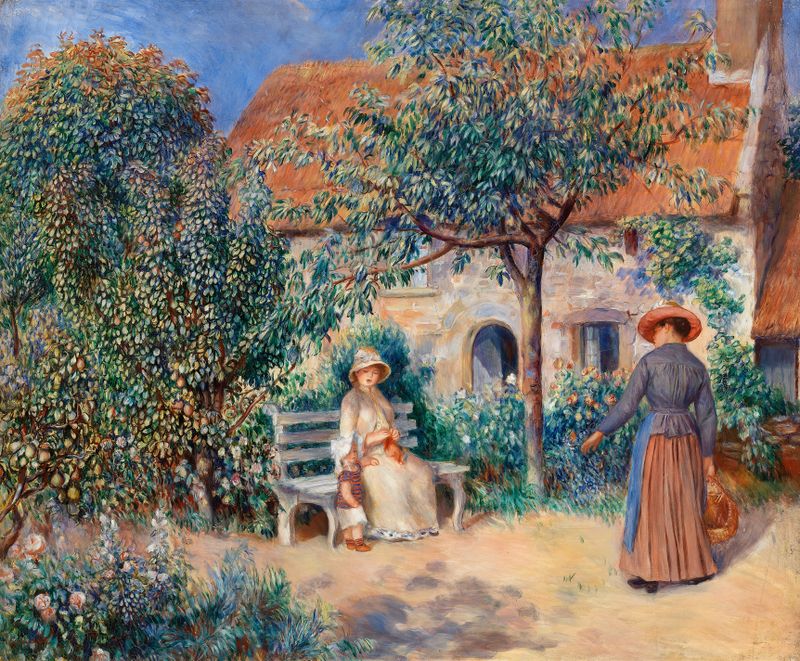
In Brittany (En Bretagne)
Pierre-Auguste Renoir
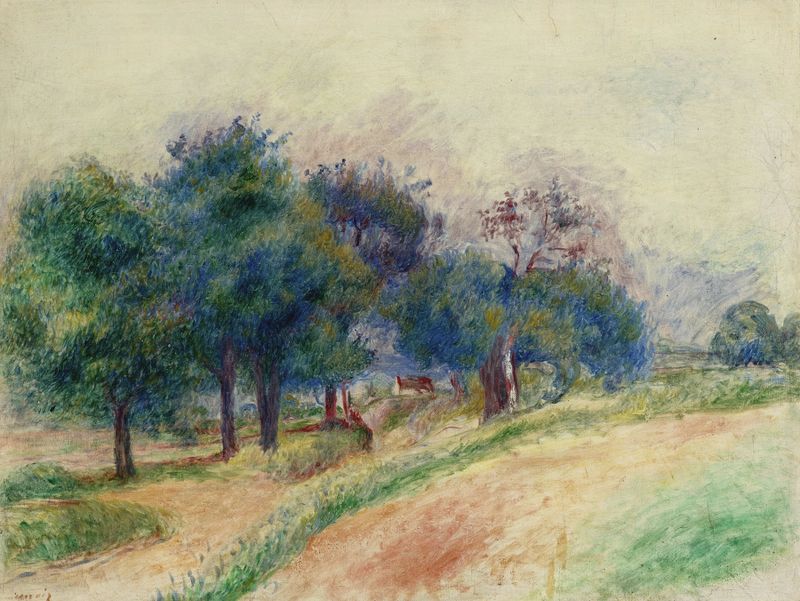
Paysage d’Essoyes
Pierre-Auguste Renoir





