
A Ruin — History & Facts
The eye is drawn first to the drama of scale: human figures, dwarfed beneath the shattered grandeur of ancient stone, gather in the shadow of arches and toppled columns. Light slips through the ruins in a golden haze, illuminating patches of activity—a woman in white tending to a child, a group resting by a broken statue—while much of the architecture looms in darkness, its details half-swallowed by time. The artist’s brushwork lingers on the crumbling capitals and tangled vegetation, inviting the viewer to imagine the stories these stones have witnessed.
The sky, heavy with clouds, seems to echo the melancholy of lost greatness, yet the people who inhabit this space go about their lives with quiet resilience. The painting’s palette, all ochres and muted greens, sets a mood of contemplation and faded glory, as if the ruins themselves are both stage and memory. A Ruin belongs to a world fascinated by the relics of antiquity, painted sometime between circa 1620 and 1660, when European artists and their patrons looked to the past to reflect on the cycles of civilization. Such capricci—imagined or composite views of ruins—were prized by collectors for their ability to evoke both the grandeur and fragility of human achievement.
Alessandro Salucci, active in Rome, was among those who made a specialty of these architectural fantasies, combining real and invented elements to create spaces where history and imagination meet. Now in the Royal Collection, this painting stands as a testament to the era’s hunger for lessons from the past, inviting us to linger in the ruins and wonder what endures.
More Artworks by Alessandro Salucci

A capriccio with an ionic portico, a fountain, a two story loggia, a Gothic palace, and figures on a quay
Alessandro Salucci
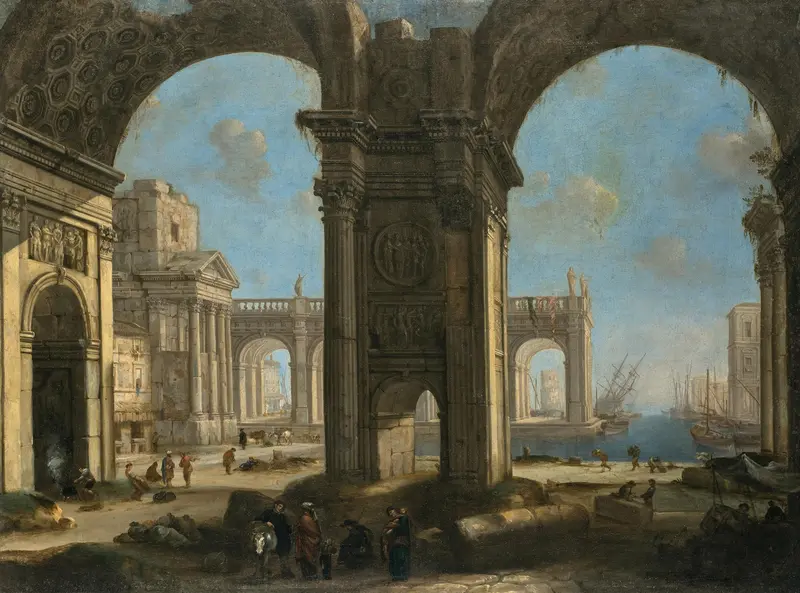
Architectural capriccio with a harbour
Alessandro Salucci
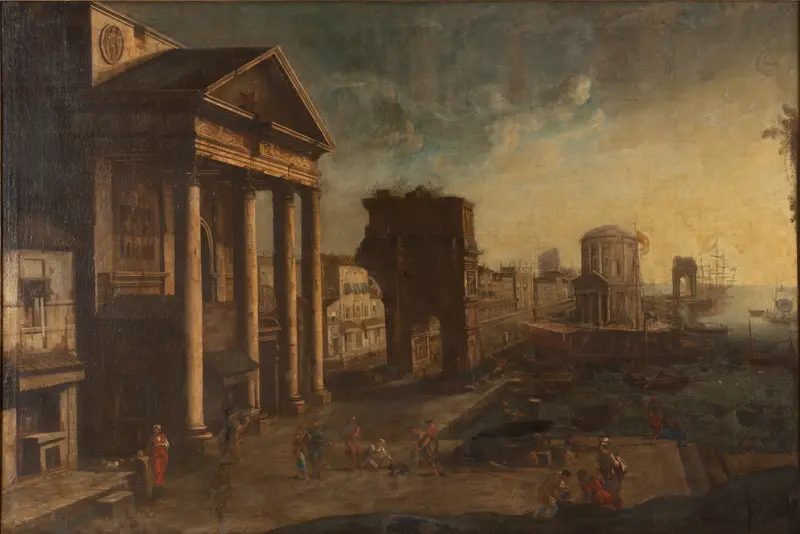
Harbour with Capriccio
Alessandro Salucci
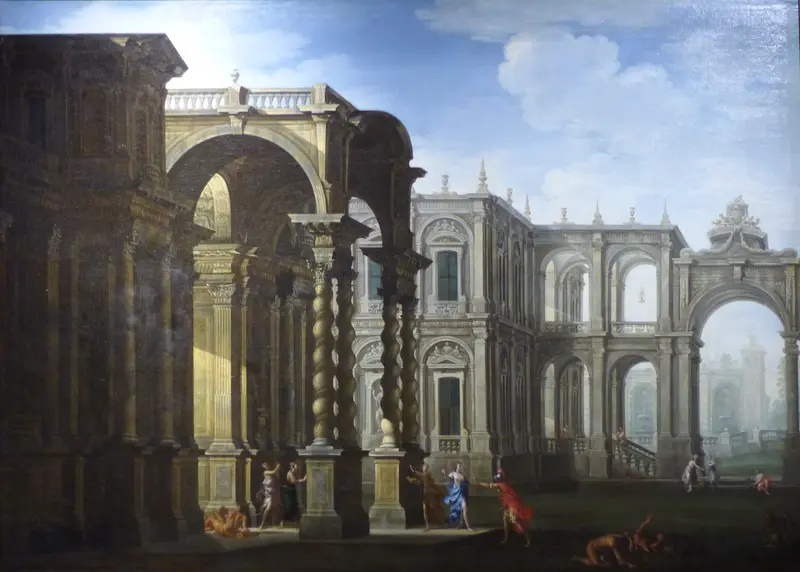
Ulysses and the sorceress Circe
Alessandro Salucci
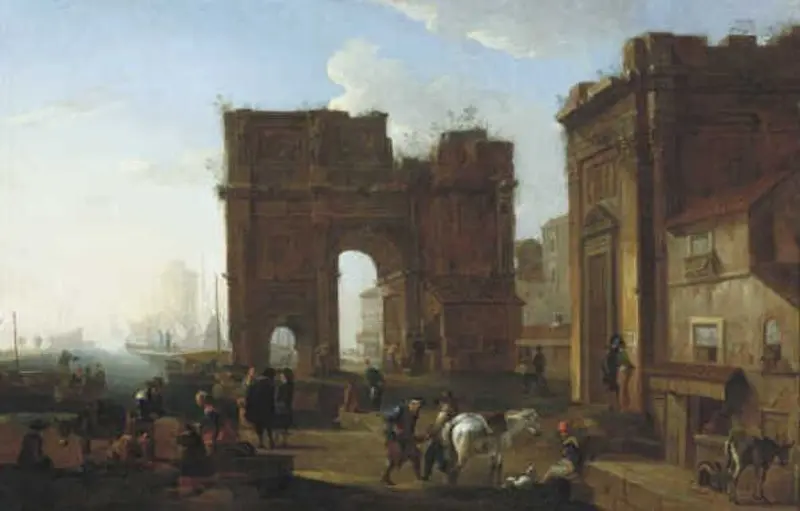
Italian Harbour with Triumphal Arch
Alessandro Salucci
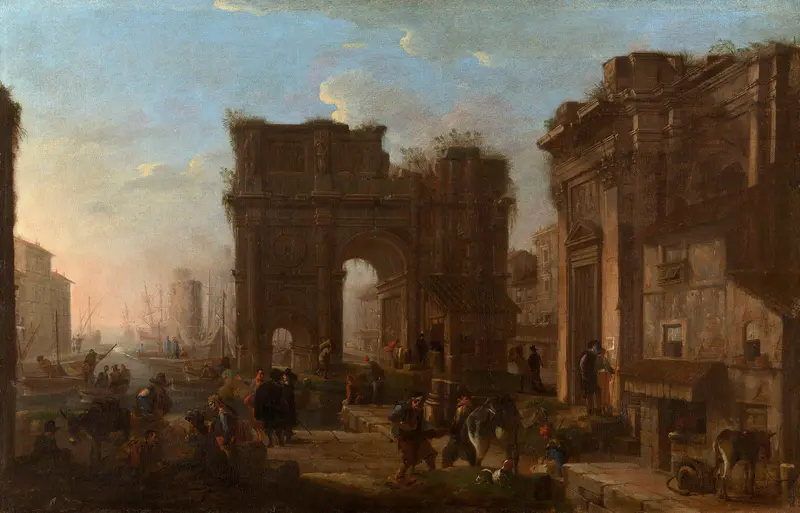
A Seaport with Figures
Alessandro Salucci
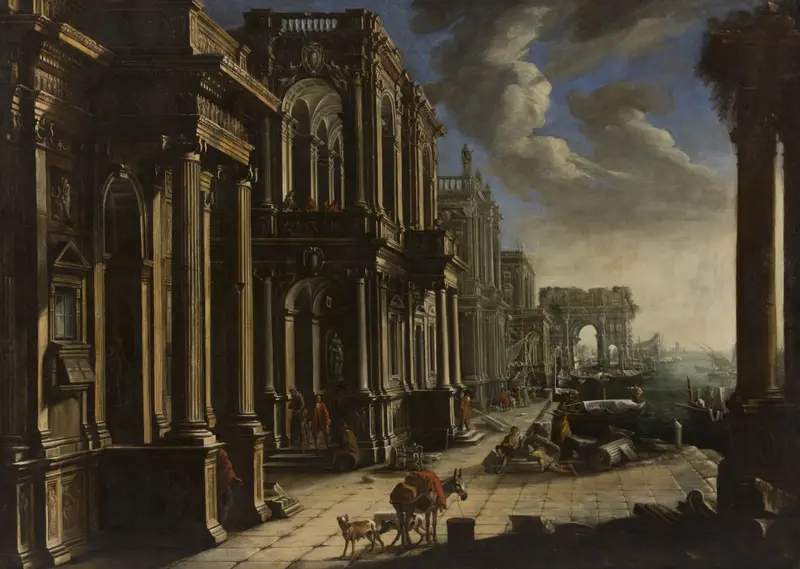
View with architecture, triumphal arch and figures
Alessandro Salucci
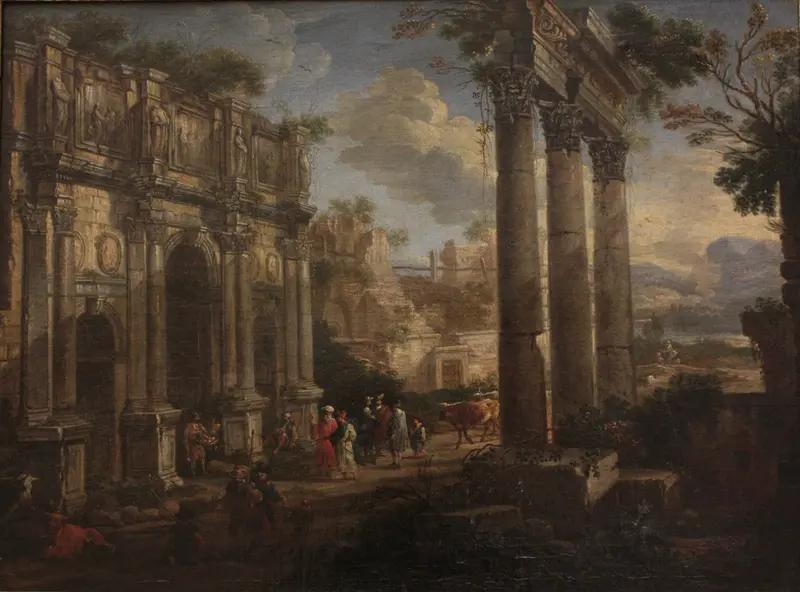
Ruines du forum
Alessandro Salucci





