
Italian Harbour with Triumphal Arch — History & Facts
The first thing that draws the eye in Italian Harbour with Triumphal Arch is the way architecture and daily life are woven together, as if the ancient stones and the bustling figures share the same breath. The monumental arch rises at the center, not as a relic, but as a living gateway between the city and the misty, sunlit harbor beyond. Figures in shadowy groups cluster in the foreground, some in animated conversation, others tending to horses or pausing in their daily routines.
The golden light falls unevenly, guiding the gaze from the busy quay to the distant ships, then back to the grand arch whose weathered surface suggests both glory and decay. Salucci’s careful play of light and space invites the viewer to imagine the sounds and stories that might echo through this invented port. This painting belongs to a world where the boundaries between reality and imagination were porous, especially in the hands of seventeenth-century Italian artists. Capriccio scenes like this—half real, half dream—were prized by collectors eager for reminders of Italy’s grandeur, whether they lived in Rome or far from its shores.
Painted sometime between 1625 and 1649, and now in the collection at Museum Boijmans Van Beuningen, this work reflects the era’s fascination with ruins, harbors, and the theater of everyday life. History has kept few traces of this specific painting’s early journey, but its blend of grandeur and intimacy still rewards close looking—every figure and shadow hints at another story waiting to be discovered.
More Artworks by Alessandro Salucci

A capriccio with an ionic portico, a fountain, a two story loggia, a Gothic palace, and figures on a quay
Alessandro Salucci
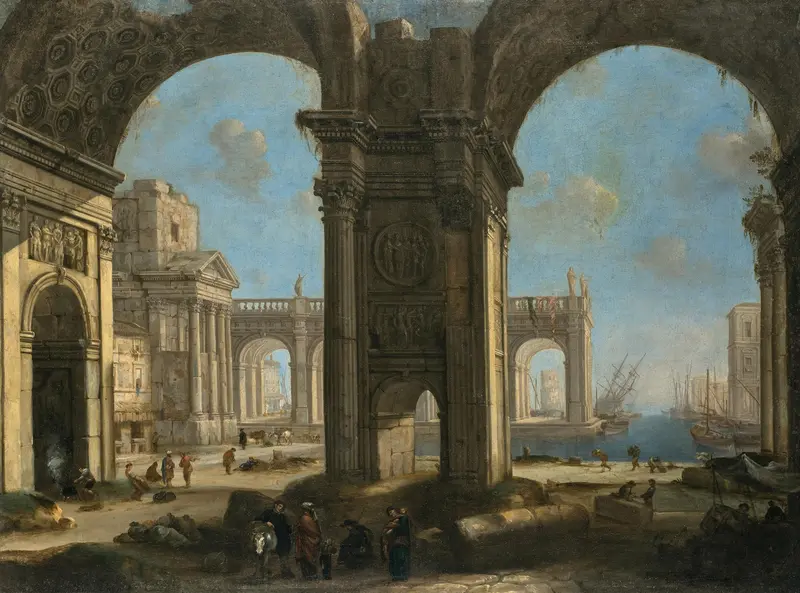
Architectural capriccio with a harbour
Alessandro Salucci
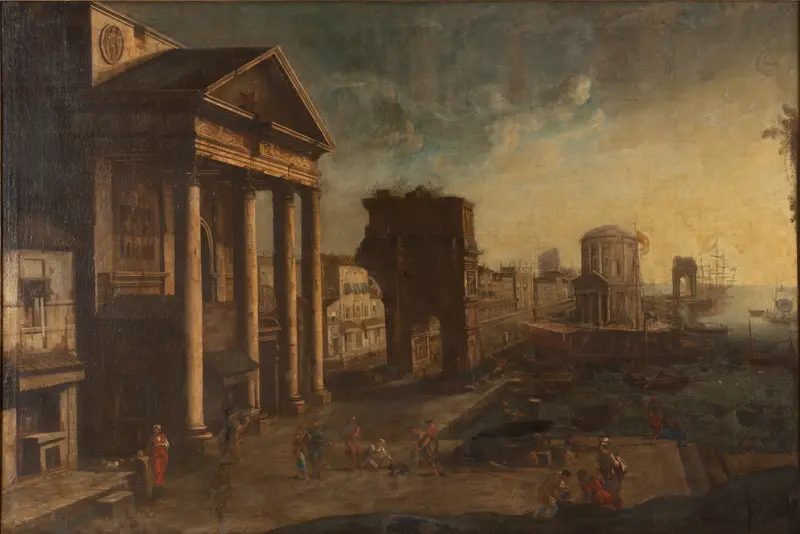
Harbour with Capriccio
Alessandro Salucci
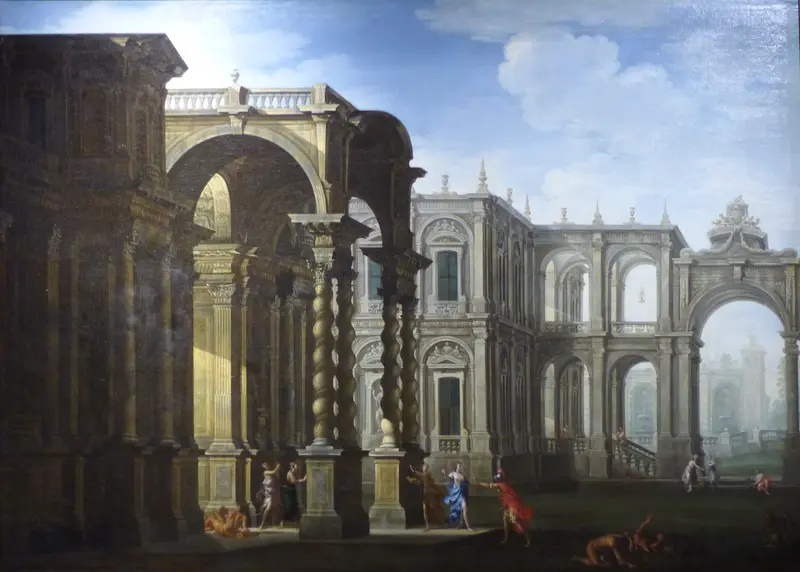
Ulysses and the sorceress Circe
Alessandro Salucci
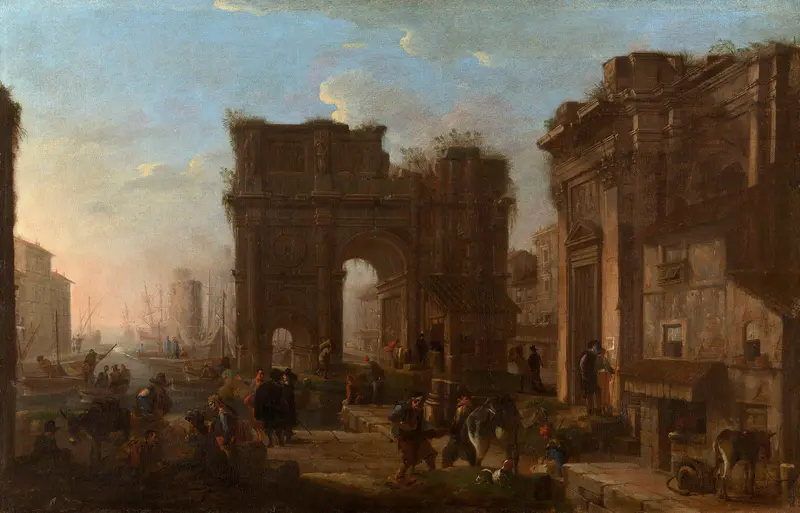
A Seaport with Figures
Alessandro Salucci
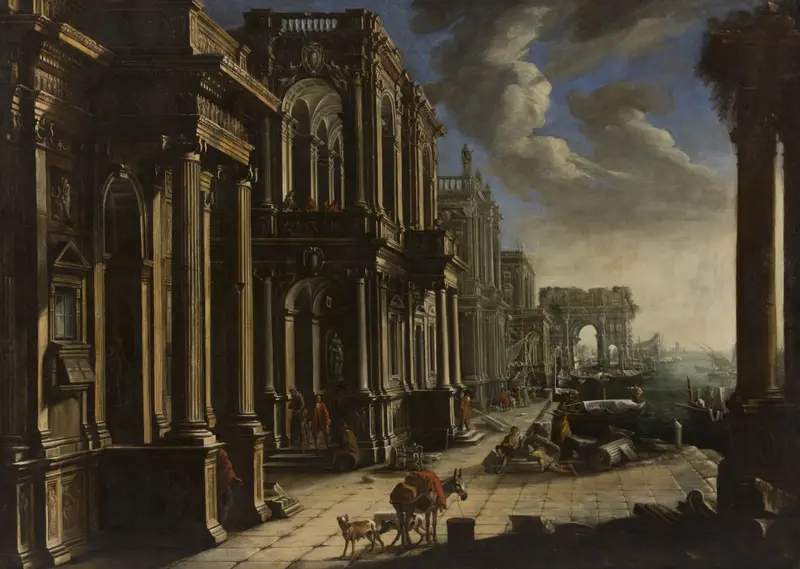
View with architecture, triumphal arch and figures
Alessandro Salucci
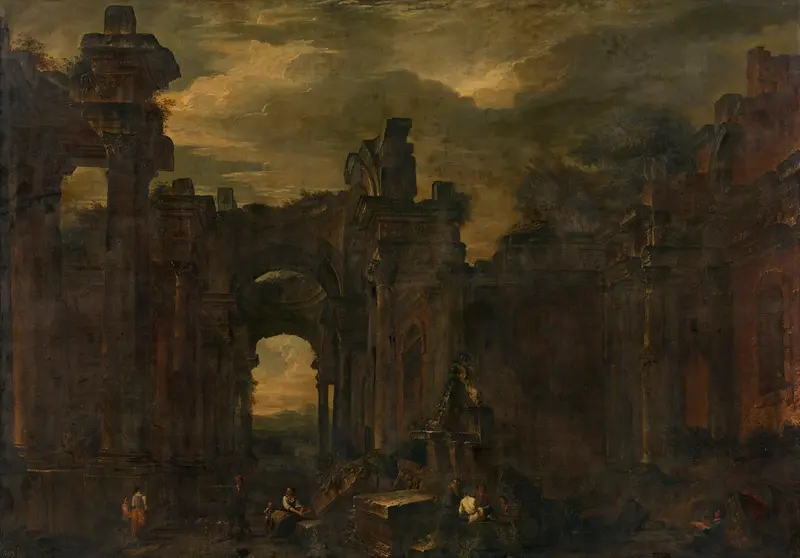
A Ruin
Alessandro Salucci
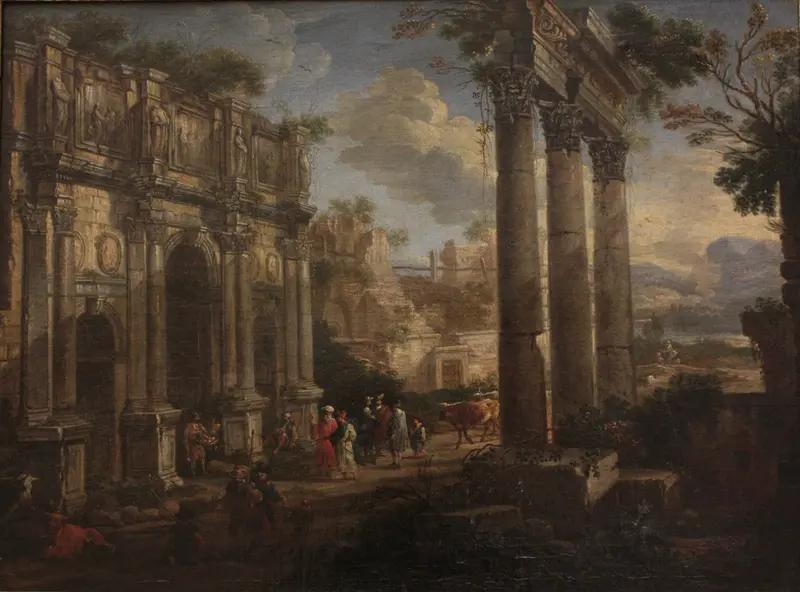
Ruines du forum
Alessandro Salucci
More Landscape Art

The Starry Night
Vincent van Gogh

View of Delft
Johannes Vermeer

Water Lilies
Claude Monet

The Grand Canal, Venice, looking north-west from the Ca' Corner to the Ca' Contarini degli Scrigni, with the campanile of Santa Maria della Carità
Canaletto

Windsor Castle
Canaletto

The Grand Canal looking North-East from the Palazzo Dolfin-Manin to the Rialto Bridge
Canaletto