
Ulysses and the sorceress Circe — History & Facts
A stage of stone and shadow rises before the viewer, where myth and architecture entwine in a vision as theatrical as it is mysterious. The eye is drawn first to the soaring, impossible palaces—arches and twisted columns framing a drama that unfolds in the foreground. Here, a woman in blue gestures commandingly toward a figure in red, whose outstretched arm and helmet mark him as Ulysses, locked in confrontation with the enchantress Circe.
Around them, figures writhe and plead, some half-transformed, their bodies caught between human and beast, echoing the ancient tale’s cruel magic. The play of light—golden on the marble, cool in the shadow—casts the action as both spectacle and warning, the grandeur of the setting amplifying the peril of temptation and the struggle for self-mastery. Painted in the second quarter of the seventeenth century, Ulysses and the sorceress Circe by Alessandro Salucci belongs to a world where mythological scenes were the currency of elite taste and erudition. Such works were often commissioned to adorn palaces, their learned subjects intended to spark conversation and reflection among guests.
Salucci, known for his architectural capriccios, here fuses the drama of Homer’s epic with the fantasy of imagined ruins, a hallmark of Baroque painting. Little is recorded of this particular canvas’s journey, but its survival in the present day—documented in a private collection as recently as 2017—invites us to wander its painted corridors and ponder the enduring spell of myth. The next time your gaze lingers on those columns, consider what other stories might be waiting in the shadows.
More Artworks by Alessandro Salucci

A capriccio with an ionic portico, a fountain, a two story loggia, a Gothic palace, and figures on a quay
Alessandro Salucci
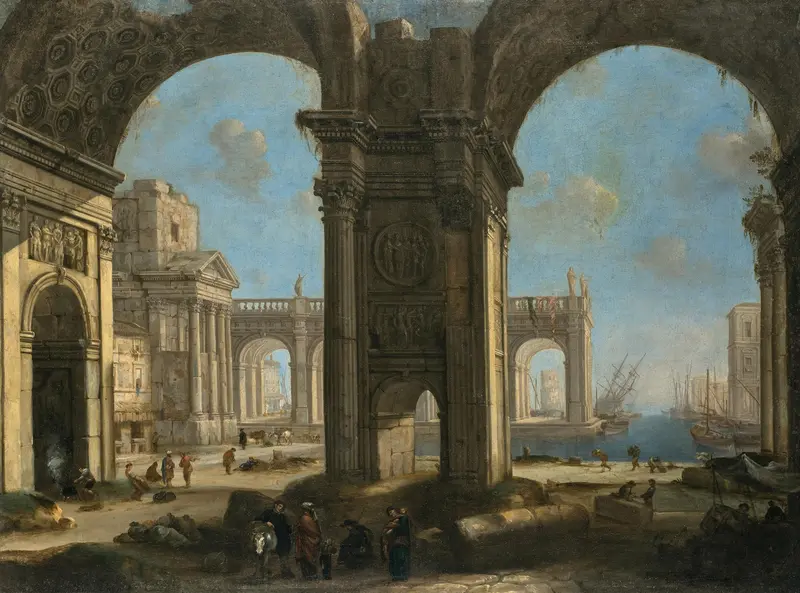
Architectural capriccio with a harbour
Alessandro Salucci
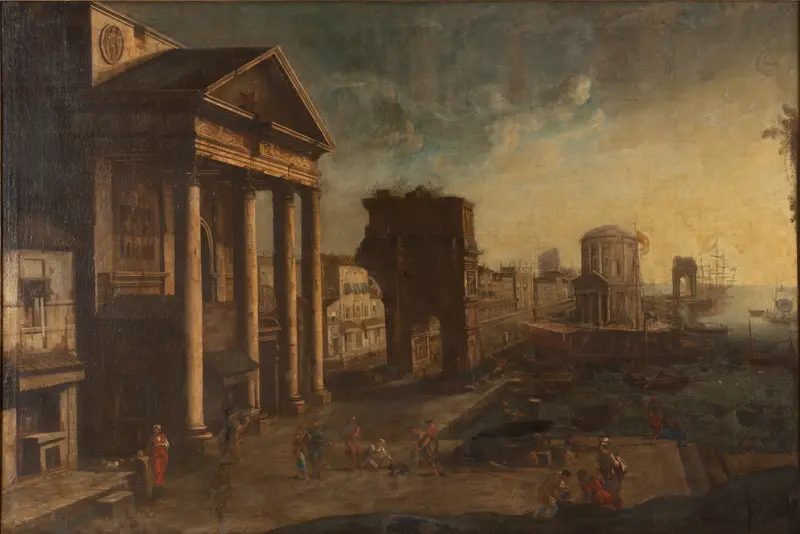
Harbour with Capriccio
Alessandro Salucci
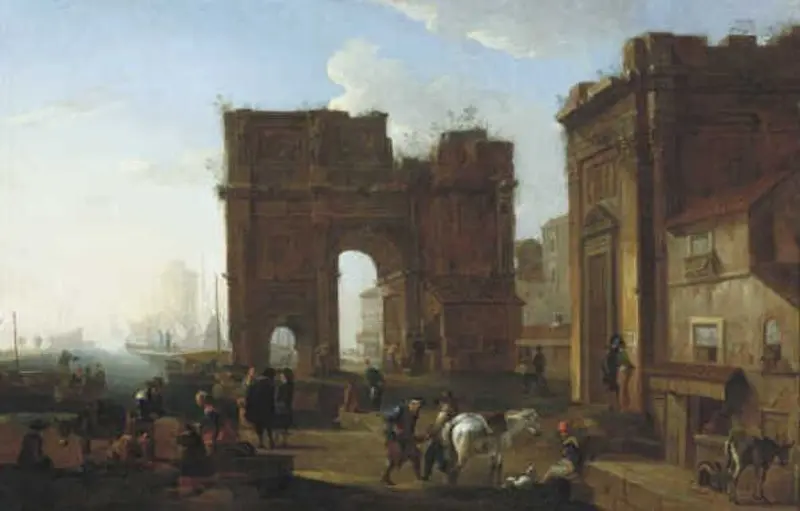
Italian Harbour with Triumphal Arch
Alessandro Salucci
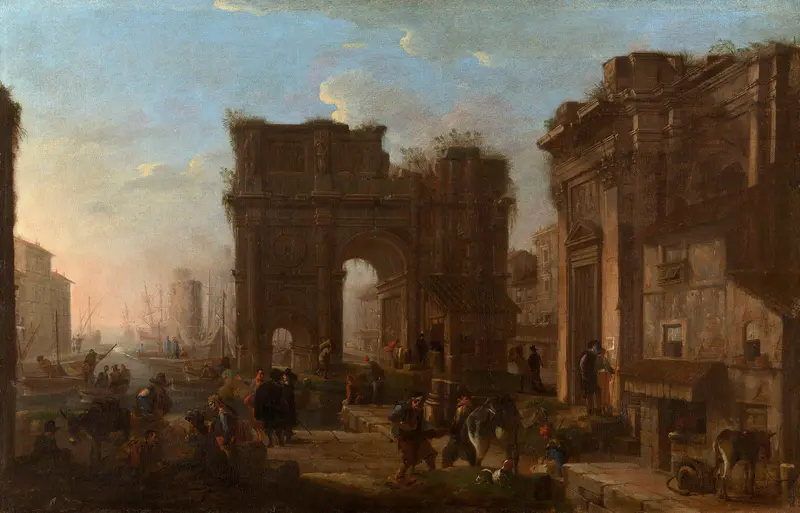
A Seaport with Figures
Alessandro Salucci
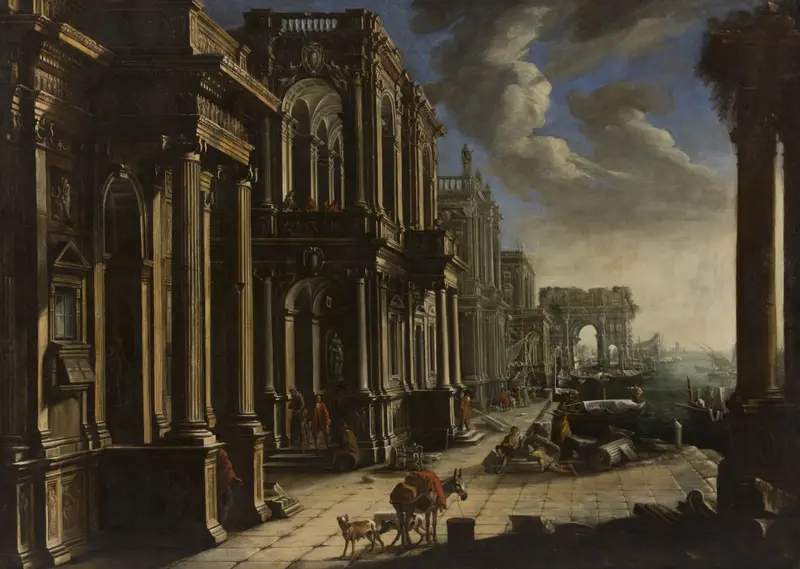
View with architecture, triumphal arch and figures
Alessandro Salucci
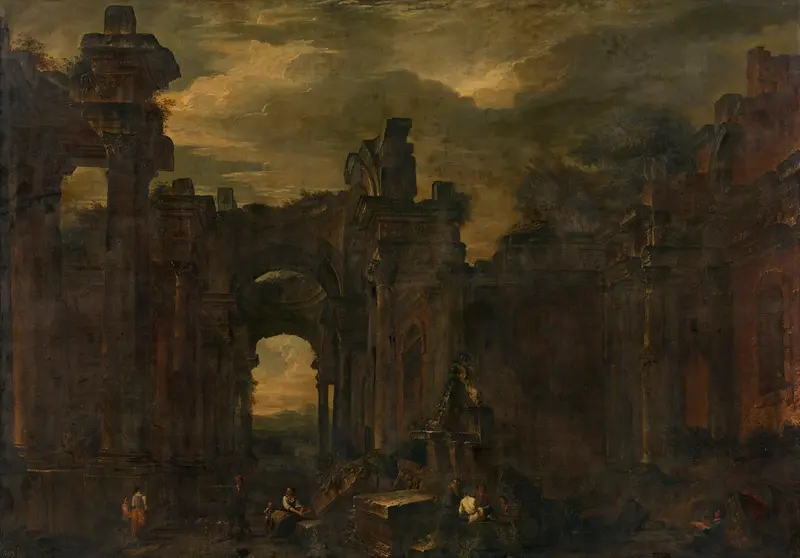
A Ruin
Alessandro Salucci
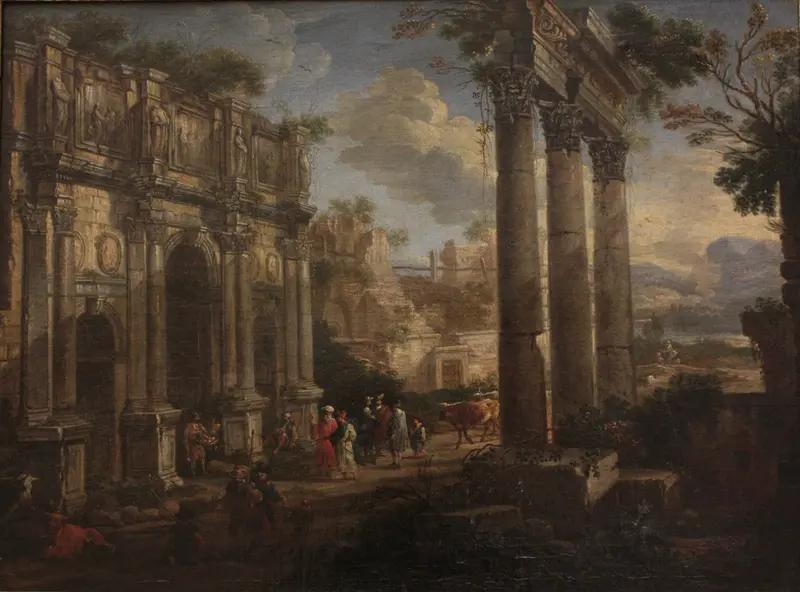
Ruines du forum
Alessandro Salucci





