
A Seaport with Figures — History & Facts
The eye is first caught by the grandeur of a ruined arch, its stones softened by creeping greenery and the golden haze of early light. Beneath this ancient structure, the city’s daily business unfolds: merchants haggle, travelers rest, and dockworkers heave their cargo. The painter, Alessandro Salucci, uses the play of light and shadow to guide us through the scene—warm sunlight bathes the figures in the foreground, while the distant ships and pale sky draw us further in, promising stories of departure and return.
Every gesture is purposeful: a man stoops to his wares, a donkey waits patiently, and a cluster of figures seem caught mid-conversation, their presence anchoring the vastness of the architecture. Painted in 1656, this work belongs to the world of mid-seventeenth-century Italy, when views of imagined harbors and classical ruins were prized by collectors seeking both grandeur and escape. Such paintings, often called capricci, blended real and invented elements to evoke the glory of Rome and the vibrancy of Mediterranean trade. A Seaport with Figures now resides in the Royal Collection, a reminder of the taste for Italianate fantasy that swept through European courts.
History has kept few traces of the painting’s own journey, but its vision of bustling life beneath the shadow of antiquity endures—inviting us to linger, and to imagine the world behind each figure’s gaze.
More Artworks by Alessandro Salucci

A capriccio with an ionic portico, a fountain, a two story loggia, a Gothic palace, and figures on a quay
Alessandro Salucci
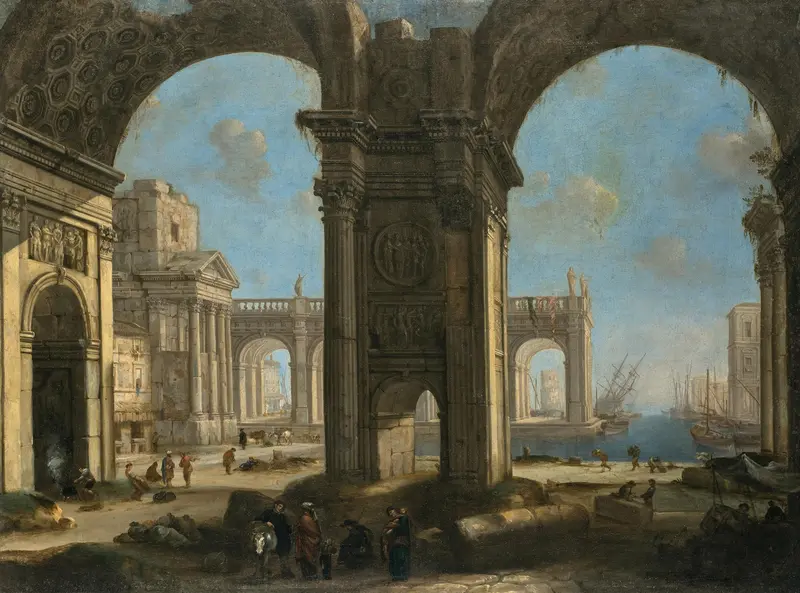
Architectural capriccio with a harbour
Alessandro Salucci
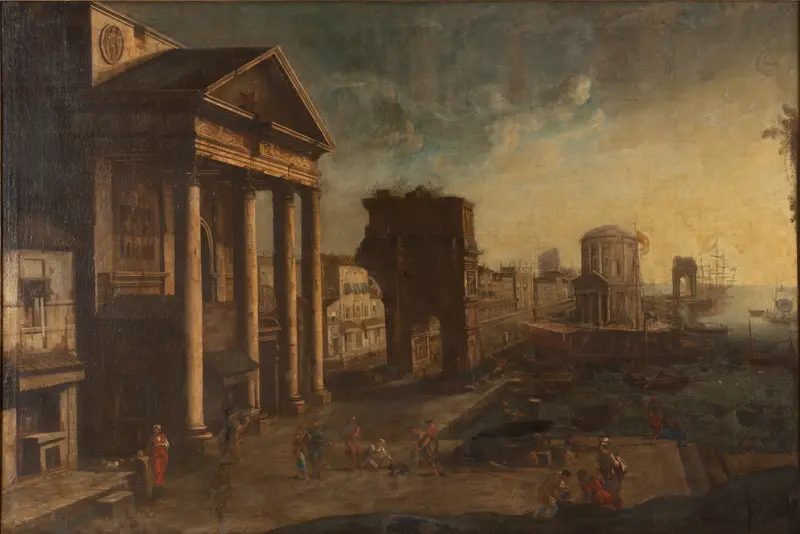
Harbour with Capriccio
Alessandro Salucci
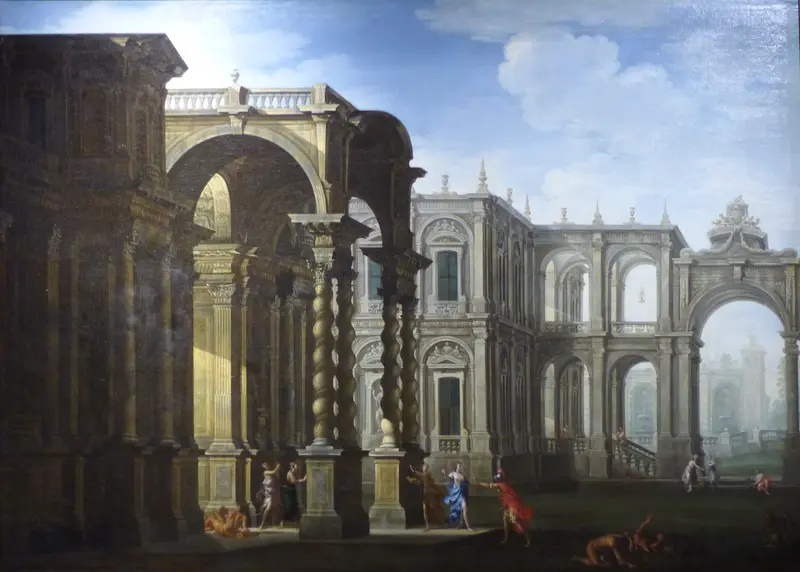
Ulysses and the sorceress Circe
Alessandro Salucci
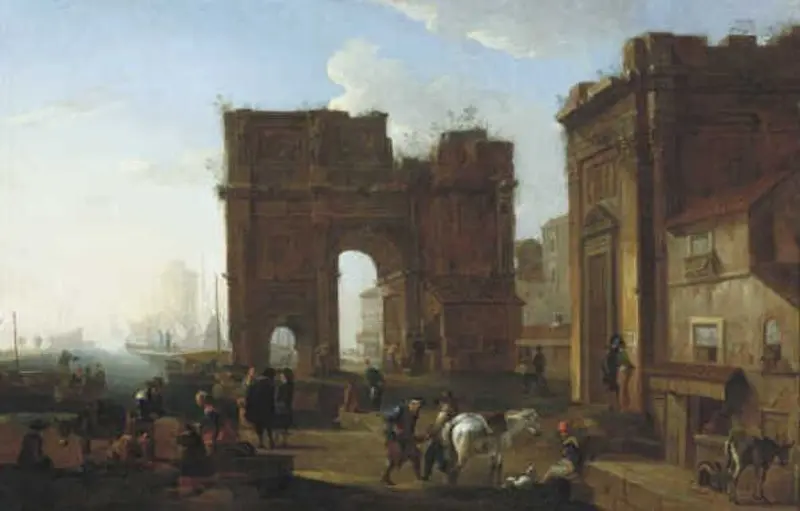
Italian Harbour with Triumphal Arch
Alessandro Salucci
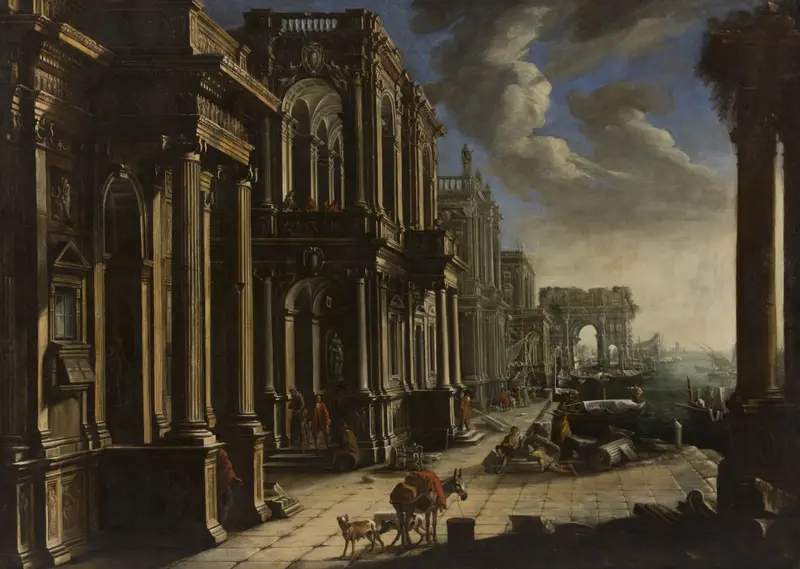
View with architecture, triumphal arch and figures
Alessandro Salucci
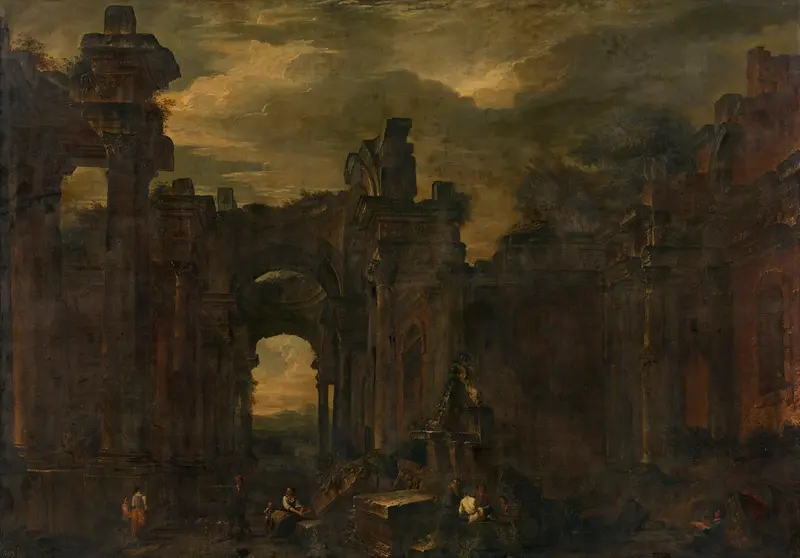
A Ruin
Alessandro Salucci
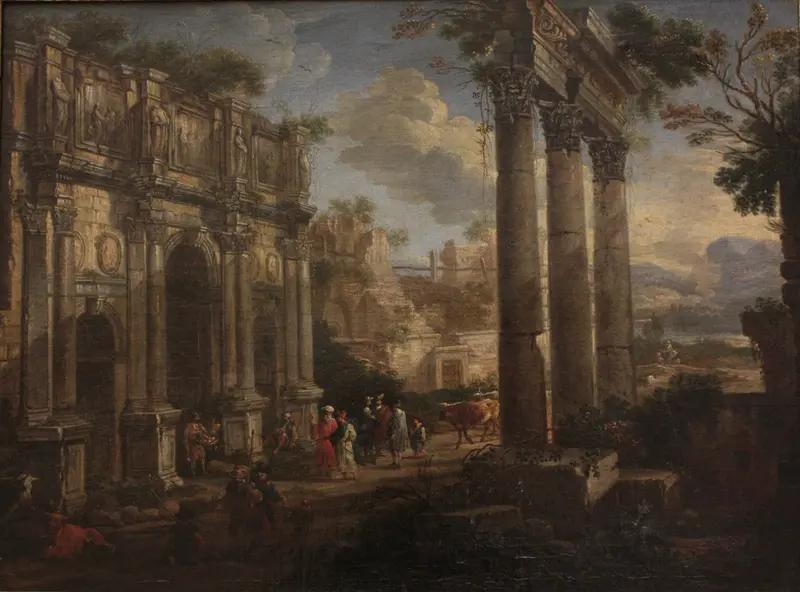
Ruines du forum
Alessandro Salucci
More Genre Scene Art

Banquet of the Officers of the St George Civic Guard
Frans Hals

Rembrandt and Saskia in the Scene of the Prodigal Son
Rembrandt van Rijn

Bal du moulin de la Galette
Pierre-Auguste Renoir

Quadrille at the Moulin Rouge
Henri de Toulouse-Lautrec

A Burial at Ornans
Gustave Courbet

When Will You Marry?
Paul Gauguin