
View with architecture, triumphal arch and figures — History & Facts
What first seizes the eye in View with architecture, triumphal arch and figures is the grandeur of stone and shadow, as if the city itself were the true protagonist. The architecture rises in theatrical tiers, columns and arches catching the angled light, their carved surfaces alive with the play of sun and cloud. The triumphal arch at the water’s edge beckons the viewer’s gaze down a receding avenue, drawing the eye past bustling figures and idle animals toward a horizon busy with ships and distant sails.
Each detail is a clue to the world Salucci conjures: the donkey and dog resting near the foreground, the merchants and workers scattered along the quay, the gestures of conversation and labor that animate the monumental stage. The palette—cool stone, warm ochre, flashes of red and blue—sets a mood of both grandeur and quiet daily life, as if the city’s ancient bones and living pulse were inseparable. Painted between 1645 and 1660, this work belongs to the world of seventeenth-century Italy, where the genre of architectural capriccio flourished among artists and collectors alike. Painters like Alessandro Salucci specialized in these imagined cityscapes, blending real and invented monuments to create vistas that were both a display of technical mastery and a meditation on the passage of time.
Such works were prized by patrons eager to display their taste and learning, often serving as conversation pieces in private collections. The painting’s current presence in the Blindarte collection is a reminder of how many such capricci survive without detailed histories, their makers’ ambitions now glimpsed through the architecture they conjured. Stand before this painting and let your eye wander: every arch and shadow is a doorway into the dreams of a vanished age.
More Artworks by Alessandro Salucci

A capriccio with an ionic portico, a fountain, a two story loggia, a Gothic palace, and figures on a quay
Alessandro Salucci
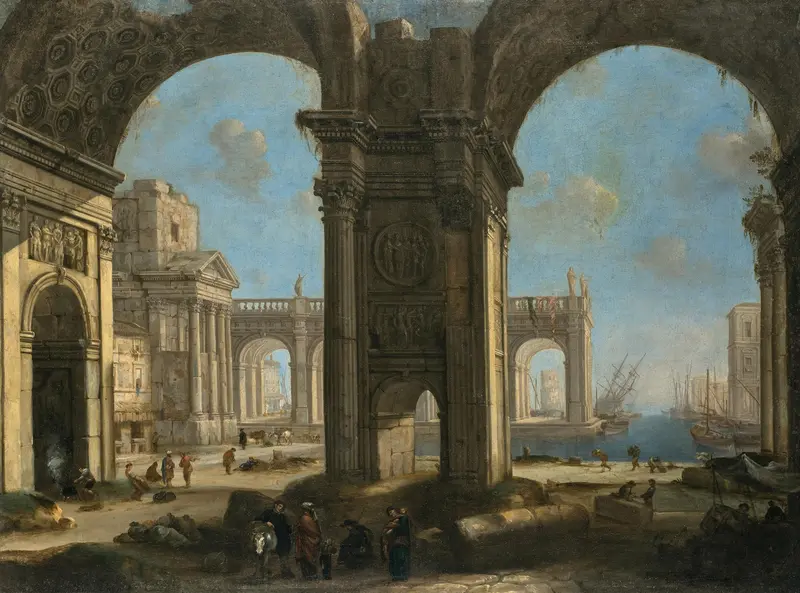
Architectural capriccio with a harbour
Alessandro Salucci
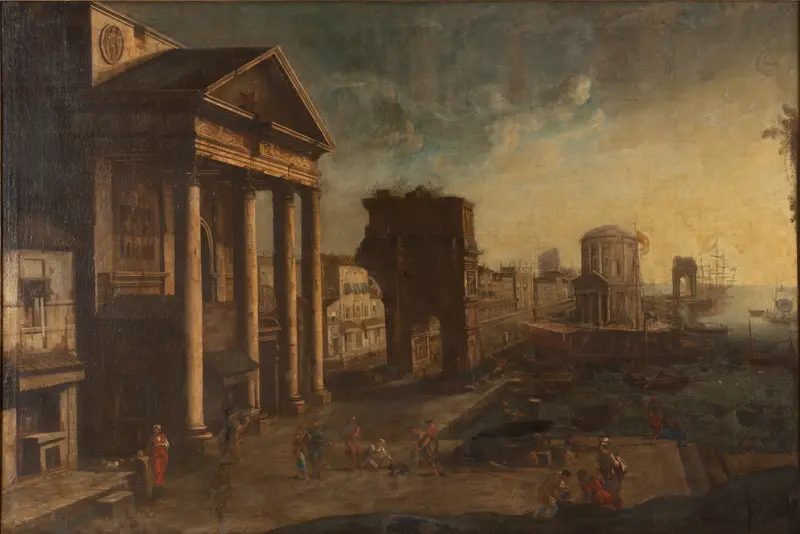
Harbour with Capriccio
Alessandro Salucci
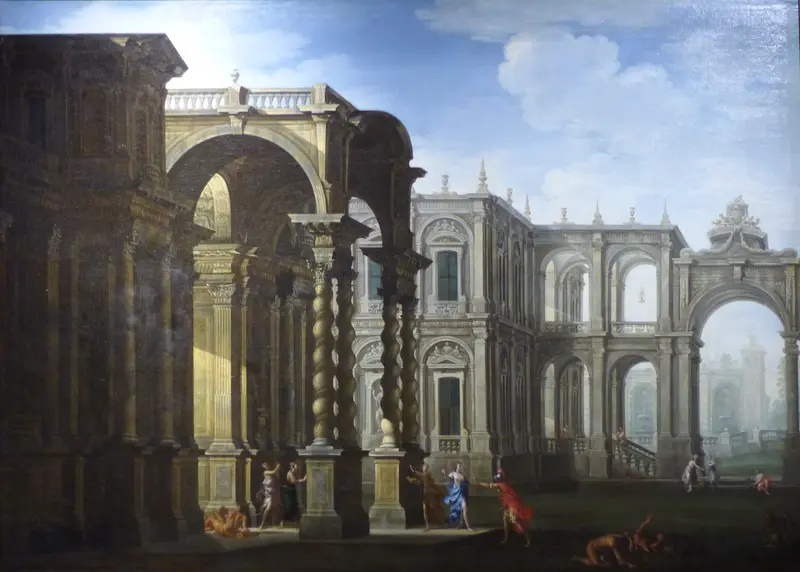
Ulysses and the sorceress Circe
Alessandro Salucci
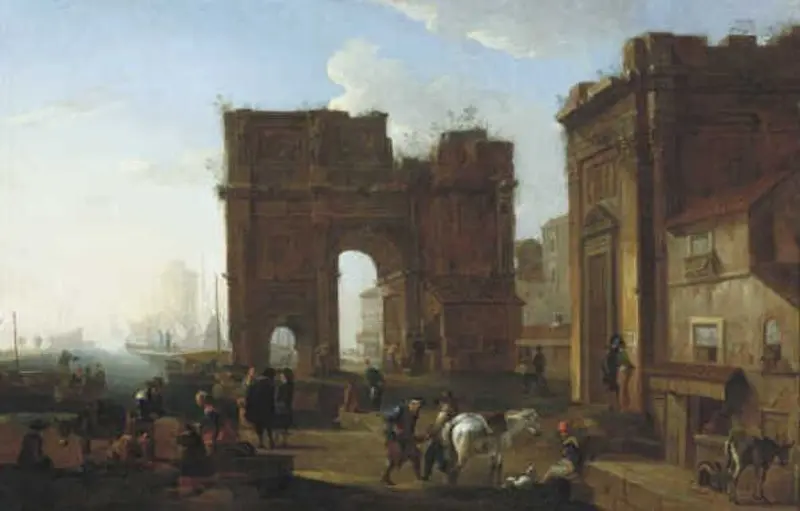
Italian Harbour with Triumphal Arch
Alessandro Salucci
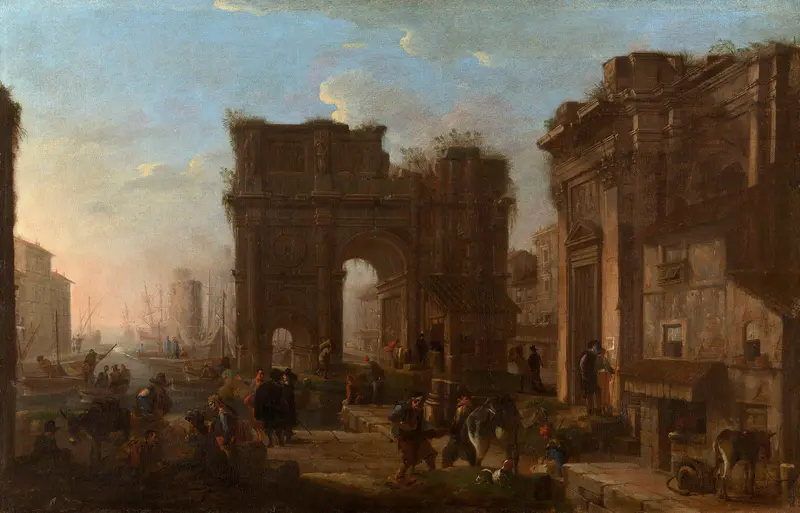
A Seaport with Figures
Alessandro Salucci
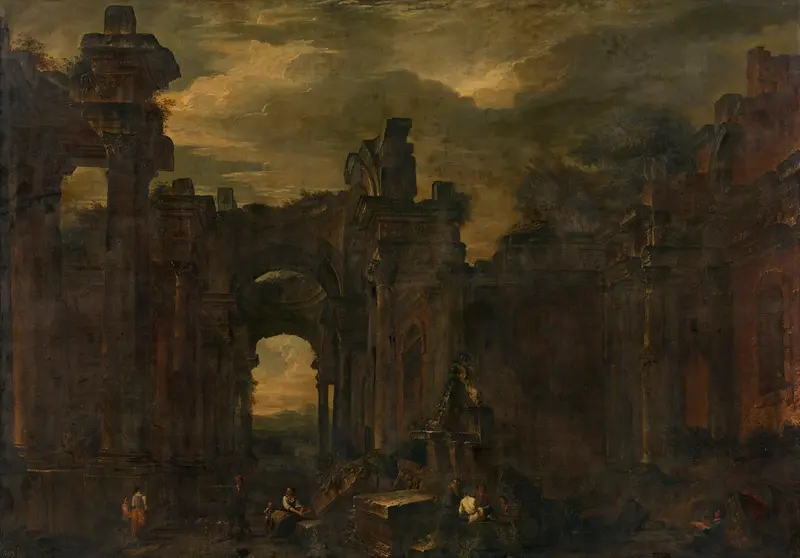
A Ruin
Alessandro Salucci
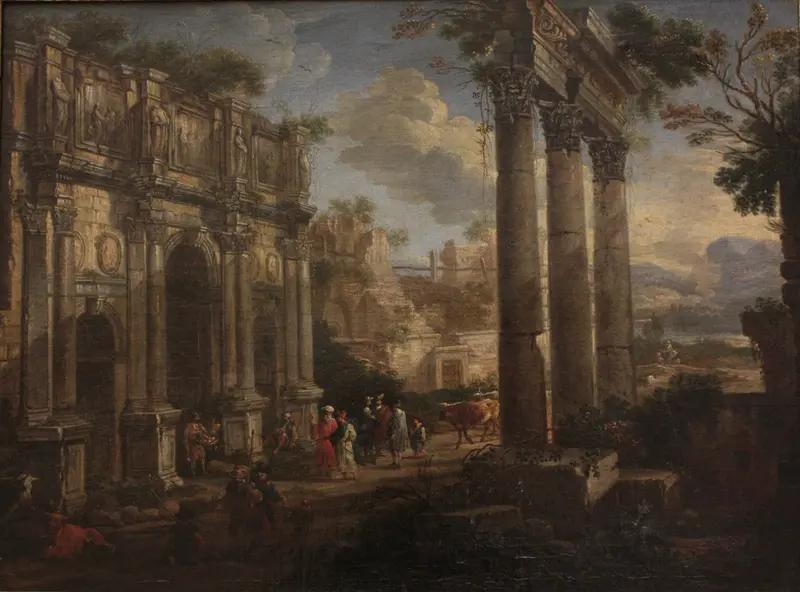
Ruines du forum
Alessandro Salucci





