
A Ruin on the Bank of a River — History & Facts
In the stillness of a landscape, hidden narratives emerge, revealing the delicate balance between ruin and nature’s resilience. Look to the left at the crumbling structure, its weathered stones softly cradled by lush greenery. The artist employs a palette of earthy greens and browns, contrasting the vibrant life surrounding the dilapidation, drawing the viewer's eye to the juxtaposition of decay and vitality. Notice the gentle interplay of light filtering through the trees, illuminating parts of the ruin while casting shadows that whisper of forgotten stories and time's relentless passage. The scene speaks to the cycle of existence, where nature reclaims its domain, and the remnants of human endeavor fade into obscurity.
The water glimmers in the foreground, reflecting not just the ruin but also an eternal dance between past and present. The contrast between the rigid lines of the structure and the flowing river suggests an ongoing dialogue—one of stability and flux, permanence and transience. Each blade of grass encroaching upon the stone hints at the inevitable healing that time brings, even to the most devastated places. Meindert Hobbema painted this work in 1667, during a period when Dutch landscape painting was flourishing.
Living in Amsterdam, he was influenced by the burgeoning interest in nature and realism, echoing the societal shifts of his time. This piece embodies his mastery of landscape, capturing the poise between human creations and the unyielding force of the natural world, while reflecting the quiet introspection characteristic of the Dutch Golden Age.
More Artworks by Meindert Hobbema
Browse all →
The Water Mill (The Trevor Landscape)
Meindert Hobbema

Bewaldete Flusslandschaft mit Figuren auf einem Weg
Meindert Hobbema
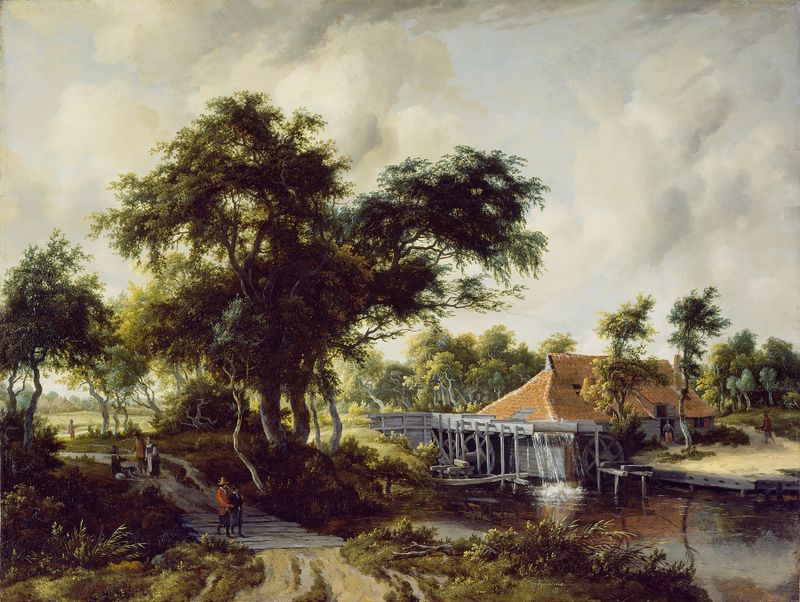
A Watermill
Meindert Hobbema
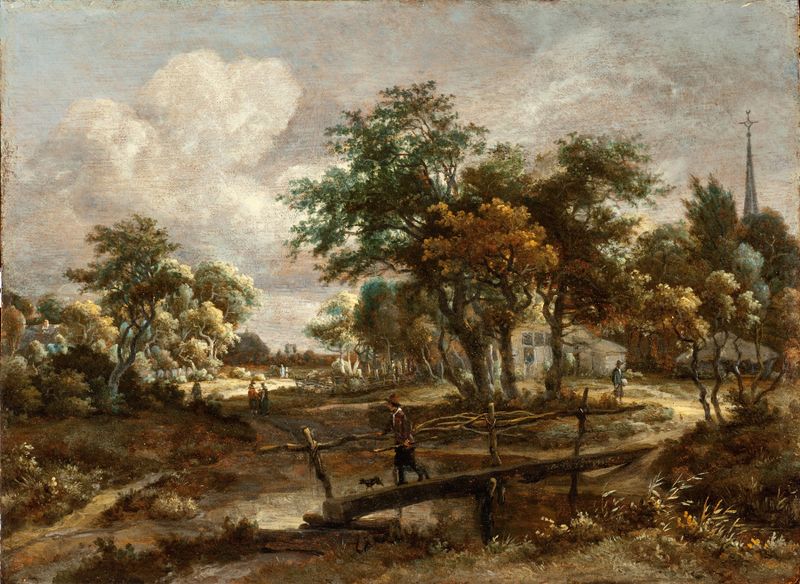
Landscape with a Footbridge
Meindert Hobbema

A Watermill
Meindert Hobbema
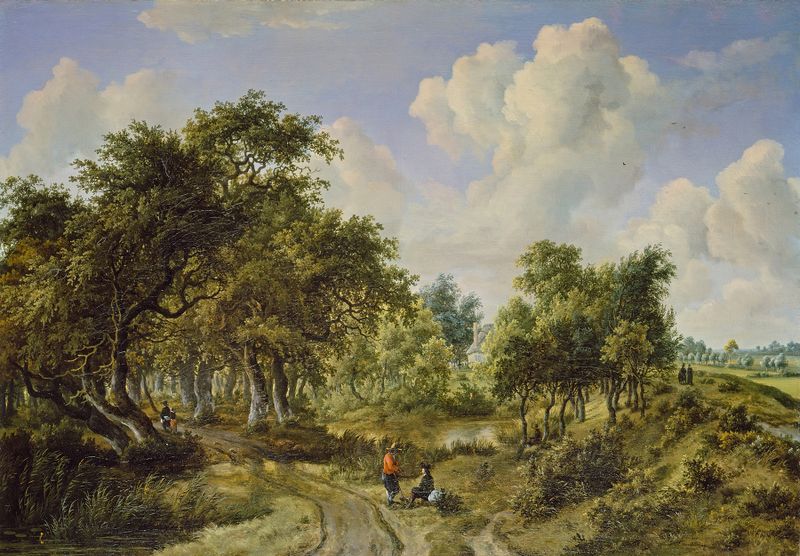
A Wooded Landscape
Meindert Hobbema

A Wooded Landscape
Meindert Hobbema
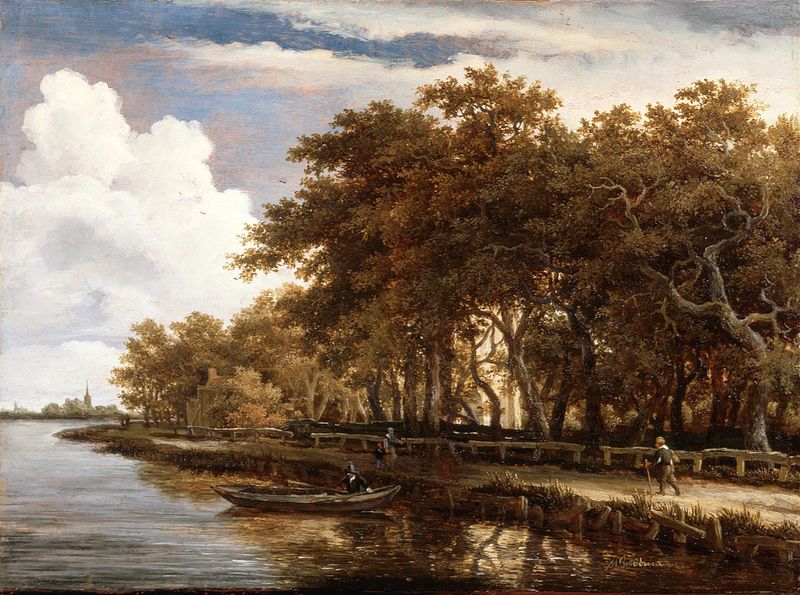
View Along the Amstel
Meindert Hobbema

The Watermill with the Great Red Roof
Meindert Hobbema

Water Mill
Meindert Hobbema





