
A southern port scene with numerous figures on a quayside — History & Facts
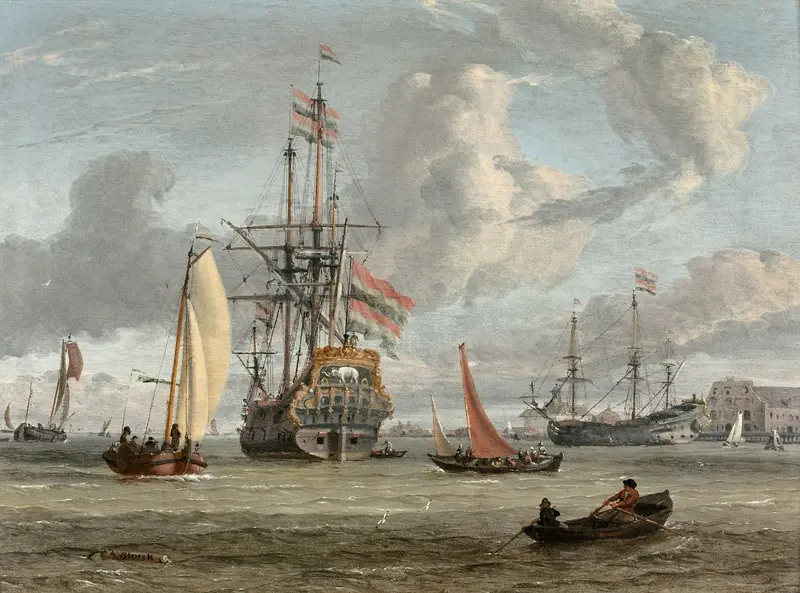
A restless energy animates every inch of A southern port scene with numerous figures on a quayside, drawing the viewer into a stage where commerce, travel, and daily life converge beneath a sky of billowing clouds. The eye is led first by the bold geometry of the ruined arcade at left, its shadowed arches framing a world in motion: merchants lean in conversation, sailors haul barrels, and a dog noses at a puddle in the foreground. The quayside bustles with figures whose gestures—pointing, bargaining, waiting—signal a choreography of anticipation and exchange.
Beyond them, a grand monument rises, crowned by a statue, anchoring the scene as ships unfurl their sails and flags in the shifting light. The Dutch tricolor flutters from a proud stern, reminding us that this is a port open to the world, where fortunes are made and stories begin. This kind of animated harbor scene flourished in the 17th-century Netherlands, when artists like Abraham Storck captured the drama and promise of maritime life for a society bound to the sea. Such paintings were prized by merchants and collectors who saw in them both a record of their world and a celebration of its possibilities.
The date—recorded as 1600s—places this work squarely in the Dutch Golden Age, when the Republic’s ships ranged across the globe and port cities swelled with new arrivals, goods, and ideas. While the details of this painting’s commission and journey remain obscure, its presence in a modern collection is a testament to the enduring fascination of these painted harbors, where every figure and sail invites us to imagine the lives unfolding within. Let your gaze linger on the horizon, where the next ship is always about to depart.
More Artworks by Abraham Storck

The Muscovite legation visiting Amsterdam, 29 August 1697
Abraham Storck
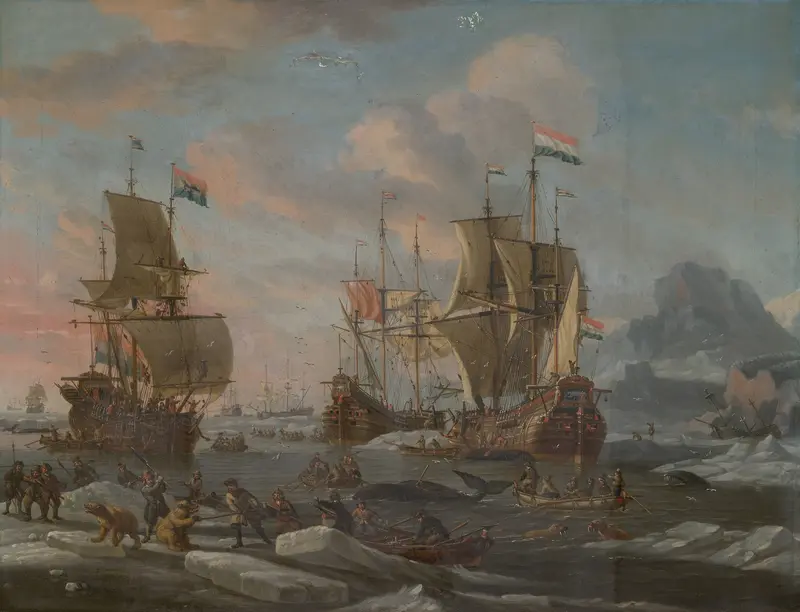
The Dutch Whaling Fleet
Abraham Storck
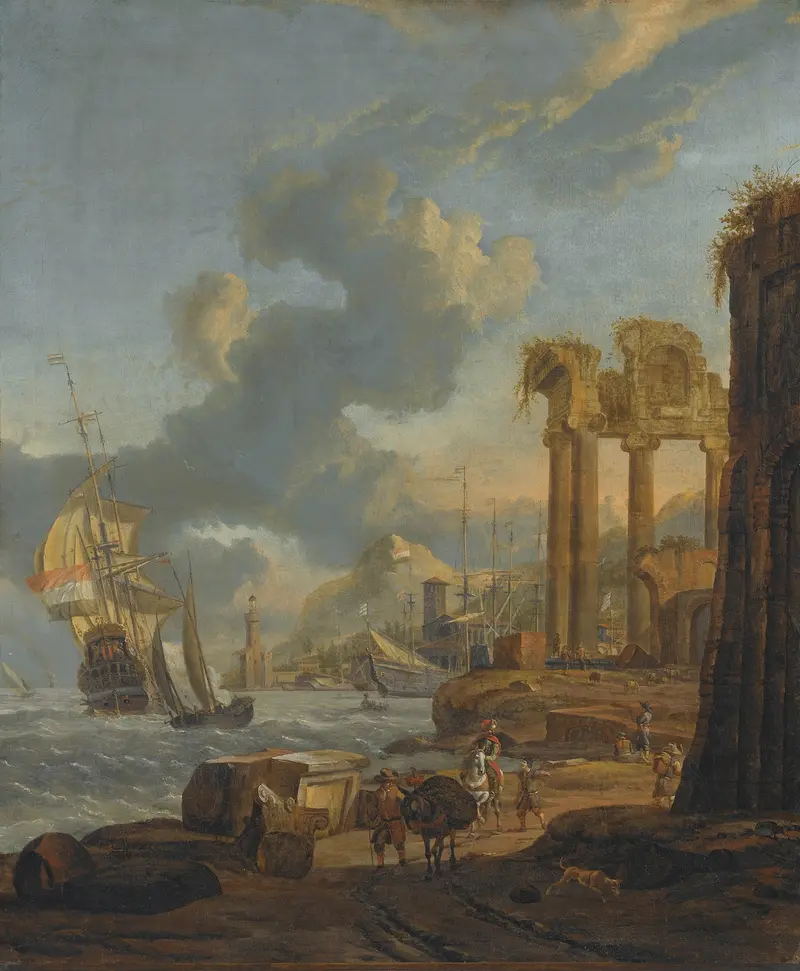
A Mediterranean Harbour Scene With Travellers On The Shore, A Dutch Man-Of-War On The Left
Abraham Storck
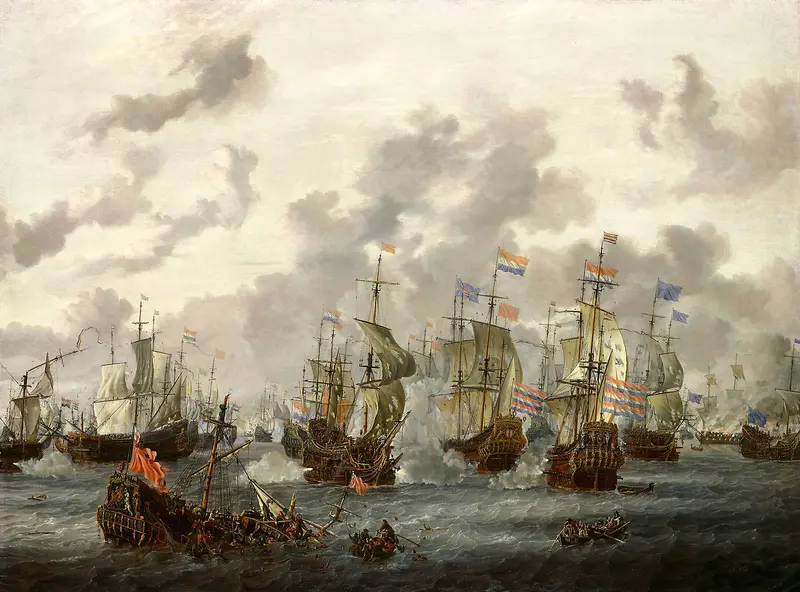
The Four Days’ Battle
Abraham Storck
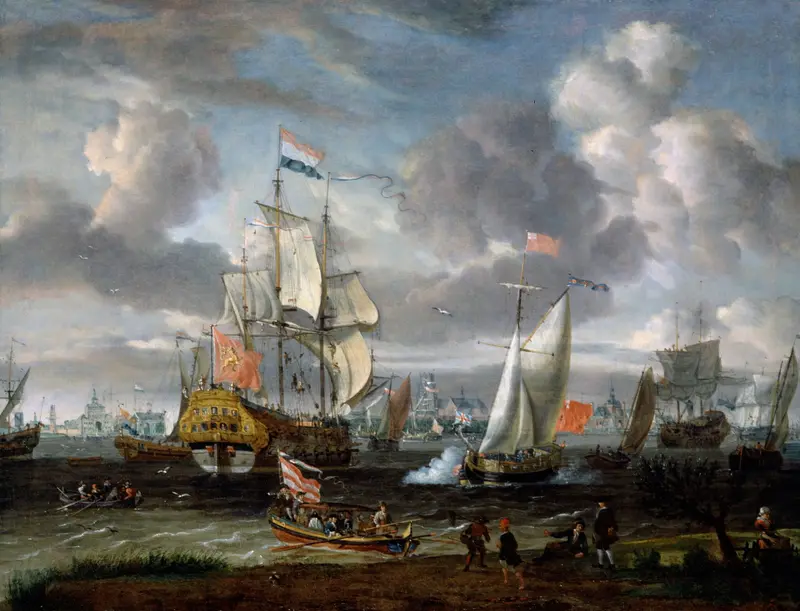
An English Yacht saluting a Dutch Man-of-War in the port of Rotterdam
Abraham Storck
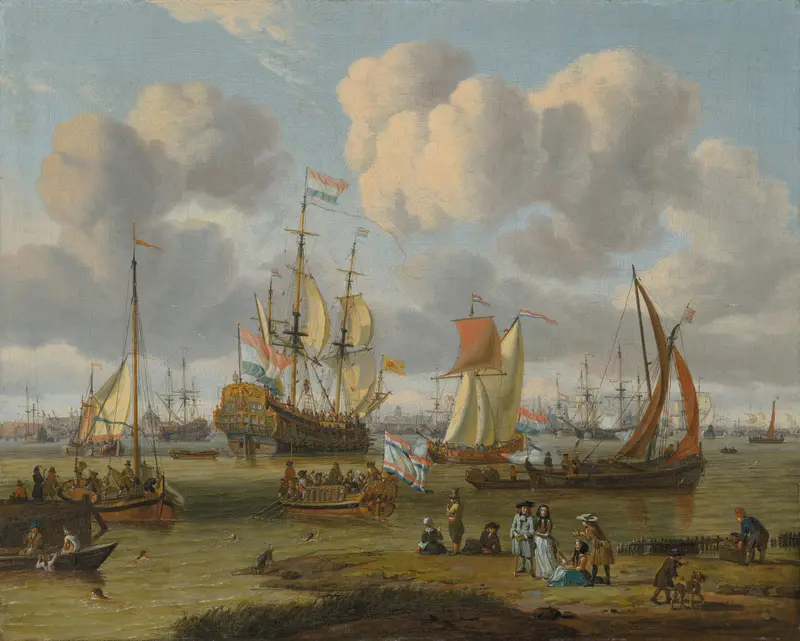
Shipping off Amsterdam with figures on a quay
Abraham Storck
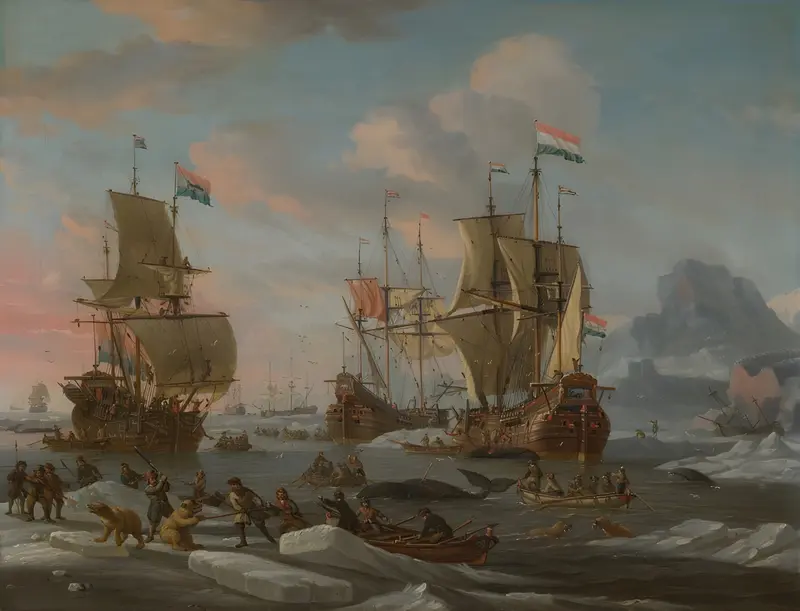
The Dutch Whaling Fleet
Abraham Storck
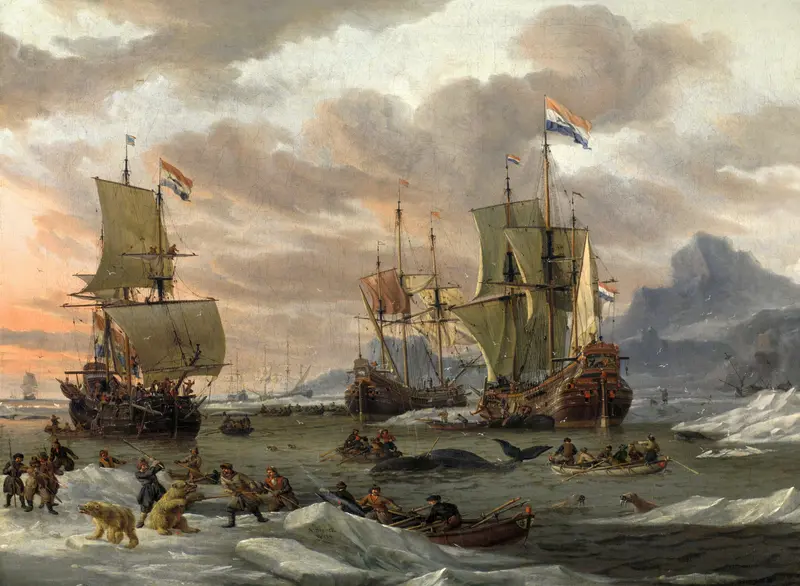
Whaling Grounds in the Arctic Ocean
Abraham Storck
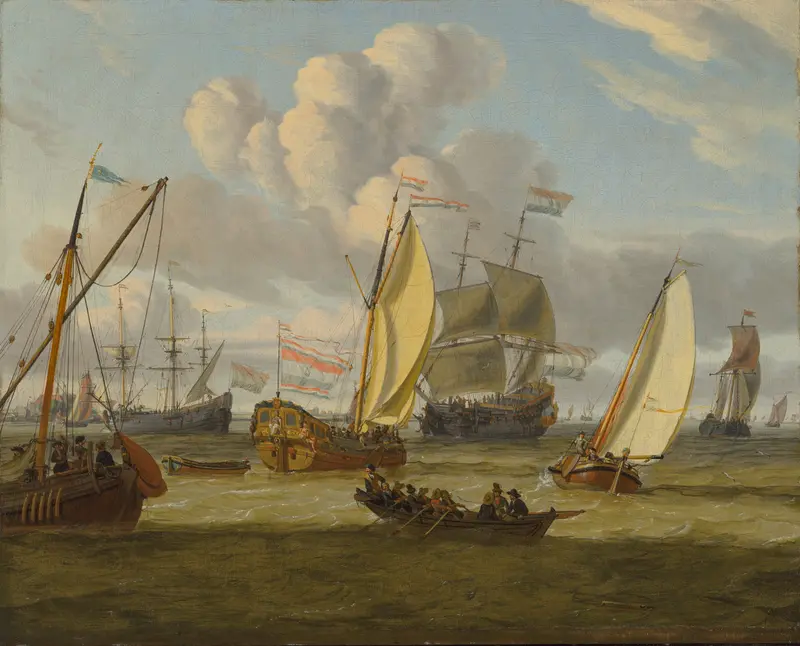
Shipping in an estuary
Abraham Storck
Grand navire de la couronne du Danemark près d’un littoral
Abraham Storck





