
A Stormy Landscape — History & Facts
Who listens when art speaks of silence? In the tumult of nature's fury, a stillness pervades the scene, inviting contemplation and introspection. Look to the center of the canvas where dark, swirling clouds loom ominously, their weight palpable against the lighter horizon. The rich greens of the landscape contrast with the foreboding sky, while a lone tree stands defiantly against the storm, its gnarled branches reaching out, as if to grasp the fading light. The interplay of dramatic shadows and fleeting highlights creates a tension that pulls the viewer into this fleeting moment—a landscape caught between chaos and tranquility. Beneath the surface, emotions pulse through the details.
The tree, a symbol of resilience, stands in stark contrast to the impending storm, representing how nature's fury can evoke both fear and reverence. The dappled sunlight breaking through the clouds suggests a fleeting hope amidst turmoil, inviting viewers to reflect on life's unpredictability. It’s as if the landscape holds its breath, caught in a moment of anticipation and uncertainty. Meindert Hobbema painted this work between 1663 and 1665 during a period marked by a flourishing interest in landscape painting in the Dutch Golden Age.
While he was establishing his reputation in Haarlem, contemporaries like Jacob van Ruisdael were also exploring similar themes. Hobbema’s focus on the natural world and its emotional resonance mirrored the broader artistic shift of the time, reflecting the complex relationship between humanity and the environment.
More Artworks by Meindert Hobbema
Browse all →
The Water Mill (The Trevor Landscape)
Meindert Hobbema

Bewaldete Flusslandschaft mit Figuren auf einem Weg
Meindert Hobbema
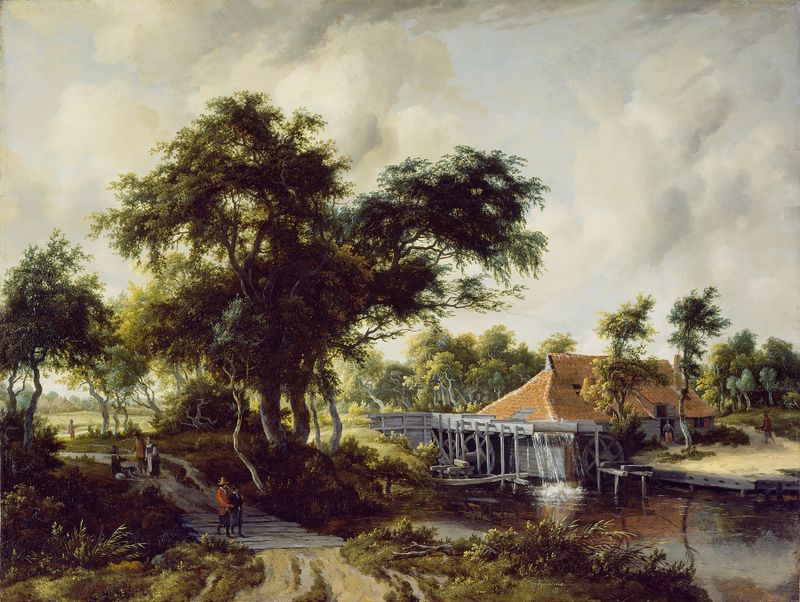
A Watermill
Meindert Hobbema
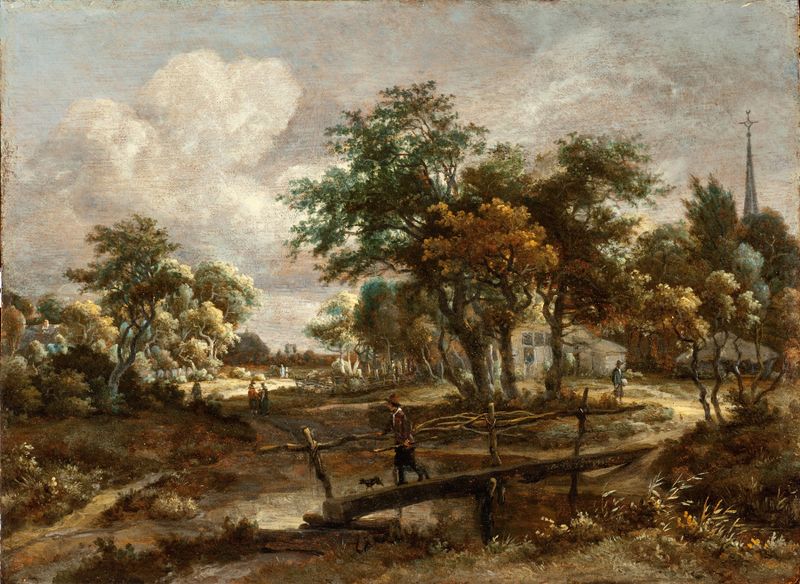
Landscape with a Footbridge
Meindert Hobbema

A Watermill
Meindert Hobbema
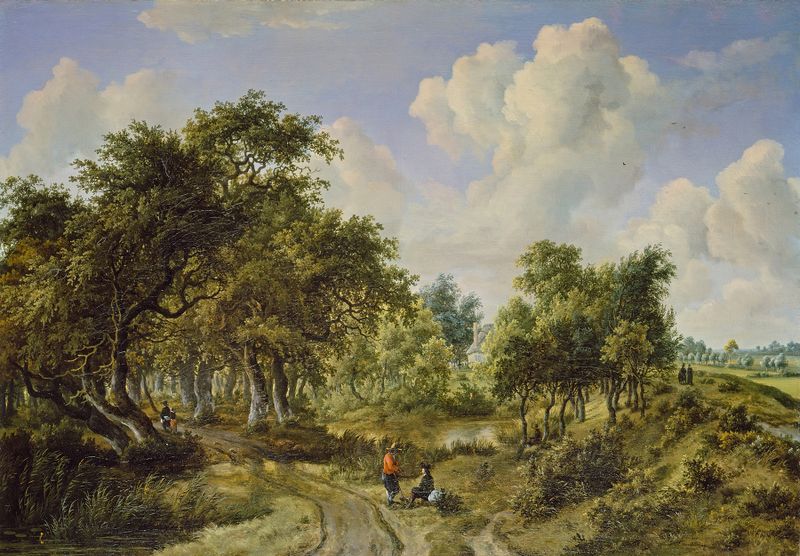
A Wooded Landscape
Meindert Hobbema

A Wooded Landscape
Meindert Hobbema
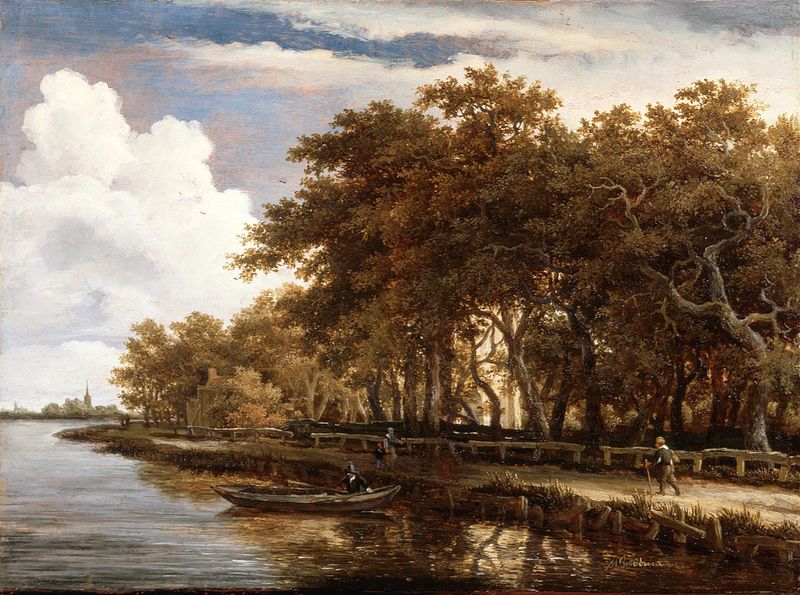
View Along the Amstel
Meindert Hobbema

The Watermill with the Great Red Roof
Meindert Hobbema

Water Mill
Meindert Hobbema





