
A View of Melibokus and The Bergstrasse — History & Facts
The first thing that catches the eye in A View of Melibokus and The Bergstrasse is the way the evening light pours over the distant hills, bathing the entire valley in a golden haze that feels both intimate and expansive. The painter, August Becker, draws you into a moment of quiet encounter: two small figures, almost lost in the foreground, pause at the edge of a humble shelter, their presence a gentle reminder of human life nestled within the vastness of nature. The eye is led from these figures, across the textured scrub and tangled undergrowth, toward the rolling green slopes and the blue-shadowed mountains beyond.
The low horizon gives the sky a commanding presence, its pale gradient suggesting the lingering warmth of late afternoon and the promise of coming dusk. Painted in 1866, this landscape belongs to a period when German artists were deeply engaged with the natural world, balancing precise observation with a sense of national pride in their native scenery. Works like this were often commissioned or collected by those eager to celebrate regional identity or the quiet dignity of rural life. The painting now forms part of the Royal Collection, but little else is recorded of its early journey or reception.
In an era when industrialization was reshaping Europe, such images offered viewers a vision of stability and rootedness—an invitation to linger in the golden light and trace the contours of a land both familiar and quietly monumental.
More Artworks by August Becker

Hirsche und alte Eiche nahe der Wallwitzburg bei Dessau
August Becker
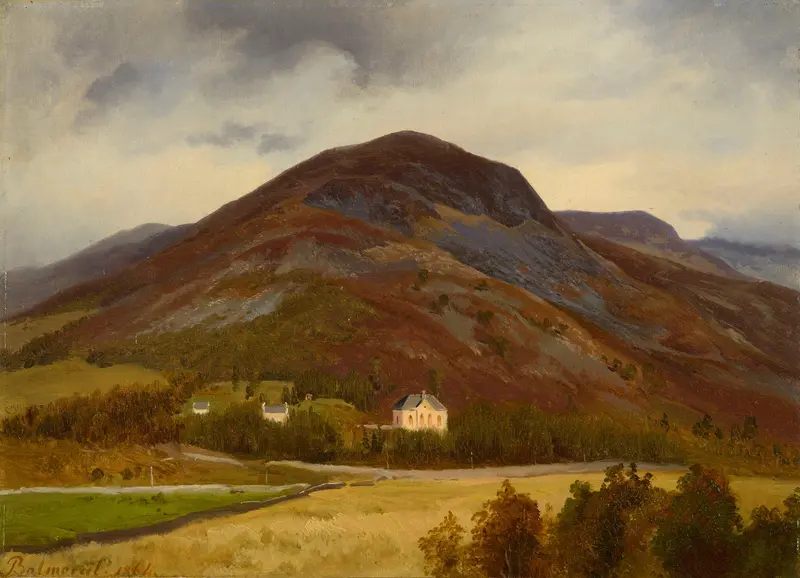
A View of the Church at Crathie
August Becker
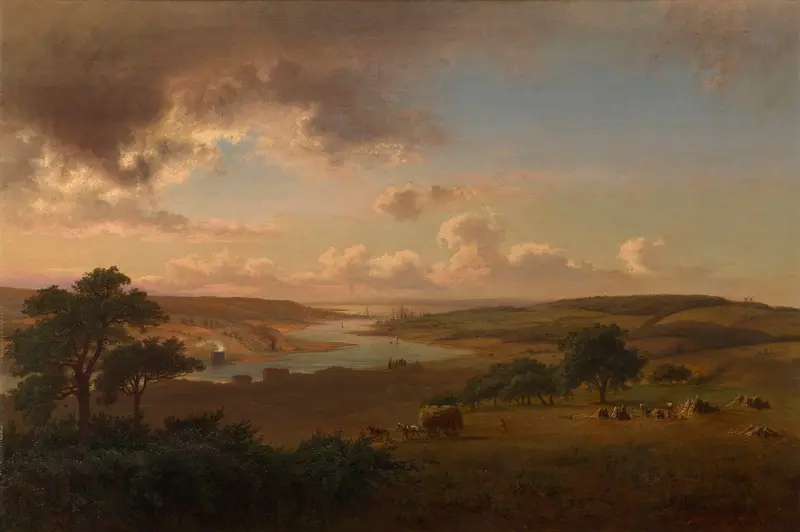
A View of Cowes
August Becker
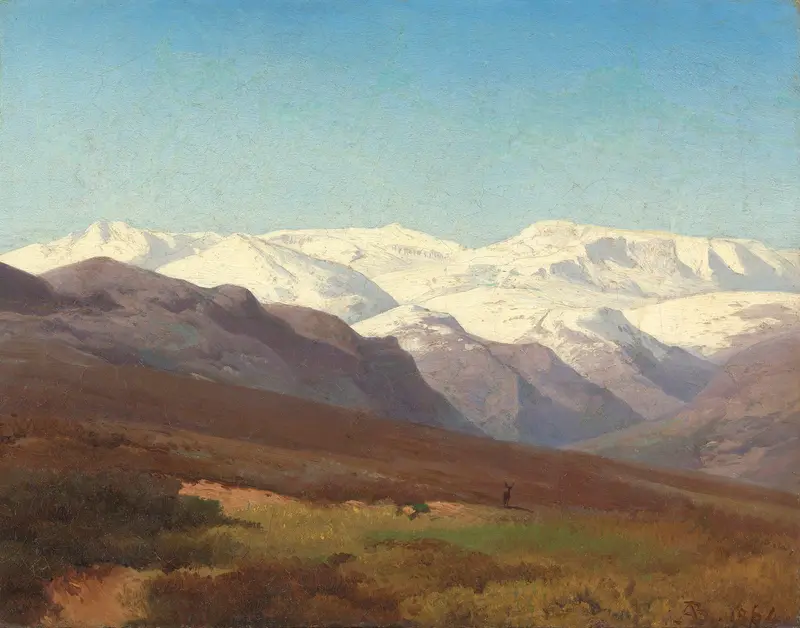
Glen Gelder
August Becker
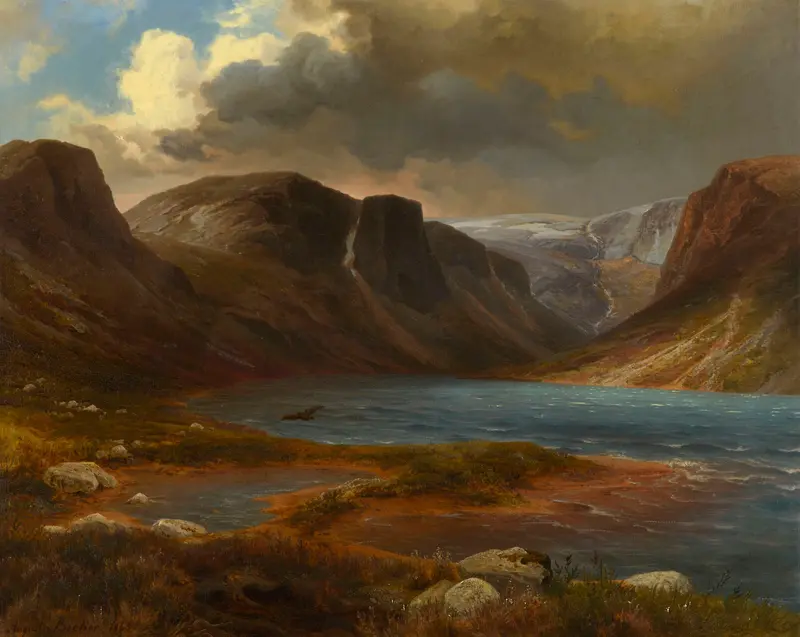
Loch Avon
August Becker
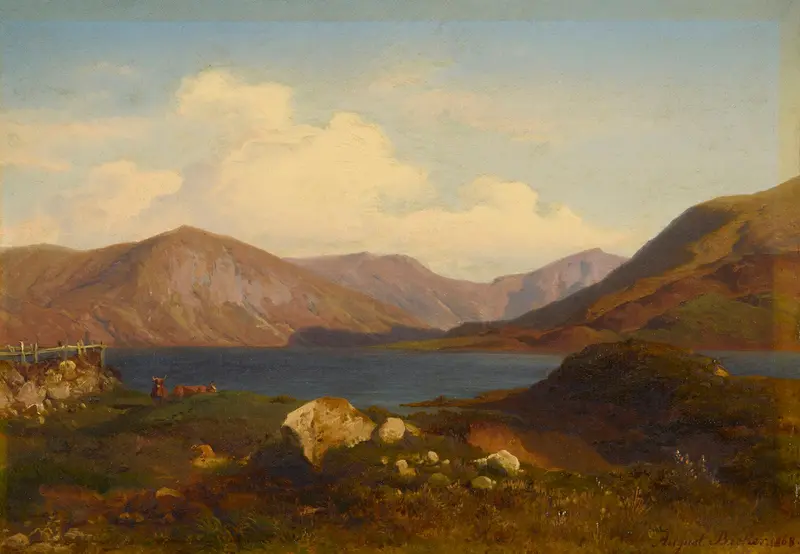
Loch Callater
August Becker
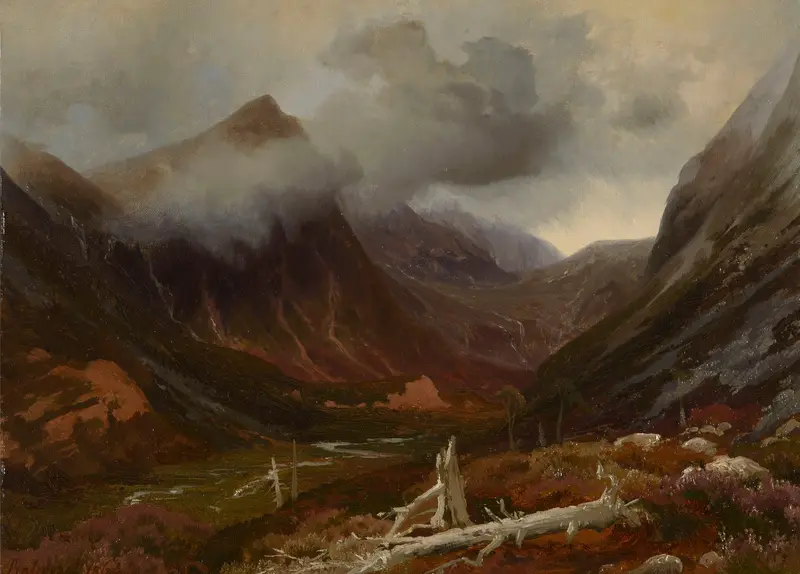
A View in Glen Derry (?)
August Becker
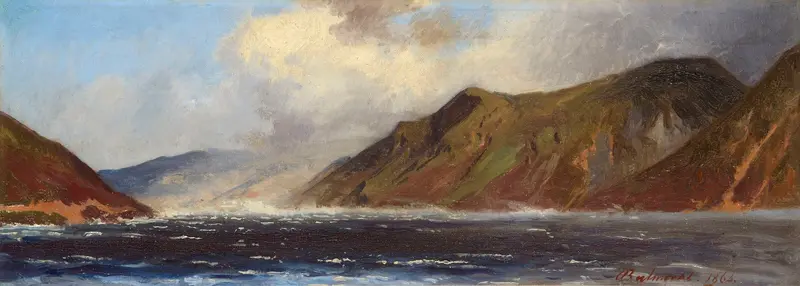
A Storm on Loch Muick
August Becker
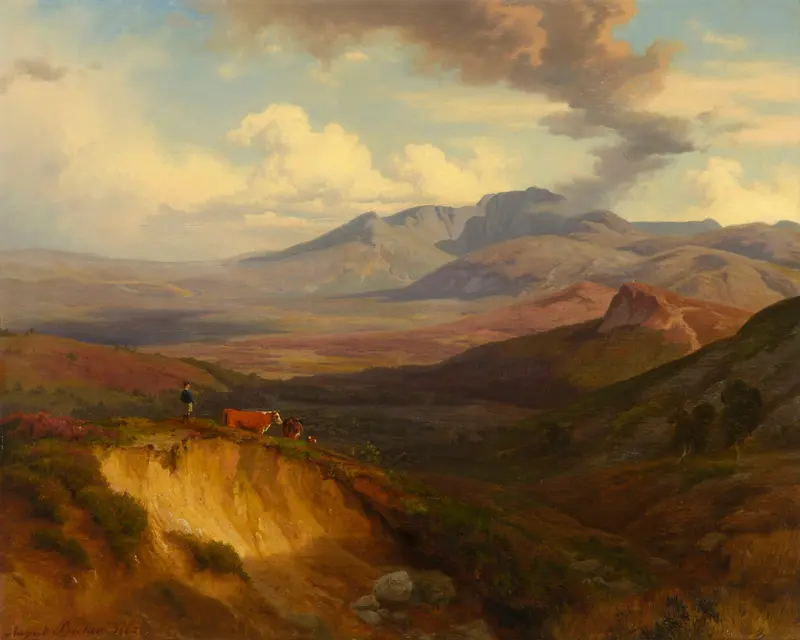
Glen Gelder and Lochnagar
August Becker
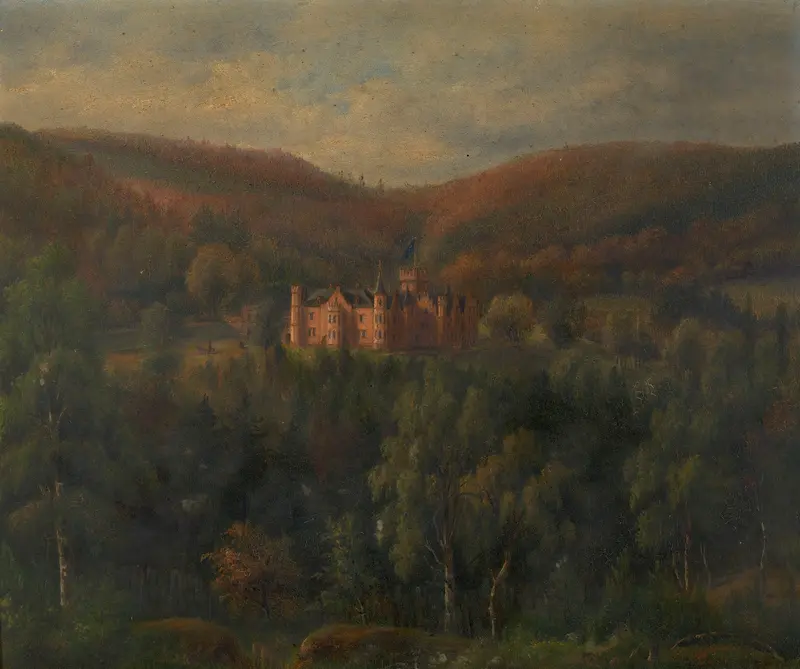
A view of Schloss Waldleiningen
August Becker
More Landscape Art

The Starry Night
Vincent van Gogh

View of Delft
Johannes Vermeer

Water Lilies
Claude Monet

The Grand Canal, Venice, looking north-west from the Ca' Corner to the Ca' Contarini degli Scrigni, with the campanile of Santa Maria della Carità
Canaletto

Windsor Castle
Canaletto

The Grand Canal looking North-East from the Palazzo Dolfin-Manin to the Rialto Bridge
Canaletto