
A View of the Church at Crathie — History & Facts
A single white church, almost swallowed by the vastness of the Scottish hills, quietly claims the foreground of A View of the Church at Crathie. The painter, August Becker, draws your gaze first to that pale, geometric shape—its walls catching what little light breaks through a sky heavy with cloud. The church is not alone: a handful of cottages nestle nearby, but it is the sweep of the mountain, rendered in earthy reds and muted greens, that dominates the scene.
The low horizon and the sheer scale of the hill give the landscape a sense of quiet awe, making the human presence feel both fragile and persistent. Painted in 1864, this work belongs to a period when landscape painting was both a celebration of nature’s grandeur and a record of place. The church at Crathie, set against the rolling terrain, hints at the growing popularity of the Scottish Highlands as a subject for artists and travelers alike. Such paintings were often commissioned or collected as mementos of journeys or as tributes to the wild beauty of the land, especially as the Victorian era’s fascination with the picturesque took hold.
Now held in the Royal Collection, this modest yet absorbing view stands as a reminder of how art can elevate a quiet corner of the world—inviting us to look longer, and perhaps to imagine ourselves standing in that soft Highland light.
More Artworks by August Becker

Hirsche und alte Eiche nahe der Wallwitzburg bei Dessau
August Becker
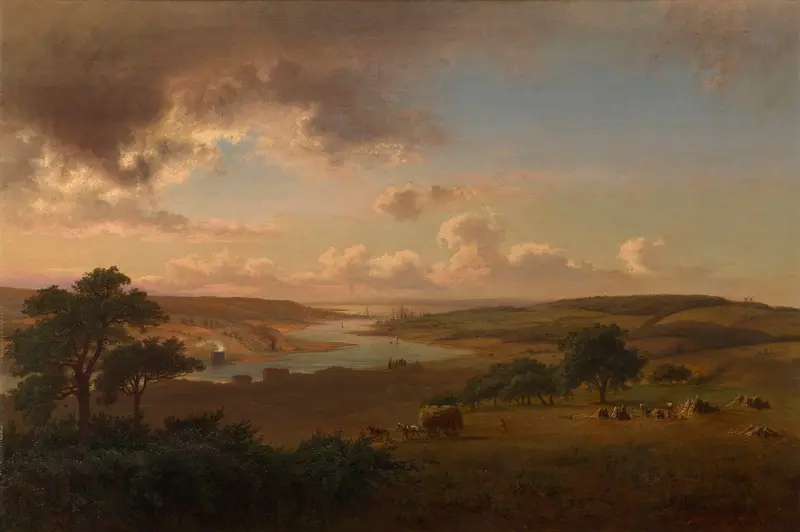
A View of Cowes
August Becker
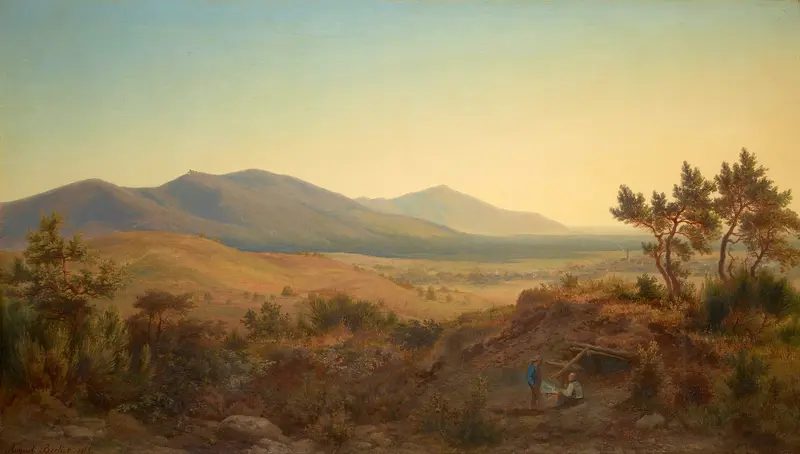
A View of Melibokus and The Bergstrasse
August Becker
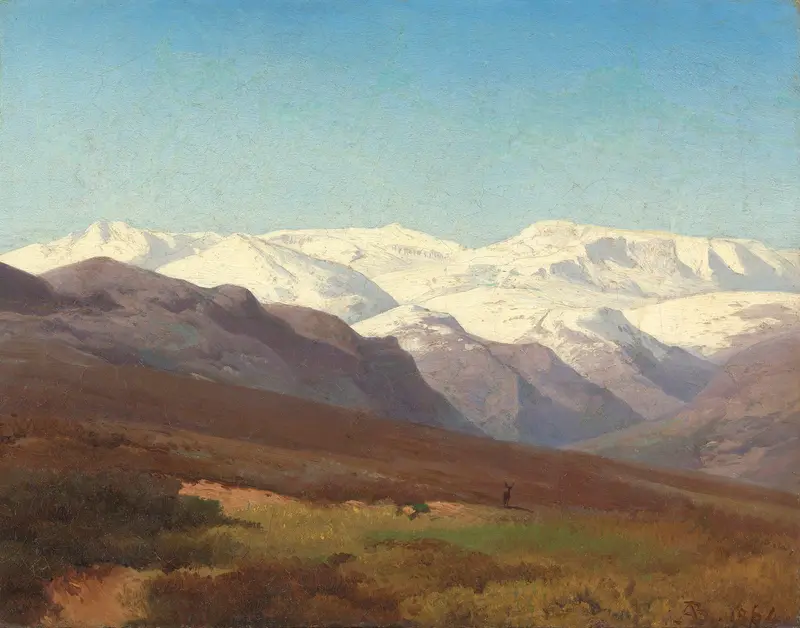
Glen Gelder
August Becker
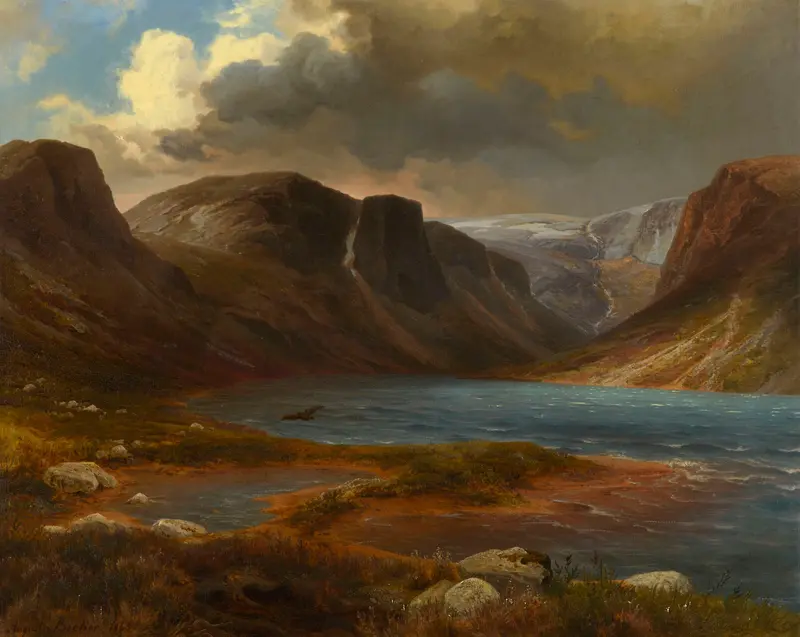
Loch Avon
August Becker
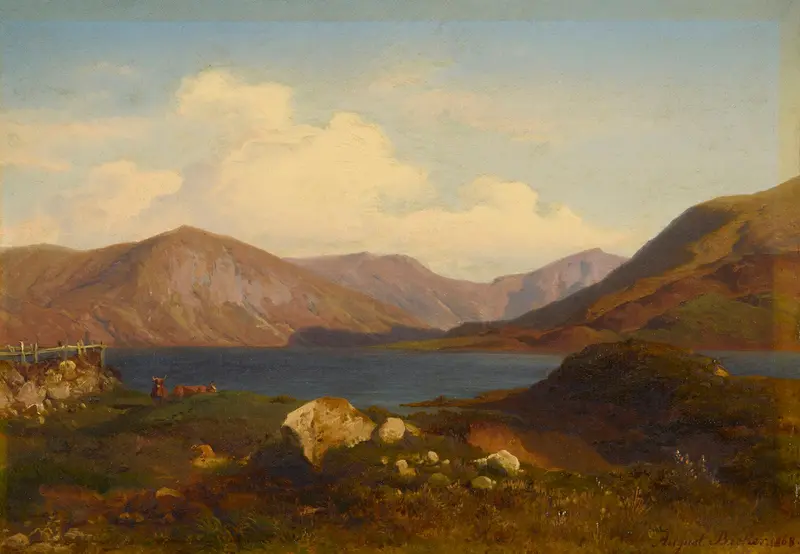
Loch Callater
August Becker
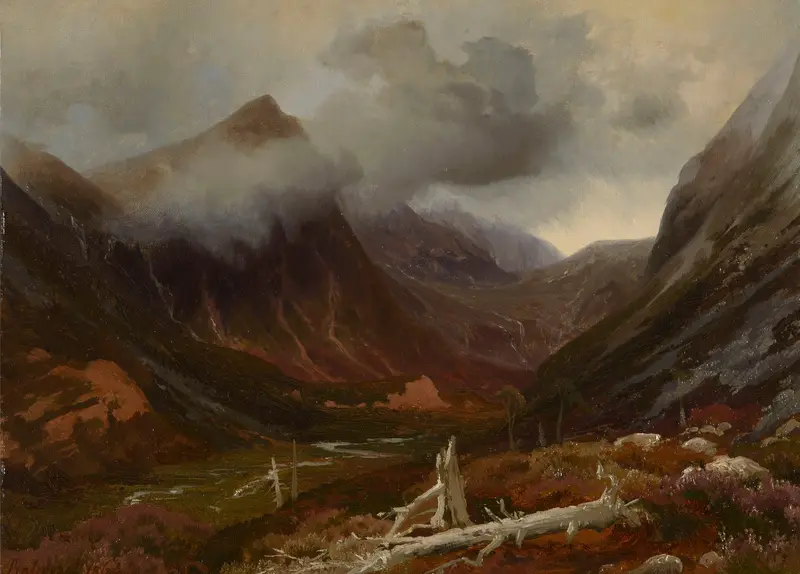
A View in Glen Derry (?)
August Becker
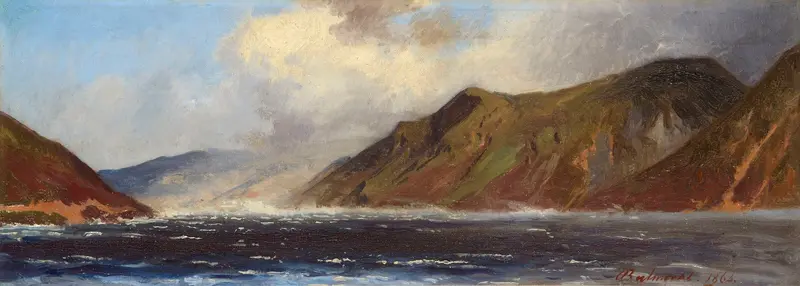
A Storm on Loch Muick
August Becker
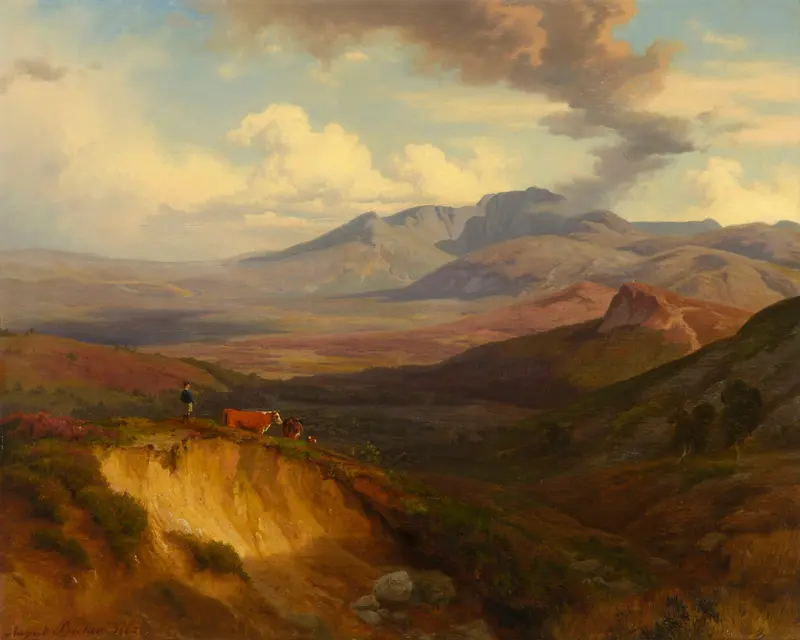
Glen Gelder and Lochnagar
August Becker
A view of Schloss Waldleiningen
August Becker
More Landscape Art

The Starry Night
Vincent van Gogh

View of Delft
Johannes Vermeer

Water Lilies
Claude Monet

The Grand Canal, Venice, looking north-west from the Ca' Corner to the Ca' Contarini degli Scrigni, with the campanile of Santa Maria della Carità
Canaletto

Windsor Castle
Canaletto

The Grand Canal looking North-East from the Palazzo Dolfin-Manin to the Rialto Bridge
Canaletto