
A. W. Boesen, Bjerglandskab i nærheden af byen Altorf i Frankrig — History & Facts
A solitary roadside shrine, its red-tiled roof catching the afternoon light, stands as a silent witness to the passage of travelers in A. W. Boesen, Bjerglandskab i nærheden af byen Altorf i Frankrig by August Wilhelm Boesen.
The painter draws the viewer’s gaze along the winding path, where two figures pause—one upright, gesturing, the other seated in rest—inviting us to imagine the stories exchanged in this brief moment of respite. The shrine itself, nestled beneath a broad tree, suggests a place of reflection or gratitude, a marker of safety on a journey through wild terrain. Beyond, the landscape unfolds in layers: rocky foreground, lush greenery, and, finally, the distant, snow-tipped peaks that rise above the haze.
The play of light and shadow not only carves out the forms of the mountains but also creates a sense of depth and tranquility, as if time itself has slowed to honor the travelers’ pause. Painted in 1855, this scene belongs to a moment in European art when landscapes were more than mere records of place—they were invitations to contemplate nature’s grandeur and the human place within it. Such works, often commissioned for private homes or collected by those with a taste for the picturesque, reflect a growing fascination with travel, pilgrimage, and the restorative power of the outdoors. The presence of the vejalter, or wayside altar, grounds the painting in a Catholic tradition of marking journeys with prayer, while the careful rendering of the terrain speaks to the era’s blend of observation and idealization.
Though history has kept few traces of Boesen’s career, this painting survives in the collection of www.bruun-rasmussen.dk, a quiet testament to the enduring allure of the path, the pause, and the promise of distant peaks.
More Artworks by August Wilhelm Boesen

Kystparti med stenet strand
August Wilhelm Boesen
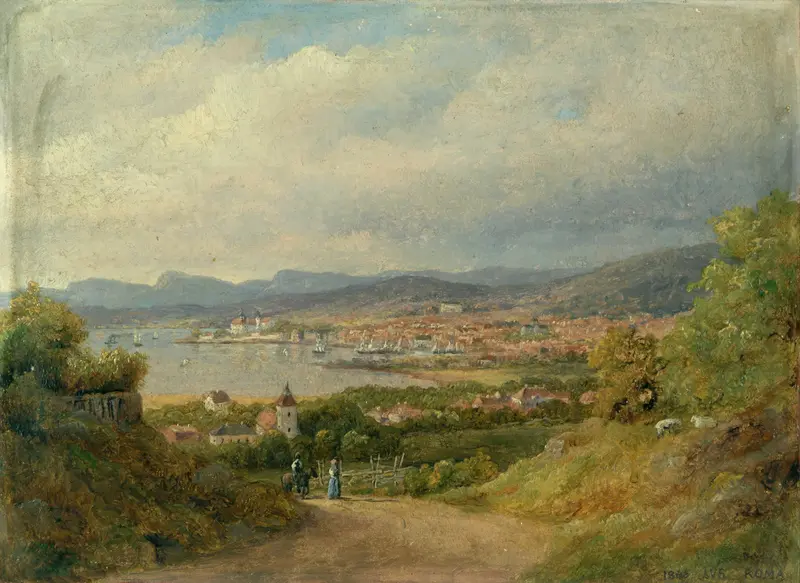
Christiania from Ekeberg
August Wilhelm Boesen
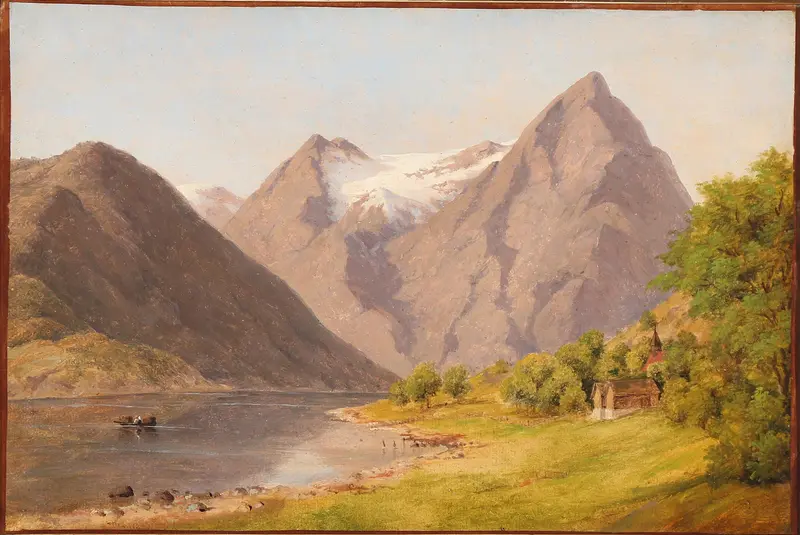
Cottages by a lake in the Alps
August Wilhelm Boesen
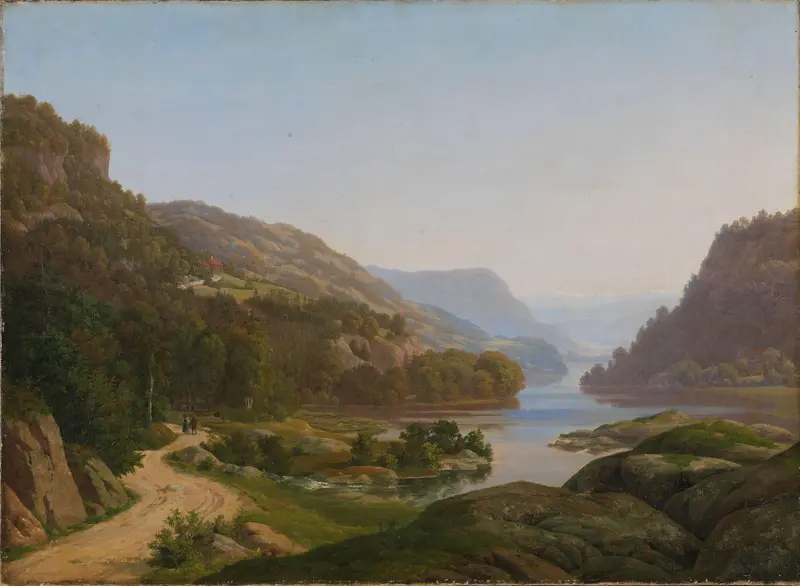
Drammenselven
August Wilhelm Boesen
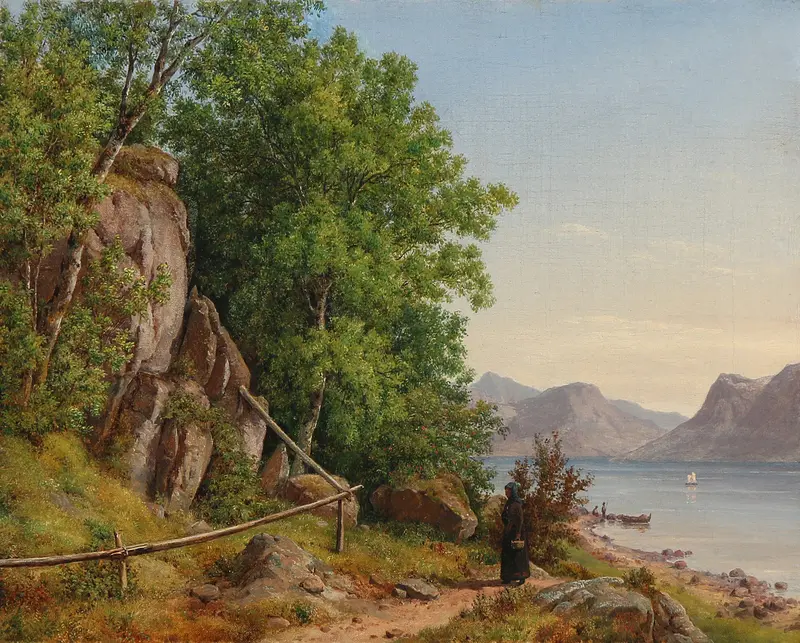
From Veøya in Norway
August Wilhelm Boesen
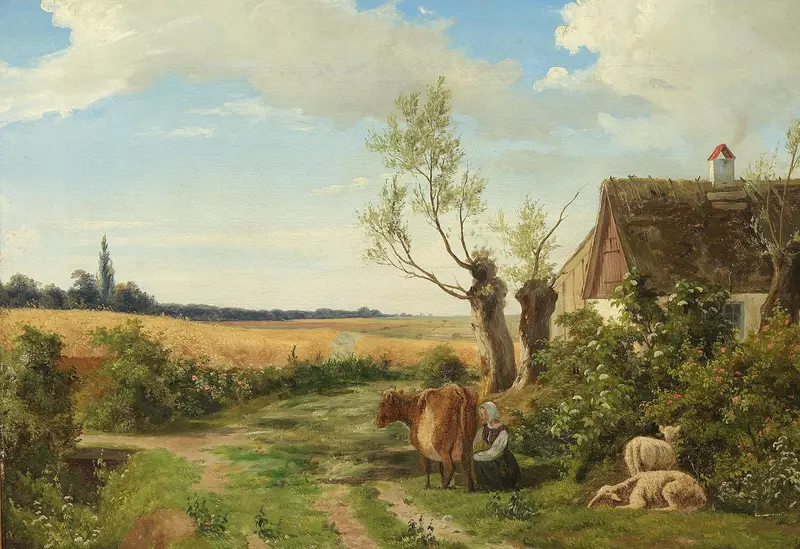
Landscape at a farmhouse.
August Wilhelm Boesen
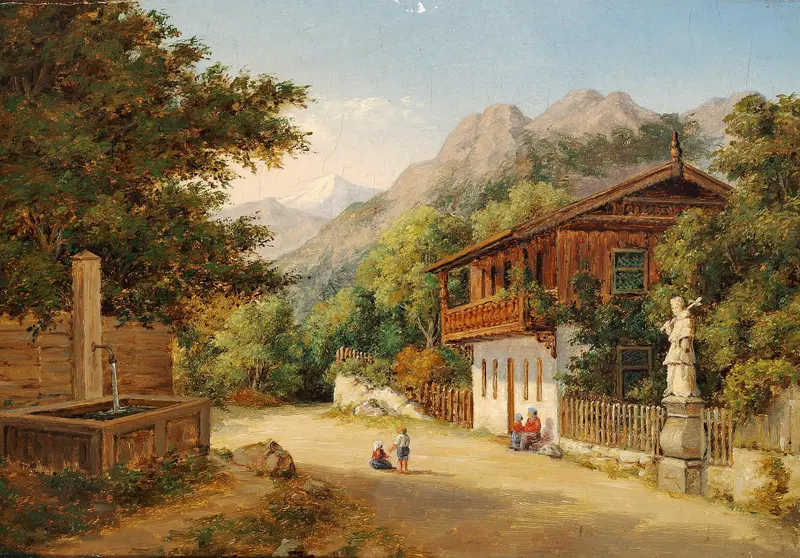
Mountain village in Southern Germany.
August Wilhelm Boesen
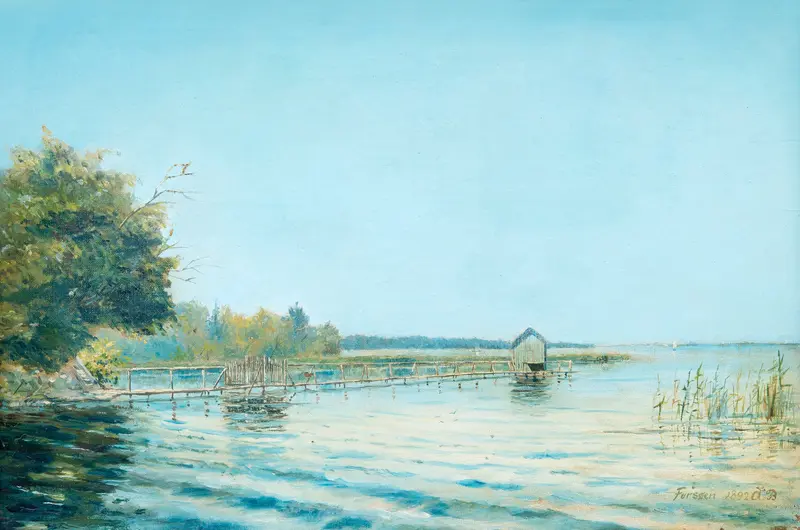
Summer day
August Wilhelm Boesen
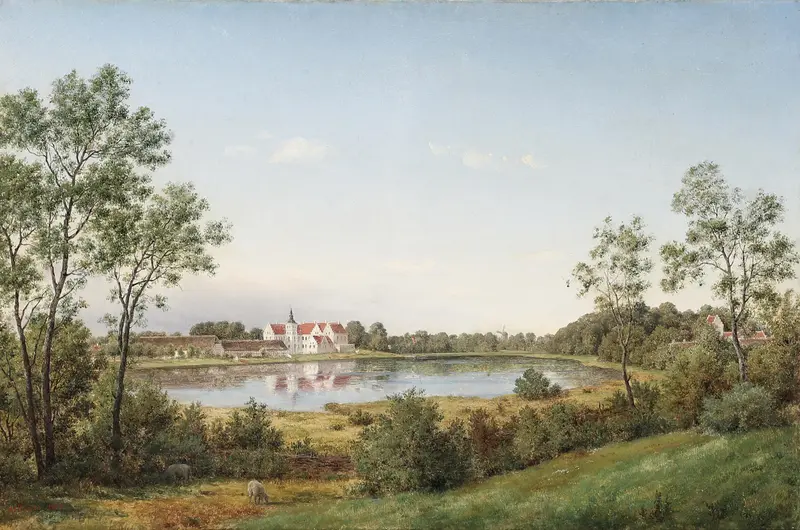
A view of the renaissance manor, Søbysøgaard, on Funen.
August Wilhelm Boesen
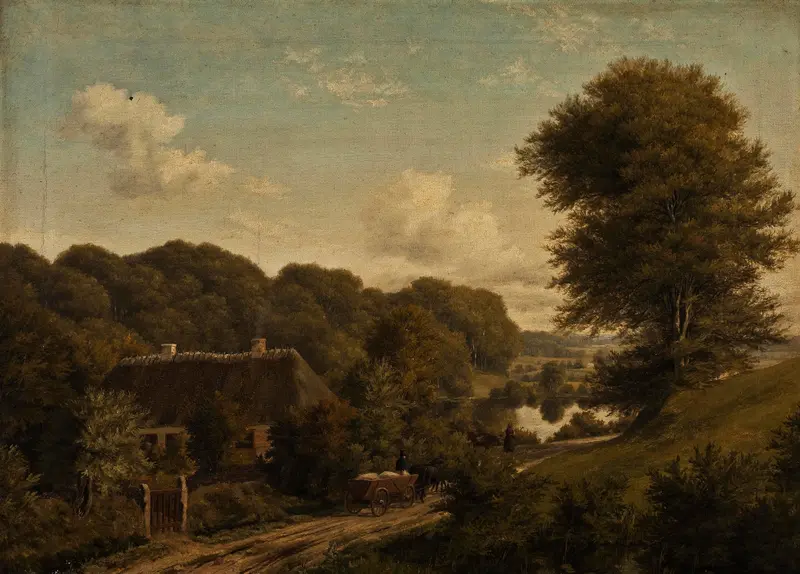
Danish Landscape
August Wilhelm Boesen
More Landscape Art

The Starry Night
Vincent van Gogh

View of Delft
Johannes Vermeer

Water Lilies
Claude Monet

The Grand Canal, Venice, looking north-west from the Ca' Corner to the Ca' Contarini degli Scrigni, with the campanile of Santa Maria della Carità
Canaletto

Windsor Castle
Canaletto

The Grand Canal looking North-East from the Palazzo Dolfin-Manin to the Rialto Bridge
Canaletto