
Christiania from Ekeberg — History & Facts
A wide, sunlit sky commands the scene, drawing the viewer’s gaze upward before letting it drift down over the sweep of hills, clustered rooftops, and the glimmering water that divides the city from the countryside. The eye is led along a winding path where two small figures—a woman and a rider—pause, as if to take in the same panorama. The city below, with its busy harbor dotted by white sails, seems both close and distant, a place of bustling life seen from the quiet remove of nature.
The painter’s brush lingers on the shifting greens and golds of the foliage, the soft haze of distance, and the way the light picks out the spires and towers of Christiania. Every element is arranged to draw the viewer into the moment of arrival, the hush before descent into the city’s embrace. Painted in 1845, Christiania from Ekeberg belongs to a tradition of panoramic city views that flourished in the nineteenth century, when urban expansion and national identity were reshaping the landscapes of Europe. Such works were often commissioned by local patrons or civic leaders eager to celebrate the growing stature of their towns, or by travelers wishing to capture the memory of a place newly visited.
The artist, August Wilhelm Boesen, here offers not just a record of the city’s appearance, but a vision shaped by the era’s fascination with nature, progress, and the pleasures of observation. Now held by Oslo Museum (accession number OB.01045), the painting stands as a quiet witness to a time when the city’s skyline was still edged by fields and forests—inviting us to linger, as the figures do, at the threshold between country and town.
More Artworks by August Wilhelm Boesen

Kystparti med stenet strand
August Wilhelm Boesen
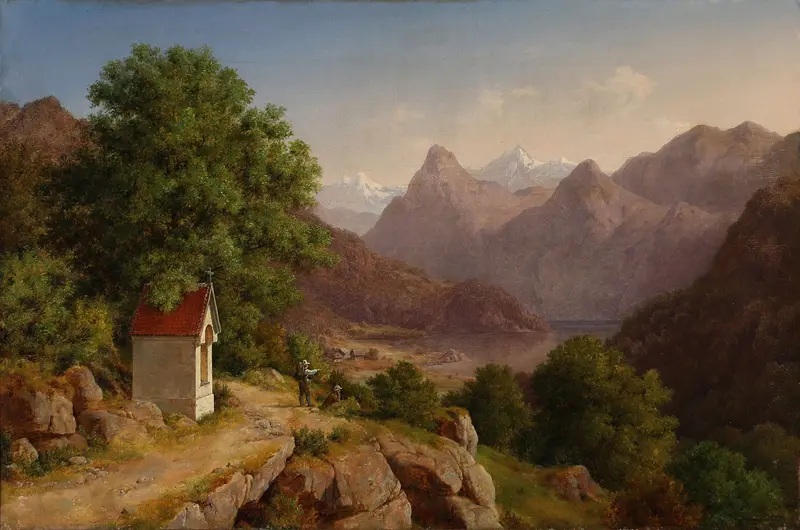
A. W. Boesen, Bjerglandskab i nærheden af byen Altorf i Frankrig
August Wilhelm Boesen
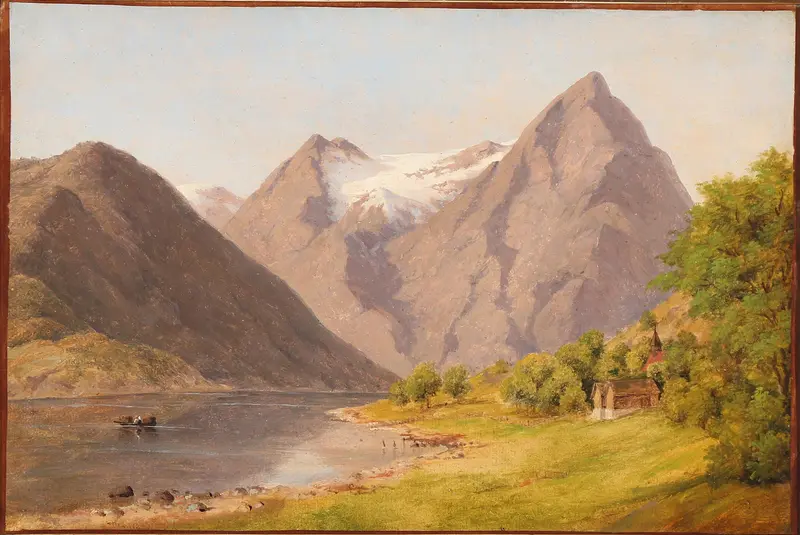
Cottages by a lake in the Alps
August Wilhelm Boesen
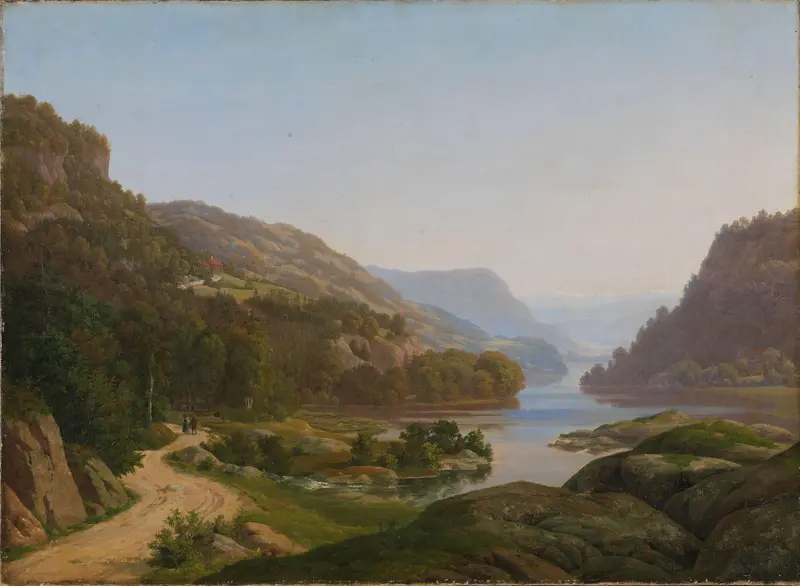
Drammenselven
August Wilhelm Boesen
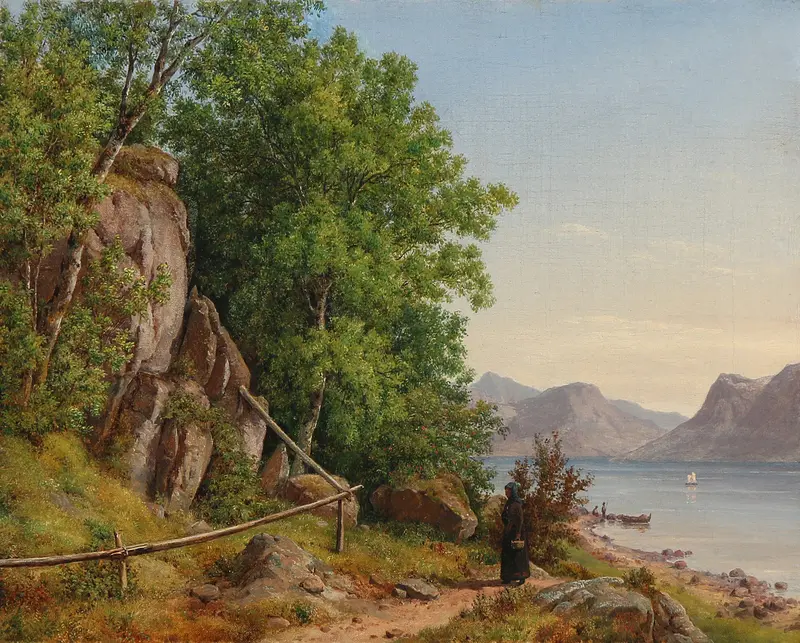
From Veøya in Norway
August Wilhelm Boesen
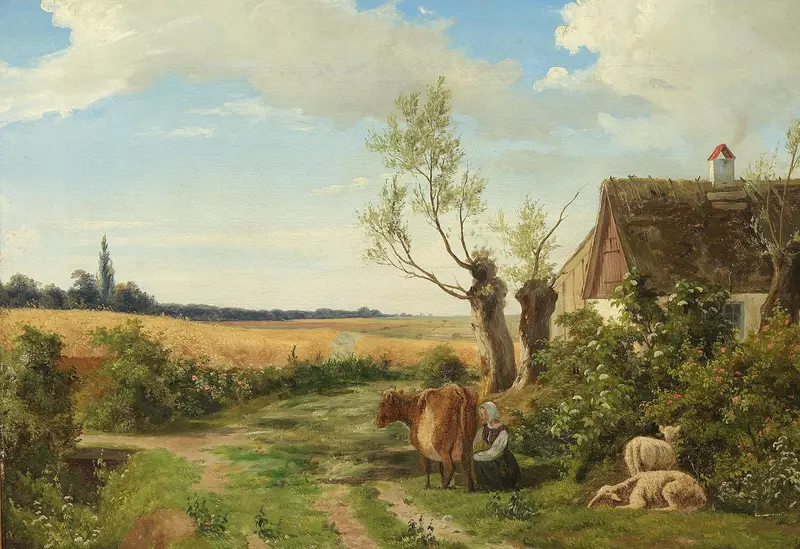
Landscape at a farmhouse.
August Wilhelm Boesen
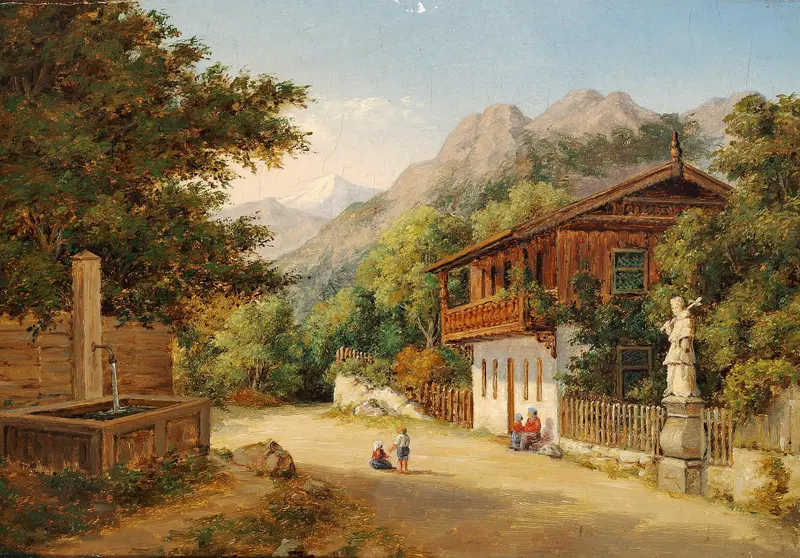
Mountain village in Southern Germany.
August Wilhelm Boesen
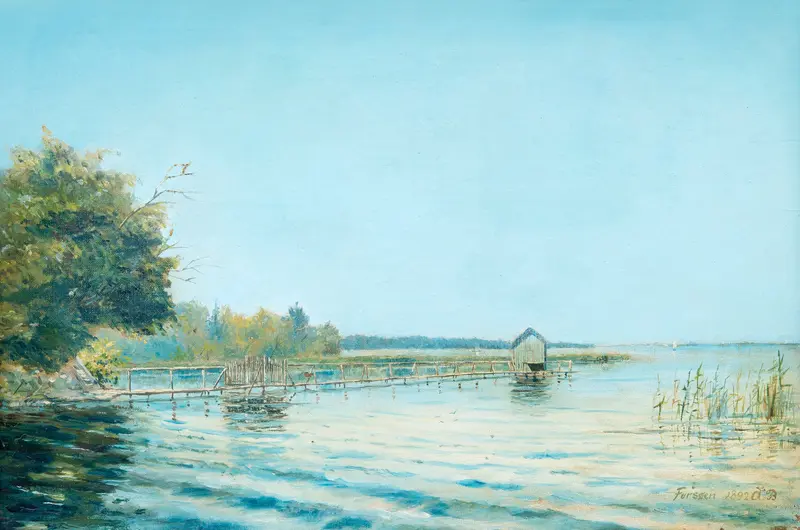
Summer day
August Wilhelm Boesen
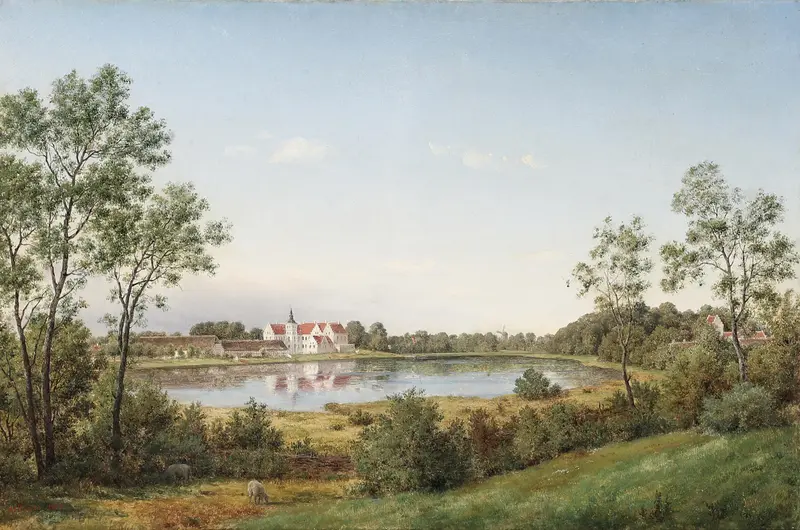
A view of the renaissance manor, Søbysøgaard, on Funen.
August Wilhelm Boesen
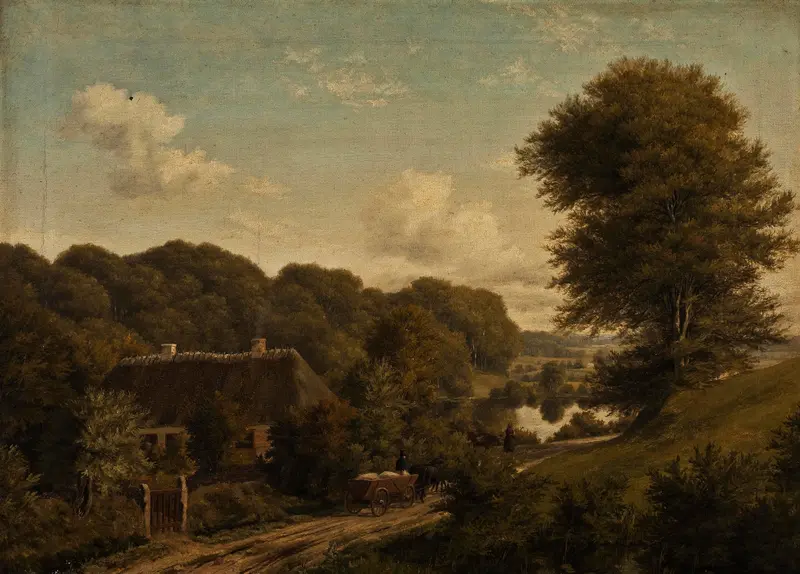
Danish Landscape
August Wilhelm Boesen
More Landscape Art

The Starry Night
Vincent van Gogh

View of Delft
Johannes Vermeer

Water Lilies
Claude Monet

The Grand Canal, Venice, looking north-west from the Ca' Corner to the Ca' Contarini degli Scrigni, with the campanile of Santa Maria della Carità
Canaletto

Windsor Castle
Canaletto

The Grand Canal looking North-East from the Palazzo Dolfin-Manin to the Rialto Bridge
Canaletto