
Mountain village in Southern Germany. — History & Facts
What first draws the eye is the quiet invitation of sunlight: it spills across a dusty village road, warming the whitewashed walls and wooden balcony of a house nestled beneath the looming Bavarian mountains. A fountain stands in the foreground, its water catching the light, while a stone statue—perhaps a local saint or folk hero—keeps gentle watch. Children, painted with a sense of pause rather than motion, linger in the center, their smallness set against the grandeur of the peaks and the sheltering trees.
The painter’s brush lingers on details that matter to rural life: the carved balcony, the careful fence, the freshness of the foliage, all signs of a world shaped by hand and season. The palette is earthy and clear, guiding the viewer from the cool shadows to the sunlit path, and finally to the distant, snow-tipped mountain that anchors the horizon. Works like this, painted between 1830 and 1857 by August Wilhelm Boesen, belong to a tradition that flourished as Europe’s middle classes grew more mobile and sentimental about the countryside. Such scenes were often commissioned or collected by city dwellers longing for the rootedness and perceived innocence of rural life, at a time when industrialization was transforming both landscape and society.
The genre, sometimes called Biedermeier in German-speaking lands, prized clarity, order, and a certain affectionate realism—qualities visible here in the careful rendering of architecture and the gentle, almost staged placement of figures. This painting’s presence today in the bruun-rasmussen.dk collection is a quiet testament to its enduring appeal: history has kept few traces of its journey, but its world remains open to any viewer willing to step into the light and shadow of its village lane.
More Artworks by August Wilhelm Boesen

Kystparti med stenet strand
August Wilhelm Boesen
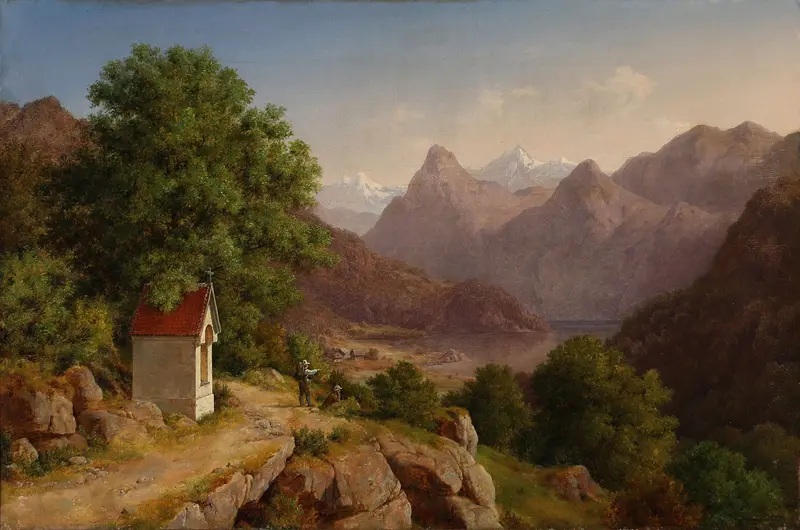
A. W. Boesen, Bjerglandskab i nærheden af byen Altorf i Frankrig
August Wilhelm Boesen
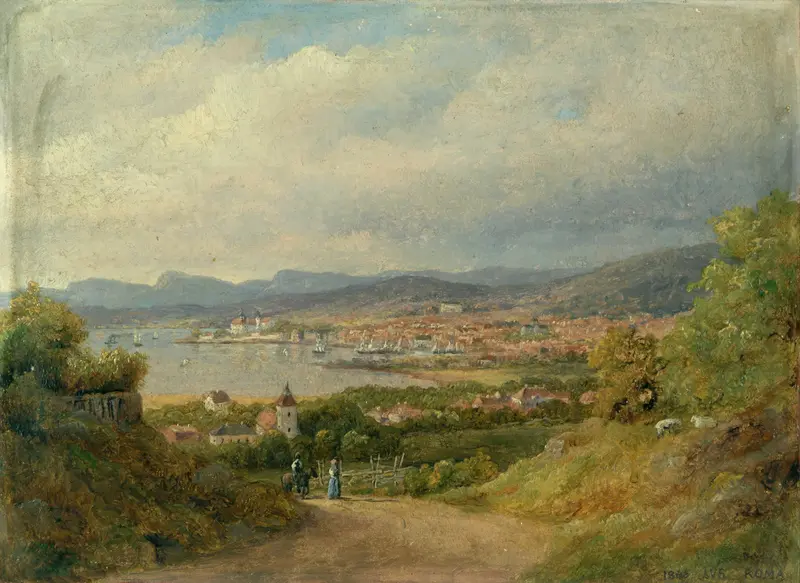
Christiania from Ekeberg
August Wilhelm Boesen
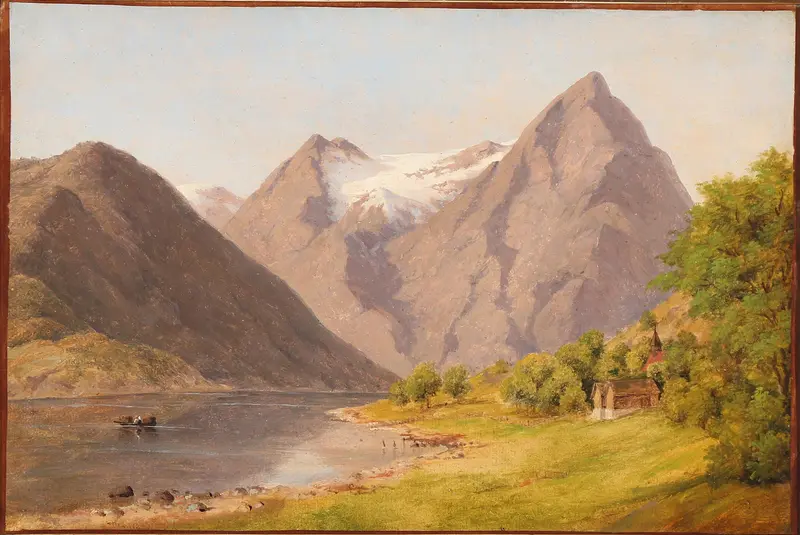
Cottages by a lake in the Alps
August Wilhelm Boesen
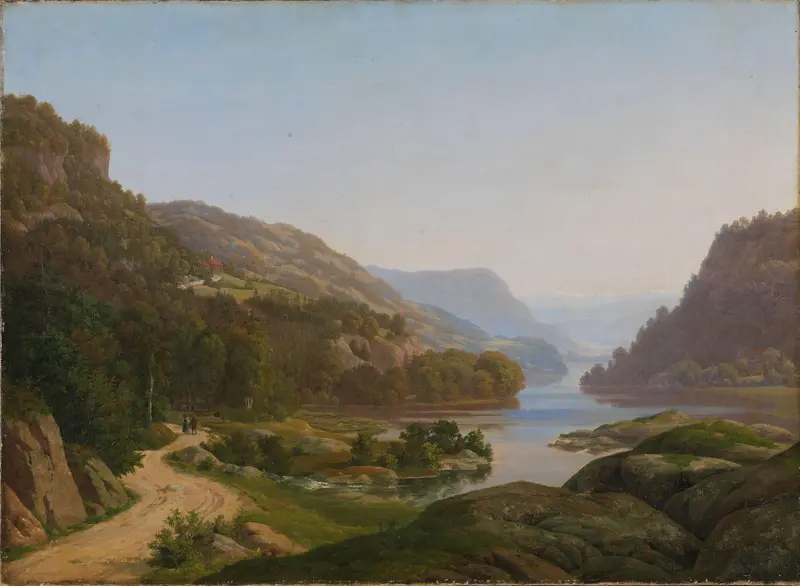
Drammenselven
August Wilhelm Boesen
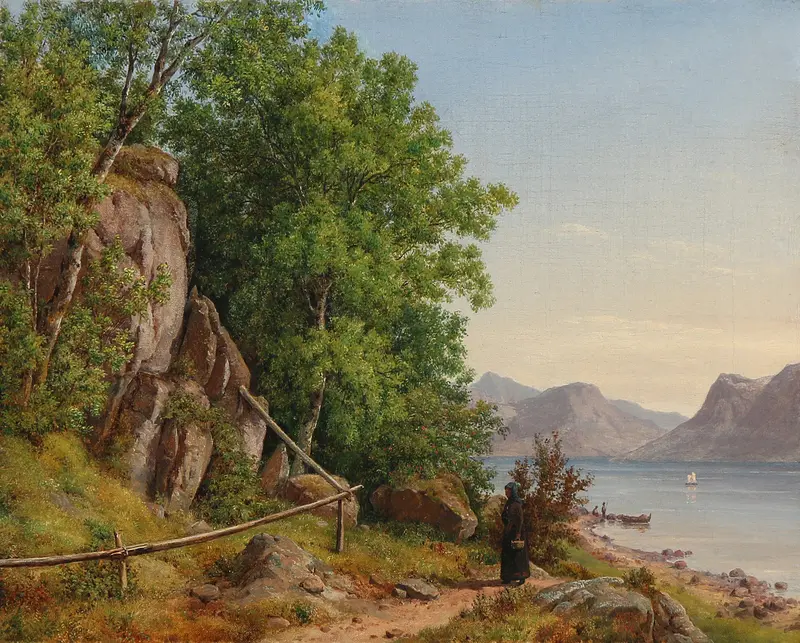
From Veøya in Norway
August Wilhelm Boesen
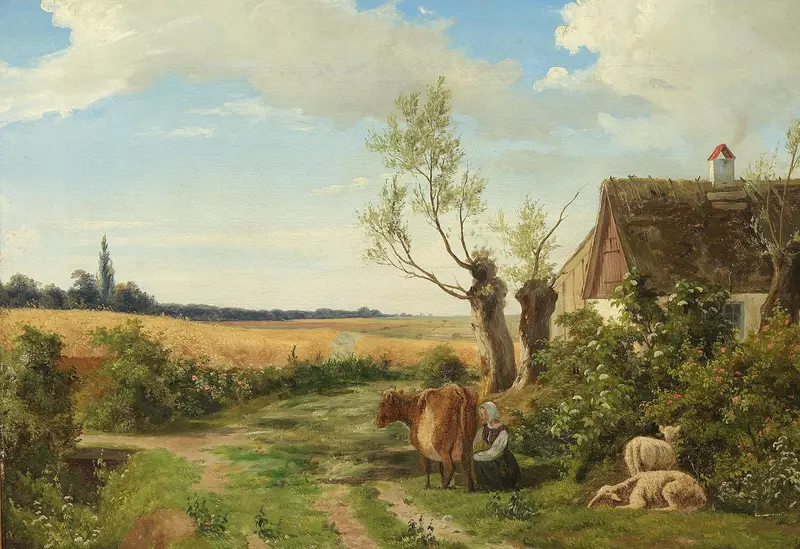
Landscape at a farmhouse.
August Wilhelm Boesen
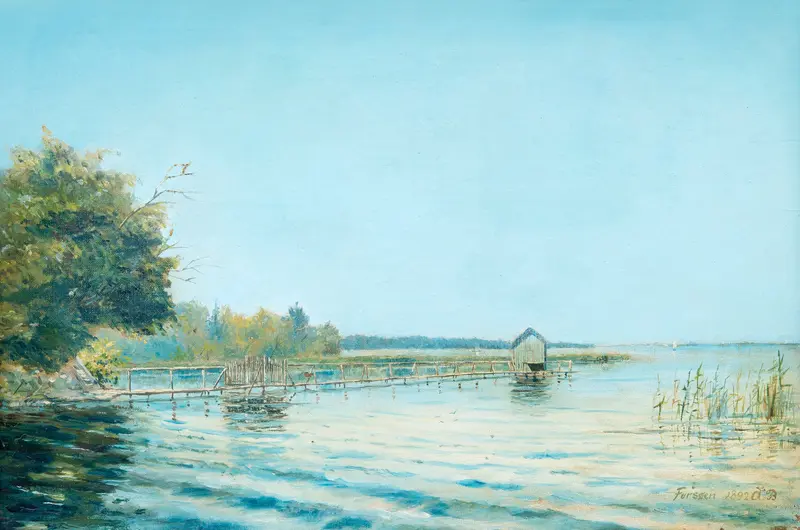
Summer day
August Wilhelm Boesen
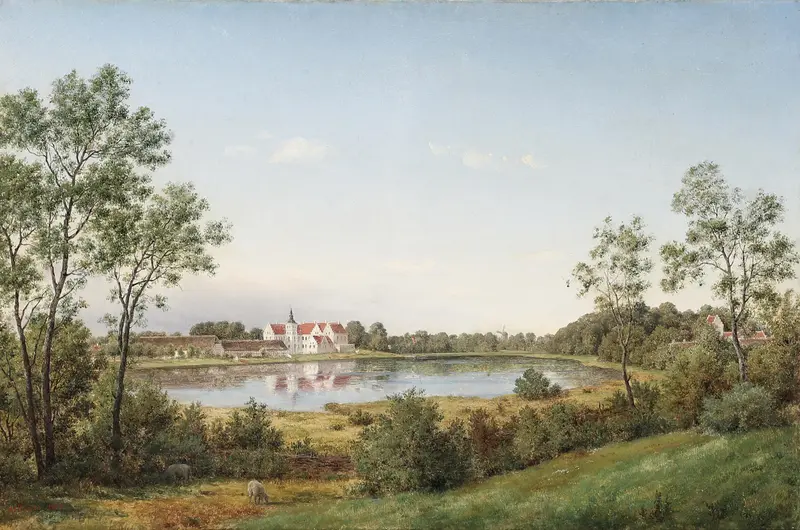
A view of the renaissance manor, Søbysøgaard, on Funen.
August Wilhelm Boesen
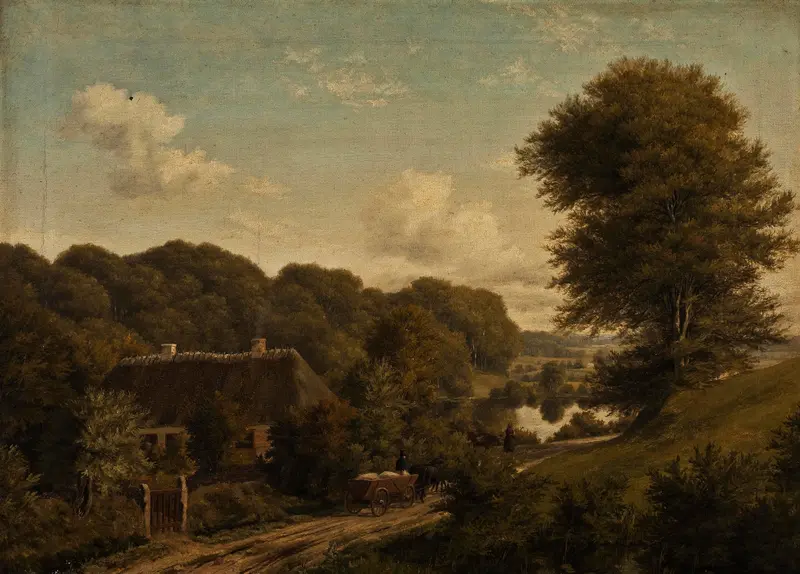
Danish Landscape
August Wilhelm Boesen
More Landscape Art

The Starry Night
Vincent van Gogh

View of Delft
Johannes Vermeer

Water Lilies
Claude Monet

The Grand Canal, Venice, looking north-west from the Ca' Corner to the Ca' Contarini degli Scrigni, with the campanile of Santa Maria della Carità
Canaletto

Windsor Castle
Canaletto

The Grand Canal looking North-East from the Palazzo Dolfin-Manin to the Rialto Bridge
Canaletto