
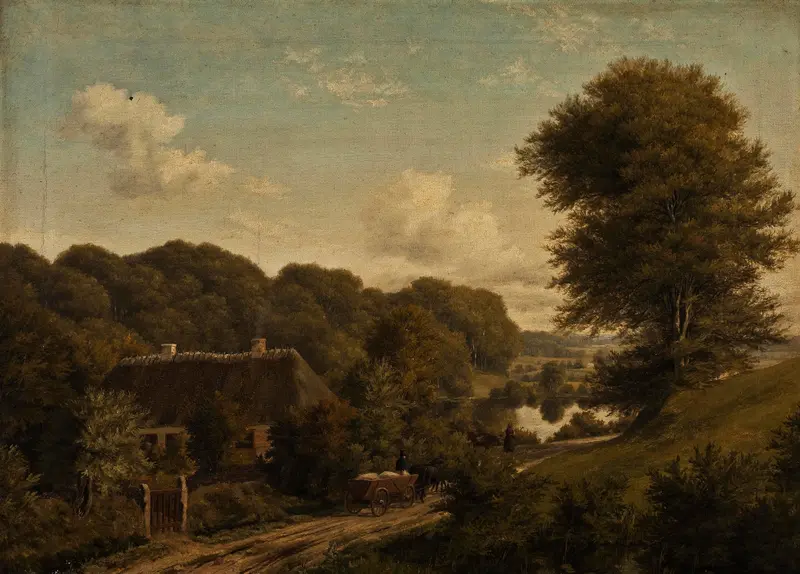
Landscape at a farmhouse. — History & Facts
A shaft of light falls on the figure of a woman, bent to her morning task beside a quiet cow, as if the day itself pauses to watch. The eye wanders from her steady hands to the golden field beyond, where wheat ripples under a sky so wide it seems to promise endless summer. The farmhouse crouches behind a screen of tangled roses and elder, its thatched roof patched and mossy, smoke curling from the chimney to mark a life in progress.
Sheep doze in the shade, their wool catching the sun in creamy tufts, while the trees—pollarded and gnarled—stand like sentinels at the edge of the yard. Everything in this scene is arranged to draw you into its hush: the path leads you in, the shadows anchor you, the open horizon invites you to linger. Painted by August Wilhelm Boesen sometime between 1830 and 1857, this work belongs to a moment when rural life was both a reality and an ideal for many European artists. Landscape painting in this period was often a gentle rebellion against the speed of industrial change, celebrating the rhythms of the countryside and the dignity of ordinary work.
Collectors and patrons, especially in northern Europe, sought such scenes for their calm and their sense of rootedness—a visual antidote to the uncertainties of the modern city. While history has kept few traces of this particular painting’s journey, its presence in the bruun-rasmussen.dk collection reminds us how the quiet details of daily life can outlast the world that inspired them. Let your gaze return to the woman and her animals, and notice how the painter’s hand preserves not just a view, but a way of being.
More Artworks by August Wilhelm Boesen

Kystparti med stenet strand
August Wilhelm Boesen
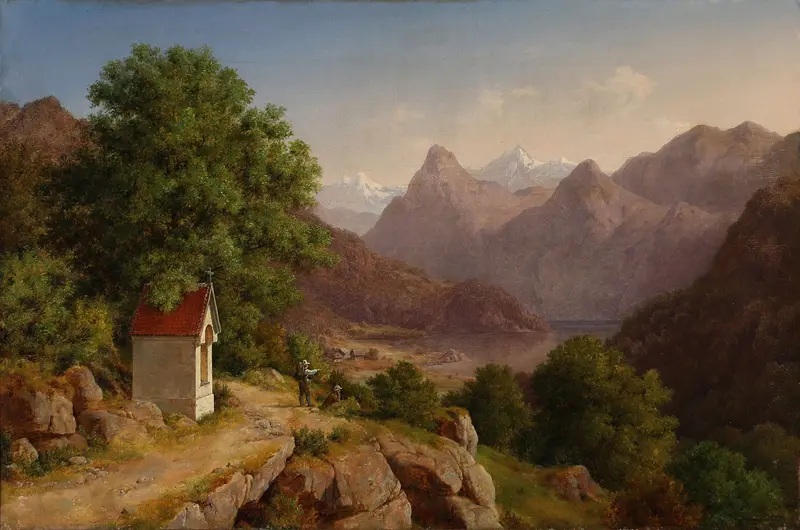
A. W. Boesen, Bjerglandskab i nærheden af byen Altorf i Frankrig
August Wilhelm Boesen
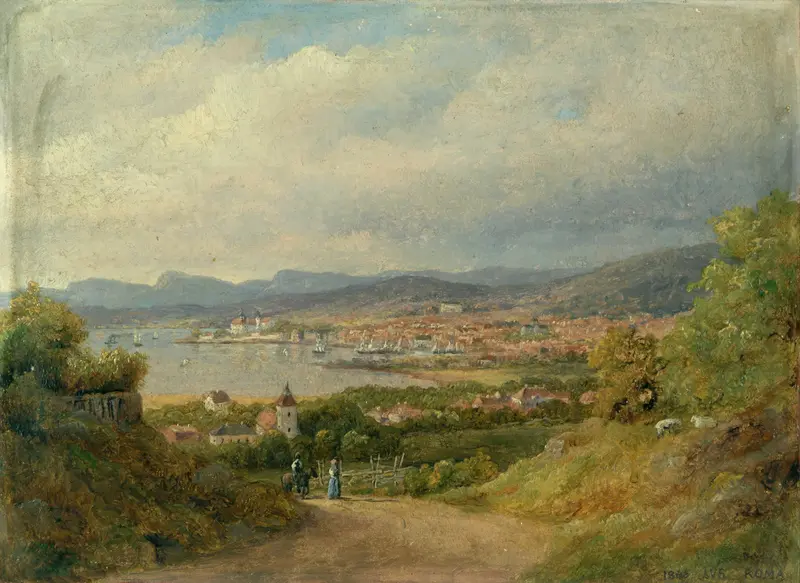
Christiania from Ekeberg
August Wilhelm Boesen
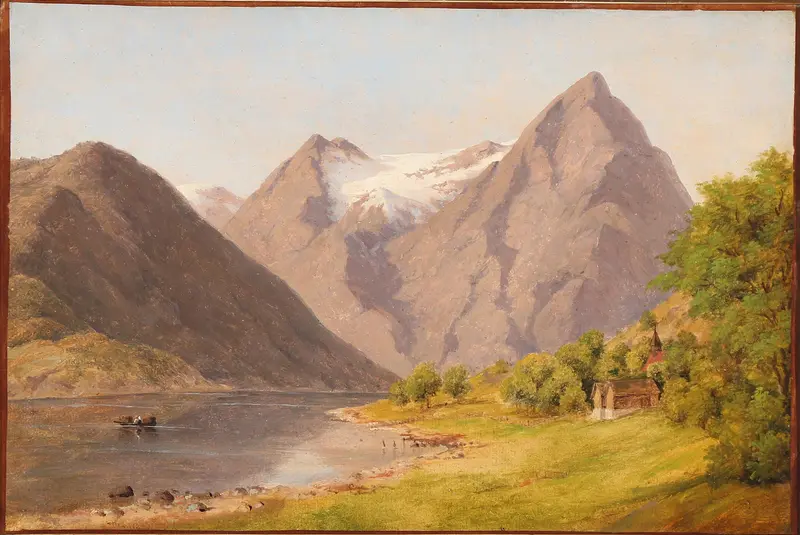
Cottages by a lake in the Alps
August Wilhelm Boesen
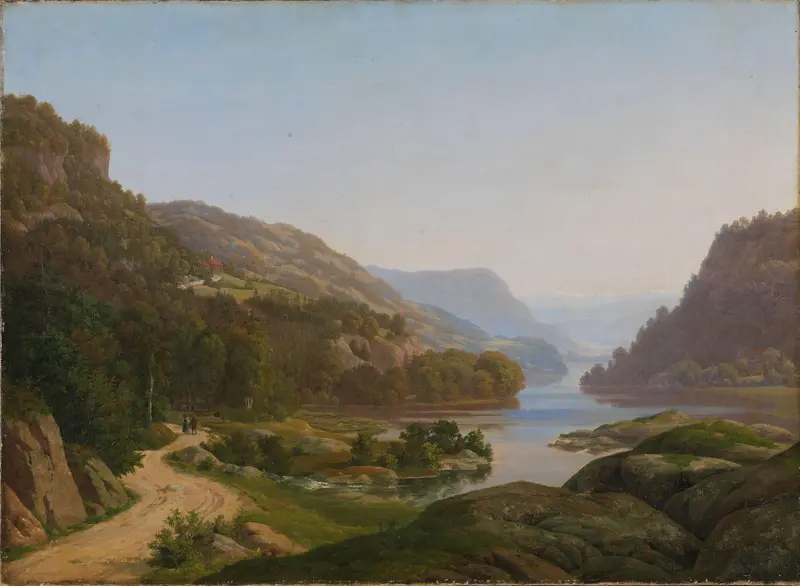
Drammenselven
August Wilhelm Boesen
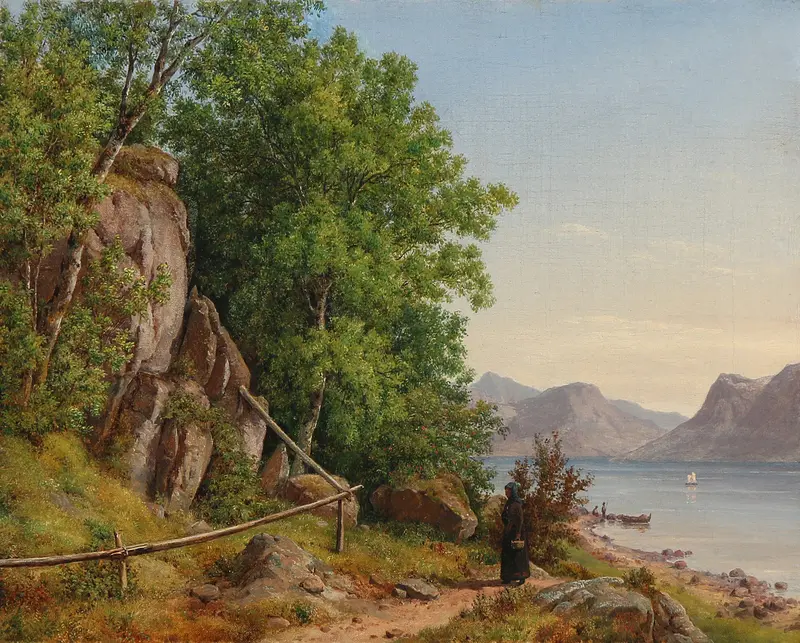
From Veøya in Norway
August Wilhelm Boesen
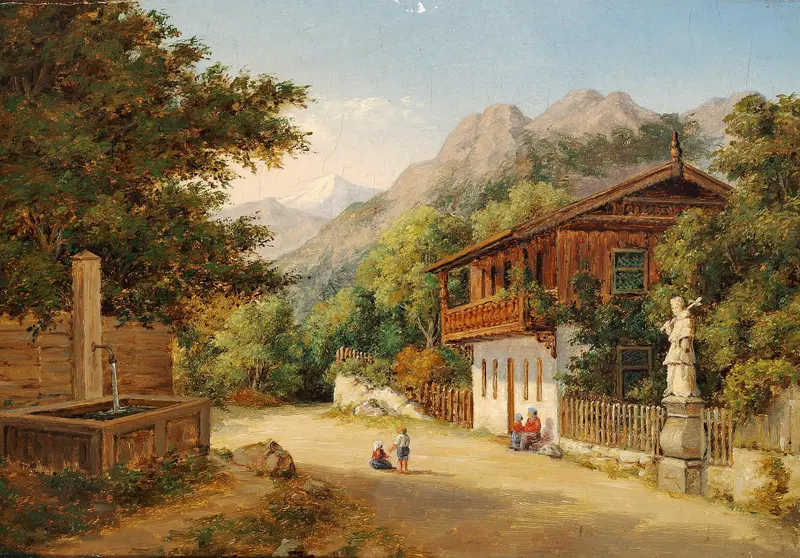
Mountain village in Southern Germany.
August Wilhelm Boesen
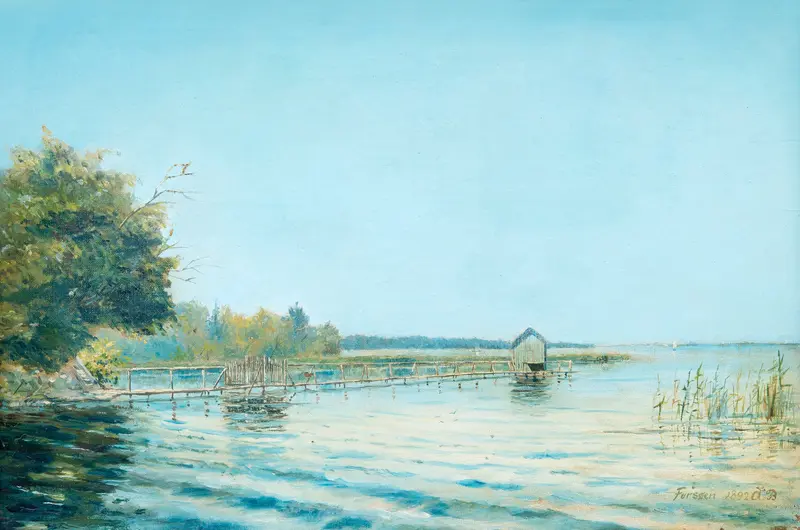
Summer day
August Wilhelm Boesen
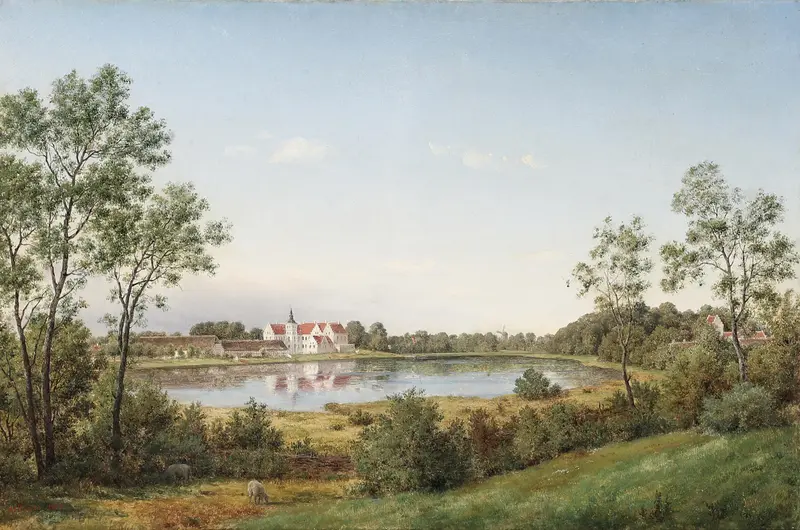
A view of the renaissance manor, Søbysøgaard, on Funen.
August Wilhelm Boesen
Danish Landscape
August Wilhelm Boesen
More Landscape Art

The Starry Night
Vincent van Gogh

View of Delft
Johannes Vermeer

Water Lilies
Claude Monet

The Grand Canal, Venice, looking north-west from the Ca' Corner to the Ca' Contarini degli Scrigni, with the campanile of Santa Maria della Carità
Canaletto

Windsor Castle
Canaletto

The Grand Canal looking North-East from the Palazzo Dolfin-Manin to the Rialto Bridge
Canaletto