
A Weary Little Mother — History & Facts
What draws the eye first in A Weary Little Mother is the gentle collapse of energy—a young girl, her kimono patterned with soft florals, sits with her head bowed, her small charge asleep against her back. The arc of blooming morning glories frames the scene like a protective halo, their curling stems echoing the curve of her tired posture. At her feet, a closed parasol lies forgotten, its bright color a quiet counterpoint to the muted earth tones around her.
Every detail, from the careful fold of her sleeve to the loose sandal slipping from her foot, signals a moment of pause and exhaustion, as if the world has briefly stopped to acknowledge the weight of her task. The artist’s delicate lines and washes of color lend the image a sense of intimacy, inviting the viewer to linger over the quiet dignity in this everyday act. Created in 1914 by Helen Hyde, this small work belongs to a period when Western artists were deeply influenced by Japanese printmaking, both in technique and subject. Hyde herself was known for her sensitive portrayals of women and children in Japan, a reflection of the era’s fascination with cross-cultural exchange and the quiet narratives of domestic life.
Works like this were often collected by Western audiences eager for glimpses of a world both exotic and familiar, and today A Weary Little Mother resides in the Smithsonian American Art Museum’s collection. History has kept few traces of the individual stories behind such images, but their enduring appeal lies in the universal language of care and fatigue—a reminder, as you look again, of the small acts that shape daily life.
More Artworks by Helen Hyde

Moonlight on the Viga Canal) - HH (monogram) LCCN0065
Helen Hyde
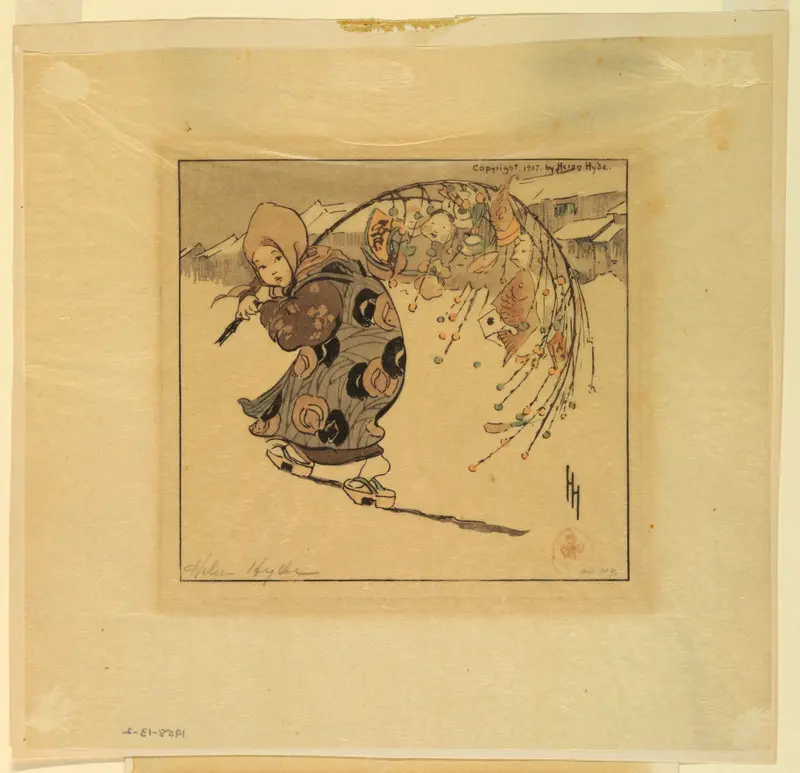
Print, The Good Luck Branch
Helen Hyde
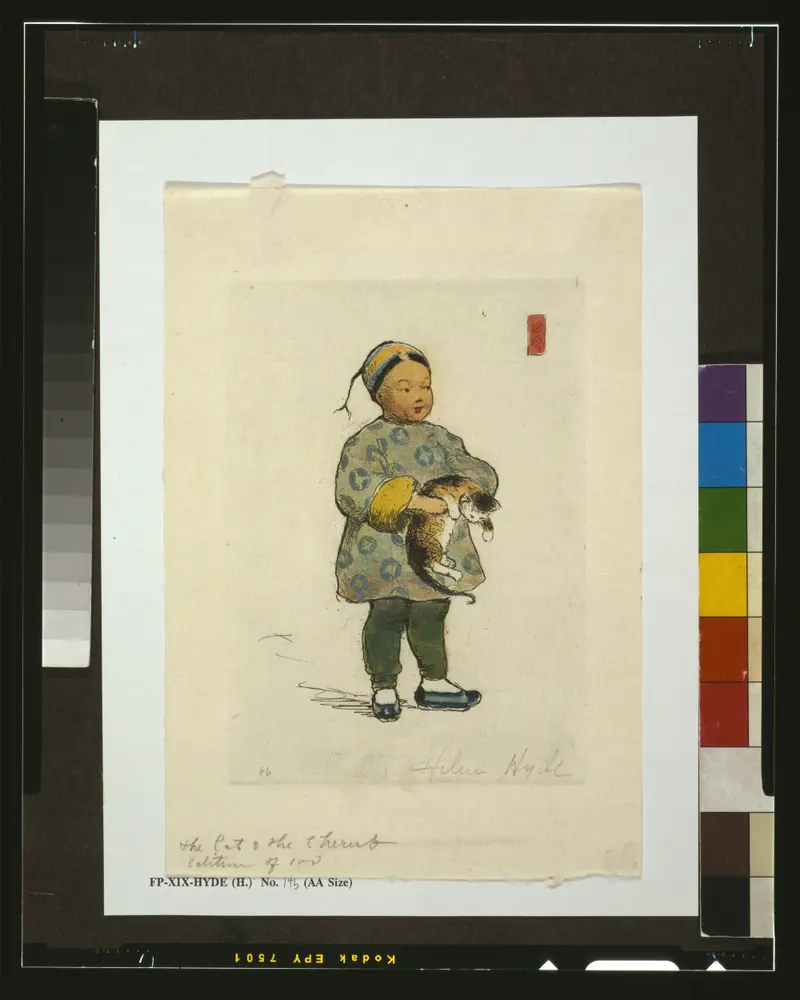
The cat and the cherub LCCN200367
Helen Hyde

Hon(orable Mr) cat - HH (monogram). LCCN200367
Helen Hyde
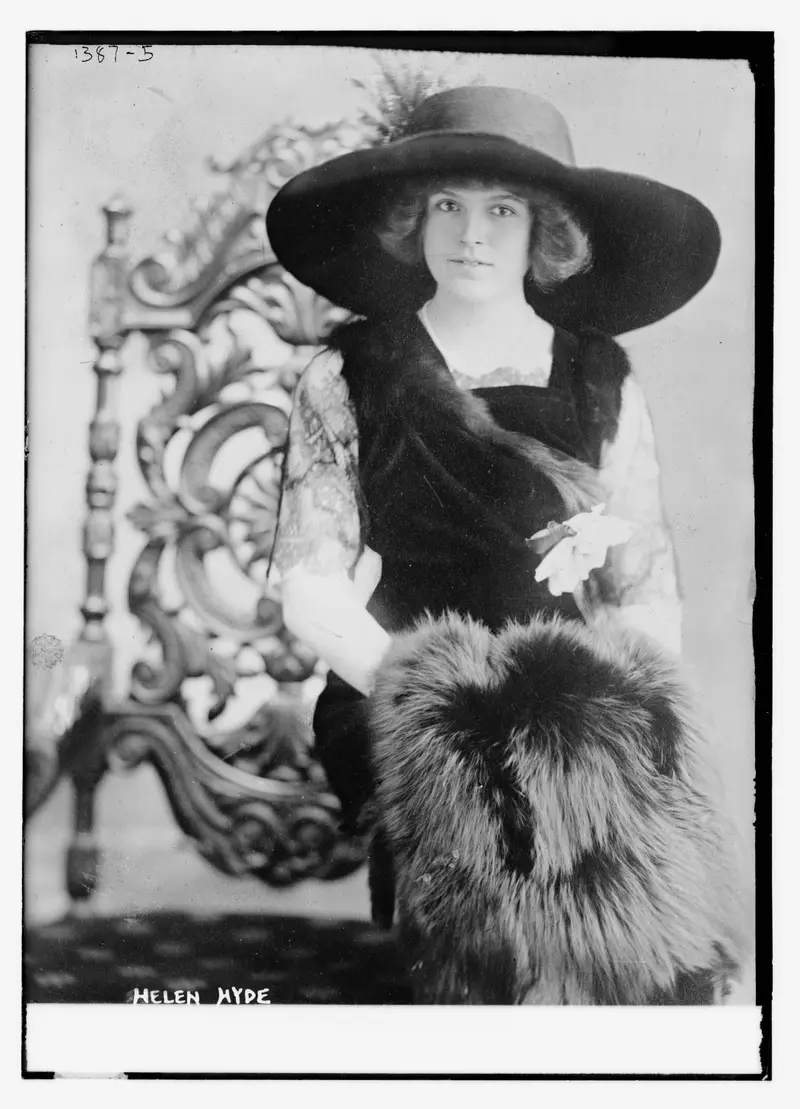
Helen Hyde LCCN201468
Helen Hyde
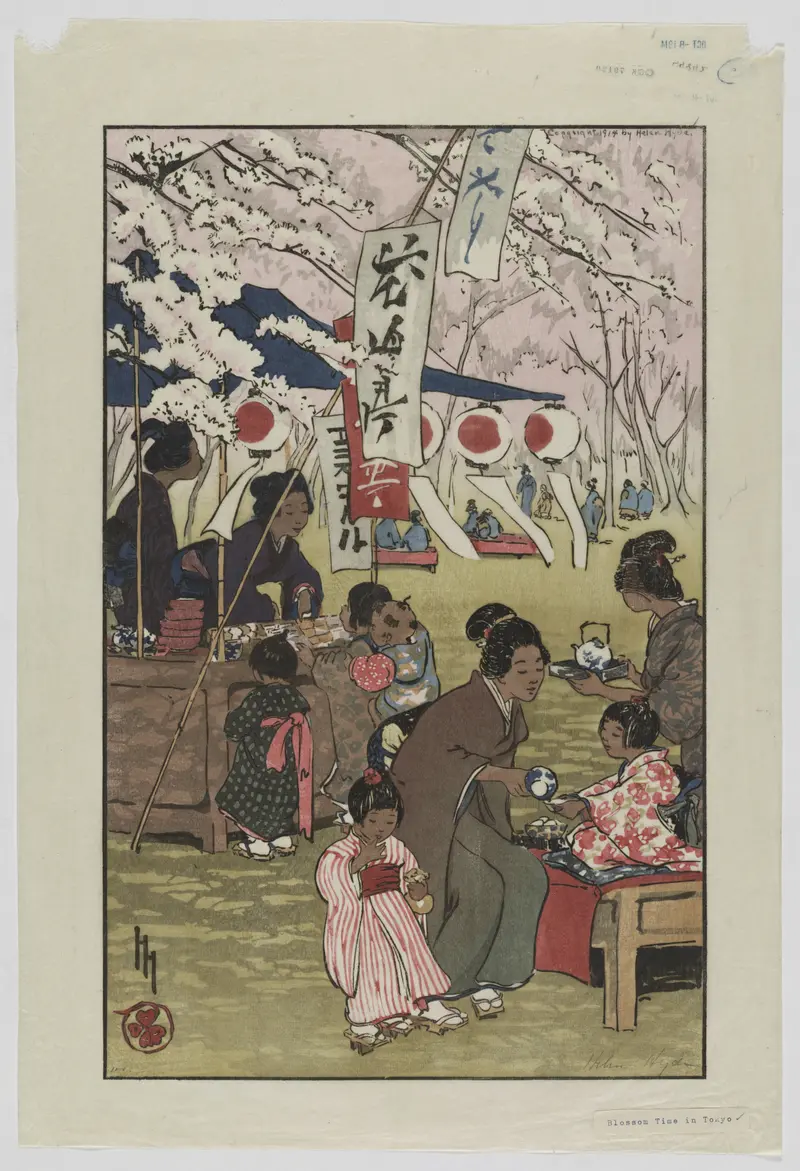
Blossom time in Tokyo) - HH (monogram) LCCN0065
Helen Hyde
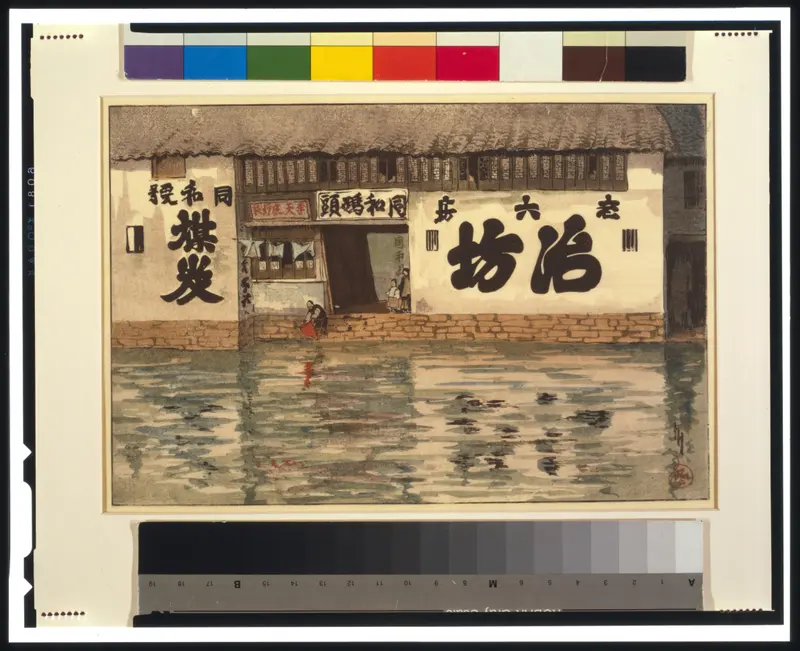
The sauce-pan shop) - HH (monogram) LCCN0065
Helen Hyde

New Year's Day in Tokyo
Helen Hyde
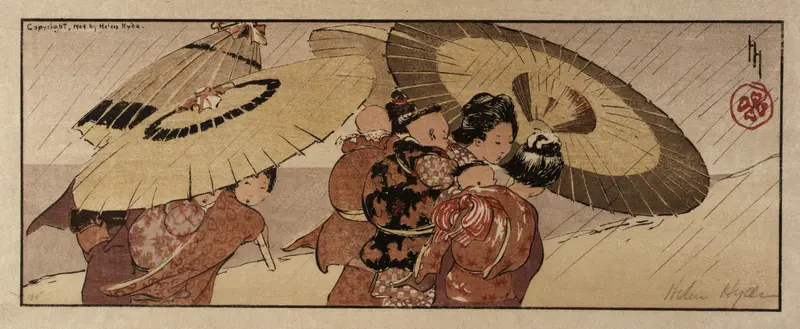
A Summer Shower
Helen Hyde
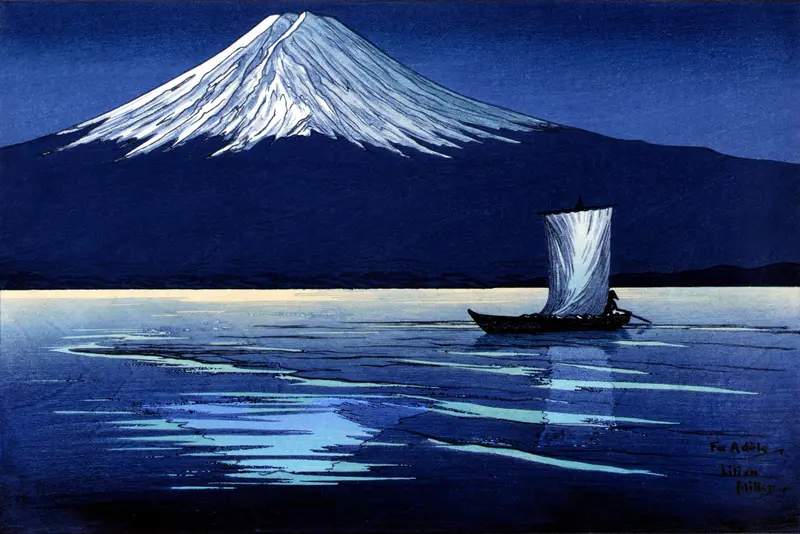
Moonlight on Mt. Fuji
Helen Hyde
More Genre Scene Art

Banquet of the Officers of the St George Civic Guard
Frans Hals

Rembrandt and Saskia in the Scene of the Prodigal Son
Rembrandt van Rijn

Bal du moulin de la Galette
Pierre-Auguste Renoir

Quadrille at the Moulin Rouge
Henri de Toulouse-Lautrec

A Burial at Ornans
Gustave Courbet

When Will You Marry?
Paul Gauguin