
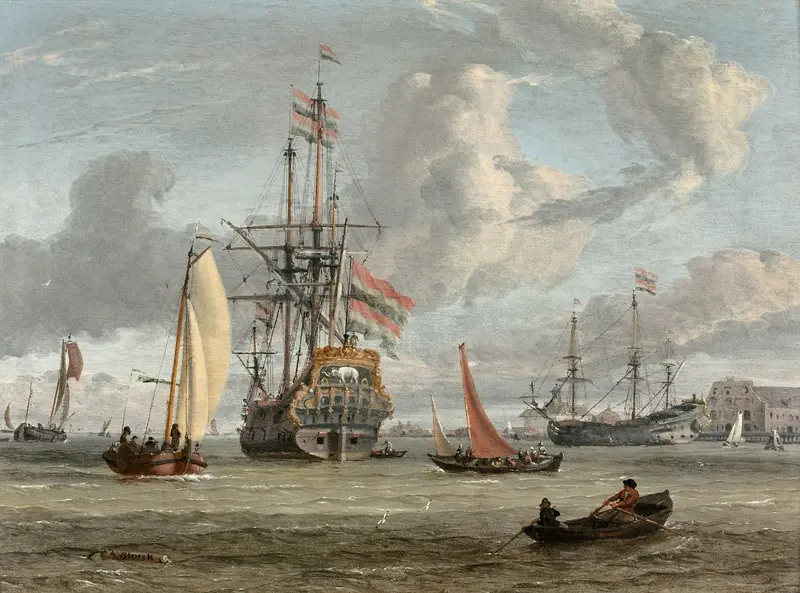
A Whaler and other Ships at Anchor before a Port — History & Facts
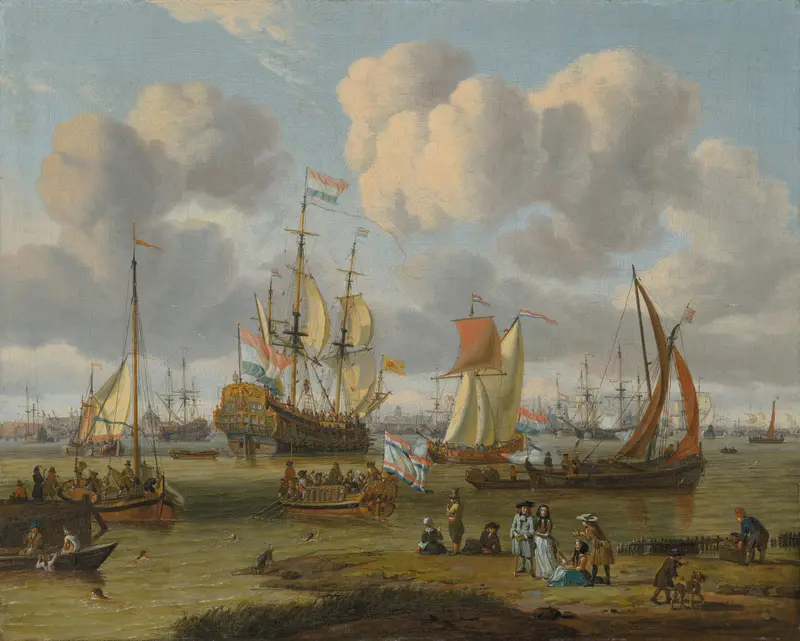
A flotilla of Dutch ships, their flags crisp against a shifting sky, gathers in calm anticipation just beyond the harbor’s reach. The largest vessel commands attention, its decks crowded with figures and its sails furled in readiness, while a small boat brimming with rowers pulls away in the foreground—a moment of embarkation or return. The light, diffused through thickening clouds, glances off the water and the canvas of sails, drawing the eye from the bustling ship to the quieter craft and then to the distant silhouettes on the horizon.
Storck’s brushwork lingers on the details: the proud banners, the rigging etched against the sky, the subtle churn of oars in the dark water. The painting’s low horizon grants the sky a stage of its own, amplifying the sense of vastness and the ever-present uncertainty of the sea. Painted in 1673, A Whaler and other Ships at Anchor before a Port belongs to a world where maritime scenes were more than decoration—they were tributes to the Dutch Republic’s oceanic might and the fortunes built on whaling, trade, and exploration. In the bustling ports of the seventeenth century, such paintings adorned the homes of merchants and shipowners, reminders of distant ventures and national pride.
Abraham Storck, active in Amsterdam, was known for his lively harbor scenes, capturing the energy and complexity of maritime life just as the Dutch Golden Age reached its height. History has kept few traces of this particular canvas beyond its date and its presence in a modern collection, but the image itself remains a window onto an age when the sea was both workplace and frontier. Look again at the crowded decks and distant sails—each ship a story, each flag a signal across the centuries.
More Artworks by Abraham Storck

The Muscovite legation visiting Amsterdam, 29 August 1697
Abraham Storck
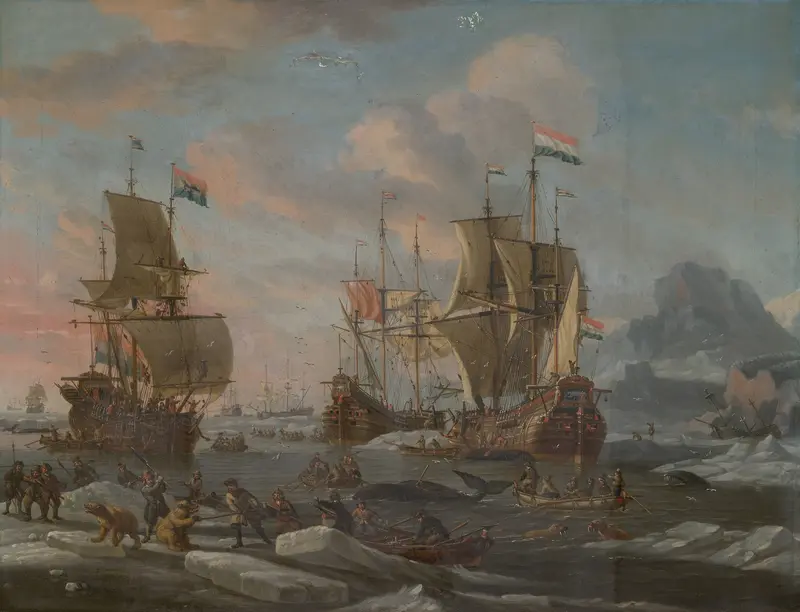
The Dutch Whaling Fleet
Abraham Storck
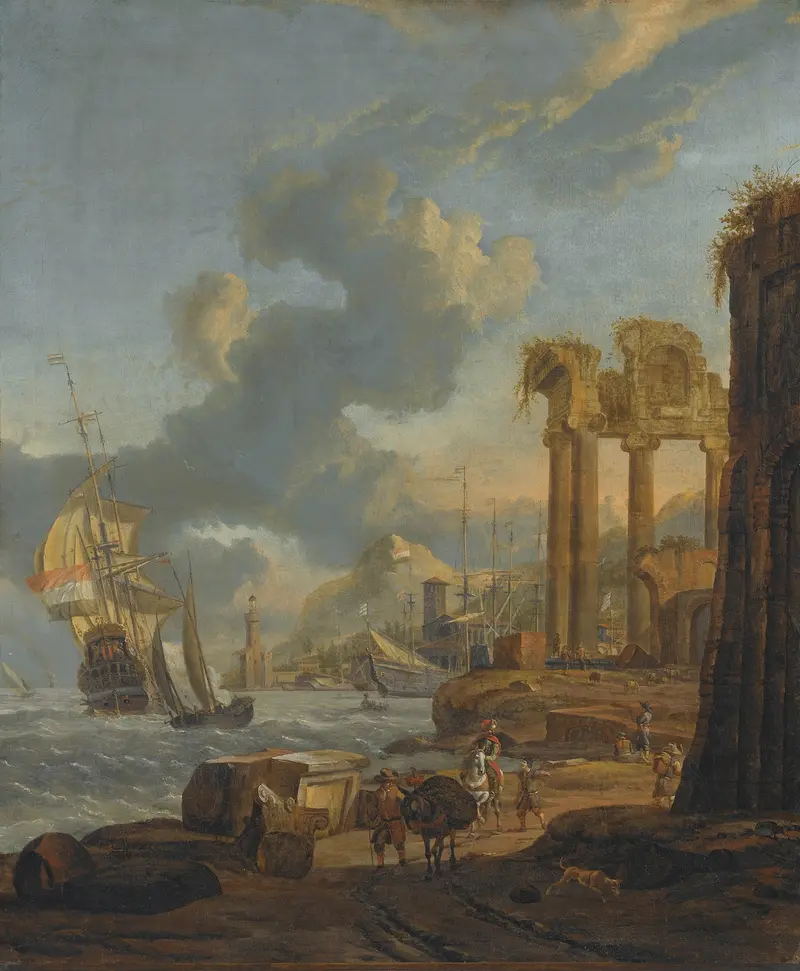
A Mediterranean Harbour Scene With Travellers On The Shore, A Dutch Man-Of-War On The Left
Abraham Storck
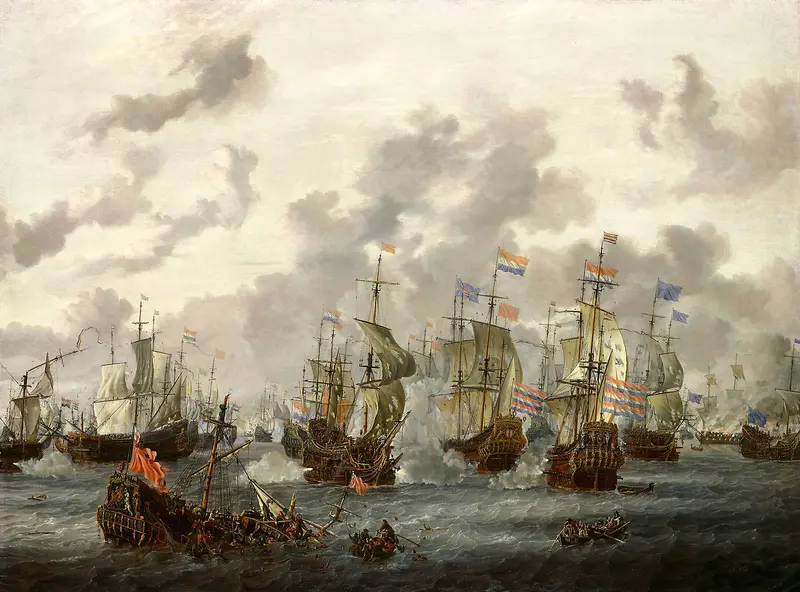
The Four Days’ Battle
Abraham Storck
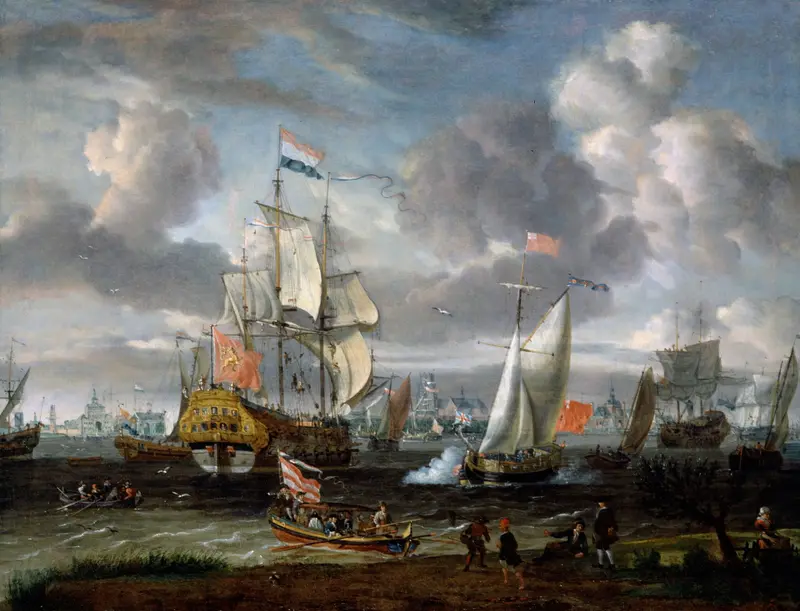
An English Yacht saluting a Dutch Man-of-War in the port of Rotterdam
Abraham Storck
Shipping off Amsterdam with figures on a quay
Abraham Storck
The Dutch Whaling Fleet
Abraham Storck
Whaling Grounds in the Arctic Ocean
Abraham Storck
Shipping in an estuary
Abraham Storck
Grand navire de la couronne du Danemark près d’un littoral
Abraham Storck





