
Abbeville, Rue Et Église Saint-Vulfran — History & Facts
In the serene shadows of the everyday, Boudin captures the essence of life, reminding us of our fleeting existence. Look to the left at the gentle curve of the cobblestone street, where soft light dances upon the muted hues of the buildings. The contrast between the warm earth tones and cooler shadows creates a rhythmic harmony that draws the viewer in. Notice how the steeple of the Église Saint-Vulfran rises solemnly against the sky, a silent observer of the human endeavors below, grounding the scene in a sense of continuity amidst change. As you contemplate the figures strolling along the street, a poignant tension emerges between the vibrancy of life and the inevitability of time's passage.
Each character appears lost in their thoughts, symbolizing personal stories that weave into the greater tapestry of existence. The delicate brushwork evokes a sense of both calm and urgency, urging us to acknowledge the beauty and transience of each moment before it slips away. In 1894, Boudin painted this piece in Abbeville, a town that served as both a refuge and a source of inspiration amidst the rapid shifts in the art world. This period marked a turning point in his career as he became more deeply influenced by the burgeoning Impressionist movement, seeking to capture the ephemeral quality of life with each stroke of his brush.
His dedication to portraying daily scenes reflects a profound understanding of mortality and the fleeting nature of beauty.
More Artworks by Eugène Boudin
Browse all →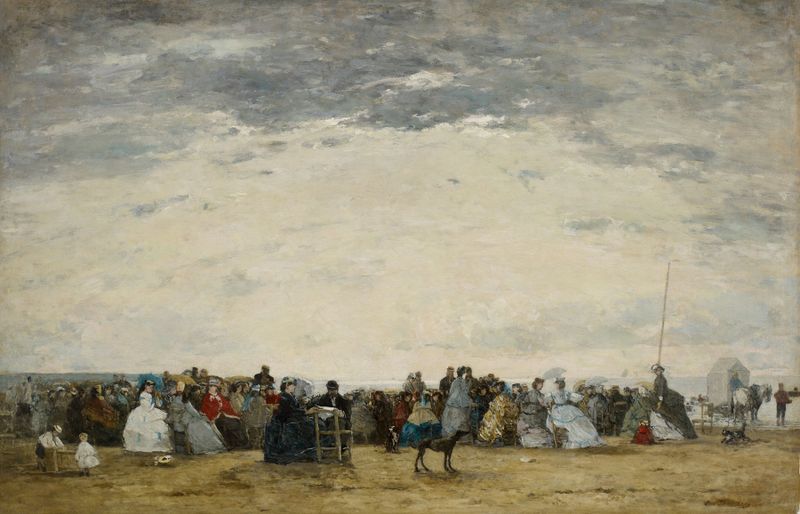
Vacationers on the Beach at Trouville
Eugène Boudin

Washerwoman near Trouville
Eugène Boudin
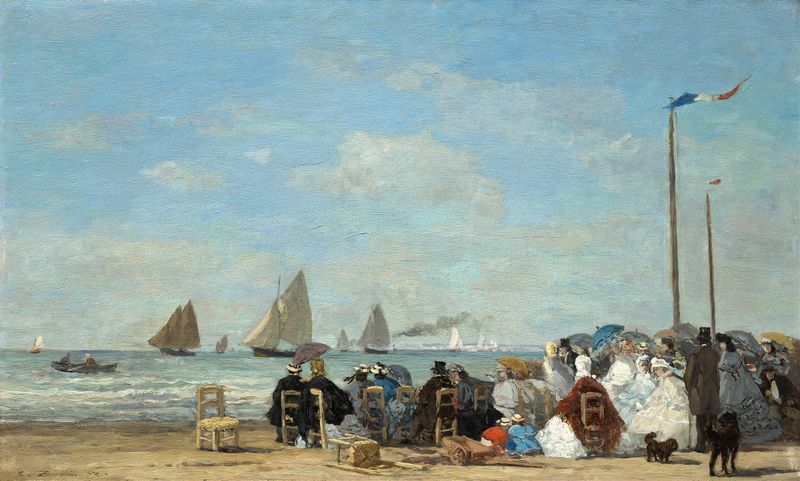
Beach Scene at Trouville
Eugène Boudin

Port aux environs d’Honfleur
Eugène Boudin

Le Faou, un coin du village
Eugène Boudin
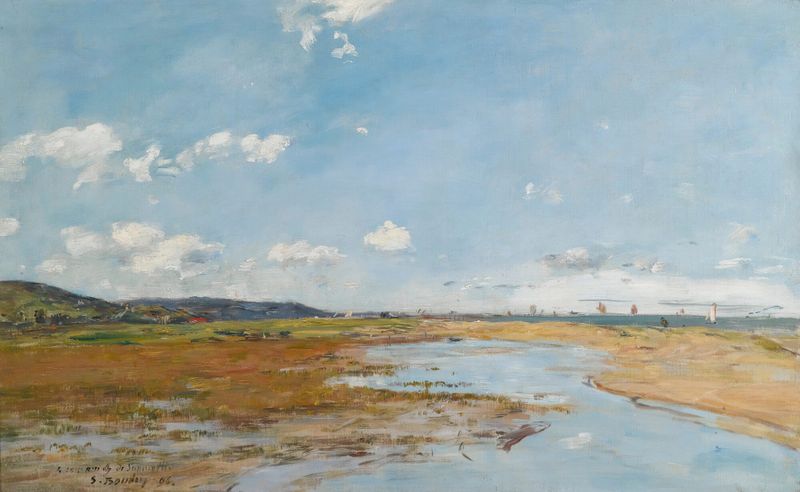
Deauville. Le Rivage
Eugène Boudin
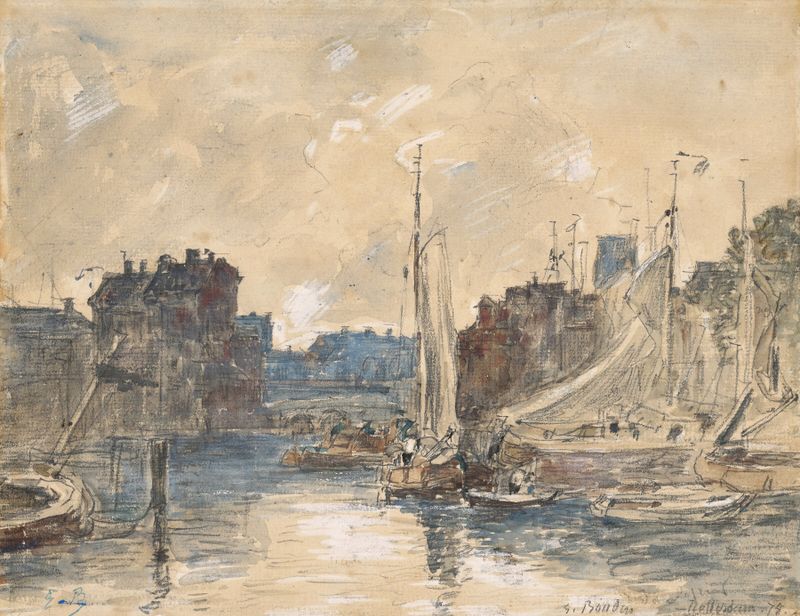
Port de Rotterdam
Eugène Boudin

View of Bordeaux, from the Quai des Chartrons
Eugène Boudin

Trouville, Scène De Plage
Eugène Boudin

Trouville, Le Port
Eugène Boudin





