
Abendlandschaft Wien — History & Facts
When did color learn to lie? A glance at Abendlandschaft Wien reveals the tension between appearance and essence, where the divine seems to flicker just beyond the reach of perception. Look to the horizon, where the vibrant oranges and dusky purples meld seamlessly into each other. The sky, alive with warmth, contrasts sharply against the cool, shadowed outlines of the city below. The buildings, though simplified in form, speak volumes through their silhouettes, standing as silent witnesses to the twilight.
Notice how the brushstrokes vary, with softer edges in the clouds suggesting a gentle embrace of the light, while sharper lines in the architecture evoke strength and stability, anchoring the viewer's gaze. Yet, it is not merely a landscape but a meditation on the human condition. The interplay of light and shadow hints at the duality of existence—the buoyant promise of dusk against the encroaching night. Here, the divine is both revealed and concealed; the ethereal glow of the sunset invites reflection, while the looming dark suggests the unknown.
The emotional tension oscillates between serenity and foreboding, asking the viewer to confront their own inner divides. In 1942, during a tumultuous period marked by war and upheaval, the artist found himself in Vienna, grappling with the heavy atmosphere of a city caught between history and destruction. As the world around him darkened, he sought to capture the fleeting beauty of his surroundings, creating a poignant reflection on hope even amidst despair. His work stands as a testament to the resilience of art in times of crisis.
More Artworks by Karl Wiener
Browse all →
Österreich
Karl Wiener

Vorstadt VII
Karl Wiener

Der Turm
Karl Wiener

Ohne Titel (Häuser mit Holzscheune)
Karl Wiener

Kopfstudie, aus; ‘Profile’, 10 Blätter, Graz XV
Karl Wiener

Steinberg
Karl Wiener
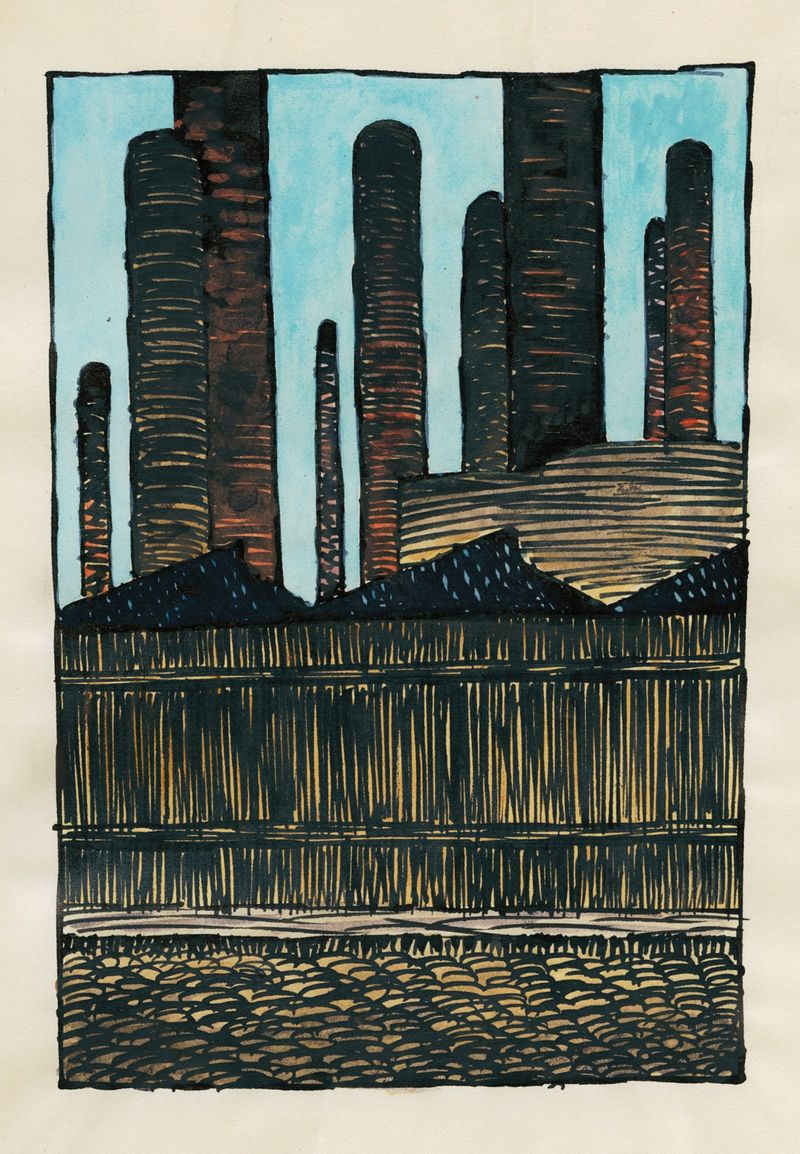
Kopfstudie, aus; ‘Profile’, 10 Blätter, Graz XIV
Karl Wiener

Ohne Titel (Bauernhaus mit Vorgarten)
Karl Wiener
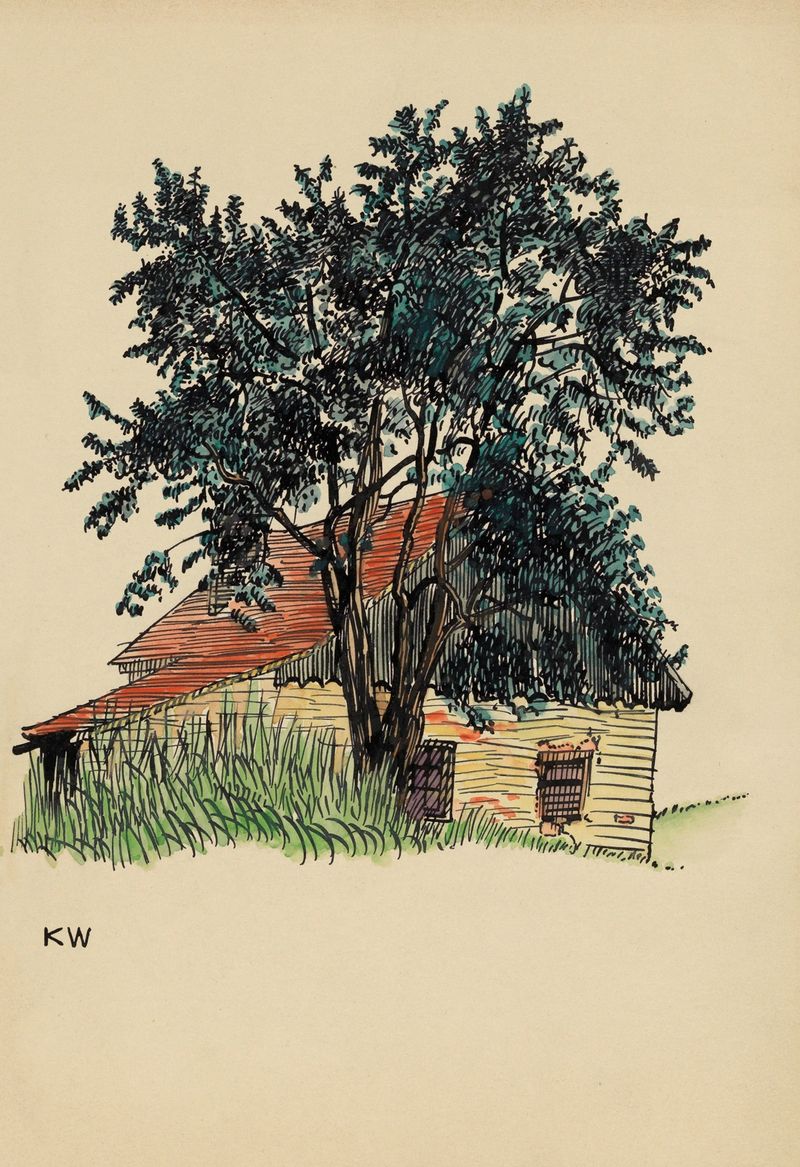
Ohne Titel (Bauernhaus)
Karl Wiener
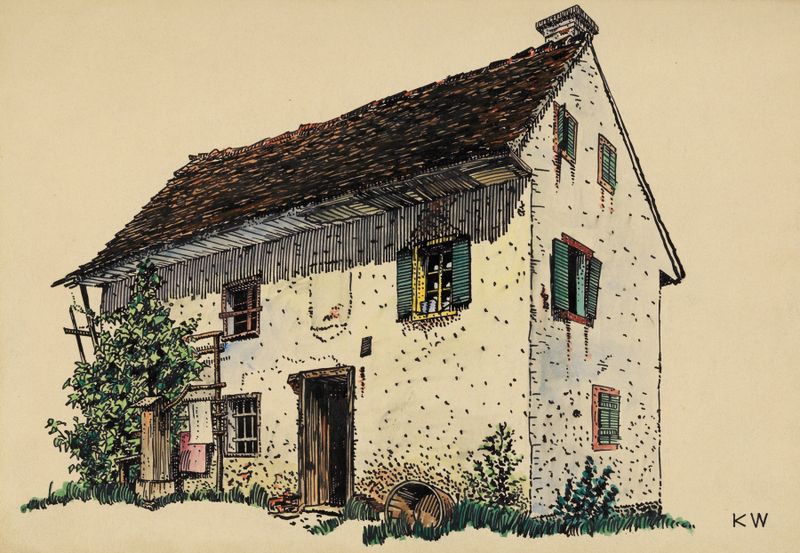
Ohne Titel (Bauernhaus)
Karl Wiener





