
Abraham en Isaak — History & Facts
What if beauty was never meant to be finished? In the delicate interplay of light and shadow, Abraham en Isaak captures a moment suspended between resolve and heartbreak, reflecting the profound depths of grief that accompany sacrifice. Look to the center of the canvas where Abraham stands tall, his arm poised to carry out an unimaginable act. The tension is palpable as you trace your gaze down to Isaak, his youthful innocence stark against the somber tones of the landscape. The intricate details of their expressions invite empathy, while the gentle interplay of warm and cool colors highlights the emotional dichotomy—a father’s duty clashing with a son’s vulnerability. Notice how the surrounding landscape, with its muted earth tones, underscores the isolation of this pivotal scene.
The distant mountains loom like the weight of fate, closing in on the figures, symbolizing the insurmountable burden that grief can impose. Each brushstroke reveals the artists' intent to evoke a visceral reaction, as if the viewer is drawn into the emotional turmoil that grips both father and son, creating a bond that transcends the physical act itself. Lucas van Leyden created this work between 1515 and 1519, during a time when Northern Renaissance art was flourishing, marked by meticulous detail and emotional gravity. Living in Leiden, he was influenced by the growing interest in humanist themes and biblical narratives, allowing him to explore complex emotions within a structured composition.
This piece stands as a testament to both his technical prowess and the profound philosophical questions swirling in the art of the time.
More Artworks by Lucas van Leyden
Browse all →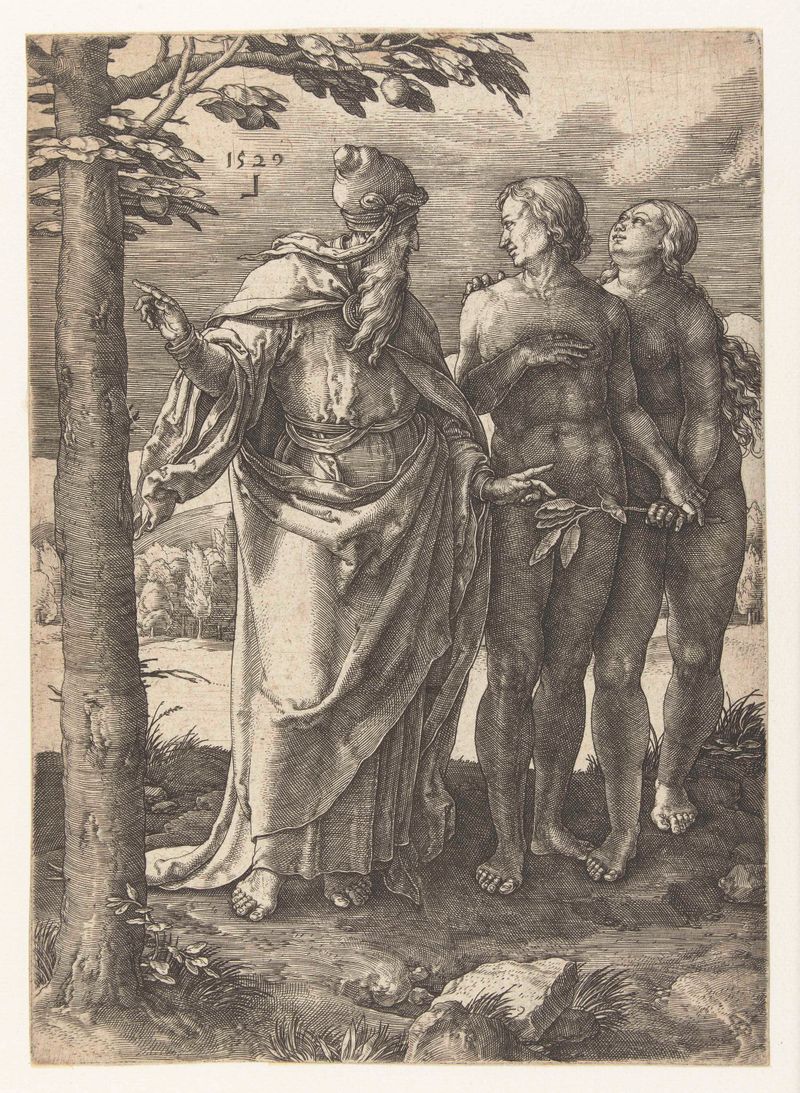
Het eerste verbod
Lucas van Leyden
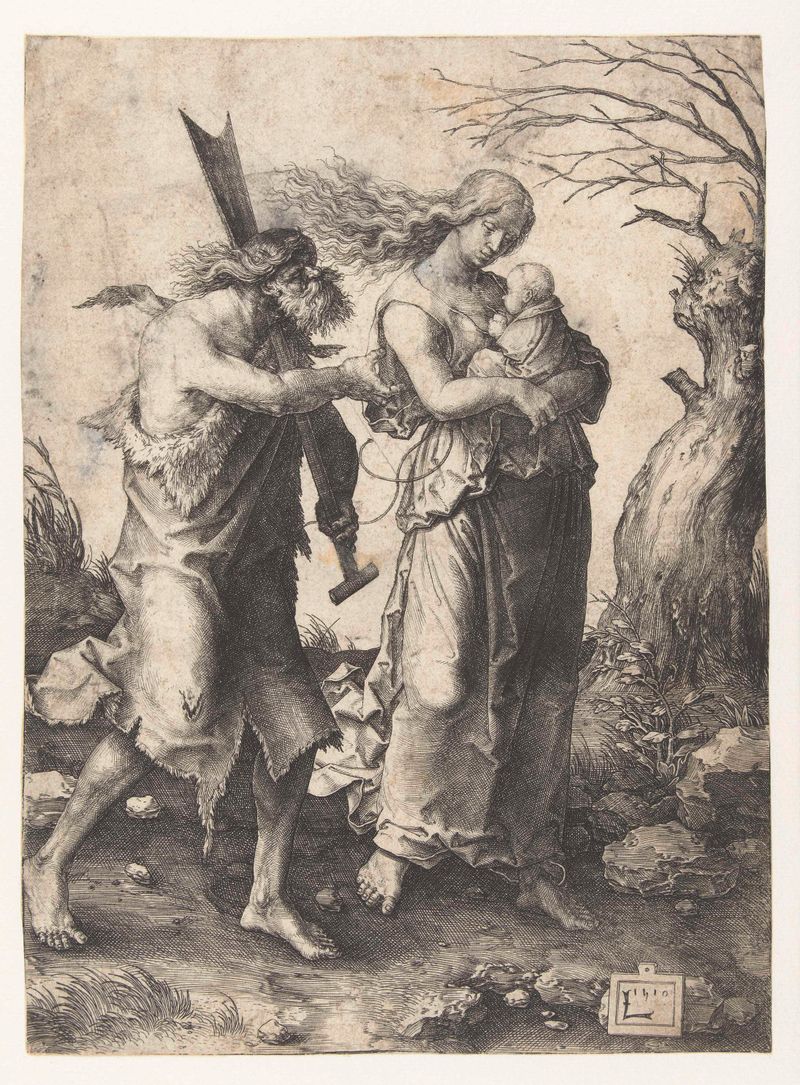
Adam en Eva na de verdrijving uit het paradijs
Lucas van Leyden
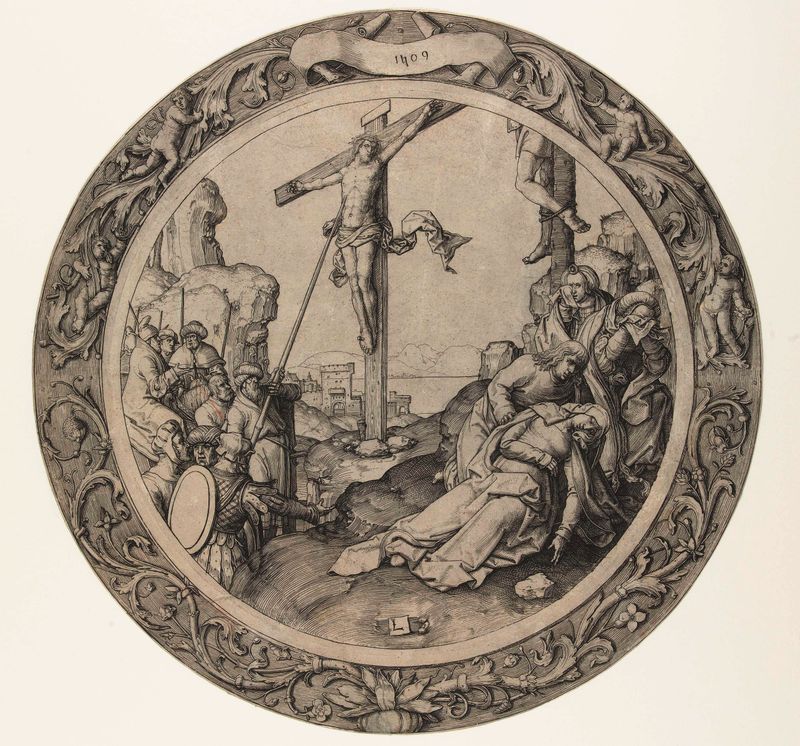
De kruisiging
Lucas van Leyden
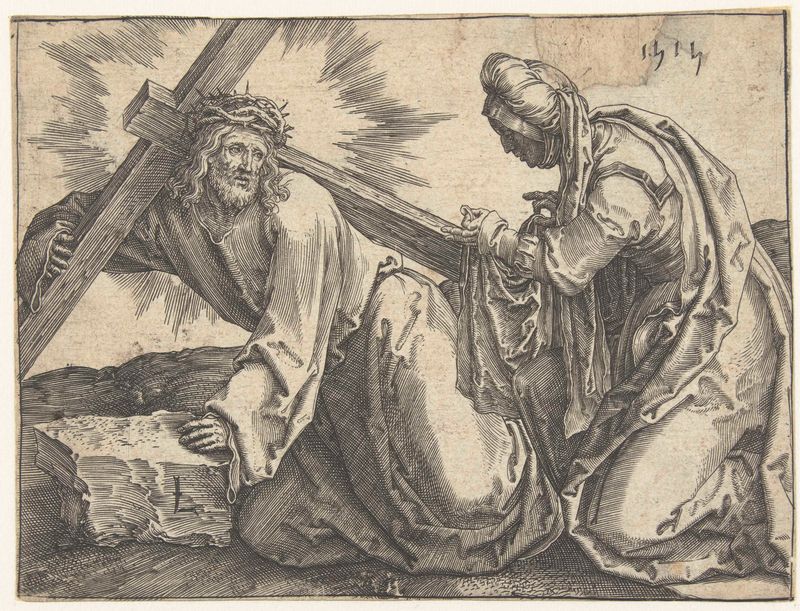
Kruisdraging
Lucas van Leyden
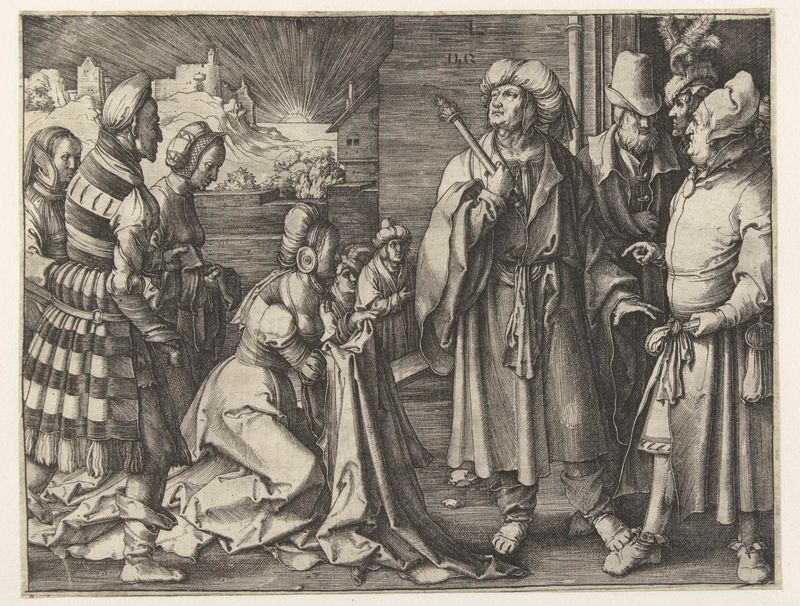
De vrouw van Potifar beschuldigt Jozef
Lucas van Leyden
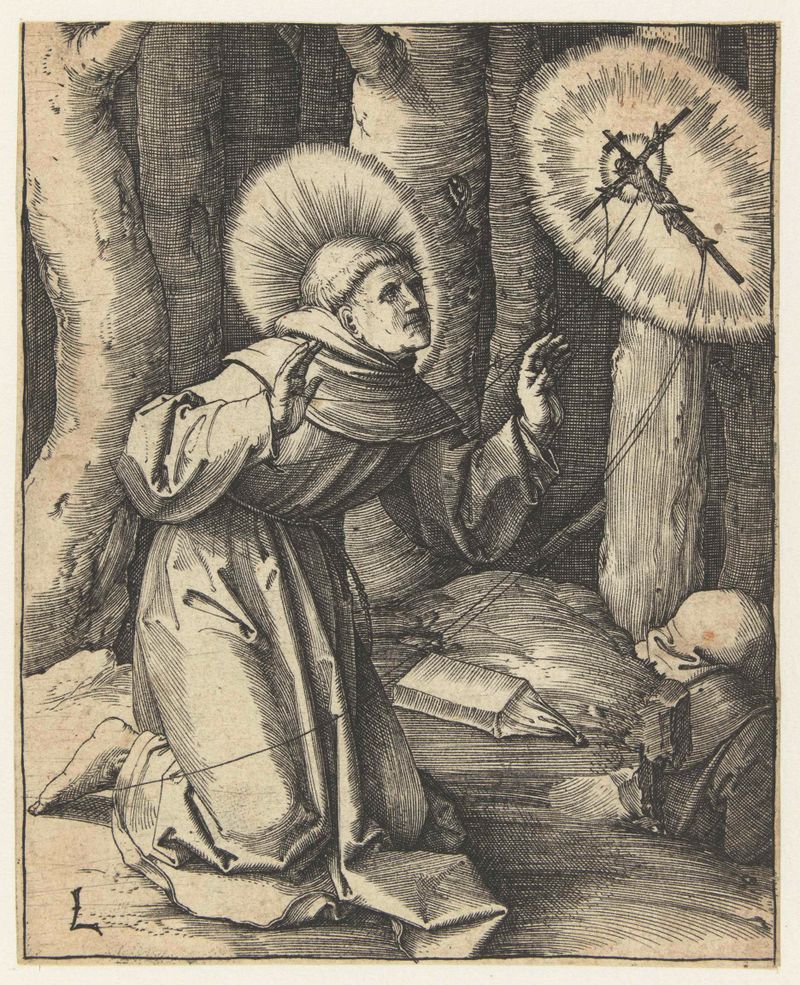
De stigmatisatie van de heilige Franciscus
Lucas van Leyden
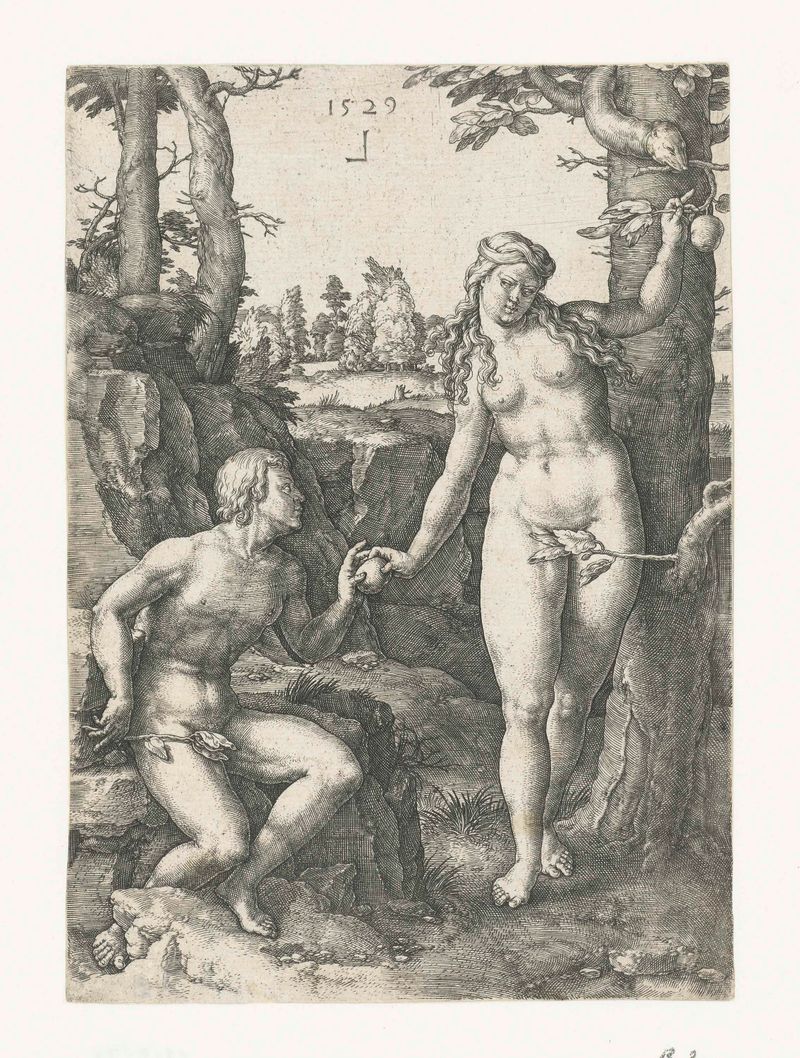
De zondeval
Lucas van Leyden
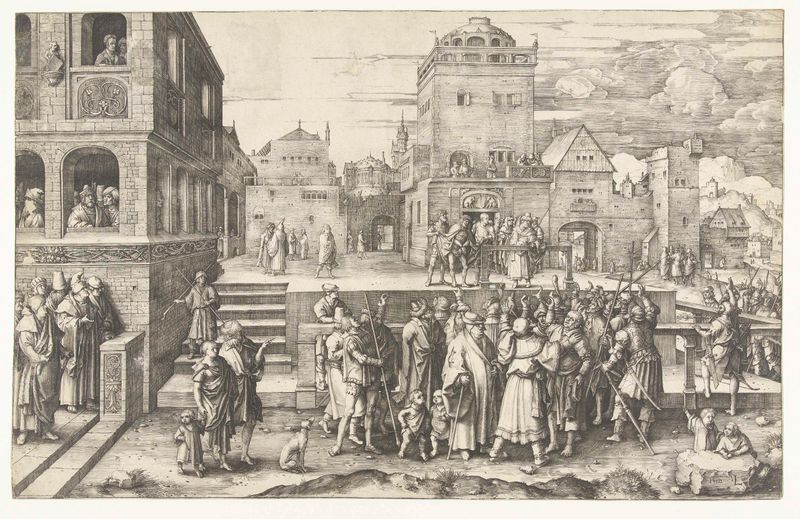
De grote Ecce Homo
Lucas van Leyden
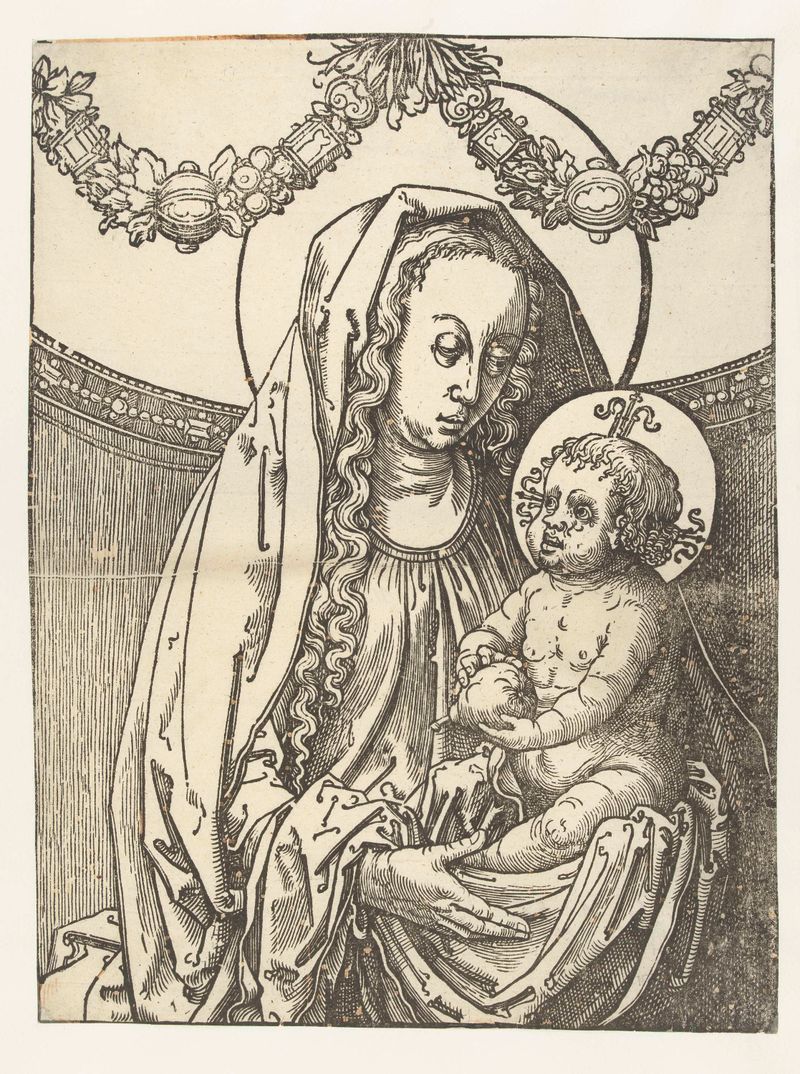
Maria met kind
Lucas van Leyden

Doornenkroning
Lucas van Leyden
More Religious Art
Browse all →
The Return of the Prodigal Son
Rembrandt van Rijn

The Garden of Earthly Delights
El Bosco

Count Orgaz’ funeral
El Greco

The Hundred Guilder Print: the central piece with Christ preaching, the plate arched
Rembrandt van Rijn

The Descent from the Cross
Rogier van der Weyden

The return of the prodigal son
Rembrandt van Rijn