
Adam and Eve — History & Facts
What draws the eye first in Adam and Eve by Lucas Cranach the Elder is the charged stillness between the two figures, each holding the forbidden fruit, their bodies parted by the dark trunk of the tree. The serpent, coiled above Eve, fixes its gaze downward, its mouth open as if mid-whisper, while Eve’s hand hovers in a gesture that suggests both offering and hesitation. Adam’s expression is not one of triumph or guilt, but a searching uncertainty, his body angled toward Eve but his eyes cast elsewhere, as if the weight of the moment has not yet settled.
The deep, almost velvety darkness behind them pushes their pale forms forward, isolating them in a space that feels both intimate and exposed, while the careful placement of leaves preserves a sense of modesty that only heightens the tension. Painted between circa 1510 and 1516, this is the earliest known treatment of the subject by Cranach, originally created as the outer panels of a winged altarpiece—its inner images now lost to history. In early sixteenth-century Germany, such biblical scenes were often commissioned for churches or private devotion, serving as visual meditations on sin, temptation, and the human condition. The era was marked by both religious upheaval and a growing fascination with the human body, and Cranach’s Adam and Eve—rendered with a cool, almost sculptural clarity—capture that crossroads.
History has kept few traces of this particular pair’s journey, but their uneasy pause invites us to linger, searching for the moment when innocence tips into knowledge.
More Artworks by Lucas Cranach the Elder

Martin Luther
Lucas Cranach the Elder
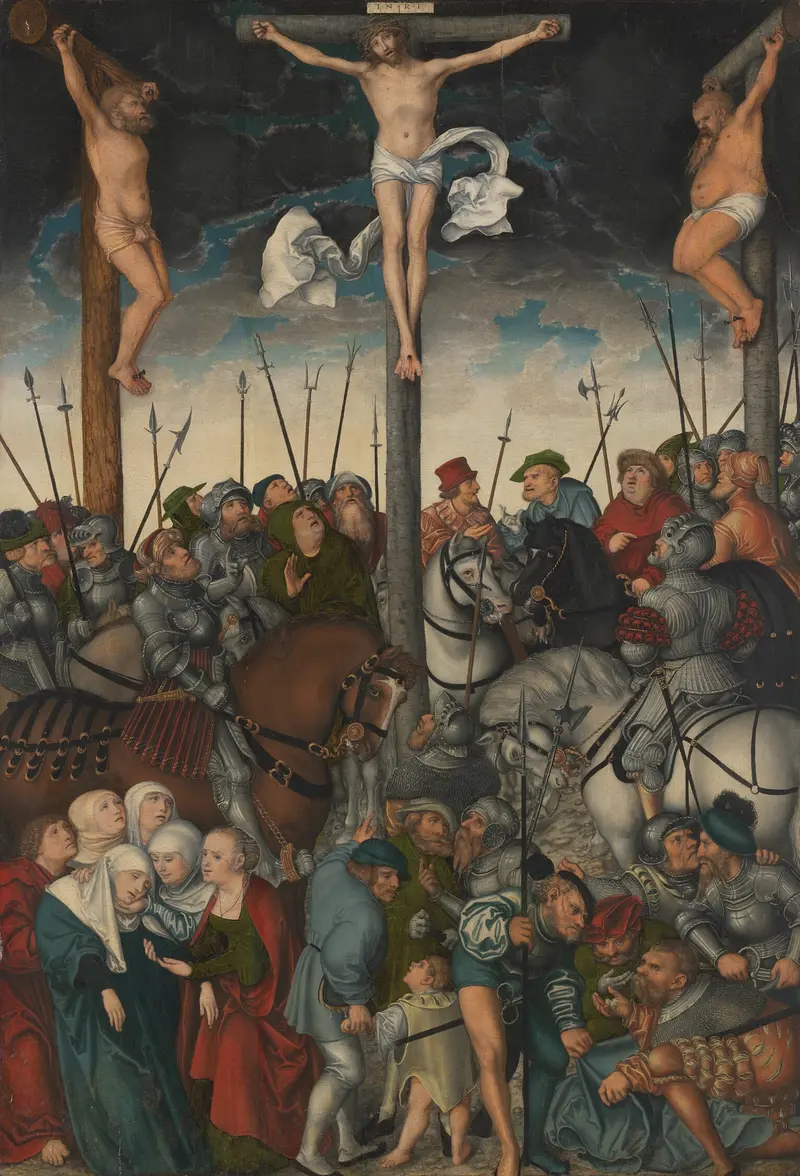
The Crucifixion
Lucas Cranach the Elder
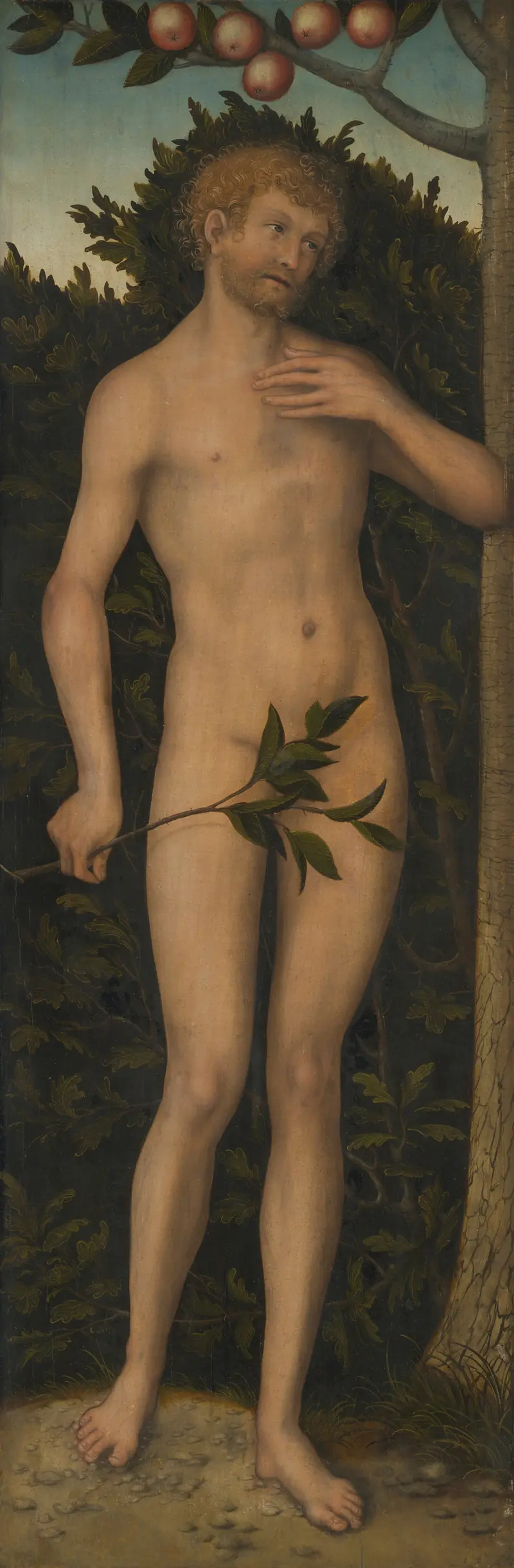
Adam
Lucas Cranach the Elder
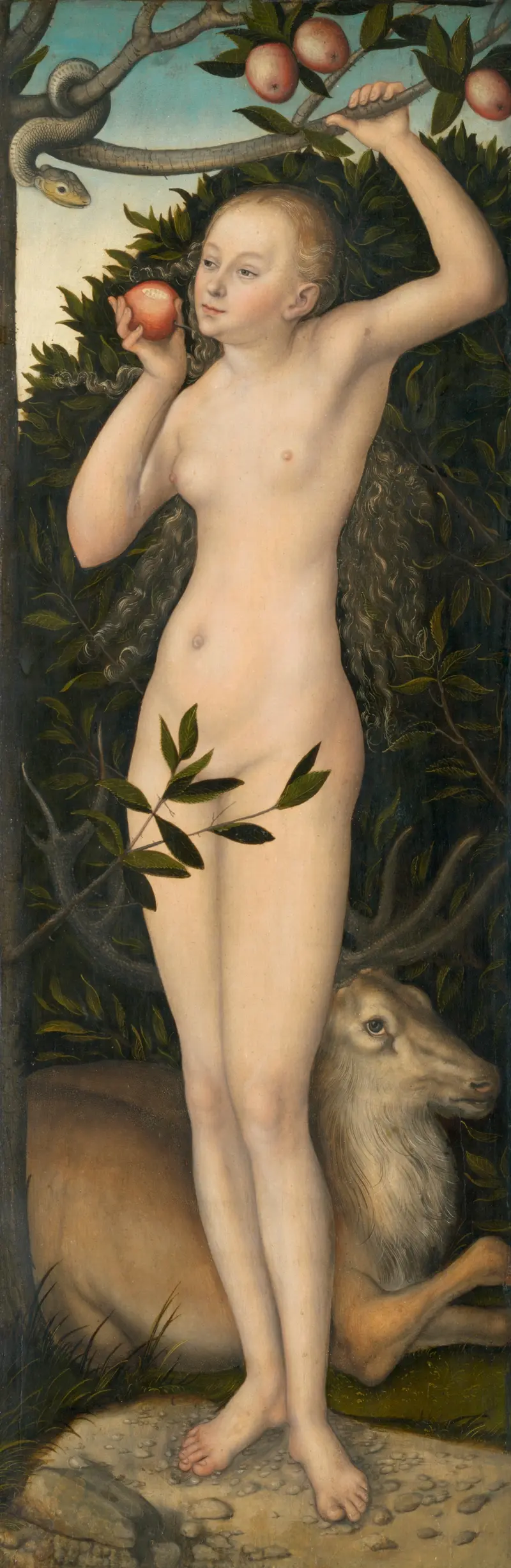
Eve
Lucas Cranach the Elder
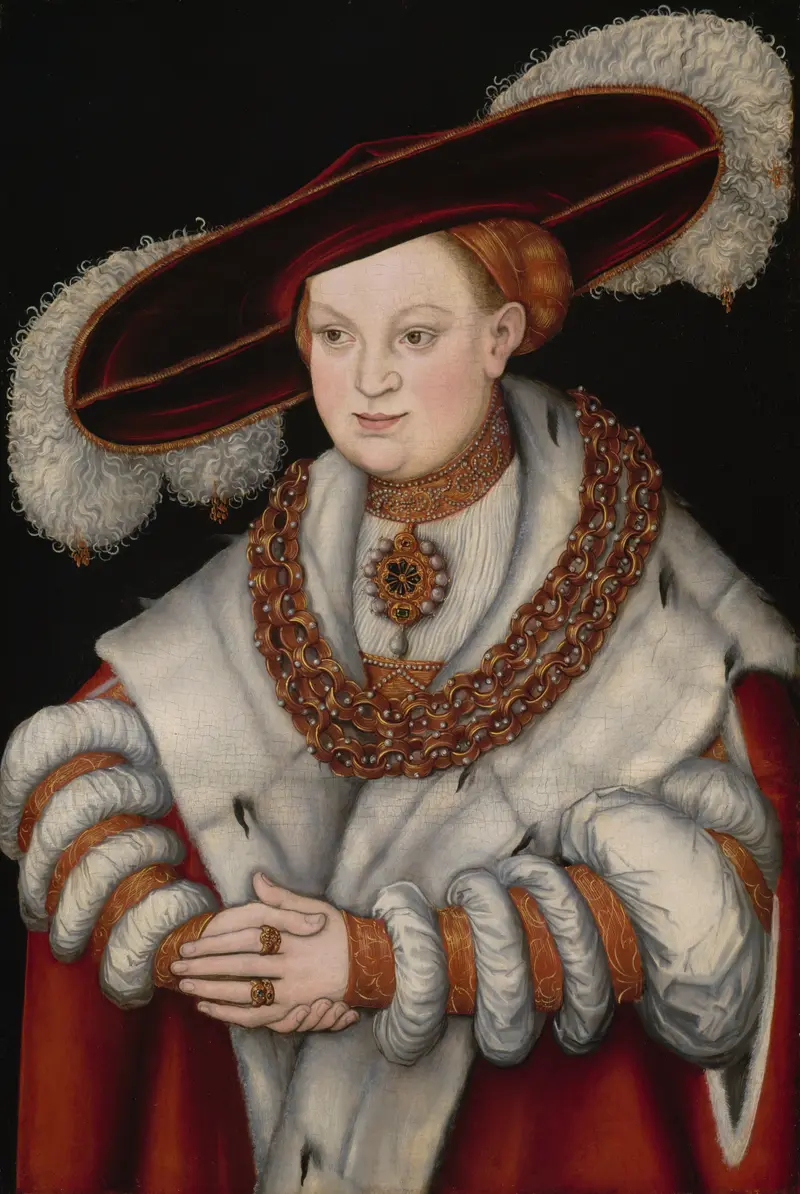
Portrait of Magdalena of Saxony, Wife of Elector Joachim II of Brandenburg
Lucas Cranach the Elder
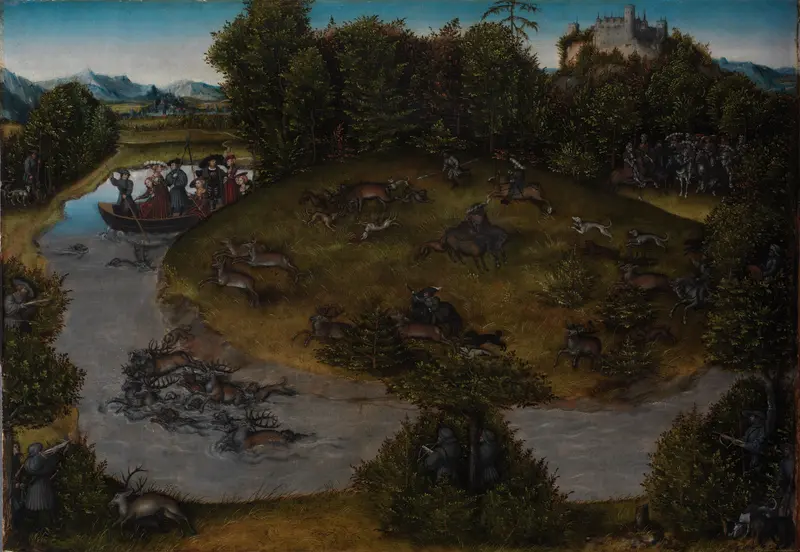
The Stag Hunt of the Elector Frederic the Wise (1463-1525) of Saxony
Lucas Cranach the Elder
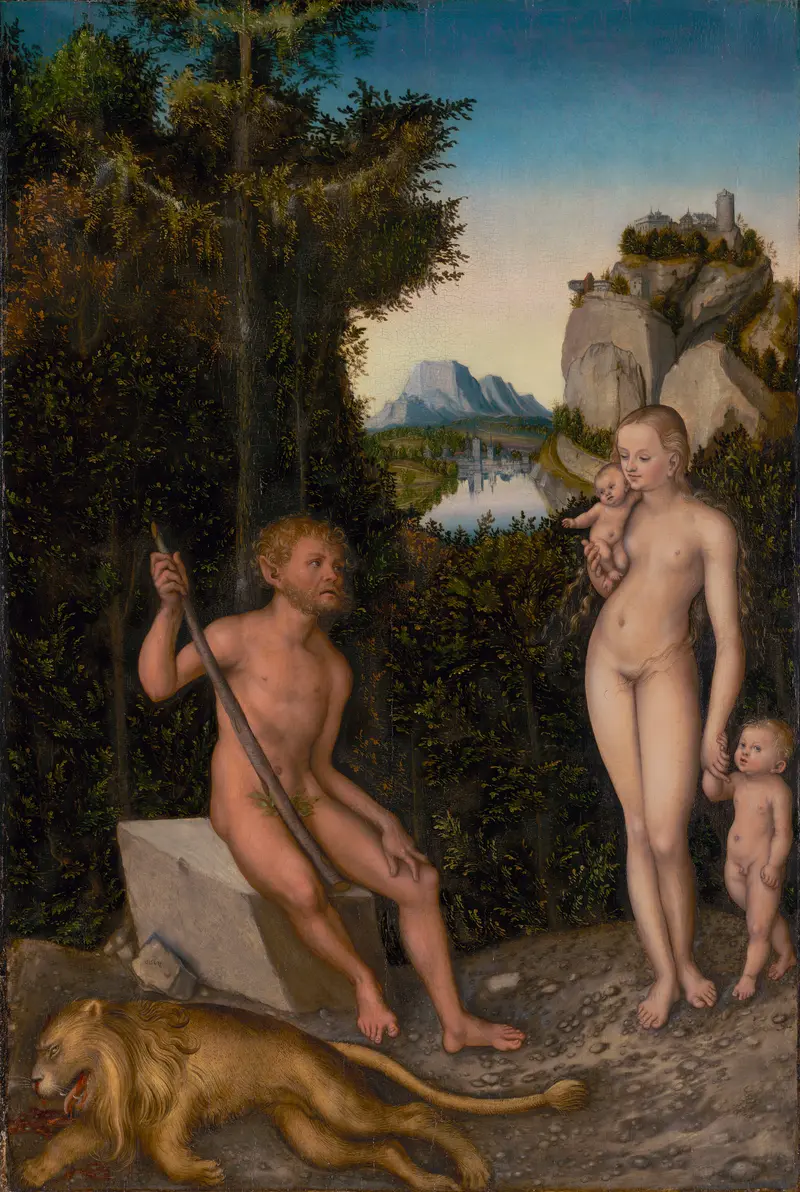
A Faun and His Family with a Slain Lion
Lucas Cranach the Elder
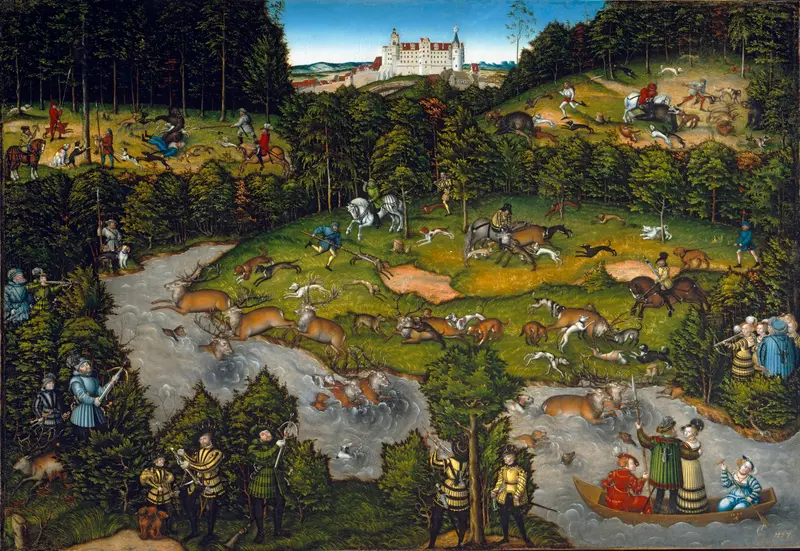
Hunting near Hartenfels Castle
Lucas Cranach the Elder
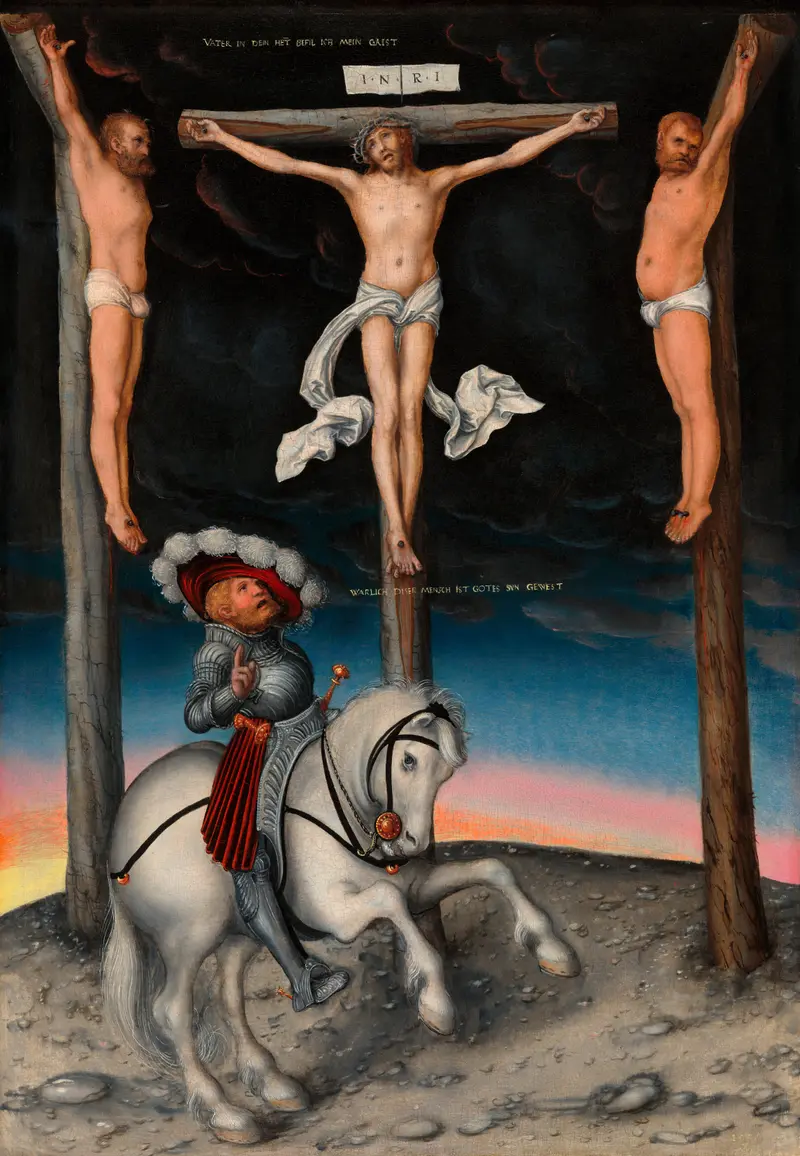
The Crucifixion with the Converted Centurion
Lucas Cranach the Elder
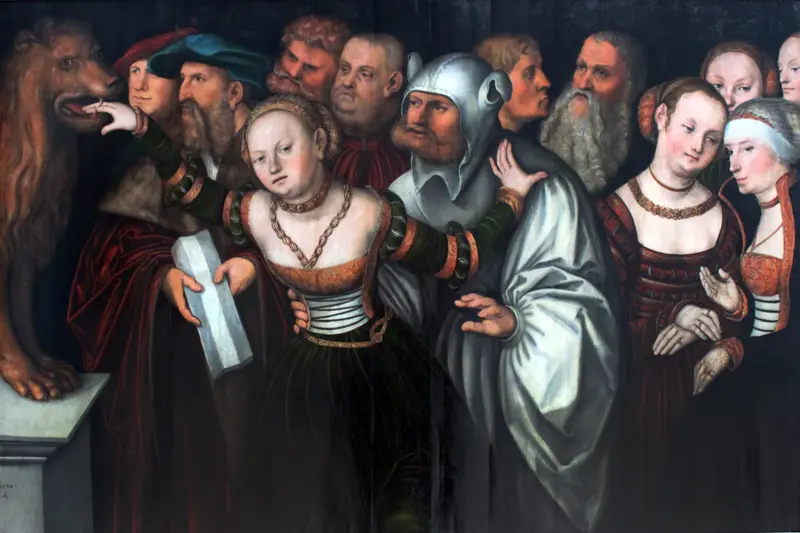
The Fable of the Mouth of Truth
Lucas Cranach the Elder





