
The Fable of the Mouth of Truth — History & Facts
A lion’s open jaws, a woman’s steady hand, and a crowd held in suspense—The Fable of the Mouth of Truth by Lucas Cranach the Elder seizes the viewer with its theatrical tension. The woman’s gaze meets ours, her arm outstretched in a gesture that is both accusation and defense. She stands at the very edge of danger, her fingers poised within the lion’s mouth, as if daring fate itself.
The figures around her are caught mid-breath: some skeptical, some bemused, one in a fool’s cap barely hiding a secret. The painter draws us into the drama, inviting us to judge, to doubt, to wonder. Every detail in this beechwood panel serves the story’s cunning. The lion, carved and lifelike, becomes the judge of truth, its calm acceptance contrasting with the crowd’s restless curiosity.
The woman’s elaborate dress and composed posture signal both her status and her resolve, while the man behind her—disguised as a fool—clutches her waist, his role hidden in plain sight. The palette is rich but cool, the background darkened to throw the cast into sharp relief, each face a study in suspicion or complicity. Painted in 1534, this scene echoes the late medieval fascination with the “Wiles of Women,” yet Cranach’s treatment is anything but flat: the moment is alive, the outcome uncertain, and the viewer is left to decide what truth, if any, has been spoken.
More Artworks by Lucas Cranach the Elder

Martin Luther
Lucas Cranach the Elder
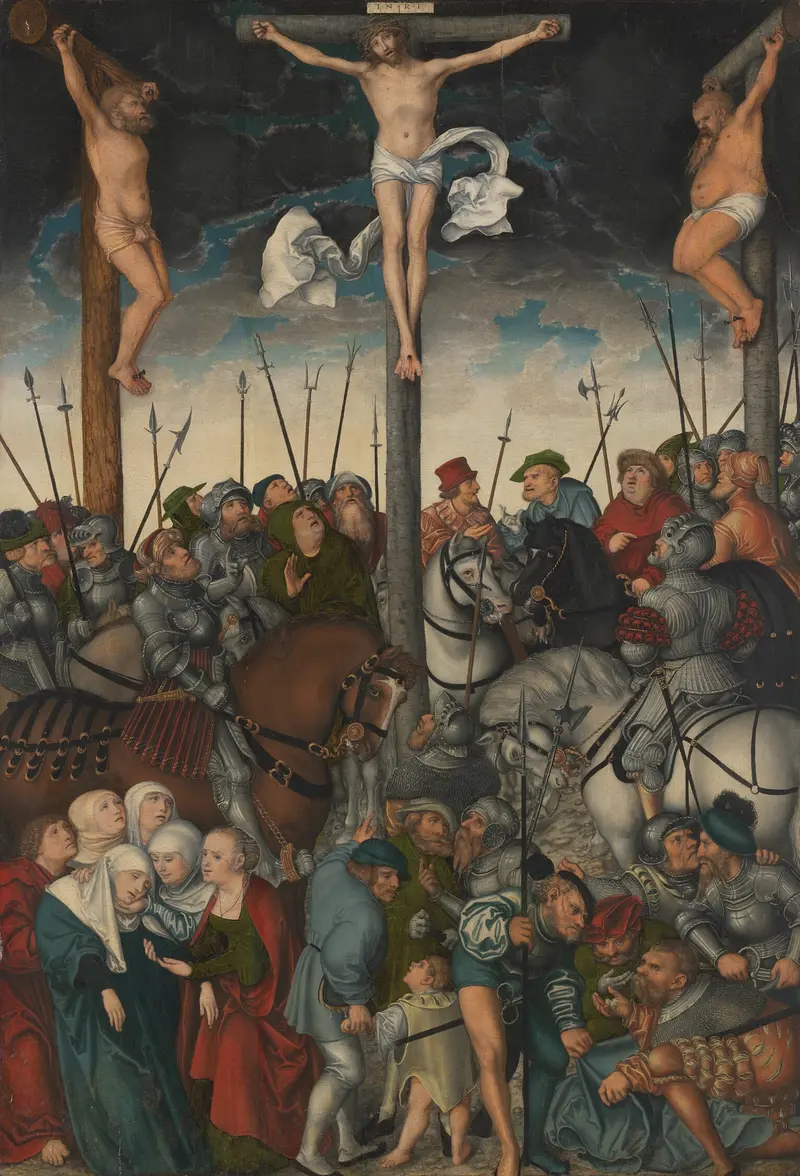
The Crucifixion
Lucas Cranach the Elder
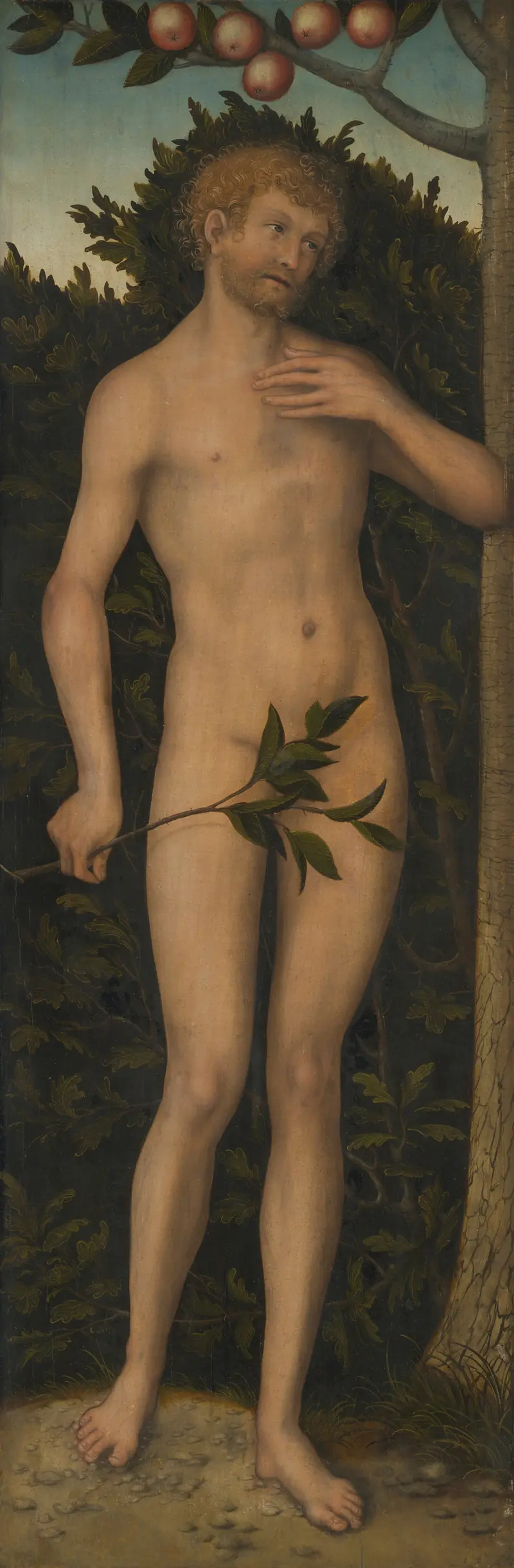
Adam
Lucas Cranach the Elder
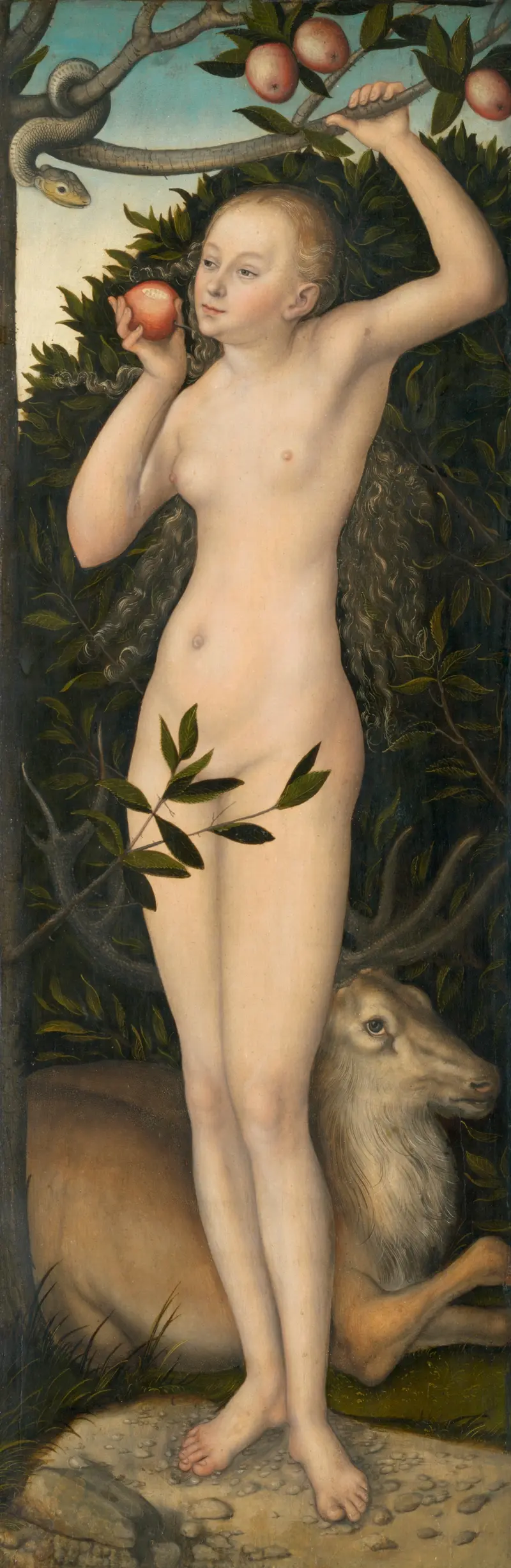
Eve
Lucas Cranach the Elder
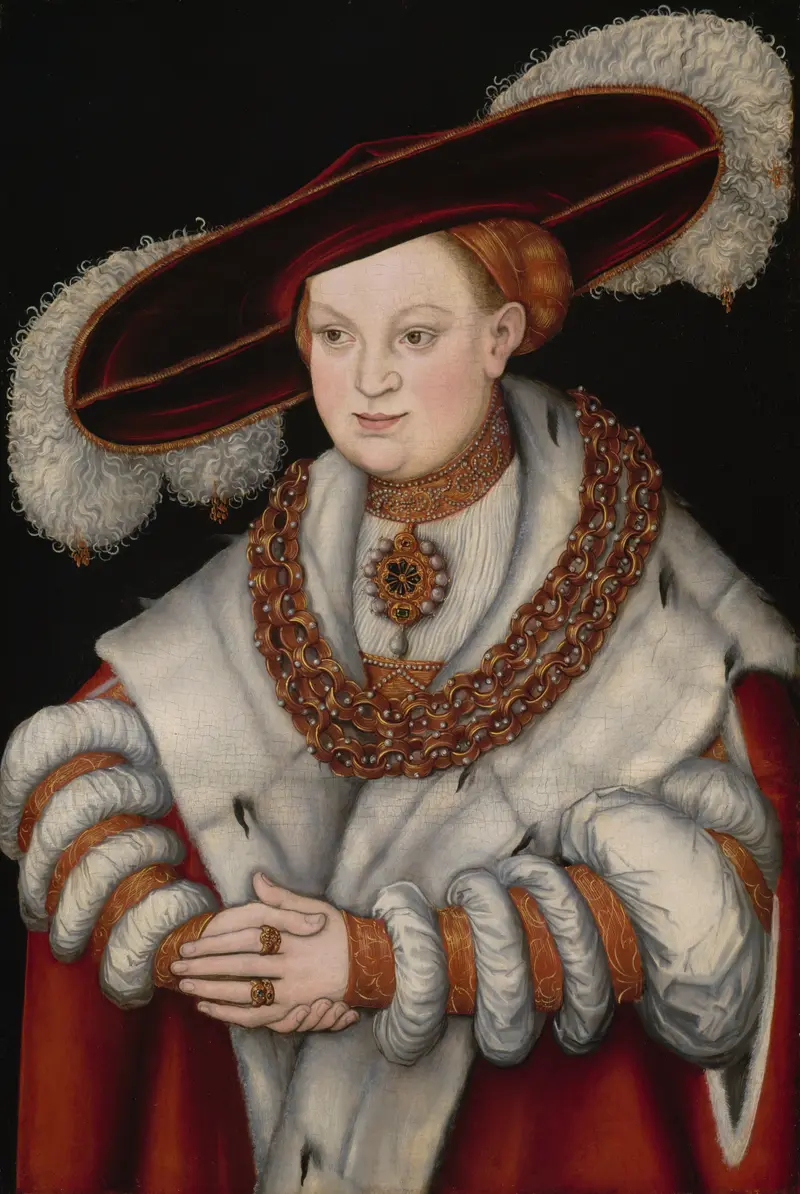
Portrait of Magdalena of Saxony, Wife of Elector Joachim II of Brandenburg
Lucas Cranach the Elder
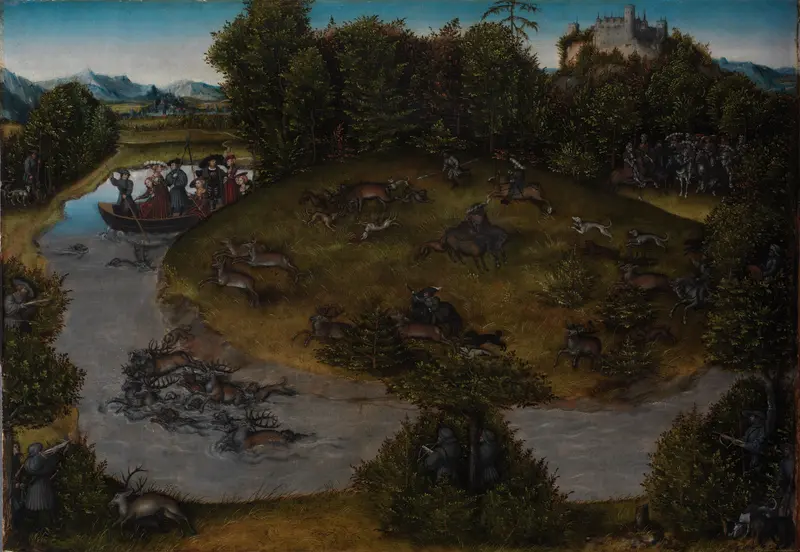
The Stag Hunt of the Elector Frederic the Wise (1463-1525) of Saxony
Lucas Cranach the Elder
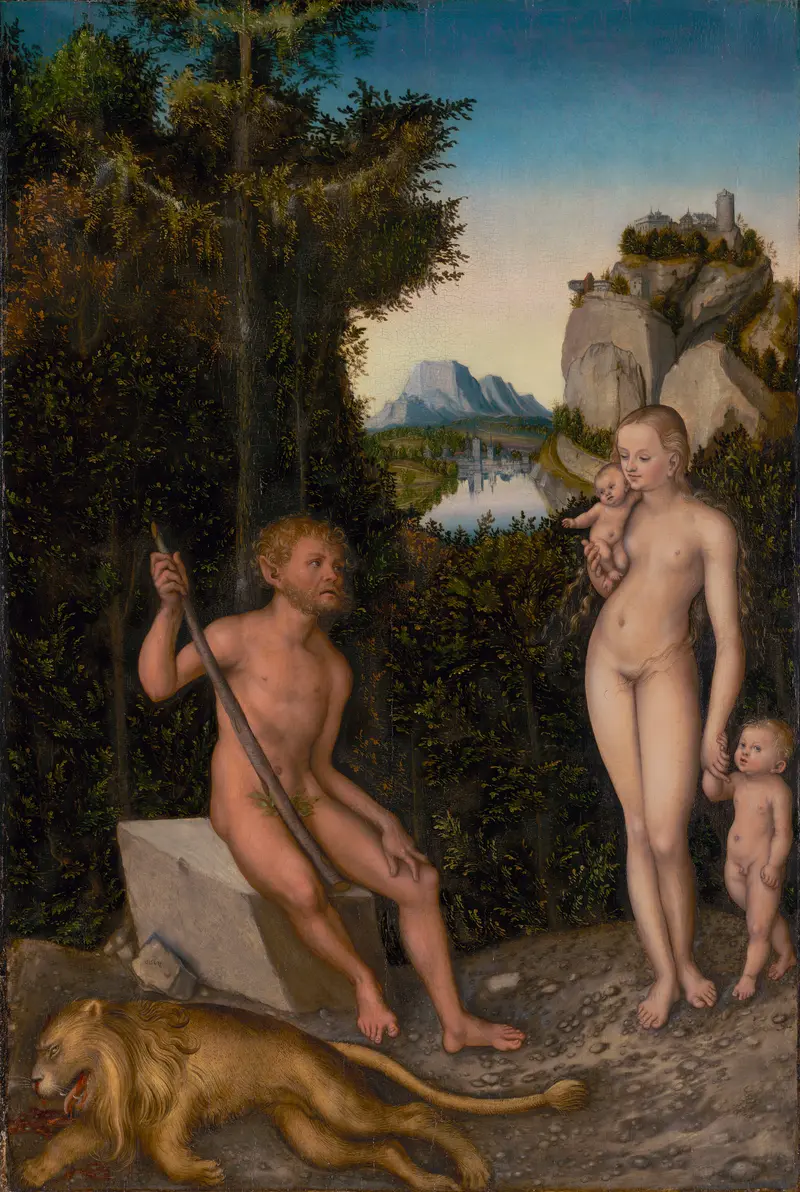
A Faun and His Family with a Slain Lion
Lucas Cranach the Elder
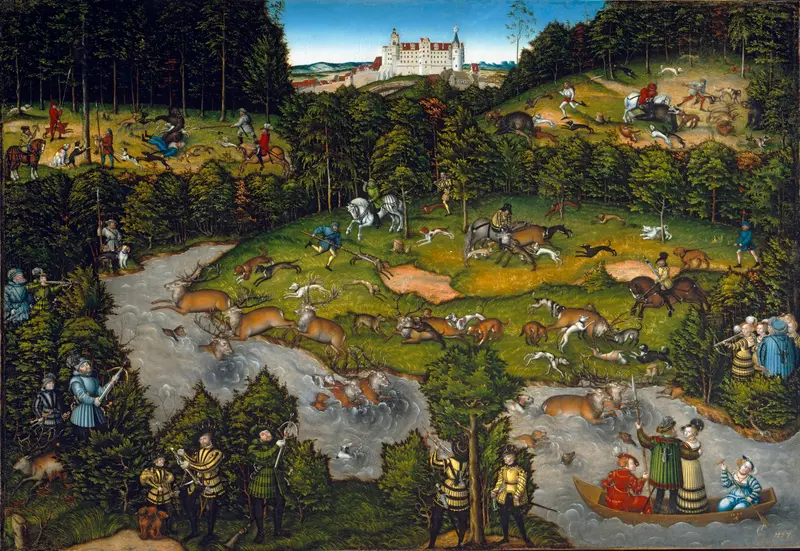
Hunting near Hartenfels Castle
Lucas Cranach the Elder
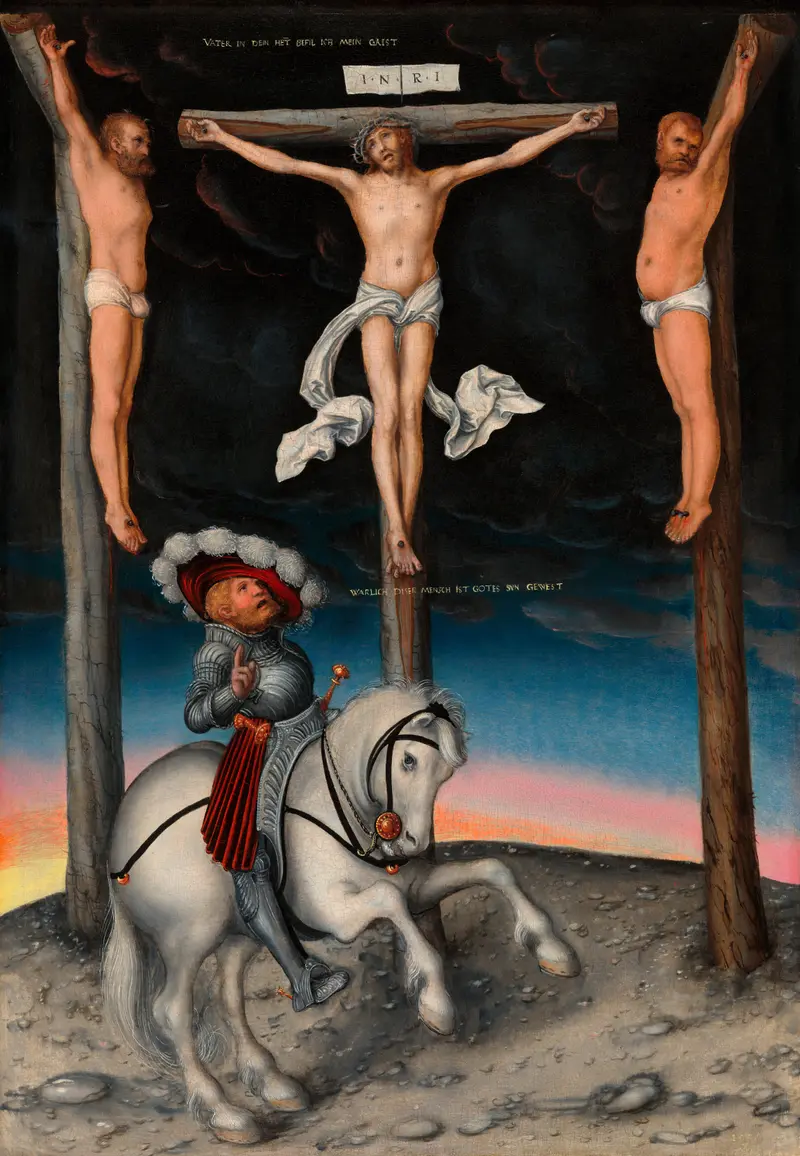
The Crucifixion with the Converted Centurion
Lucas Cranach the Elder
Portrait of Joachim II, Elector of Brandenburg
Lucas Cranach the Elder





