
Adirondack Lake — History & Facts
The first thing that draws the eye in Adirondack Lake is the hush before movement—a lakeshore paused in the long light, where the water mirrors the sky’s gentle blue and the mountain’s bulk seems to hold its breath. The painter, Alexander Helwig Wyant, leads you from the rough, glinting stones at the water’s edge, past the dense, sunstruck pines, out to the shadowed mountain that anchors the horizon. The composition is a careful balance: the rocks and trees on the right feel close enough to touch, while the far shore and the clouds drifting above it invite the gaze to wander.
Wyant’s handling of light is deliberate, the golden hour catching on trunks and needles, suggesting the day’s slow turning. There is no human figure, but the scene is charged with presence—the sense that someone has just stepped out of view, or is about to arrive. Painted between 1868 and 1870, this work belongs to a moment when American artists were turning to the wilderness as both subject and symbol. The Adirondacks, newly accessible and celebrated as a retreat from city life, became a favorite of painters seeking to capture both the grandeur and the intimacy of the landscape.
Works like this were often collected by those who longed for a reminder of untamed nature, even as the country’s cities grew. Wyant was part of the generation shaped by the Hudson River School, but his approach here is quieter, more attentive to mood than spectacle. Held today in the collection of Heritage Auctions, Adirondack Lake stands as a record of an era’s fascination with the American wild—a painting that invites you to linger, as if you too were pausing on that silent shore.
More Artworks by Alexander Helwig Wyant

Autumn Landscape and Pool
Alexander Helwig Wyant
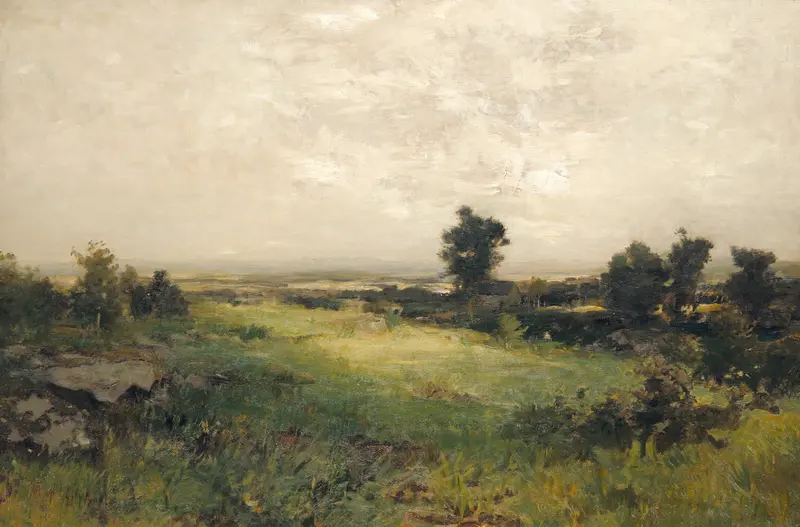
Housatonic Valley
Alexander Helwig Wyant
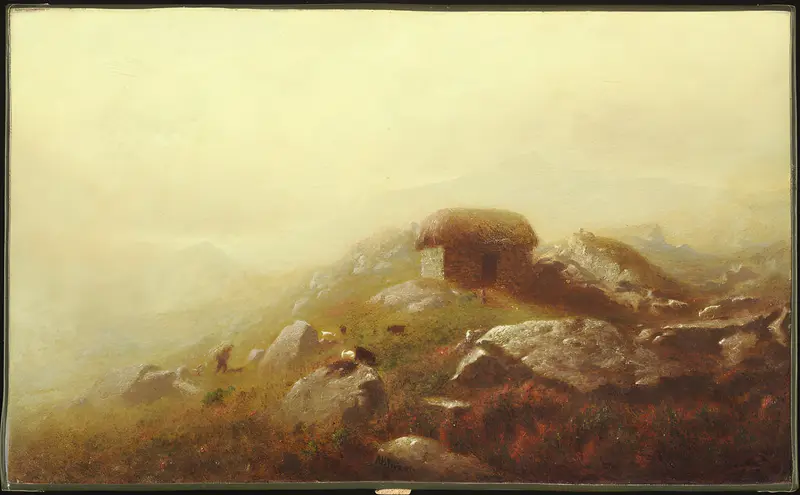
Misty Morning Near the Lakes of Killarney
Alexander Helwig Wyant
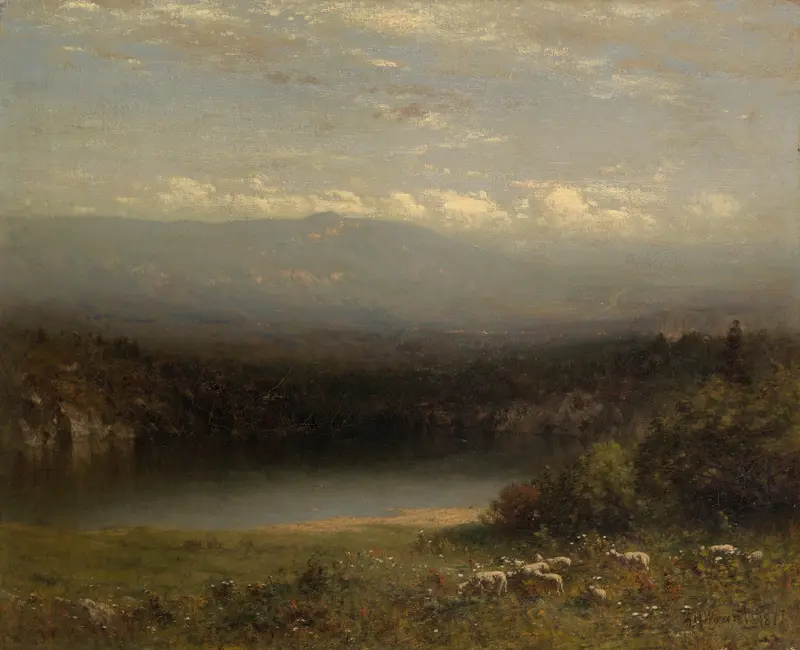
Mountain Lake
Alexander Helwig Wyant
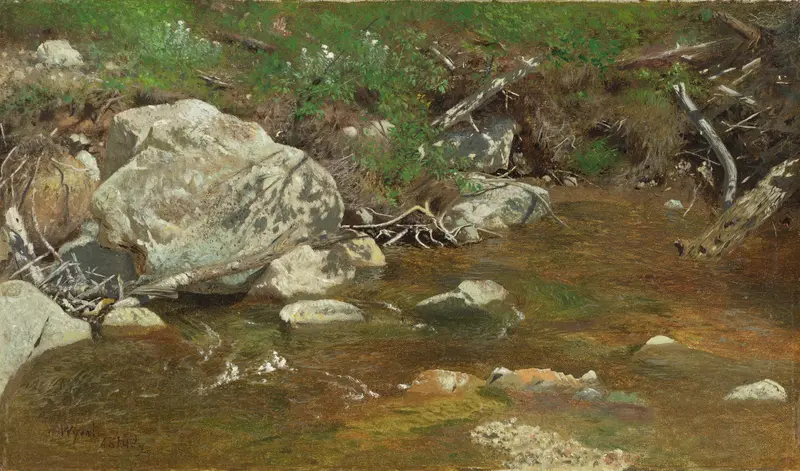
Mountain Brook; A Study
Alexander Helwig Wyant
Keene, Adirondacks
Alexander Helwig Wyant
Autumn in the Adirondacks
Alexander Helwig Wyant
Cattle Grazing, Late Afternoon
Alexander Helwig Wyant
Peaceful Valley
Alexander Helwig Wyant
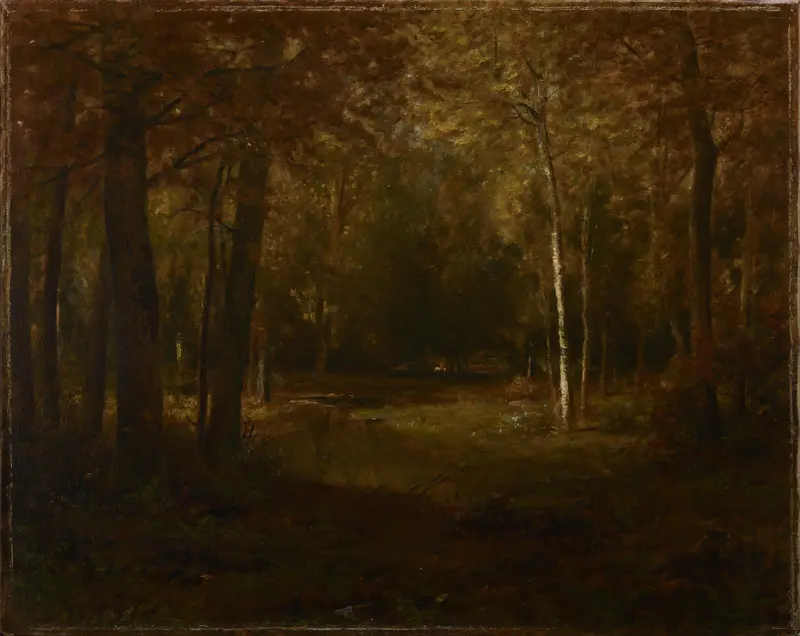
Glade in Autumn
Alexander Helwig Wyant
More Landscape Art

The Starry Night
Vincent van Gogh

View of Delft
Johannes Vermeer

Water Lilies
Claude Monet

The Grand Canal, Venice, looking north-west from the Ca' Corner to the Ca' Contarini degli Scrigni, with the campanile of Santa Maria della Carità
Canaletto

Windsor Castle
Canaletto

The Grand Canal looking North-East from the Palazzo Dolfin-Manin to the Rialto Bridge
Canaletto