Afternoon in Estérel (Côte d’Azur) — History & Facts
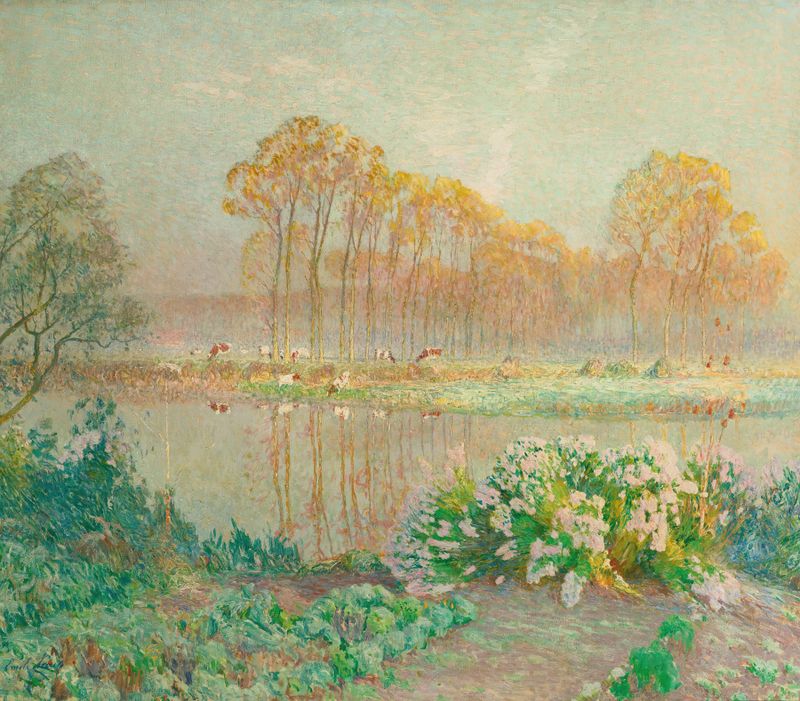
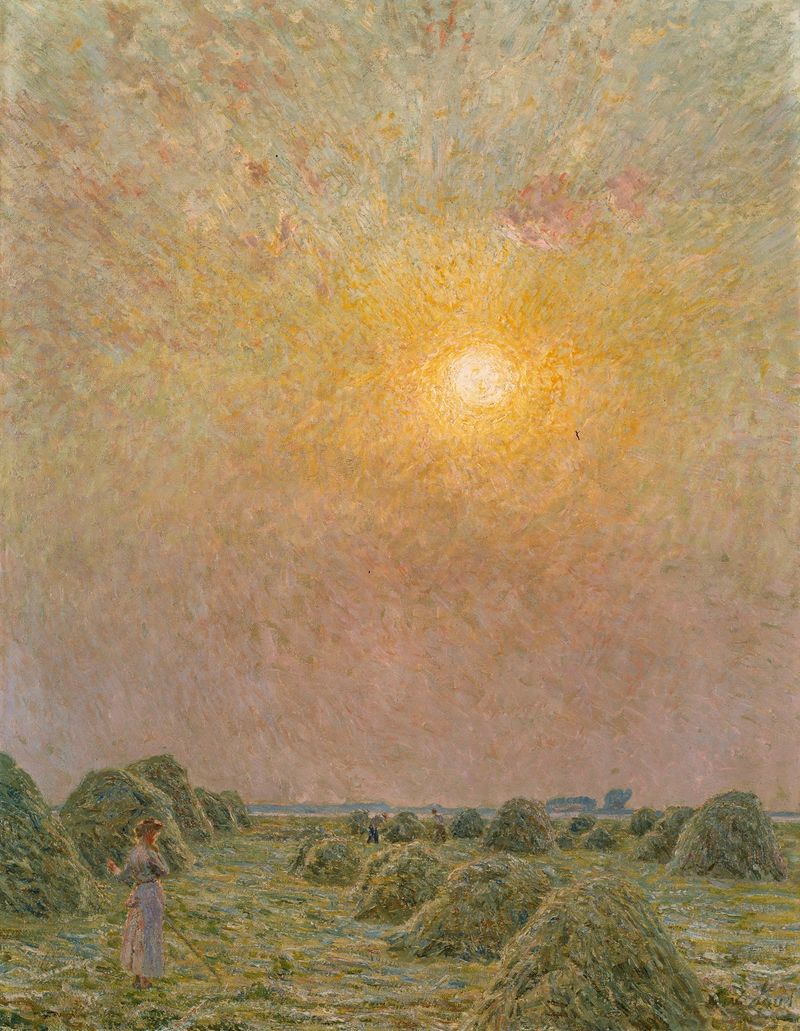
In the gentle embrace of light and color, a poignant sense of loss lingers, echoing the transience of beauty itself. Here, the vibrancy of the Côte d’Azur contrasts with the shadow of what is lost, inviting introspection. Look to the left at the warm hues, where sunlight dances across the azure waters, capturing the essence of a fleeting moment. Notice how the waves reflect a symphony of soft oranges and deep blues, evoking both warmth and melancholy.
The composition invites the eye to traverse the horizon, where sky meets sea, while the lush greenery of the surrounding landscape serves as a reminder of life's vibrant pulse, yet also its inevitable passage. Beneath the surface, the painting hums with emotions of nostalgia and yearning. The idyllic scene, infused with sunlight, acts as a double-edged sword, symbolizing not just joy but also the poignant awareness of time slipping away. The interplay of shadow and light on the water's surface hints at deeper currents of memory, suggesting that what is celebrated can also evoke a sense of mourning for what is no longer attainable. In 1914, Emile Claus created this masterpiece amidst a Europe on the brink of upheaval.
Living in Belgium, Claus was deeply influenced by the Impressionist movement, yet he infused his work with a personal touch that reflected both the beauty of his surroundings and the complexities of human emotion. This year marked a transitional period in art history, as the world prepared for the Great War, a backdrop of turmoil that contrasted sharply with the serene beauty captured in Afternoon in Estérel.