Summer — History & Facts
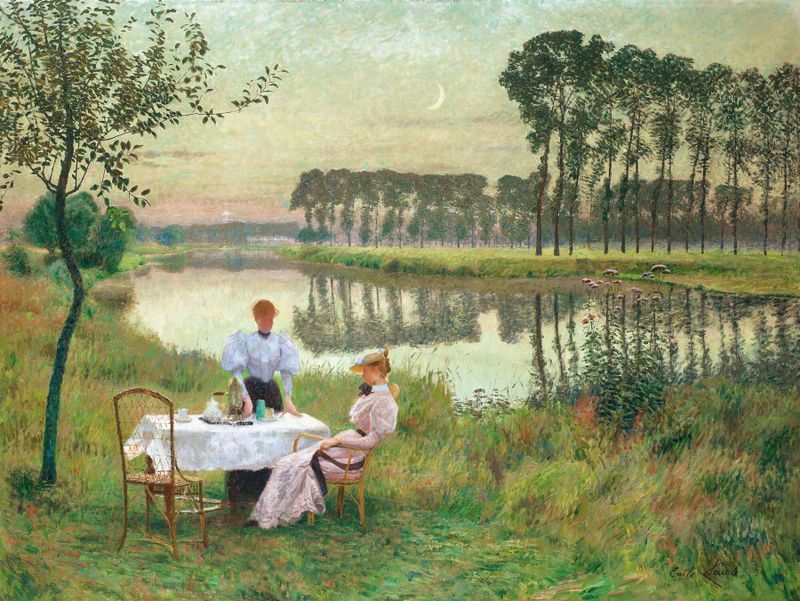
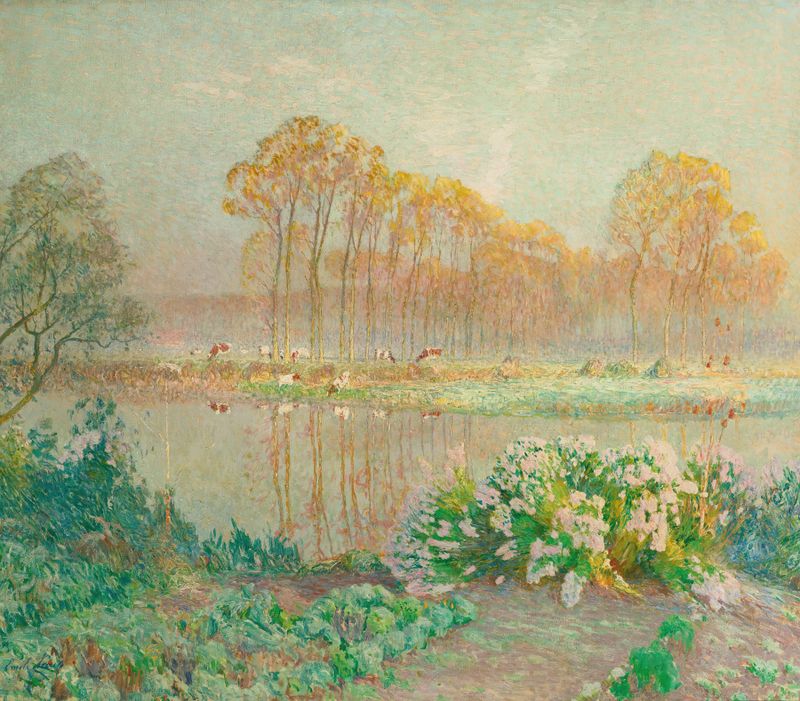
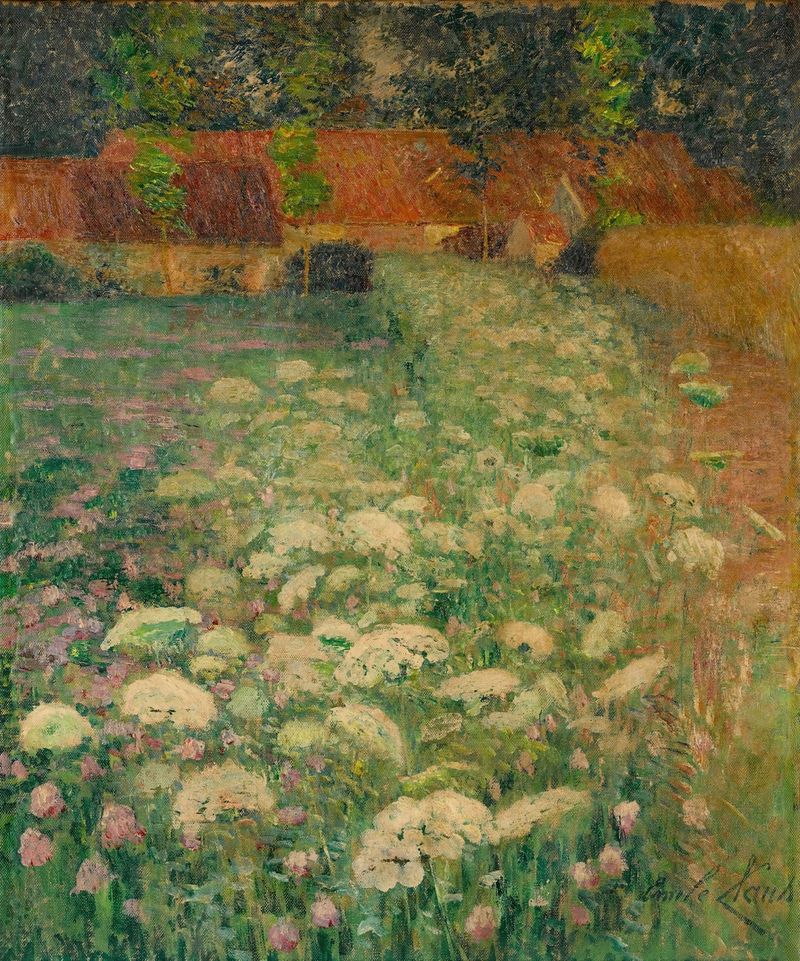
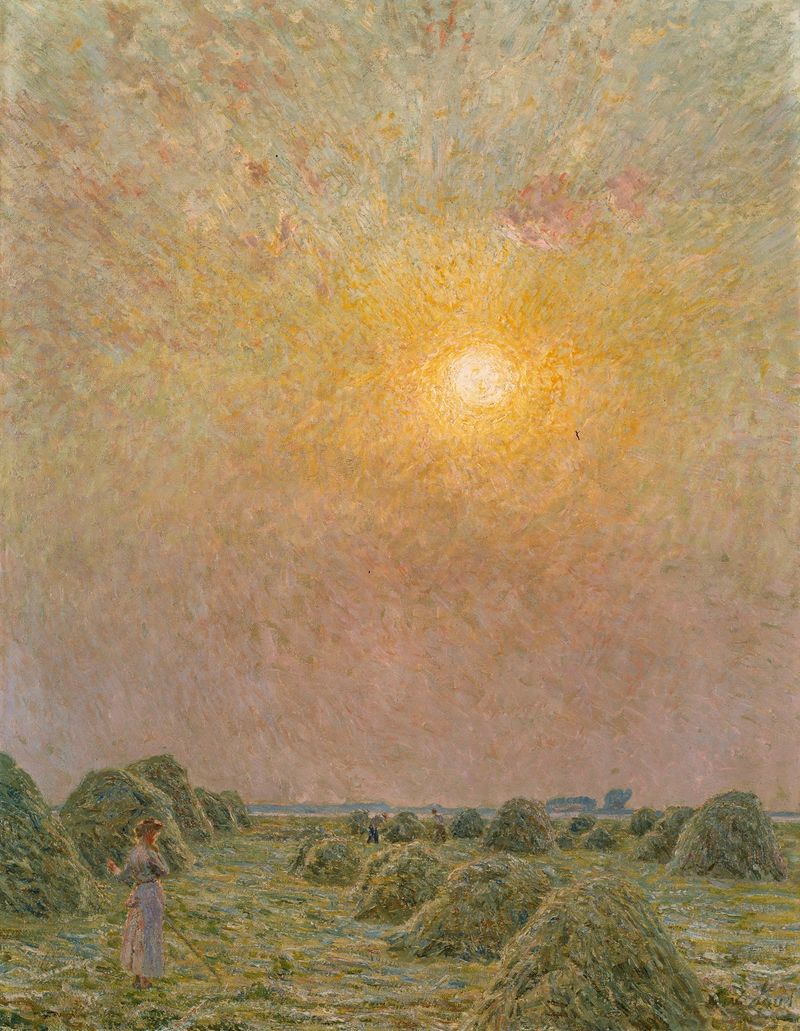
Could beauty survive in a century of chaos? In Summer, Emile Claus offers a resplendent answer to this poignant question, capturing the essence of tranquility amidst the turbulent tides of history. Focus first on the luminous sky, painted in sweeping strokes of soft yellows and ambers, where sunlight dances across the canvas. The vibrant fields of golden wheat draw your gaze downward, their texture almost palpable, inviting you to feel the warmth of a midsummer's day. Notice the figures in the foreground, their relaxed postures and joyful expressions reflecting a fleeting moment of peace.
The balance of light and shadow throughout the piece creates a gentle rhythm, underscoring the harmony between human existence and nature. Yet, beneath this idyllic surface lies an undercurrent of tension. The bright palette juxtaposes with the looming uncertainties of the late 19th century, a period fraught with industrial upheaval and social change. The figures, seemingly content, hint at a deeper anxiety about the fragility of such joy.
The waves of wheat might symbolize abundance but also the anxiety of what lies beyond the horizon, suggesting that this serene summer day could soon be overshadowed by chaos. Painted in 1893, during a time when the world was on the brink of transformation, Claus found himself in an era characterized by shifts in artistic expression. Living in Belgium, he was influenced by the rise of Impressionism, which encouraged explorations of light and color. While art embraced new techniques, it also reflected the complex societal dynamics that surrounded him.
In this work, Claus not only captures a moment in time but also speaks to the resilience of beauty in a world poised for change.