The flower garden in may — History & Facts
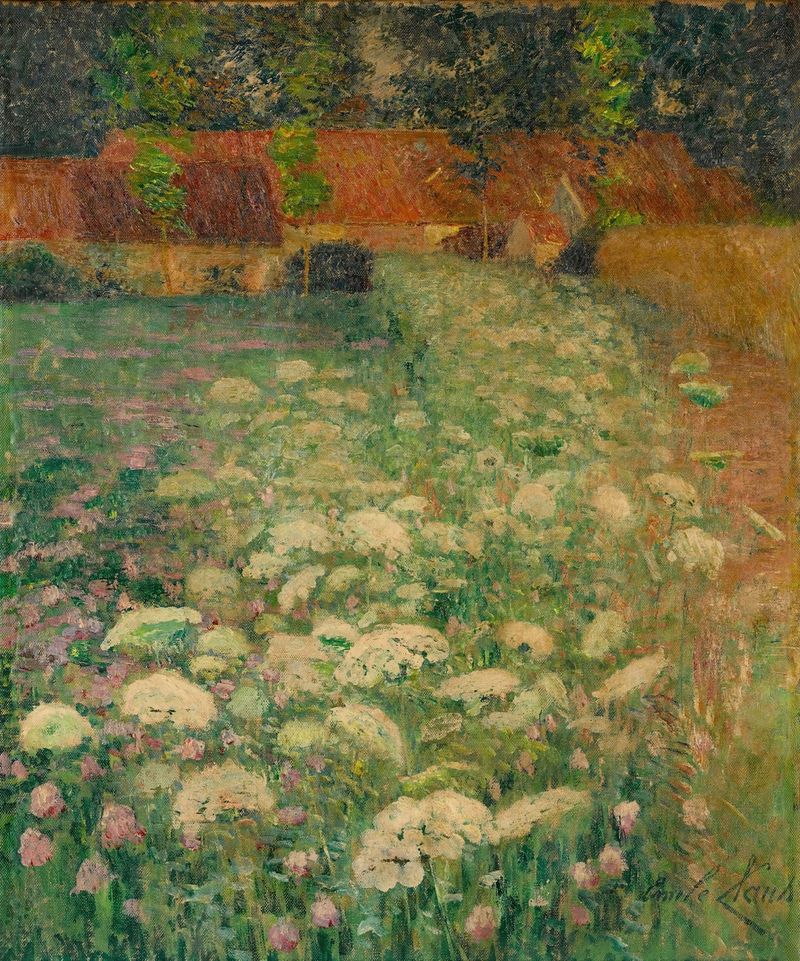
The sun drenches the garden in golden light, casting shadows that dance among the blossoms. A figure, perhaps a woman, kneels amid the vibrant colors, hands tenderly buried in the earth, as if searching for a lost memory. The air is thick with the scent of blooms, yet silence hangs heavy, suggesting a poignant absence. Look to the left at the riotous splashes of color—pinks, reds, yellows—a symphony of petals that beckons with their beauty.
Notice how the artist masterfully layers brushstrokes to convey both vibrancy and fragility, creating an intricate texture that invites the viewer to touch. The play of light brings out the delicate details of each flower while the soft greens of the foliage create a calming backdrop. Yet, beneath this lush façade lies a deeper sorrow. The woman's posture, slightly hunched, seems to echo a sense of longing or loss, as if each flower she tends represents a memory or a loved one no longer present.
The stark contrast between the lively colors of the garden and the woman's muted presence heightens this emotional tension, reflecting the delicate balance between grief and the beauty of life persisting. Emile Claus painted this garden scene during a period of introspection in his career, likely in Belgium around the turn of the 20th century. During this time, he was deeply influenced by the Impressionist movement, experimenting with light and color while expressing the subtleties of human emotion. The world was grappling with rapid industrial changes, and Claus sought solace in the natural world, finding comfort in the vibrant yet ephemeral beauty of gardens.