Soirée D’été — History & Facts
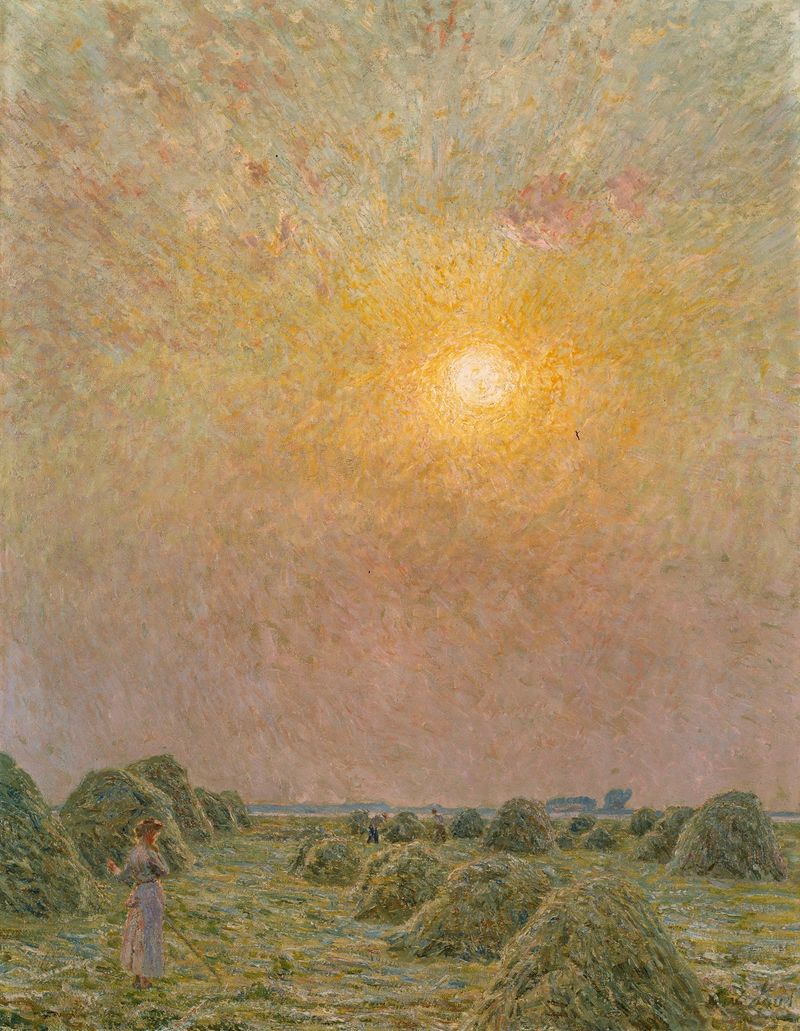
Who listens when art speaks of silence? In the delicate twilight of Soirée D’été, whispers of mortality blend seamlessly with the beauty of a fleeting summer evening. Look to the center of the canvas, where soft, golden light bathes a group of elegantly attired figures gathered in animated conversation. Their vivid garments contrast against the cool, shadowy tones of the surrounding landscape, drawing your eye to their gestures and expressions. Note the interplay of light and shadow — how the gentle luminescence illuminates their faces, capturing a moment of intimacy that feels suspended in time.
The artist's brushwork, loose yet deliberate, conveys a sense of movement and life, while the lush greenery in the background quietly frames this social scene, inviting contemplation. Yet beneath the surface vibrancy lies an undercurrent of existential reflection. The figures’ smiles, though bright, are tinged with a poignant awareness of the transient nature of joy, much like the warm light that may soon fade into darkness. The lush garden serves as a metaphor for the fleeting pleasures of life, while the encroaching evening shadows hint at the inevitable passage of time.
In this gathering, one can sense a collective pause, as if the participants are acutely aware that such moments are ephemeral, instilling a bittersweet tension between celebration and the specter of mortality. Emile Claus painted Soirée D’été in 1895 while living in Belgium, a period marked by a burgeoning interest in Impressionism. Influenced by the interplay of light and color, he sought to capture the essence of life’s fleeting moments. At this time, the art world was undergoing a transformation, as artists moved away from traditional forms and embraced new ways of seeing the world.
This work reflects both a personal and collective exploration of beauty, intimacy, and the transitory nature of human experience.