Village de Deurle — History & Facts
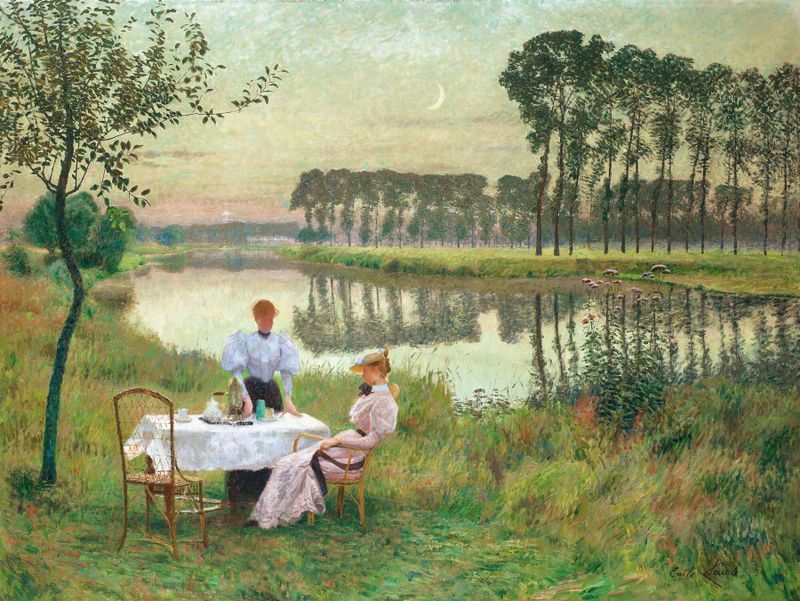
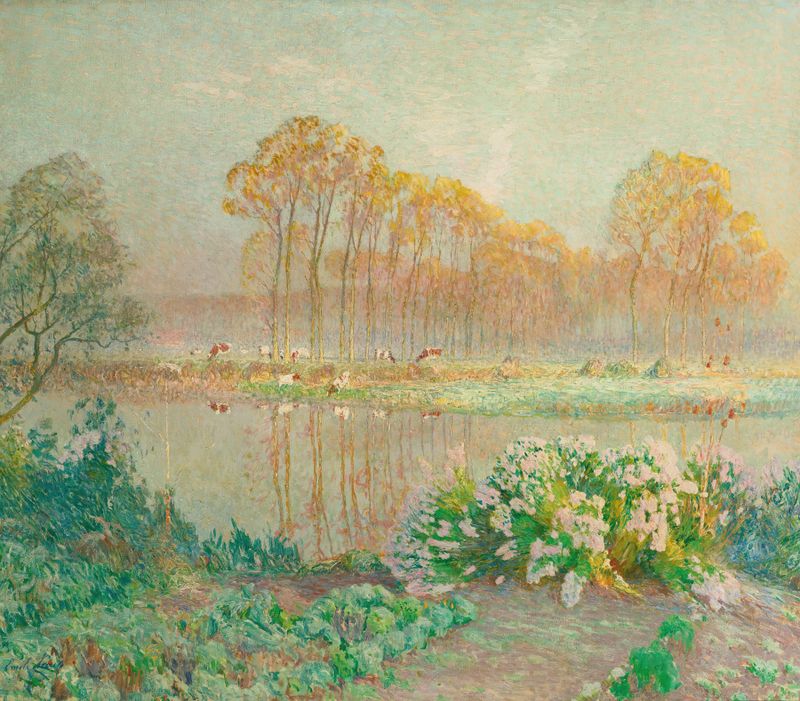
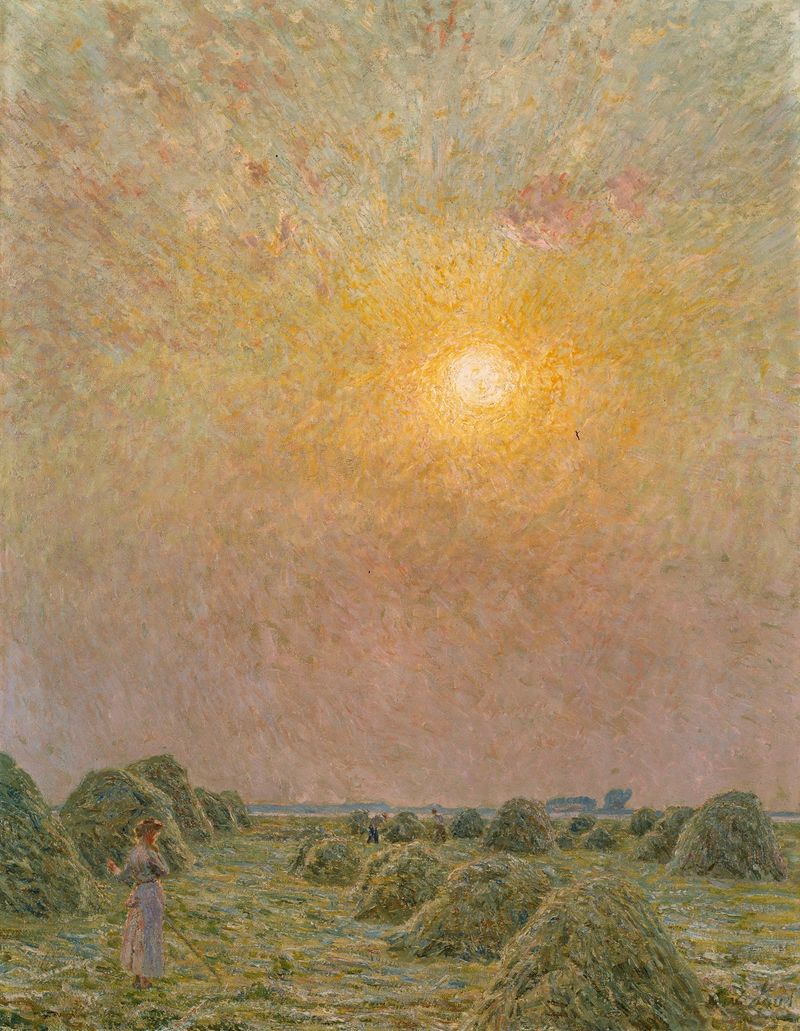
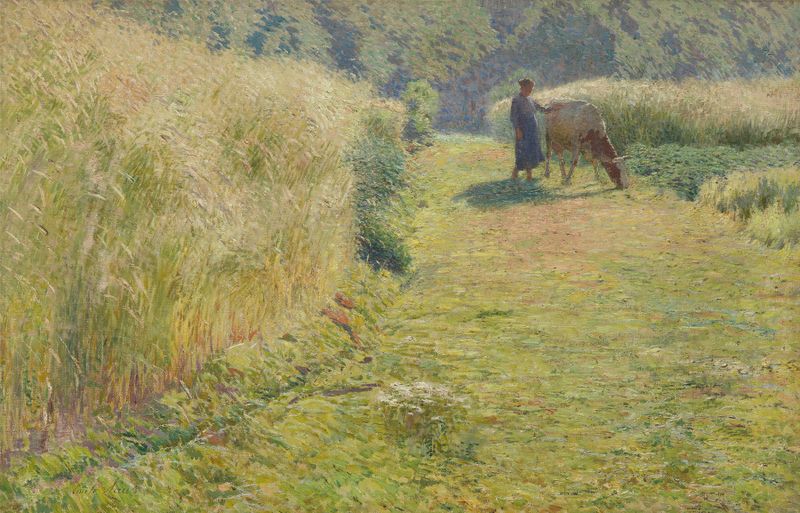
Who listens when art speaks of silence? In the hushed ambiance of Village de Deurle, a quiet ecstasy unfolds beneath the brushstrokes of a master painter, inviting viewers to linger in its serene embrace. Look to the center, where the gentle curve of the river draws the eye, flanked by lush greenery and quaint cottages kissed by sunlight. Notice how the palette dances between soft greens, deep blues, and warm earth tones, creating a harmonious balance. The interplay of light and shadow, masterfully rendered, evokes a sense of tranquility, as if the village holds its breath in a moment suspended in time. Delve deeper into the canvas, where small details reveal larger narratives.
The reflections on the water hint at fleeting moments of joy and solitude, while the distant figures appear almost ethereal, embodying both movement and stillness. This contrast between the vibrancy of nature and the quietude of human life illustrates the duality of existence—an invitation to embrace both ecstasy and introspection. In 1895, Emile Claus painted Village de Deurle during a period characterized by the rise of Impressionism in Belgium. He was influenced by the natural light and landscape around him, seeking to capture the essence of rural life.
The artwork emerged when societal changes were challenging traditional values, reflecting a moment in art history where personal experience and emotional depth began to define artistic expression.