
Albert (Paul Besnard dit) Esquisse pour la mairie du 4ème , Le retour des champs — History & Facts
What first catches the eye in Albert (Paul Besnard dit) Esquisse pour la mairie du 4ème , Le retour des champs is the rush of movement surging up the sunlit path. The figures, loosely sketched yet full of energy, stride forward with a sense of shared fatigue and satisfaction, their bodies angled by the weight of the day’s labor. The woman in the foreground clutches a sheaf of wheat, her scarf fluttering, while her companion hoists a tool over his shoulder, mouth open as if in mid-song or call.
The light spills from behind, flattening shadows and bathing the scene in a golden haze, while the rough, unfinished lower portion of the canvas reminds us that this is a working idea, a glimpse into the artist’s process. Every brushstroke seems to push the story onward, capturing not just a walk home, but the rhythm of rural life. Painted in 1884, this sketch belongs to a world where scenes of everyday labor were gaining a new dignity in French art. The late nineteenth century saw artists turning their gaze to the countryside, honoring the toil and rituals of the working class at a time of rapid urban change.
Works like this, intended for civic spaces such as the mairie, were meant to root communities in shared values and local identity. While little is recorded about the journey of this particular sketch, its presence in the Paris Musées collection today ties it to a broader tradition: the celebration of ordinary lives, rendered with immediacy and empathy. The unfinished wood-toned base at the bottom invites us to imagine the mural’s final form, and to linger a moment longer with these returning workers before they vanish into history.
More Artworks by Albert Besnard
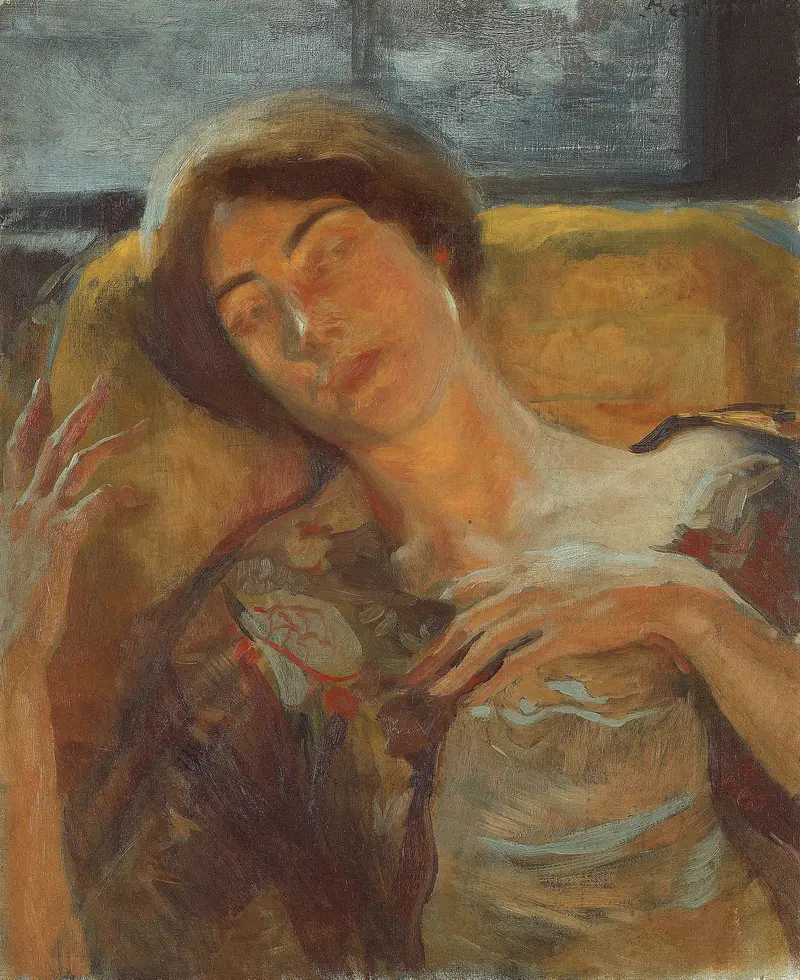
Woman's Head
Albert Besnard
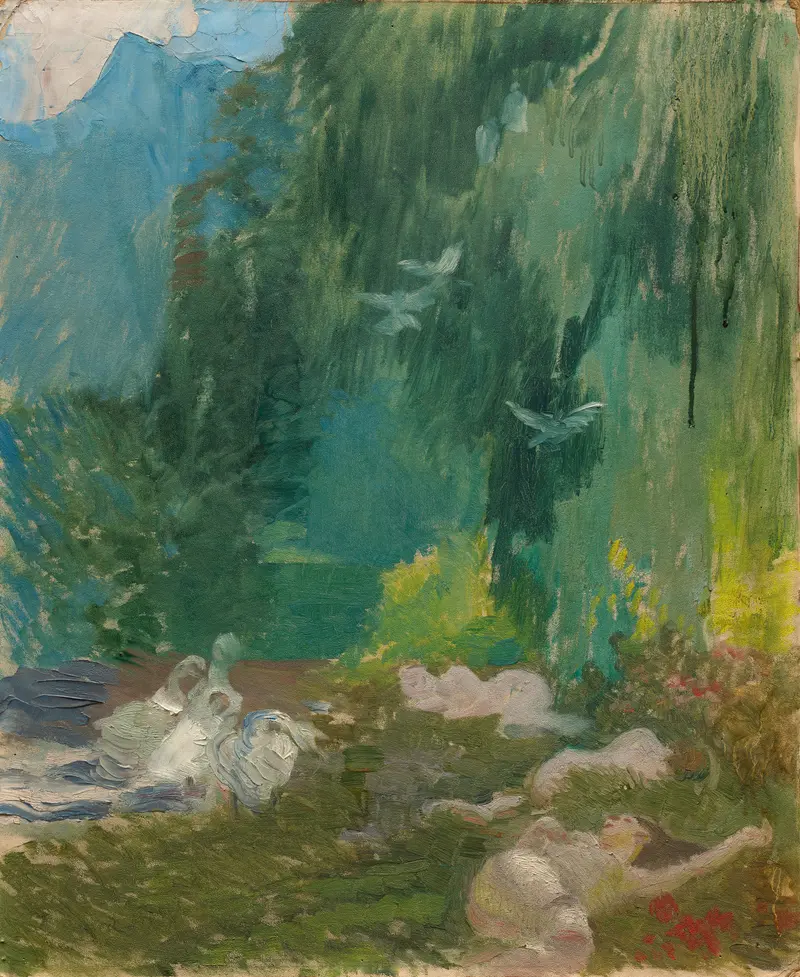
The Siesta
Albert Besnard
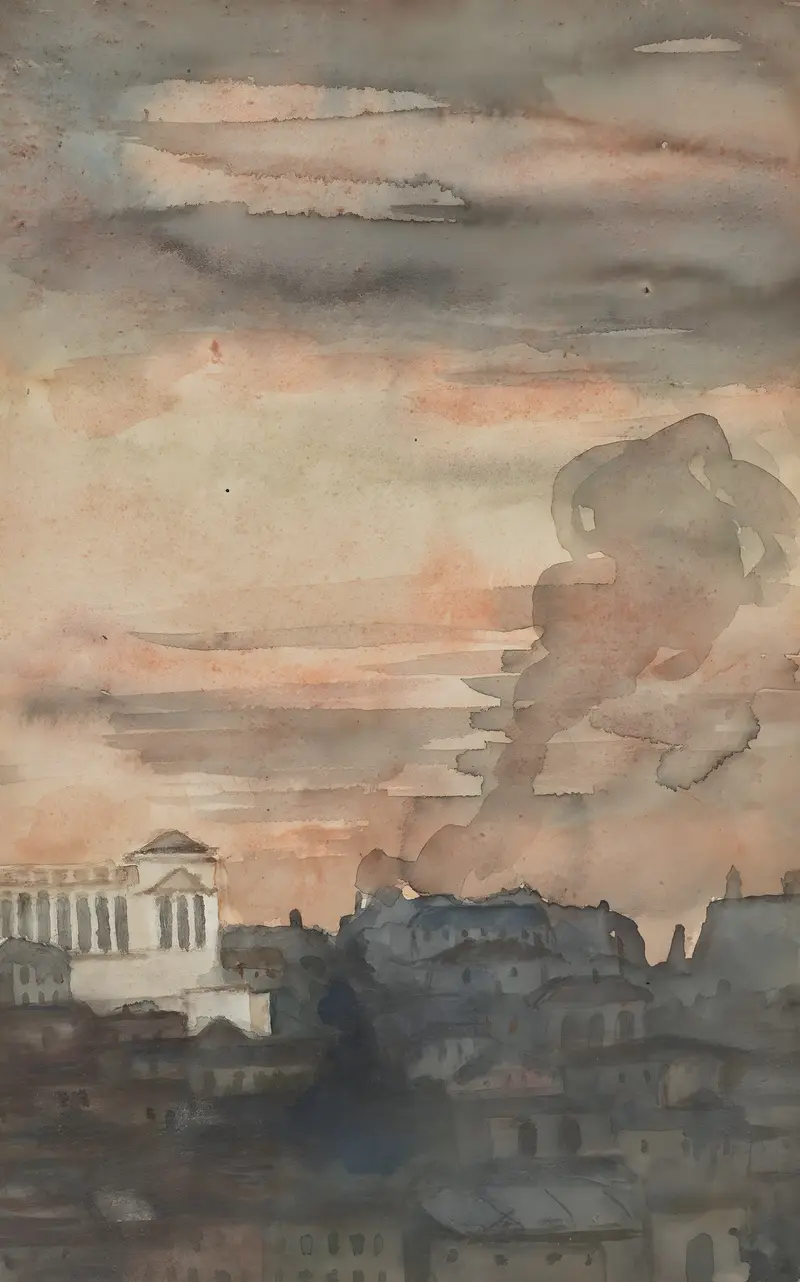
View of Rome with the Vittorio Emanuele II Monument in the distance, at sunset
Albert Besnard
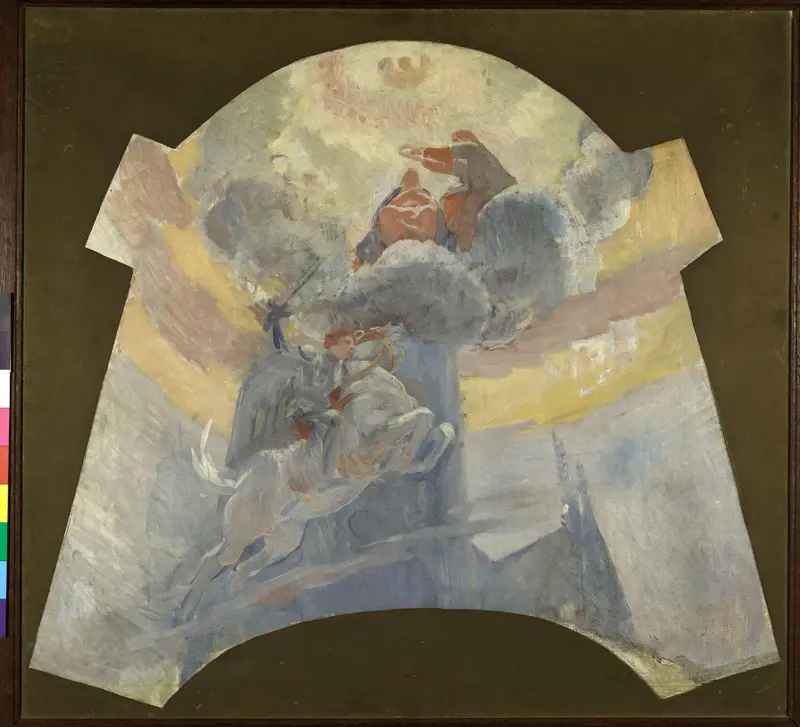
Albert (Paul Besnard dit) La Mystique, esquisse de la composition d'ensemble
Albert Besnard
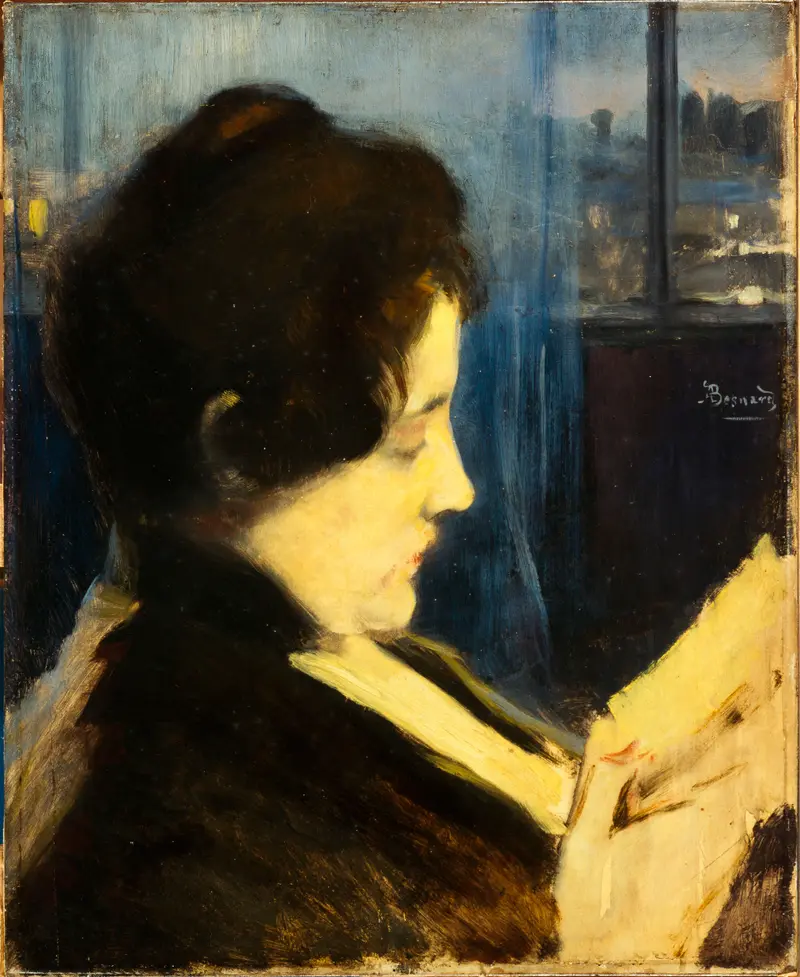
Charlotte Besnard c.
Albert Besnard
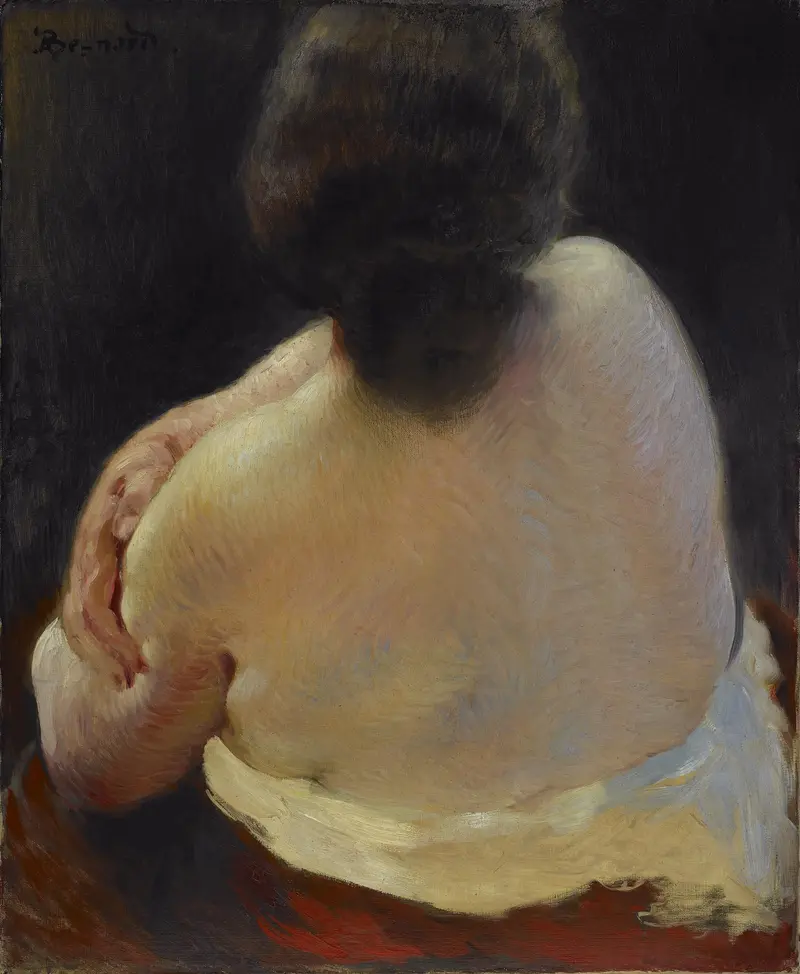
Back of a Woman, Study
Albert Besnard
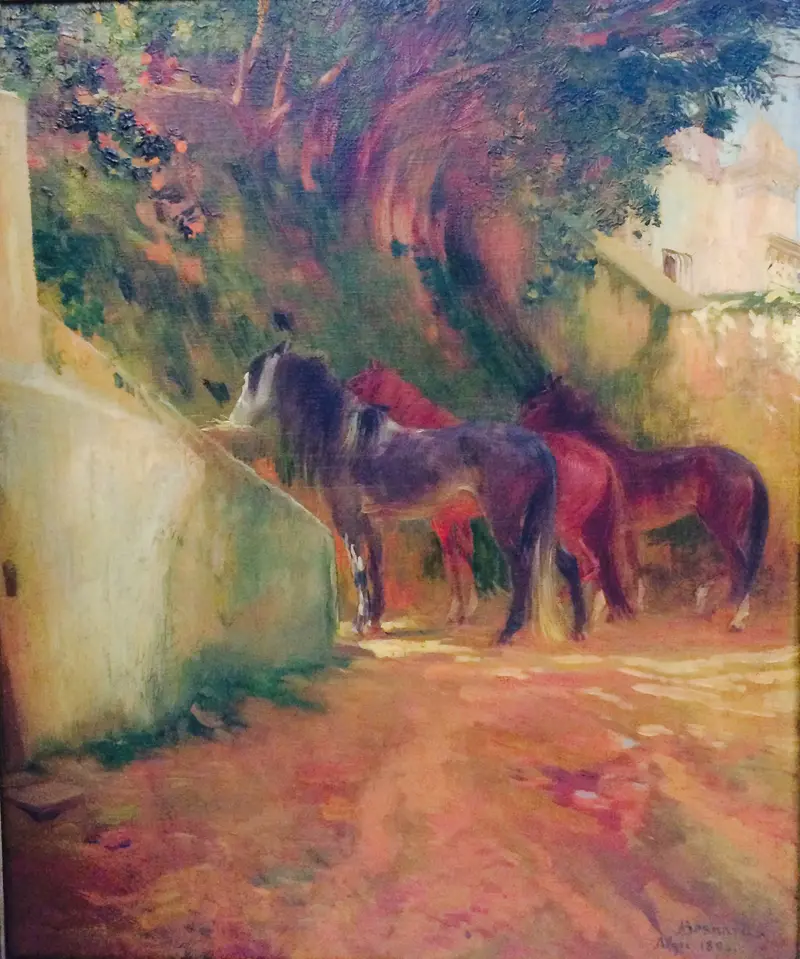
Horses
Albert Besnard
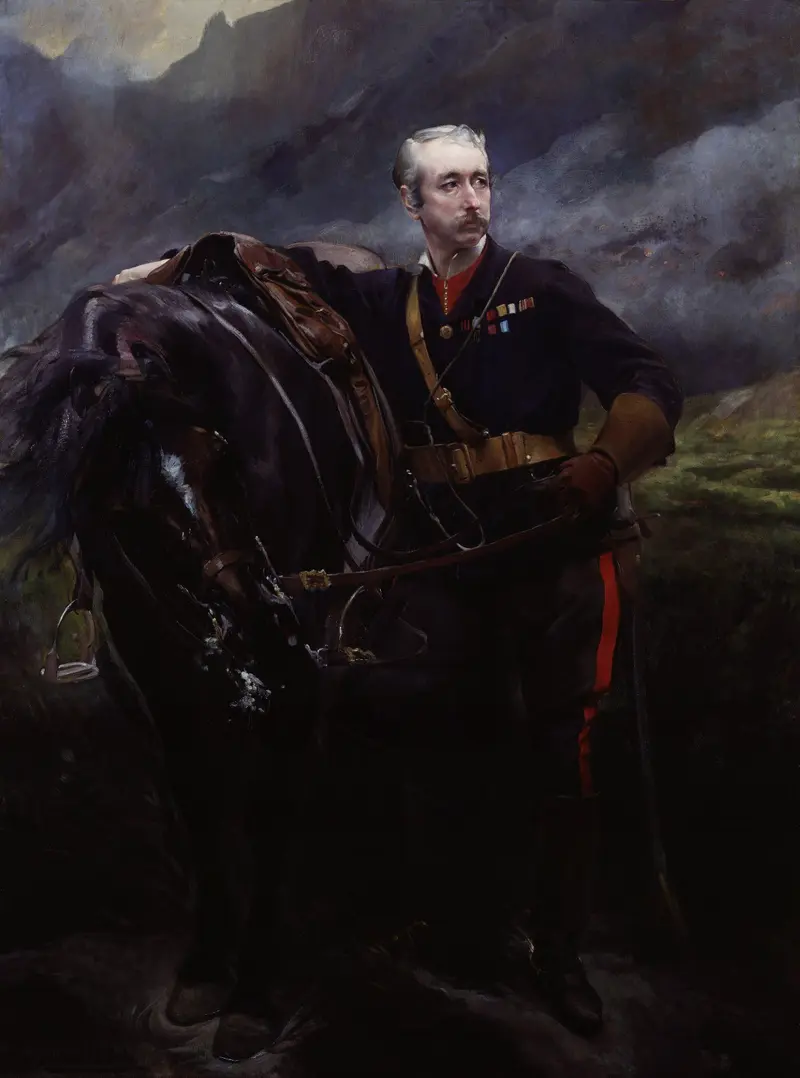
Garnet Joseph Wolseley, 1st Viscount Wolseley
Albert Besnard
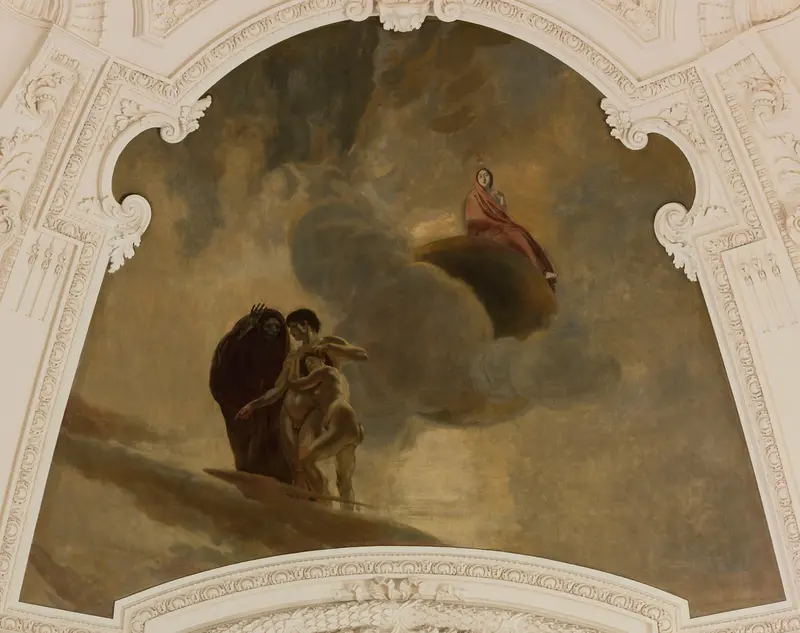
Besnard La Pensée DECOP00A(04) Petit Palais 01
Albert Besnard
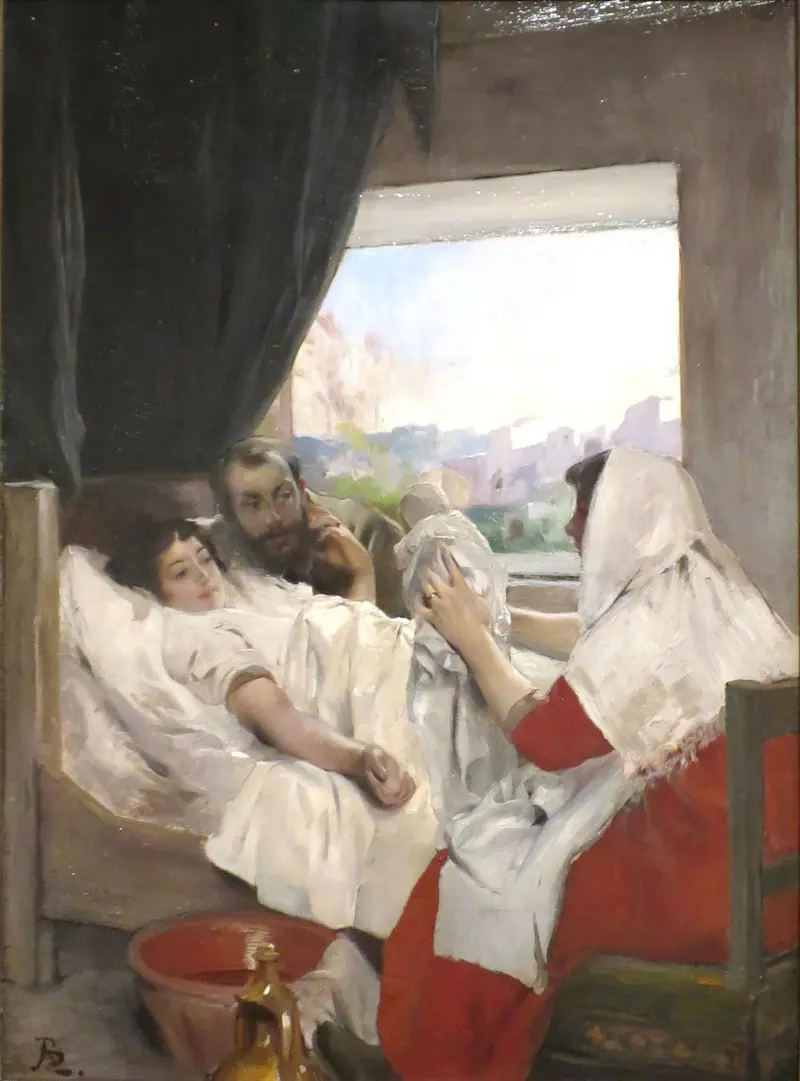
The First Morning (Albert and Charlotte Dubray Besnard and their Son, Robert)
Albert Besnard
More Genre Scene Art

Banquet of the Officers of the St George Civic Guard
Frans Hals

Rembrandt and Saskia in the Scene of the Prodigal Son
Rembrandt van Rijn

Bal du moulin de la Galette
Pierre-Auguste Renoir

Quadrille at the Moulin Rouge
Henri de Toulouse-Lautrec

A Burial at Ornans
Gustave Courbet

When Will You Marry?
Paul Gauguin