
Albert (Paul Besnard dit) Sur le Pont de Trichinopoly (Inde) — History & Facts
What first seizes the eye in Albert (Paul Besnard dit) Sur le Pont de Trichinopoly (Inde) is the sense of movement and sun-drenched heat, as if the figures themselves are part of the landscape’s pulse. The artist sets the viewer amid a procession of women, their arms and backs bearing the weight of terracotta water jars, their saris catching the light in ochres and reds. The composition pulls you forward, the crowd pressing in from the left, while the river and dense palms beyond promise relief and distance.
A child, naked and unselfconscious, glances out from the lower right, grounding the scene in daily life and reminding us of the continuity between generations. Painted in 1911, this work belongs to a moment when European artists turned their gaze outward, fascinated by the textures and rhythms of colonial India. Such scenes were rarely painted for the people they depicted; instead, they were often commissioned or collected by Europeans eager for images of the “exotic” world abroad. The painting’s energy and palette echo the broader Post-Impressionist search for color and sensation, yet the artist’s name and the Paris Musées collection root it in a specifically French context.
History has kept few traces of the individual stories behind such images, but the vividness of this crowd—caught mid-step, mid-conversation, mid-task—invites us to linger, searching for the lives behind the brushstrokes.
More Artworks by Albert Besnard
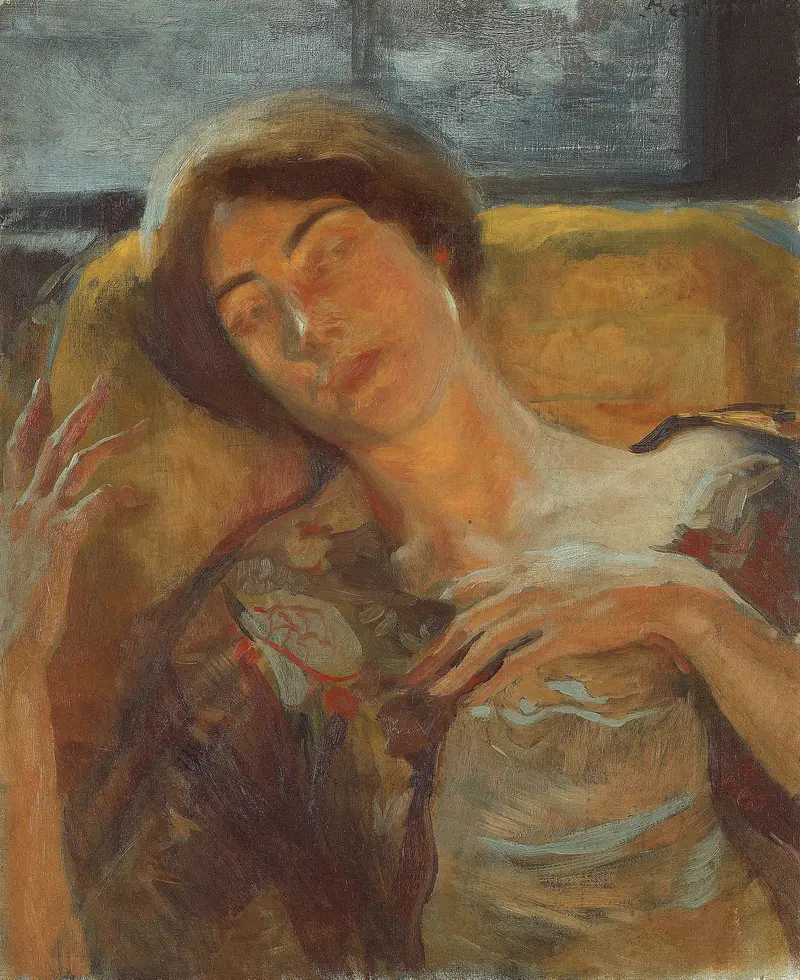
Woman's Head
Albert Besnard
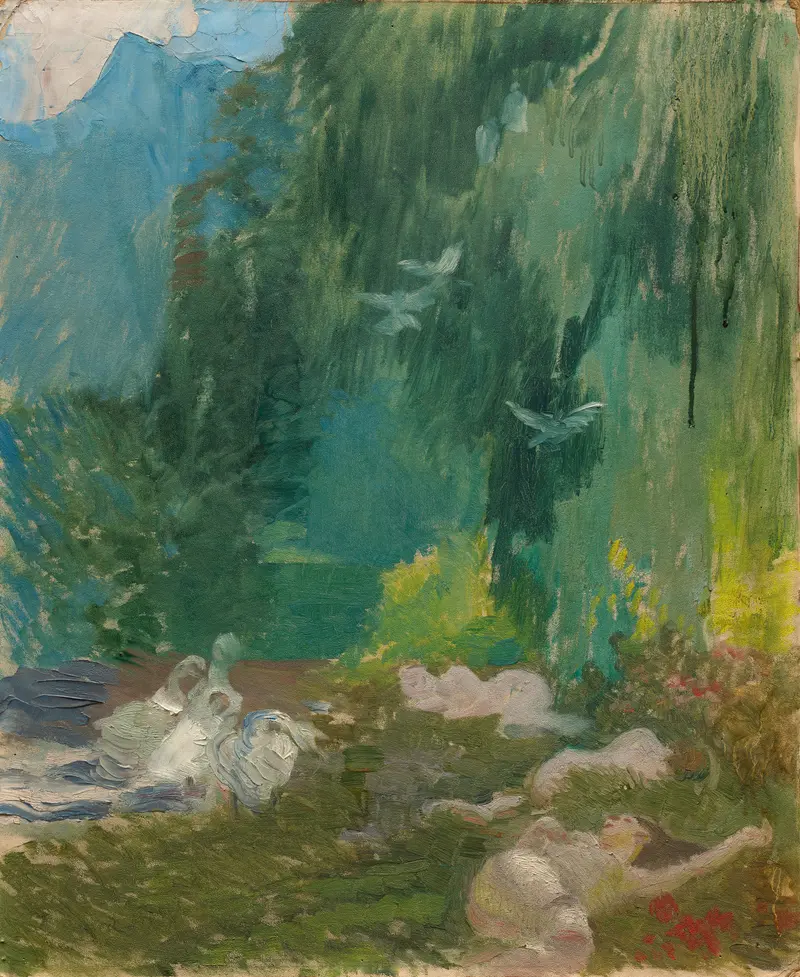
The Siesta
Albert Besnard
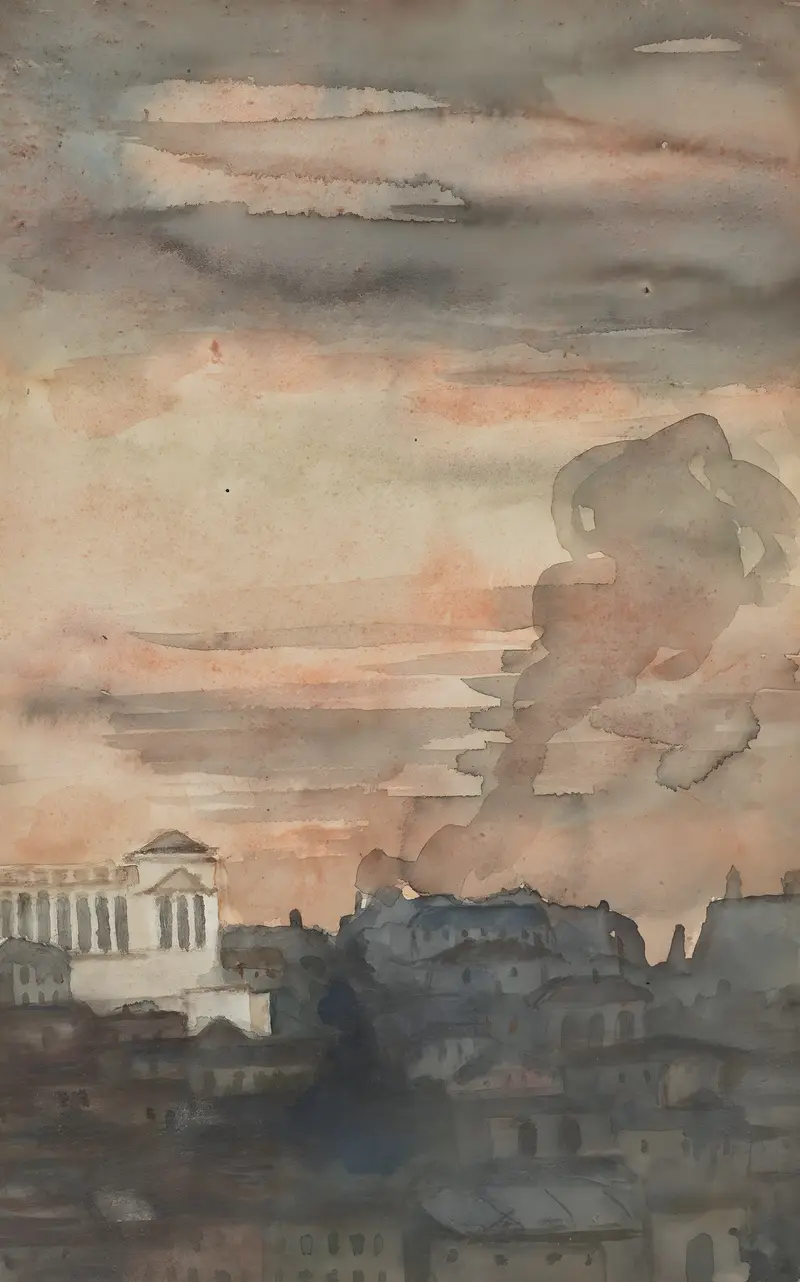
View of Rome with the Vittorio Emanuele II Monument in the distance, at sunset
Albert Besnard
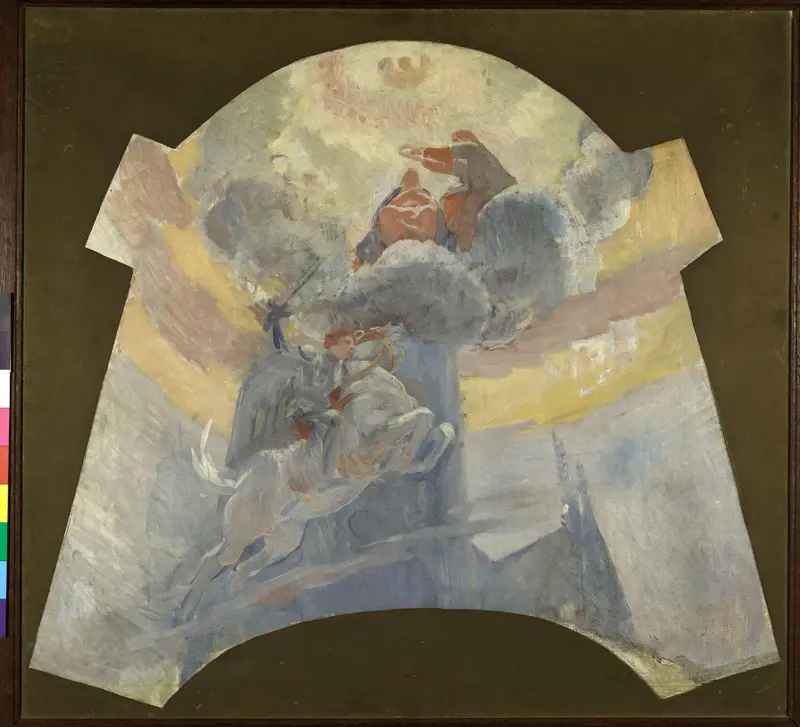
Albert (Paul Besnard dit) La Mystique, esquisse de la composition d'ensemble
Albert Besnard
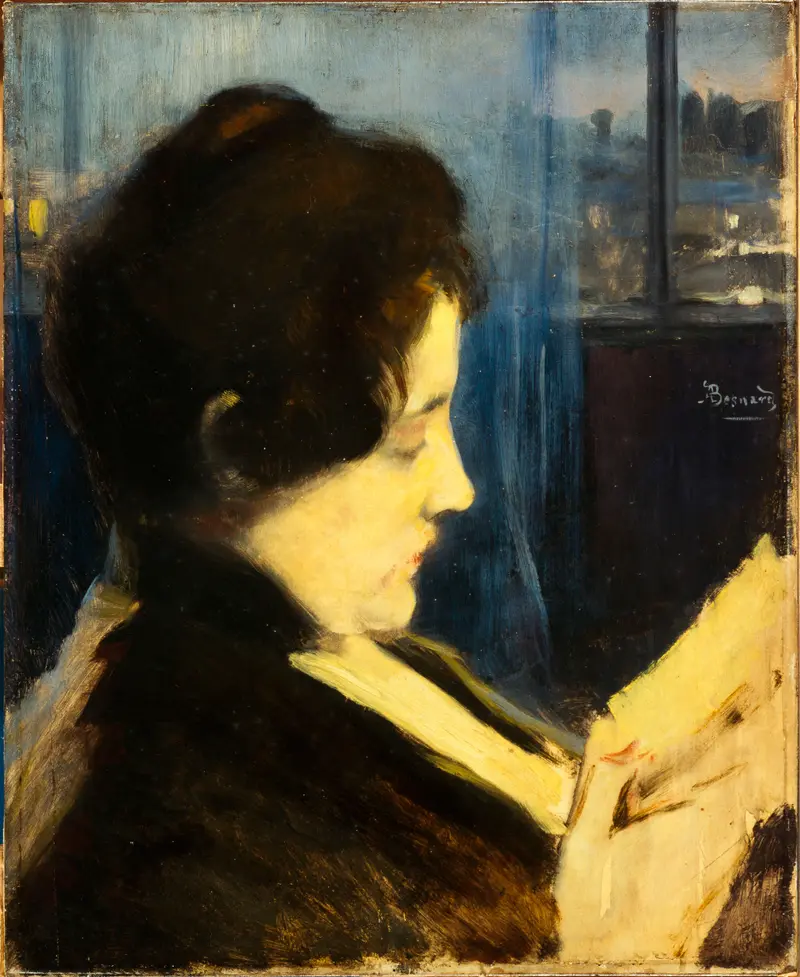
Charlotte Besnard c.
Albert Besnard
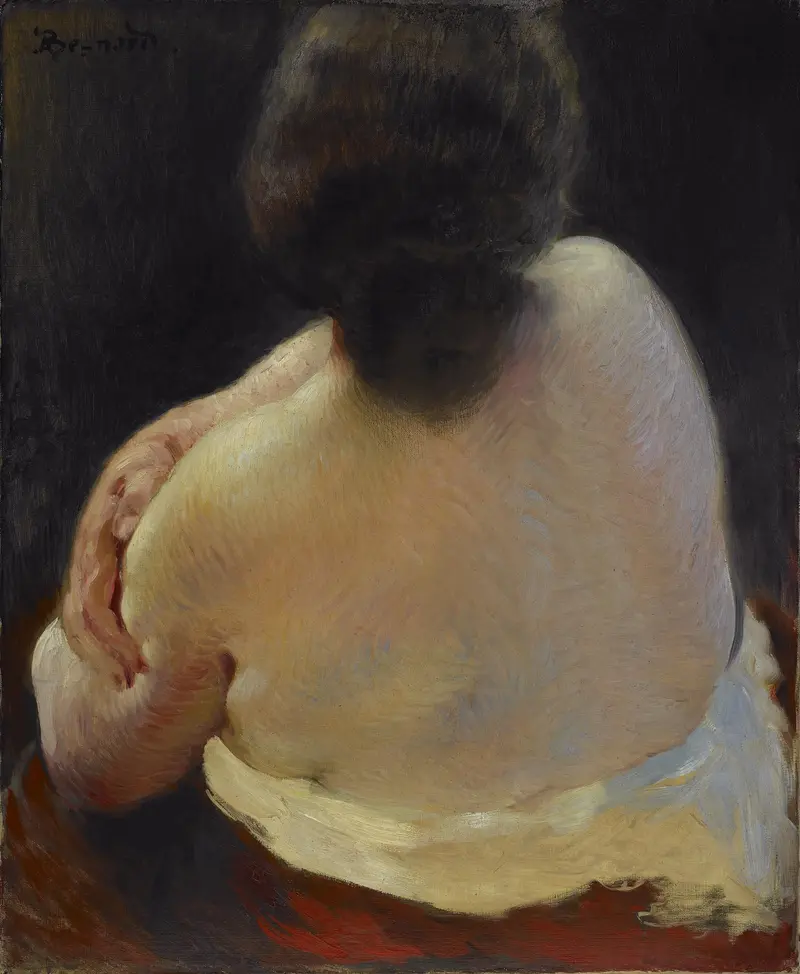
Back of a Woman, Study
Albert Besnard
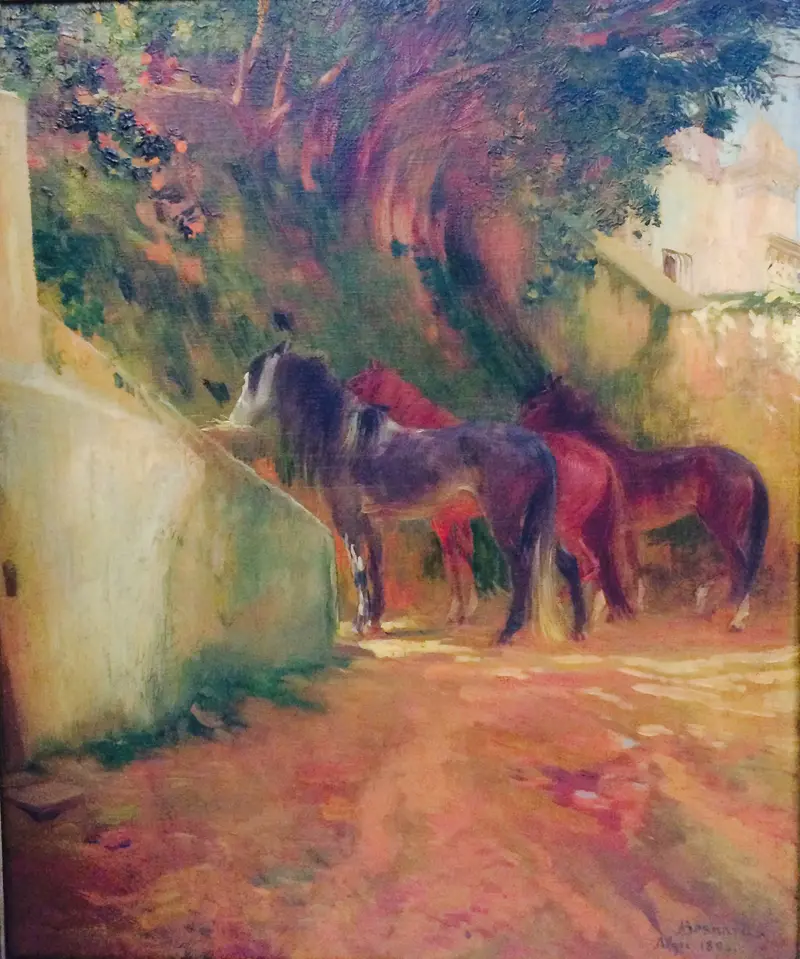
Horses
Albert Besnard
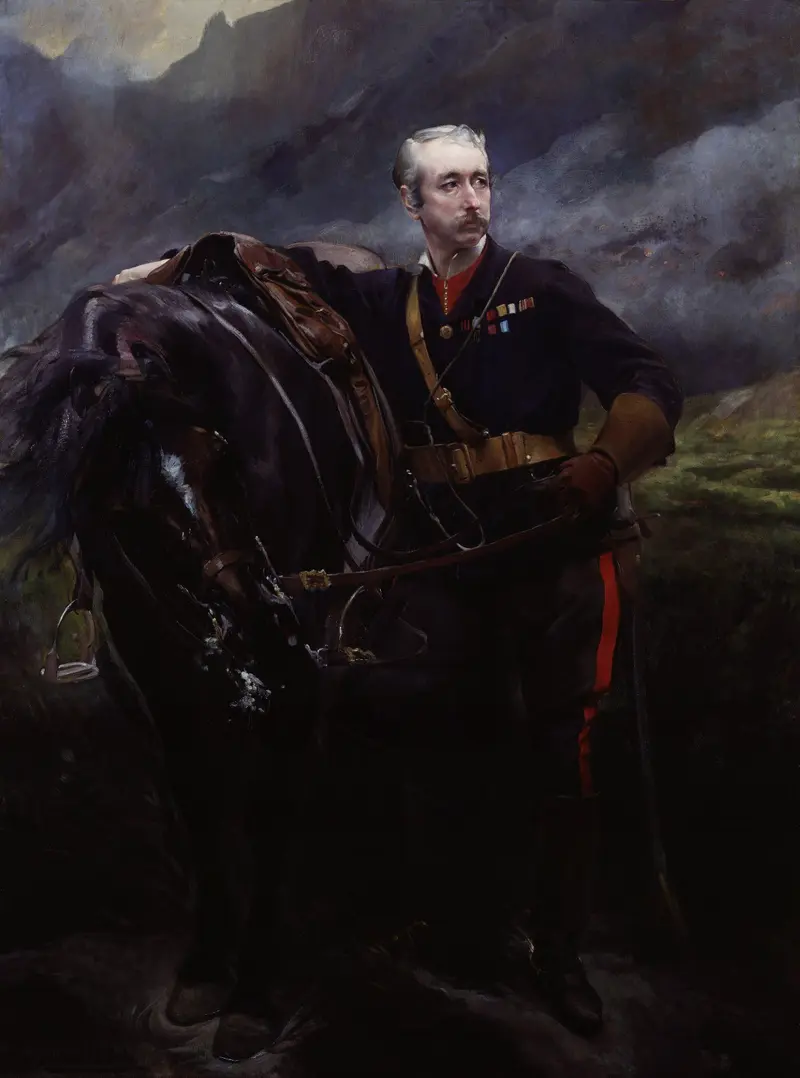
Garnet Joseph Wolseley, 1st Viscount Wolseley
Albert Besnard
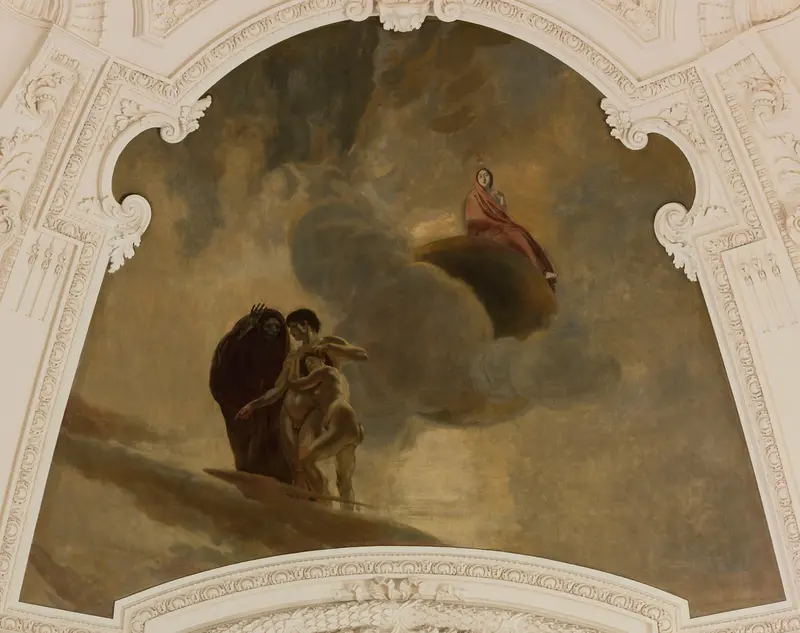
Besnard La Pensée DECOP00A(04) Petit Palais 01
Albert Besnard
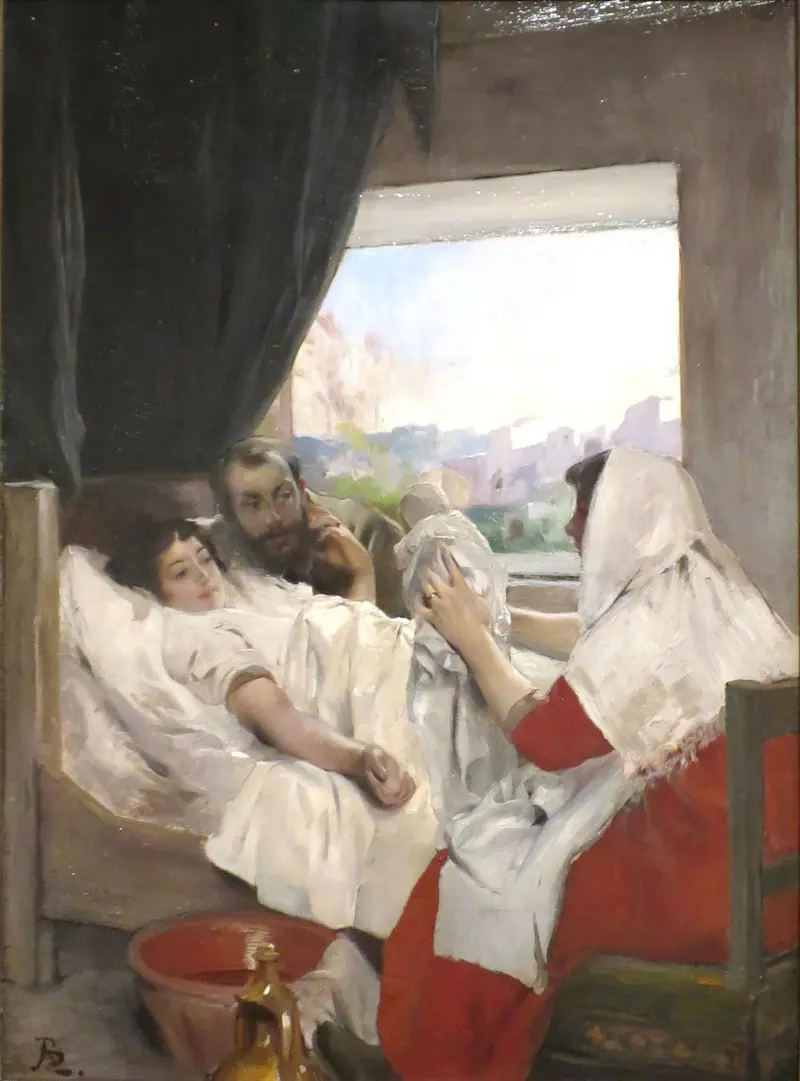
The First Morning (Albert and Charlotte Dubray Besnard and their Son, Robert)
Albert Besnard
More Genre Scene Art

Banquet of the Officers of the St George Civic Guard
Frans Hals

Rembrandt and Saskia in the Scene of the Prodigal Son
Rembrandt van Rijn

Bal du moulin de la Galette
Pierre-Auguste Renoir

Quadrille at the Moulin Rouge
Henri de Toulouse-Lautrec

A Burial at Ornans
Gustave Courbet

When Will You Marry?
Paul Gauguin