
Ali Baba in the Wood — History & Facts
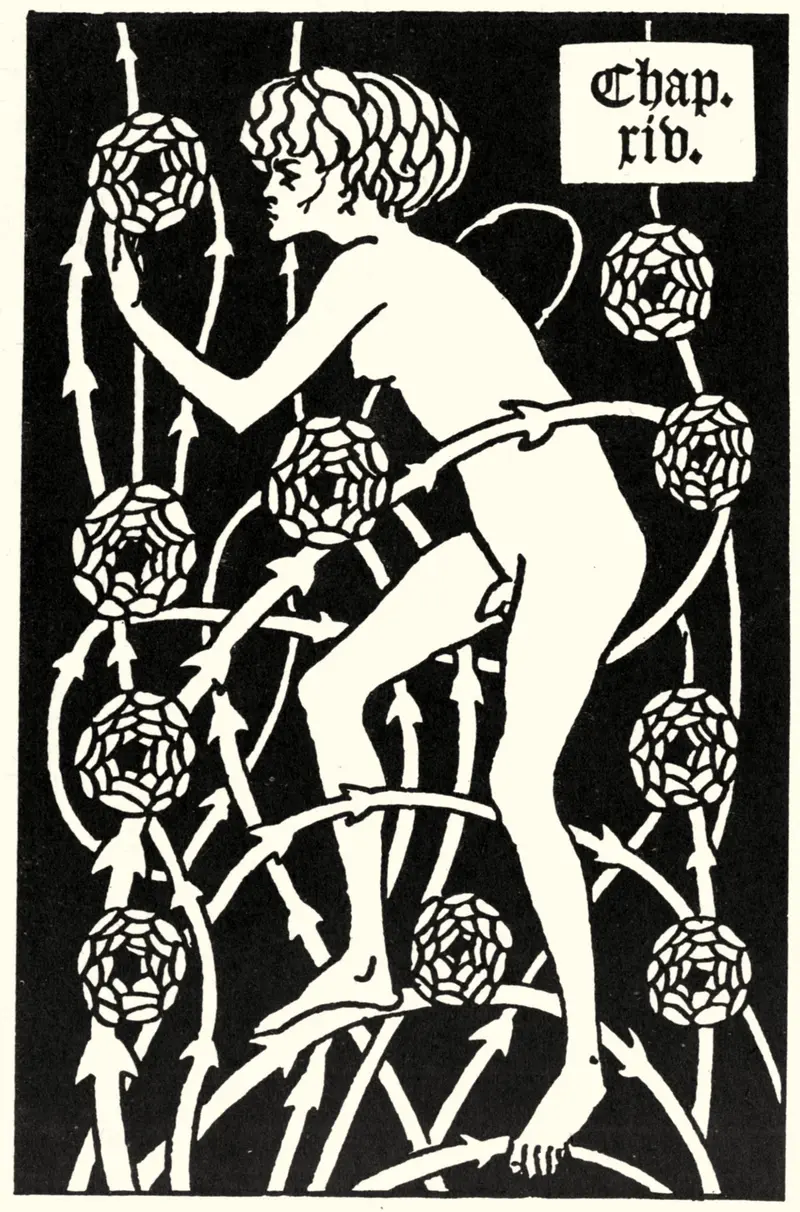
A figure pauses at the edge of shadow, every line of his body braced for what he cannot yet see. In Ali Baba in the Wood, Aubrey Beardsley captures suspense not with a flurry of action but with the tension of stillness: the man’s hands hover, his eyes dart, and the forest behind him presses in with a dense, stippled darkness. The stark contrast between the pale figure and the ink-black woods draws the viewer into the uncertainty of the moment—what has startled him, and what might be lurking just out of sight? Even the ragged edges of his clothing seem to tremble, as if the forest itself might swallow him whole. Created in 1897, this illustration belongs to the twilight years of the nineteenth century, when artists like Beardsley were reshaping the possibilities of line and ornament.
The fin-de-siècle was a time of fascination with exotic tales and decadent aesthetics, and Beardsley’s work—often made for books and periodicals—thrived on the interplay between narrative and design. His illustrations for literary works, especially those drawn from the East or from folklore, were both a tribute to and a playful subversion of Victorian tastes. Little is recorded about the journey of this specific piece, but its sharp contrasts and nervous energy are unmistakably Beardsley’s, inviting the viewer to linger on every detail and to imagine what story might unfold next in the darkness.
More Artworks by Aubrey Beardsley

The Dream
Aubrey Beardsley
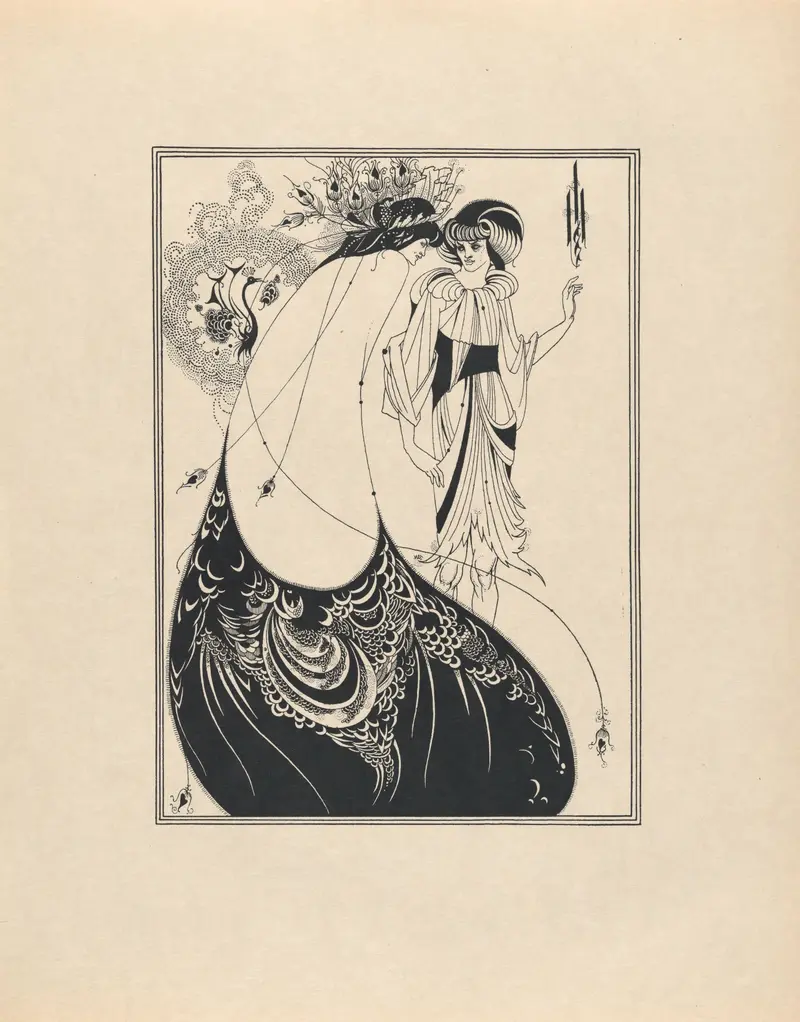
The Peacock Skirt
Aubrey Beardsley
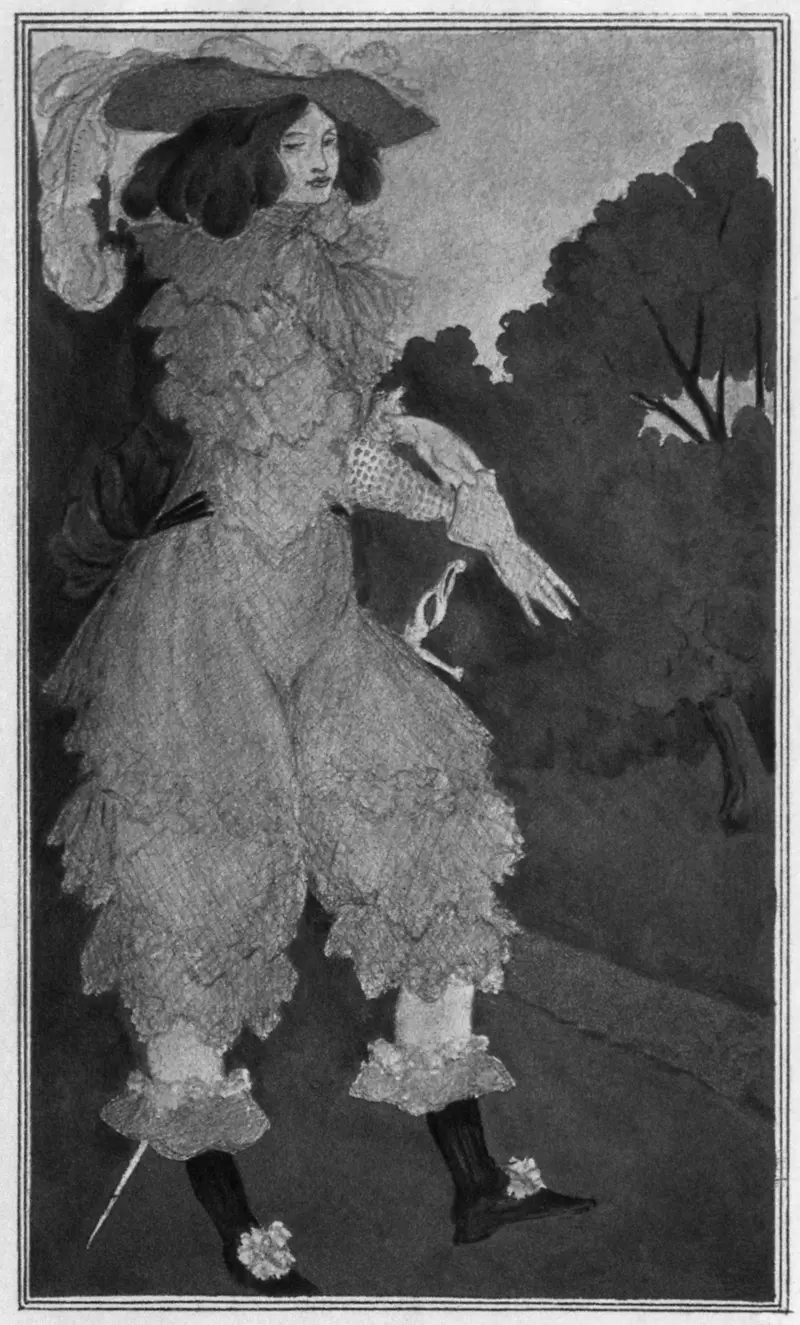
Mademoiselle de Maupin
Aubrey Beardsley
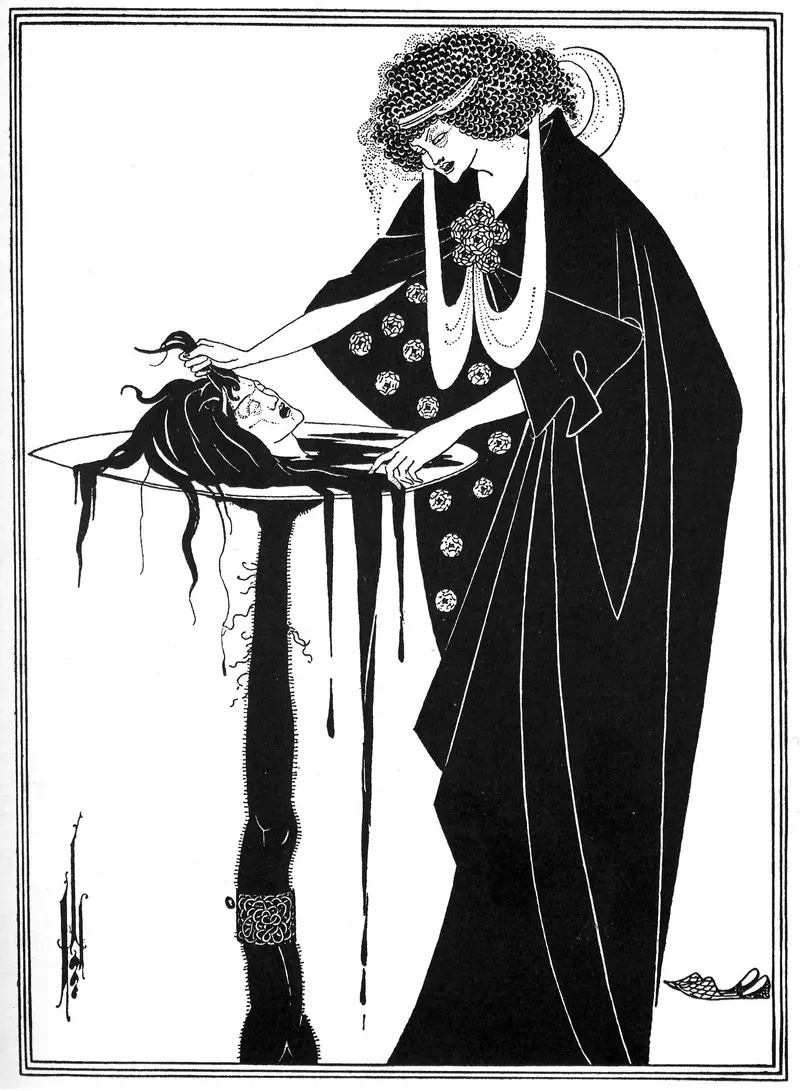
The Dancer's Reward (Salome)
Aubrey Beardsley
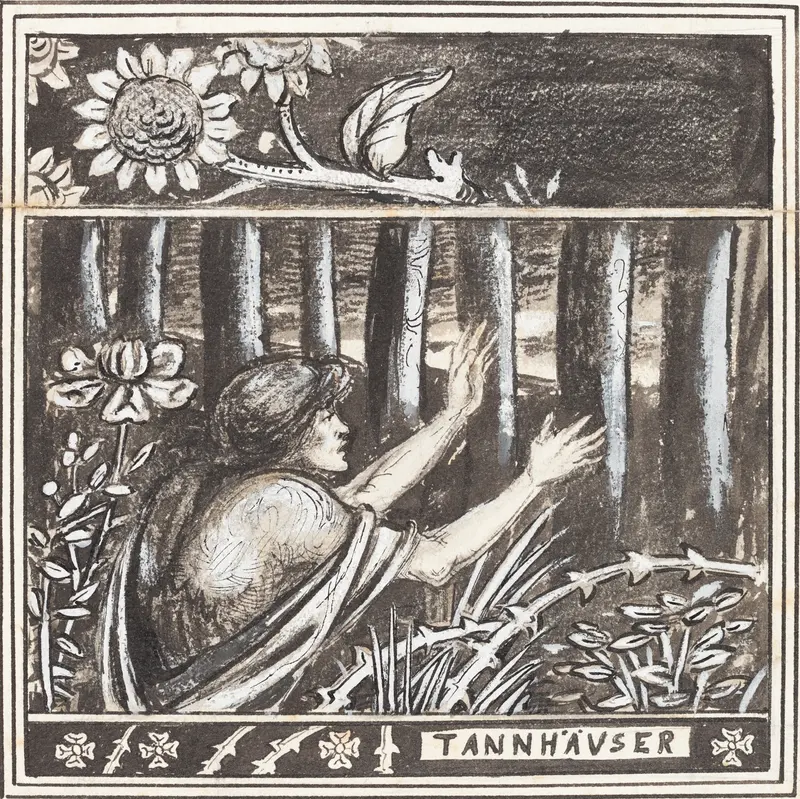
Tannhäuser
Aubrey Beardsley
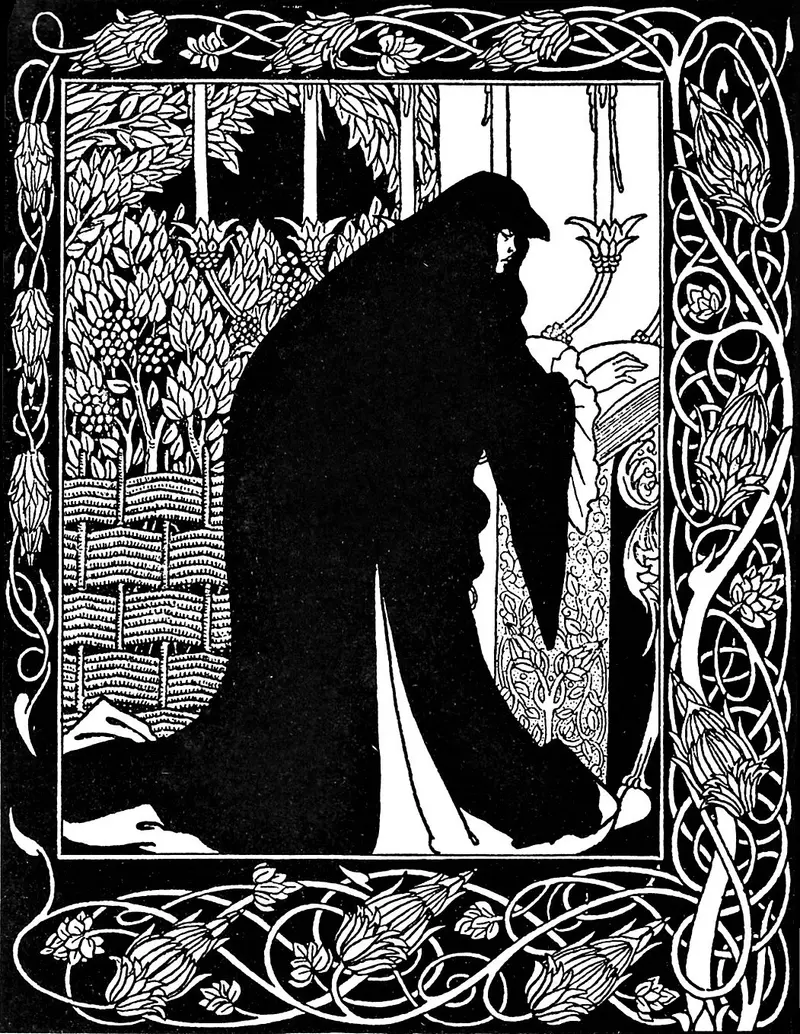
Queen Guenever, a Nun at Almesbury (Le Morte d'Arthur)
Aubrey Beardsley
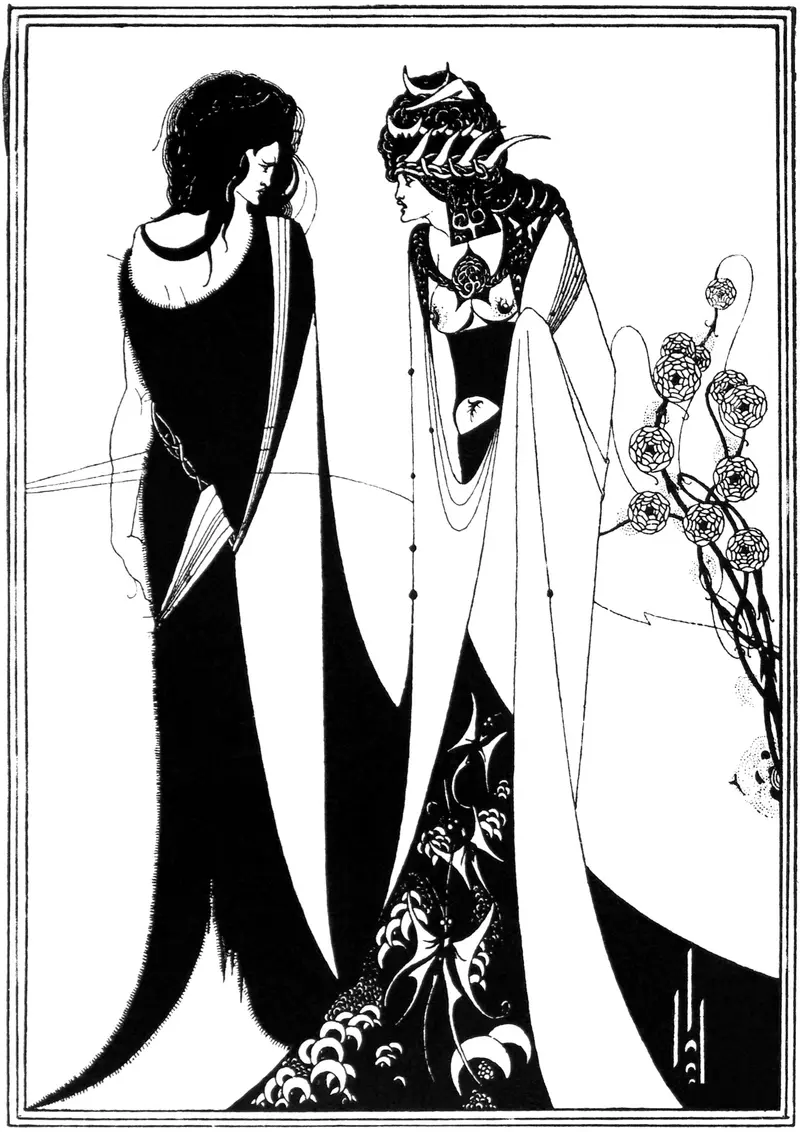
John and Salome
Aubrey Beardsley
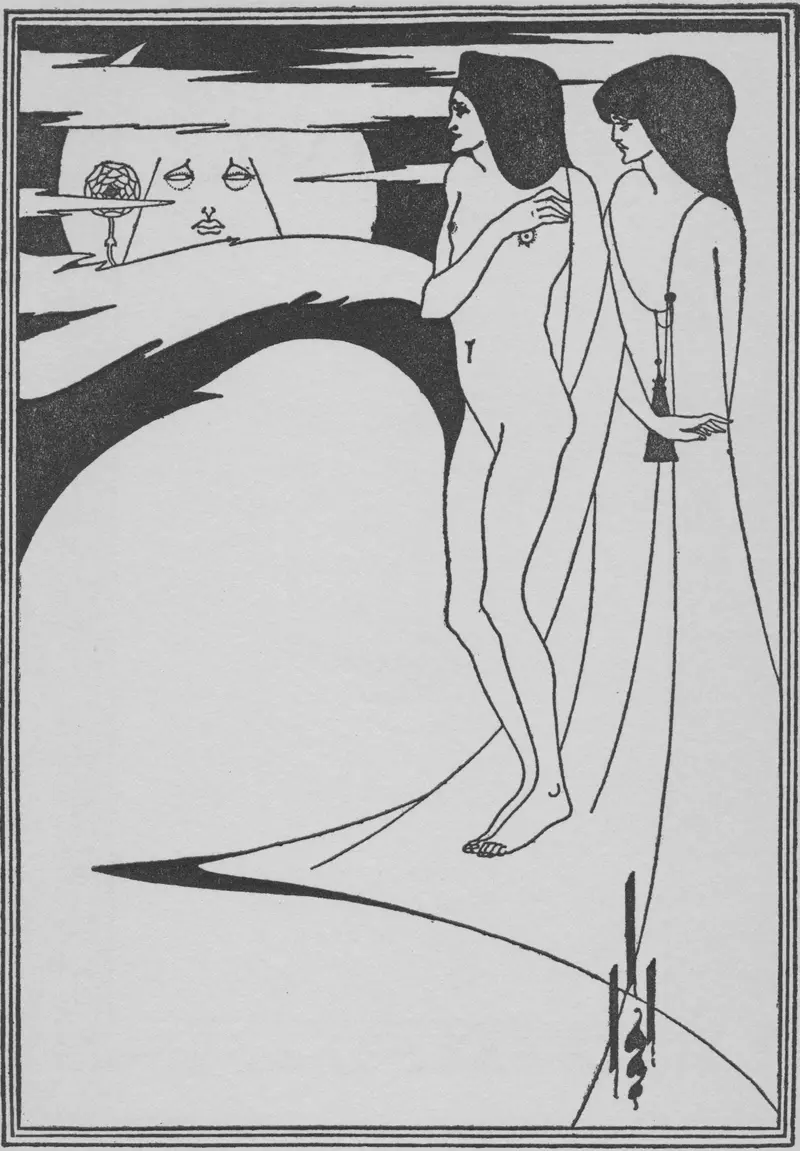
The Woman in the Moon (Salome)
Aubrey Beardsley
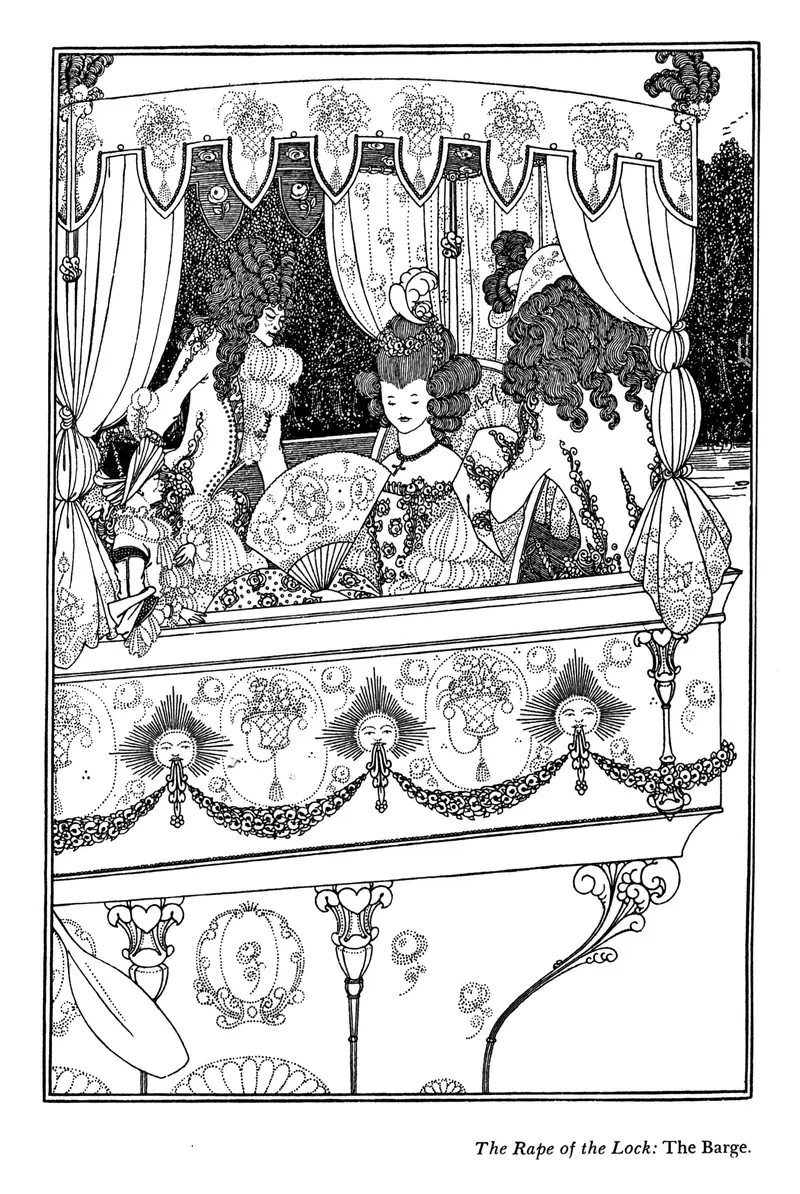
The Barge (The Rape of the Lock)
Aubrey Beardsley
Hermaphroditus (Le Morte d'Arthur)
Aubrey Beardsley





