
Hermaphroditus (Le Morte d'Arthur) — History & Facts
What first catches the eye in Hermaphroditus (Le Morte d'Arthur) is the way the figure seems both ensnared and in command, poised amid a tangle of thorny vines that spiral with a life of their own. The body, rendered in stark black and white, is all tension and grace—one hand reaching for a stylized blossom, the other arm braced as if to part the thorns. Every line in the composition is purposeful: the arrows on the vines suggest movement and danger, while the geometric flowers offer a strange, hypnotic calm.
The figure’s ambiguous anatomy and androgynous face invite the viewer to linger, questioning boundaries and identities, just as the thorns both threaten and frame the central form. This work comes from the fevered world of the 1890s, when Aubrey Beardsley was reshaping the visual language of illustration for a new, decadent age. Created for the 1892 edition of Le Morte d'Arthur, Beardsley’s images were not mere decoration but provocations, challenging Victorian sensibilities with their eroticism and wit. Such illustrations were commissioned for luxury books, intended to dazzle collectors and scandalize polite society.
Little is recorded about this specific drawing beyond its place in that legendary publication, but its bold lines and charged atmosphere are unmistakably Beardsley—an invitation to look again, and to wonder what secrets the thorns might conceal.
More Artworks by Aubrey Beardsley

The Dream
Aubrey Beardsley
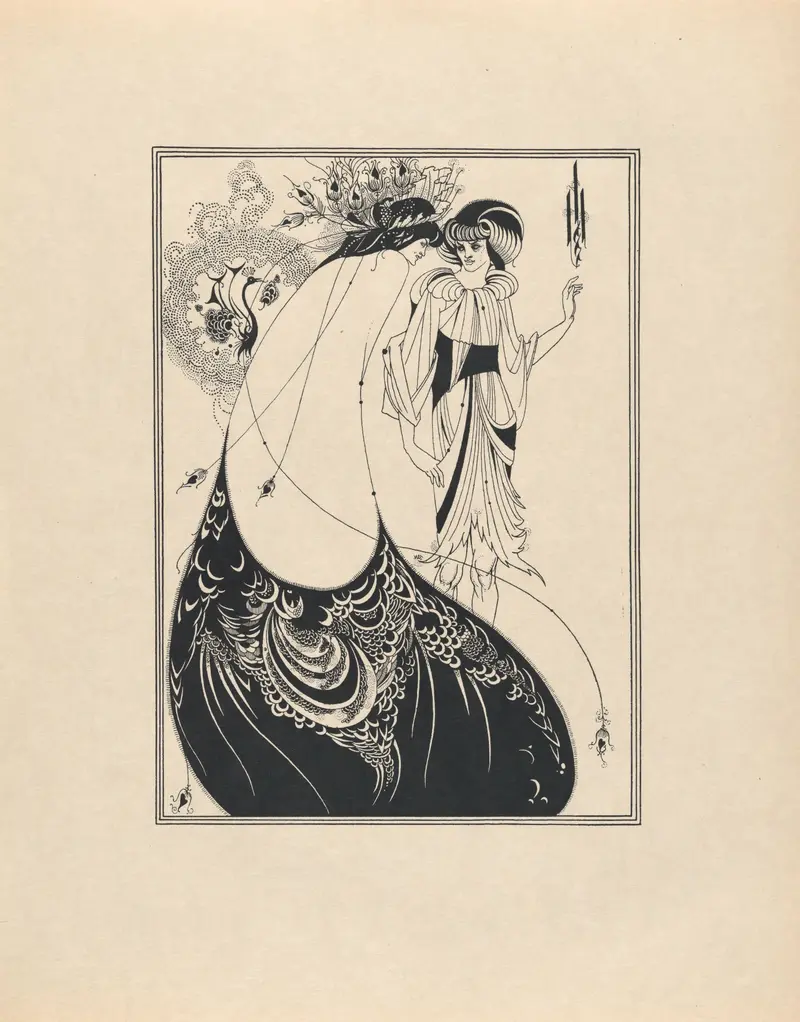
The Peacock Skirt
Aubrey Beardsley
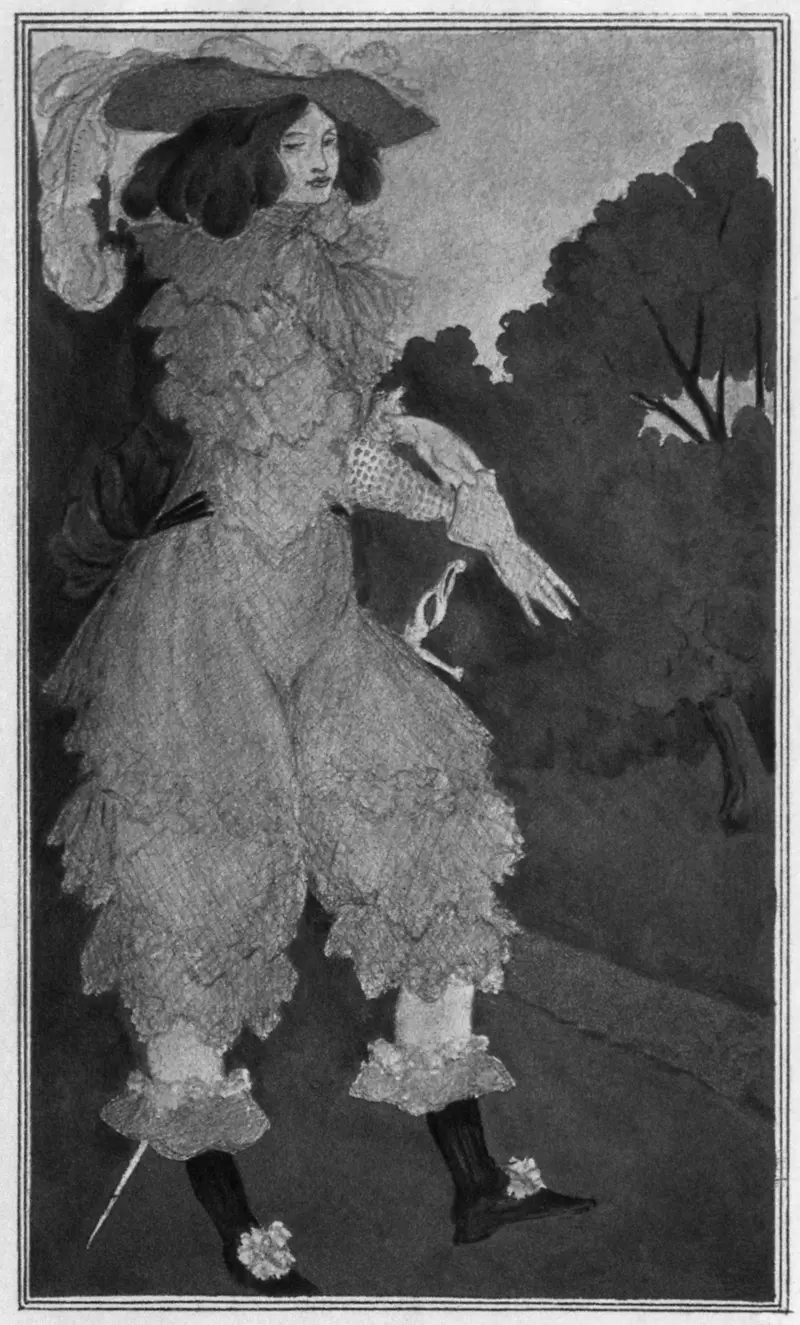
Mademoiselle de Maupin
Aubrey Beardsley
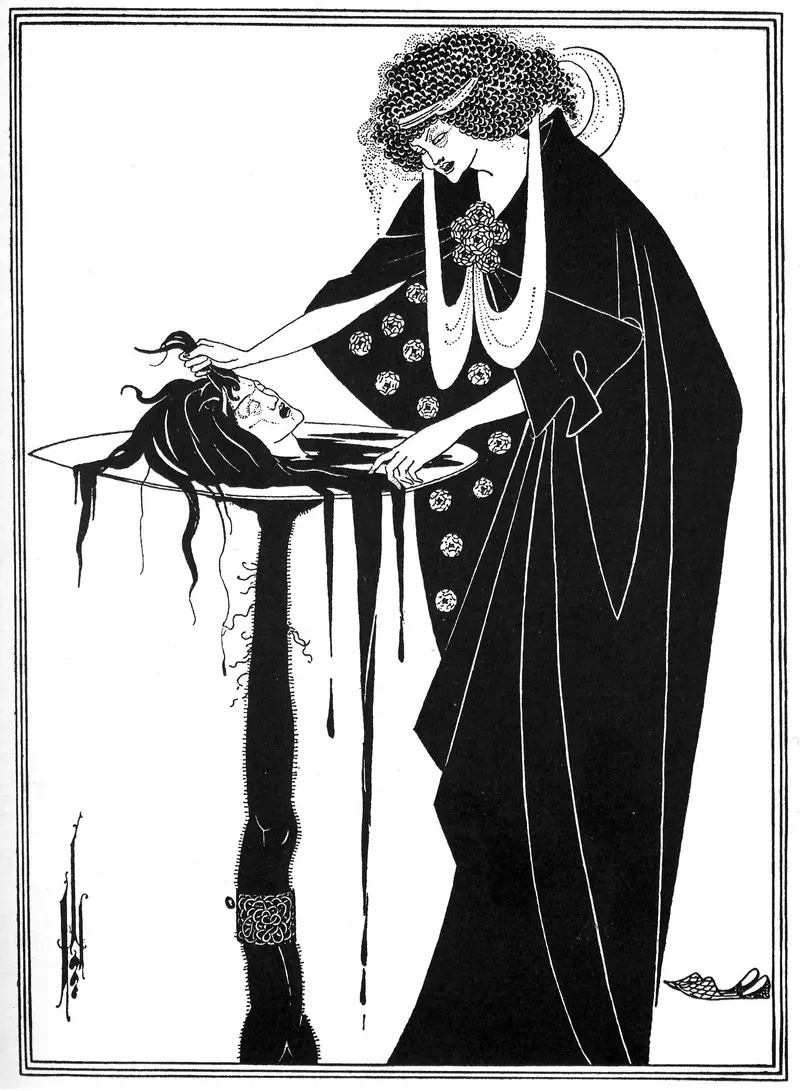
The Dancer's Reward (Salome)
Aubrey Beardsley
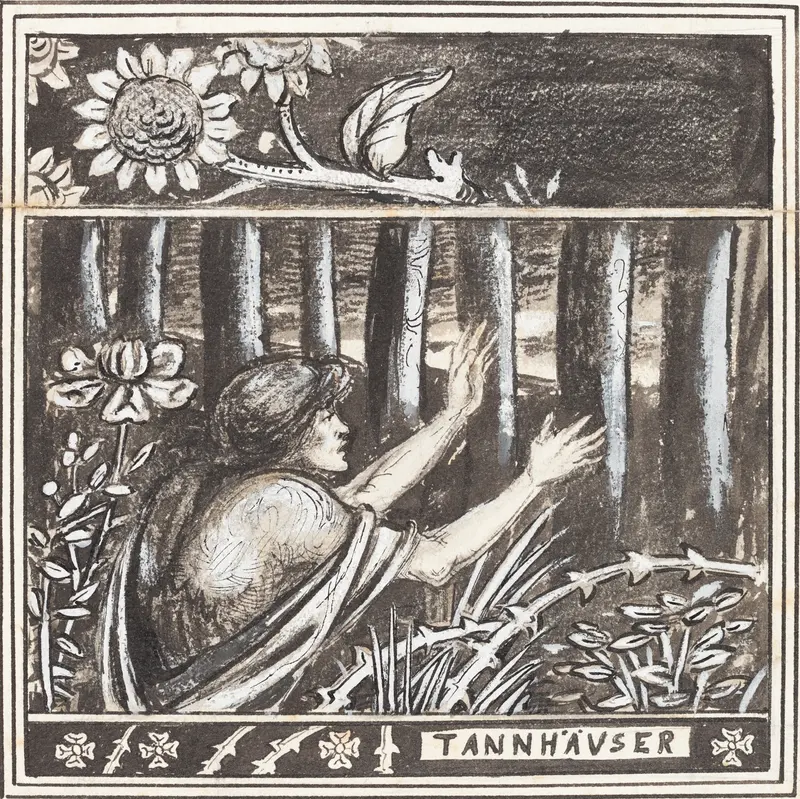
Tannhäuser
Aubrey Beardsley
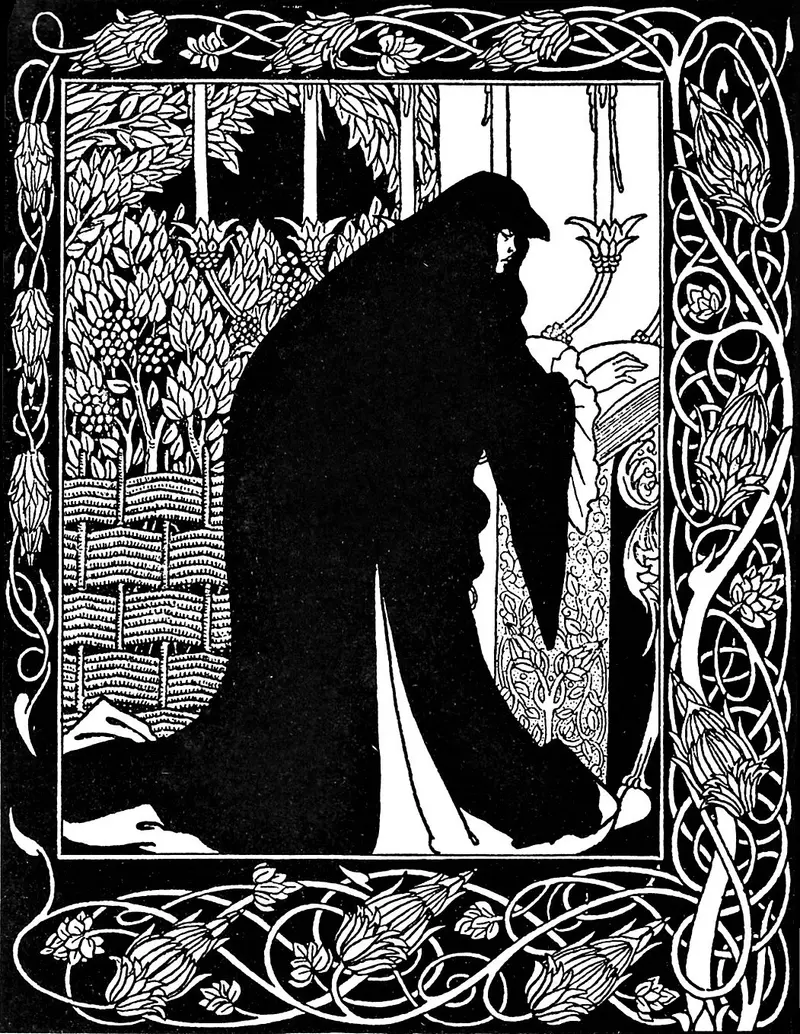
Queen Guenever, a Nun at Almesbury (Le Morte d'Arthur)
Aubrey Beardsley
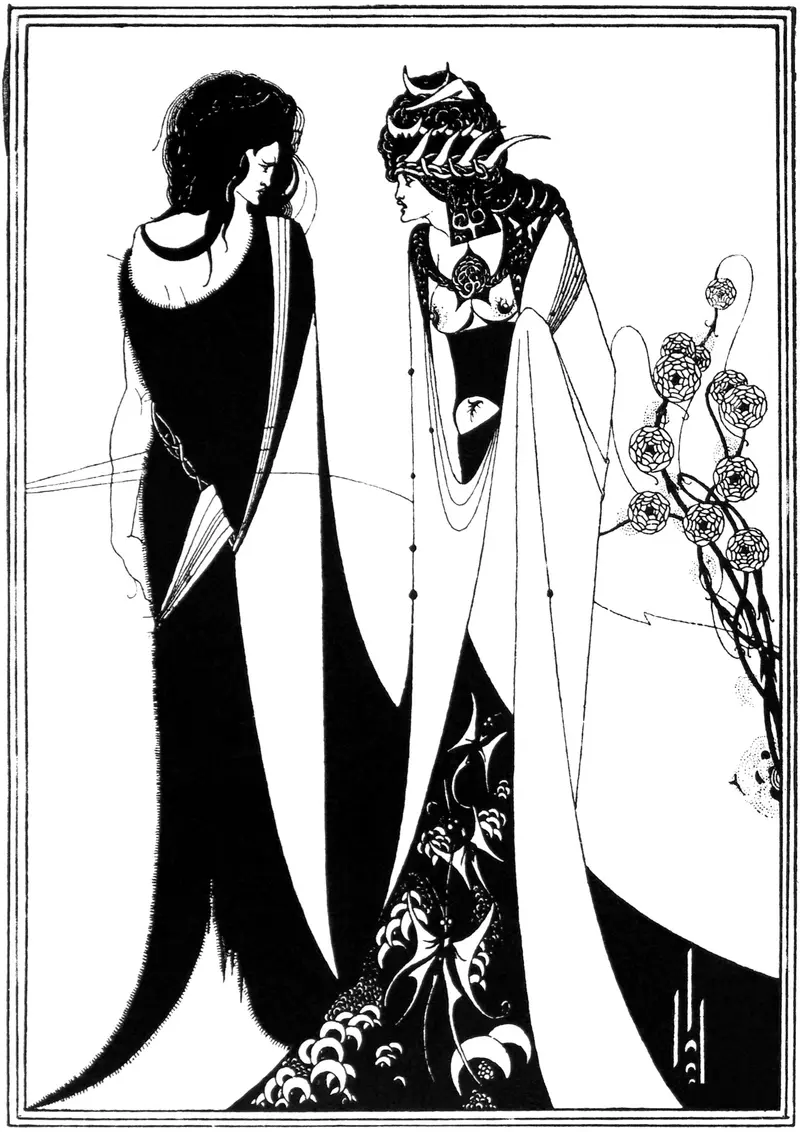
John and Salome
Aubrey Beardsley
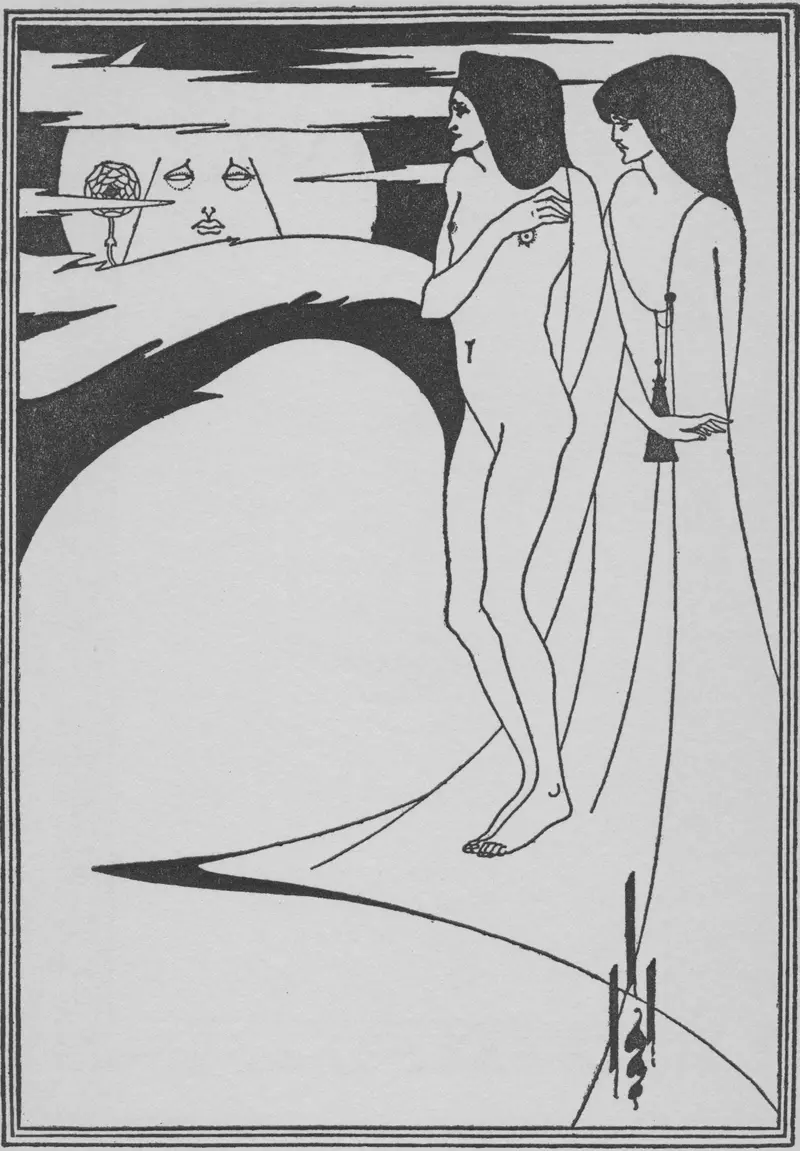
The Woman in the Moon (Salome)
Aubrey Beardsley
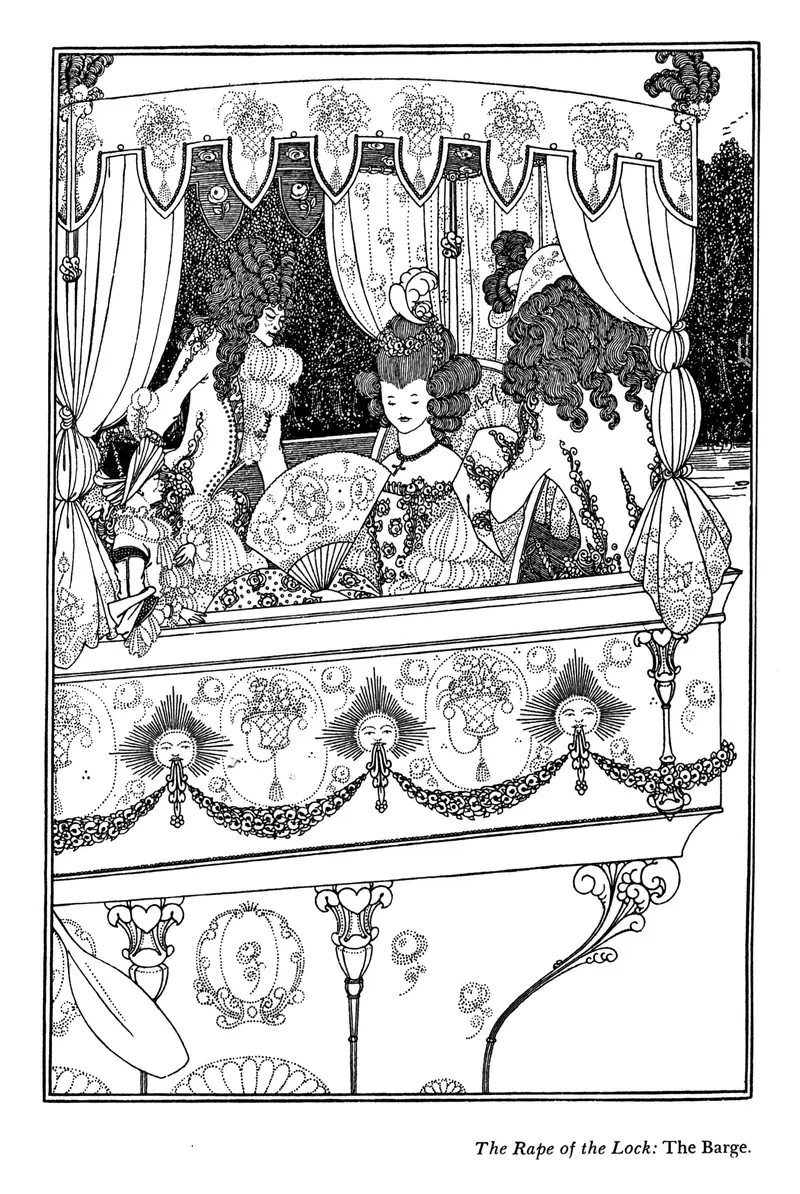
The Barge (The Rape of the Lock)
Aubrey Beardsley
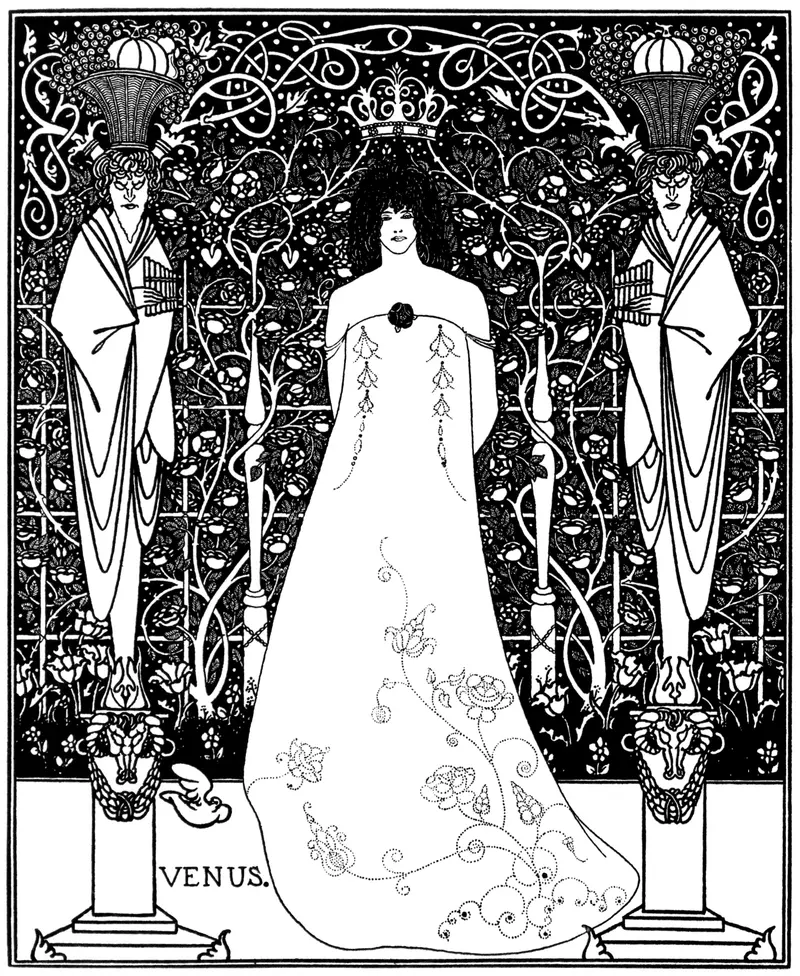
Venus Between Terminal Gods
Aubrey Beardsley





