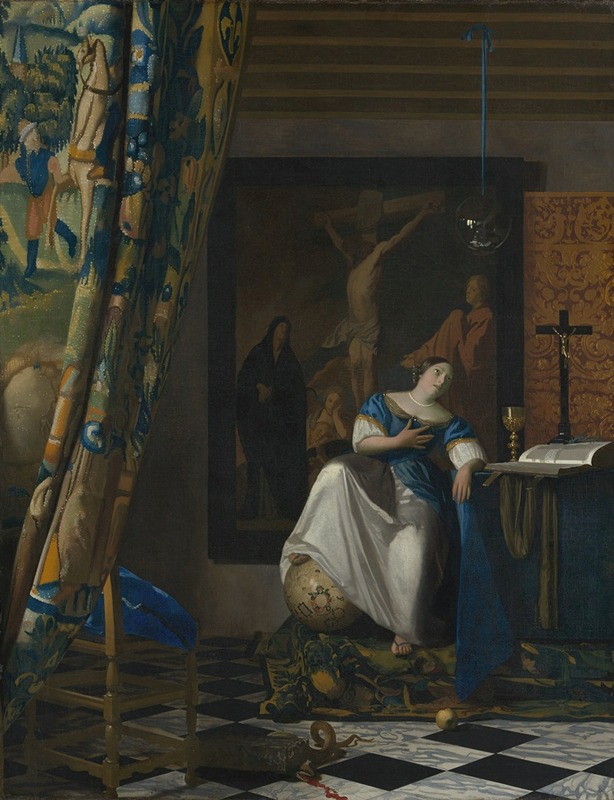
Allegory of the Sciences — History & Facts
In this delicate interplay between perception and reality, innocence lingers like a whisper amidst the chaos of knowledge. Look closely at the central figure, a serene woman embodying the spirit of science, draped in flowing robes that cascade around her like a gentle stream. Notice how the soft light illuminates her face, revealing an expression of calm and contemplation as she gazes into the distance, lost in thought. To the left, allegorical figures of the arts surround her, their gestures flowing with purpose, while the rich, warm palette invites the viewer into a tranquil sanctuary of intellect and creativity, expertly layered to create depth. Yet, beneath this serene surface lies a tension between enlightenment and ignorance.
The juxtaposition of the tranquil central figure and the dynamic, somewhat chaotic arrangement of the surrounding figures suggests that the pursuit of knowledge is fraught with struggle. The childlike innocence embodied in the central woman contrasts sharply with the weighty presence of the figures beside her, hinting at the bittersweet nature of discovery, where joy and burden coexist. Each detail—the books, the instruments—echoes the timeless dialogue between aspiration and reality. Created between 1675 and 1683 during a period of significant artistic development in the Netherlands, the artist was influenced by the grand ideals of the Baroque movement while navigating a personal journey of experimentation.
Lairesse's work, characterized by its allegorical richness and technical finesse, reflects a moment in history marked by an expansion of scientific exploration and a celebration of the arts, mirroring the evolving consciousness of society at that time.
More Artworks by Gerard de Lairesse
Browse all →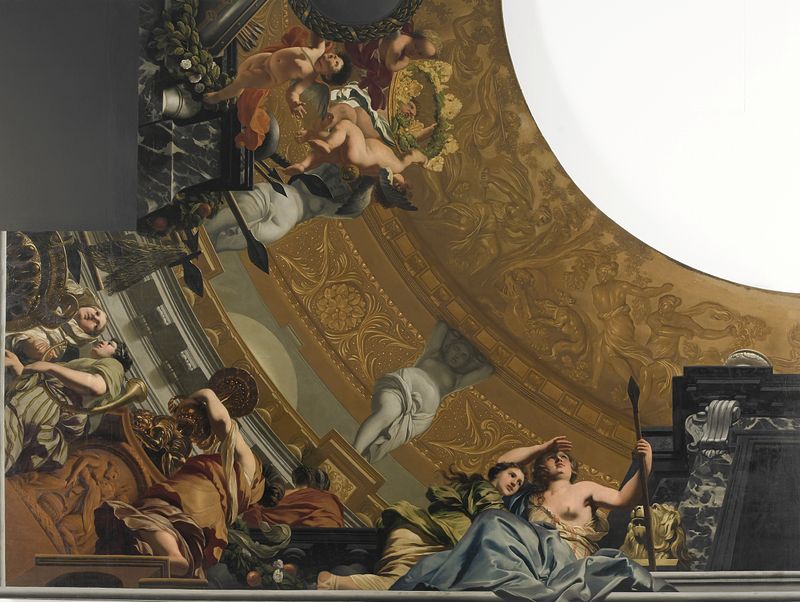
Ceiling painting with Diana and her companions
Gerard de Lairesse

Allegory of Fame
Gerard de Lairesse
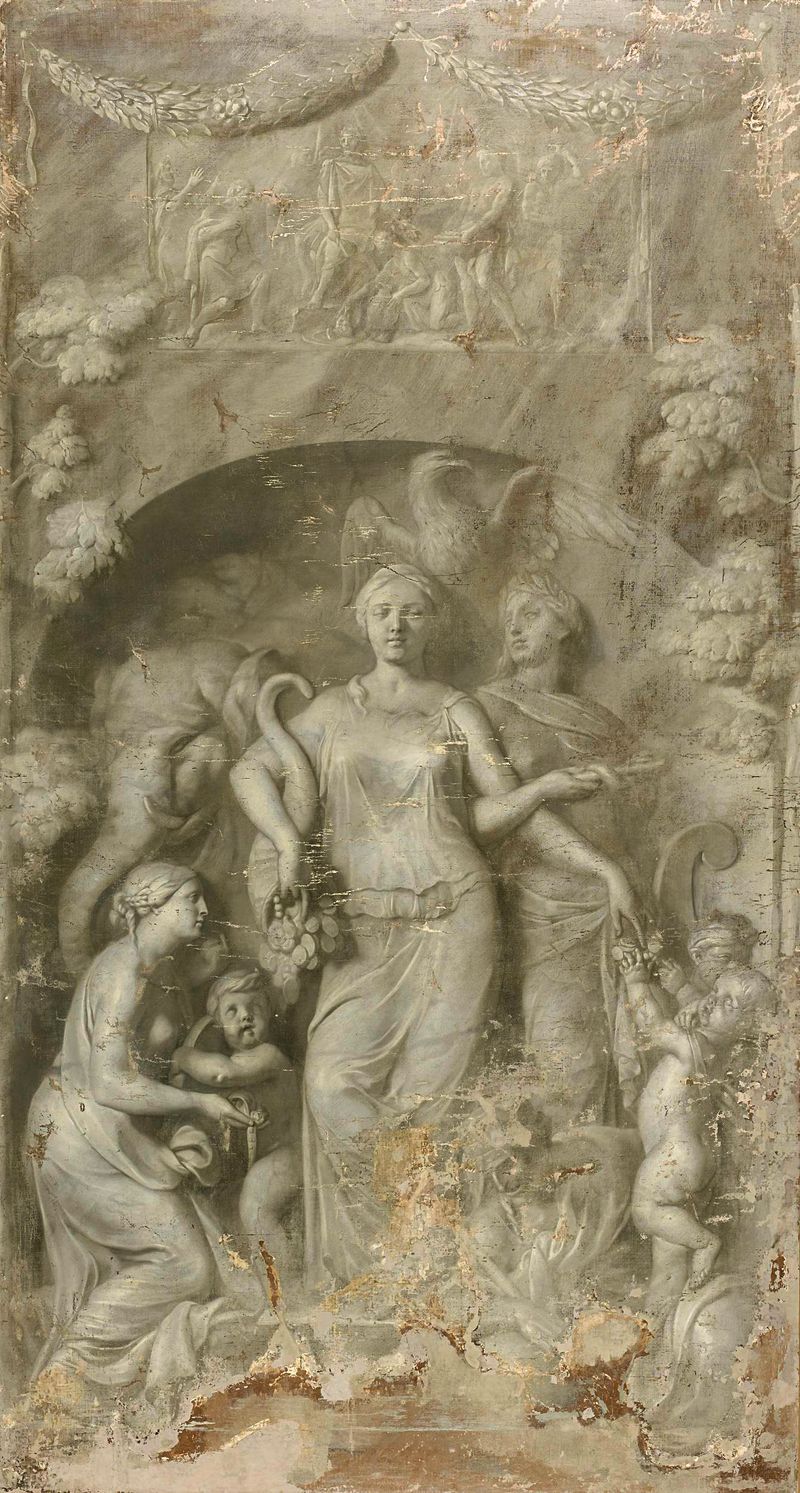
Allegory of Charity
Gerard de Lairesse

Allegory of Dawn
Gerard de Lairesse
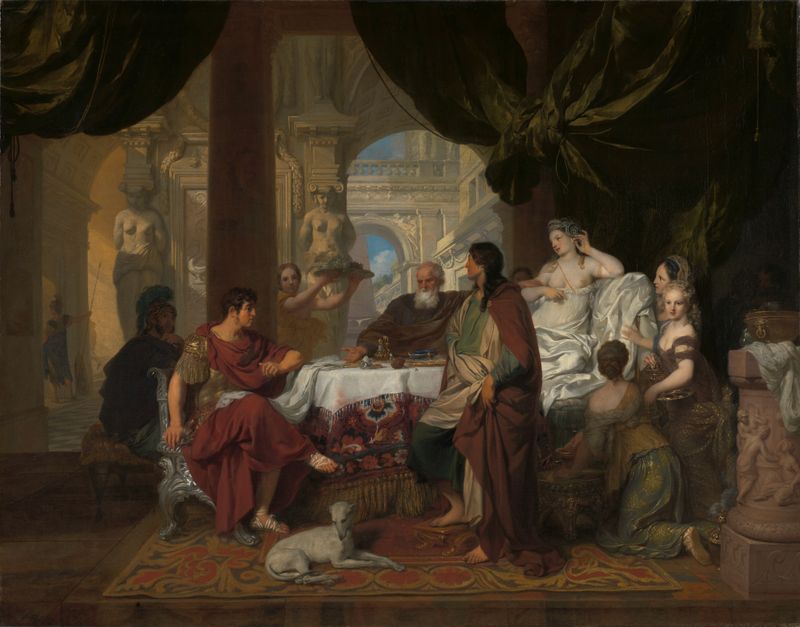
Cleopatra’s Banquet
Gerard de Lairesse
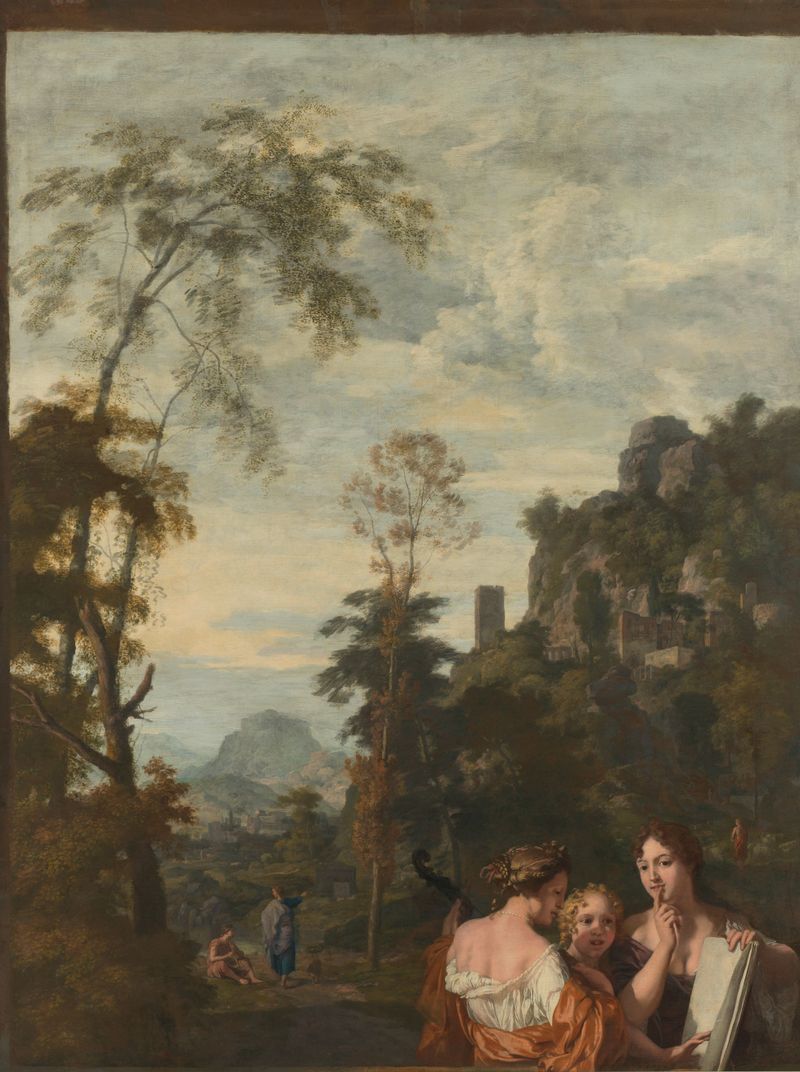
Italian Landscape with three Women Making Music
Gerard de Lairesse
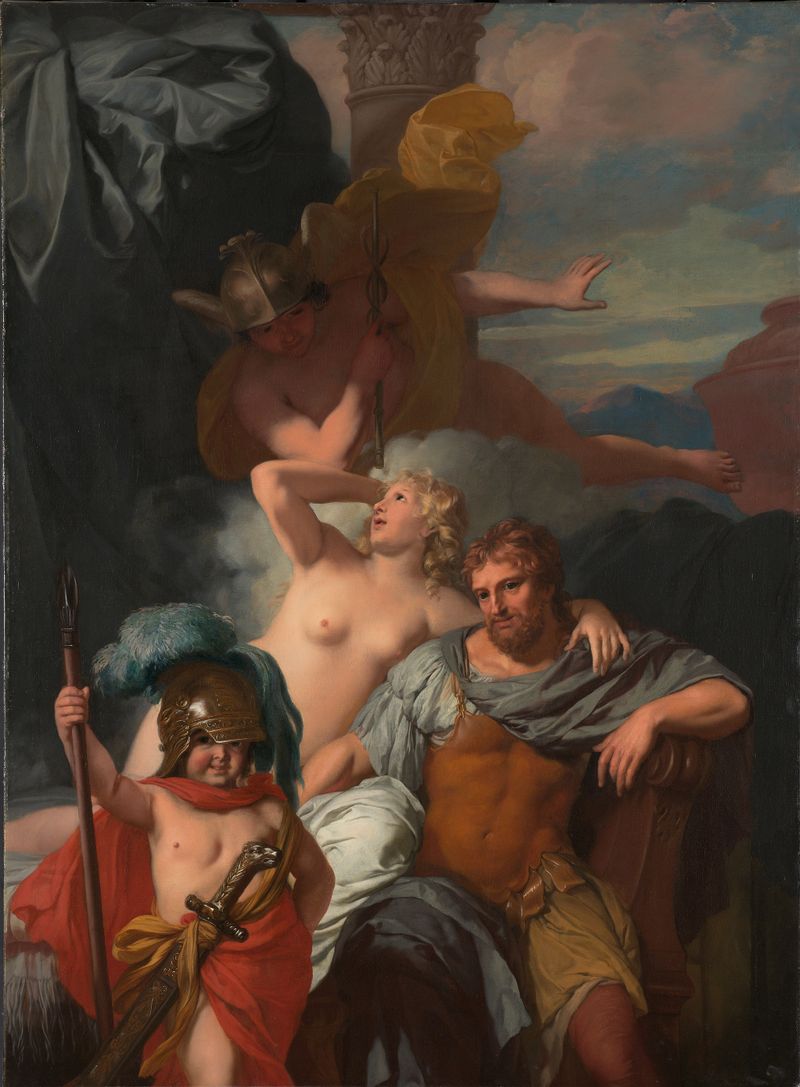
Mercury Ordering Calypso to Release Odysseus
Gerard de Lairesse
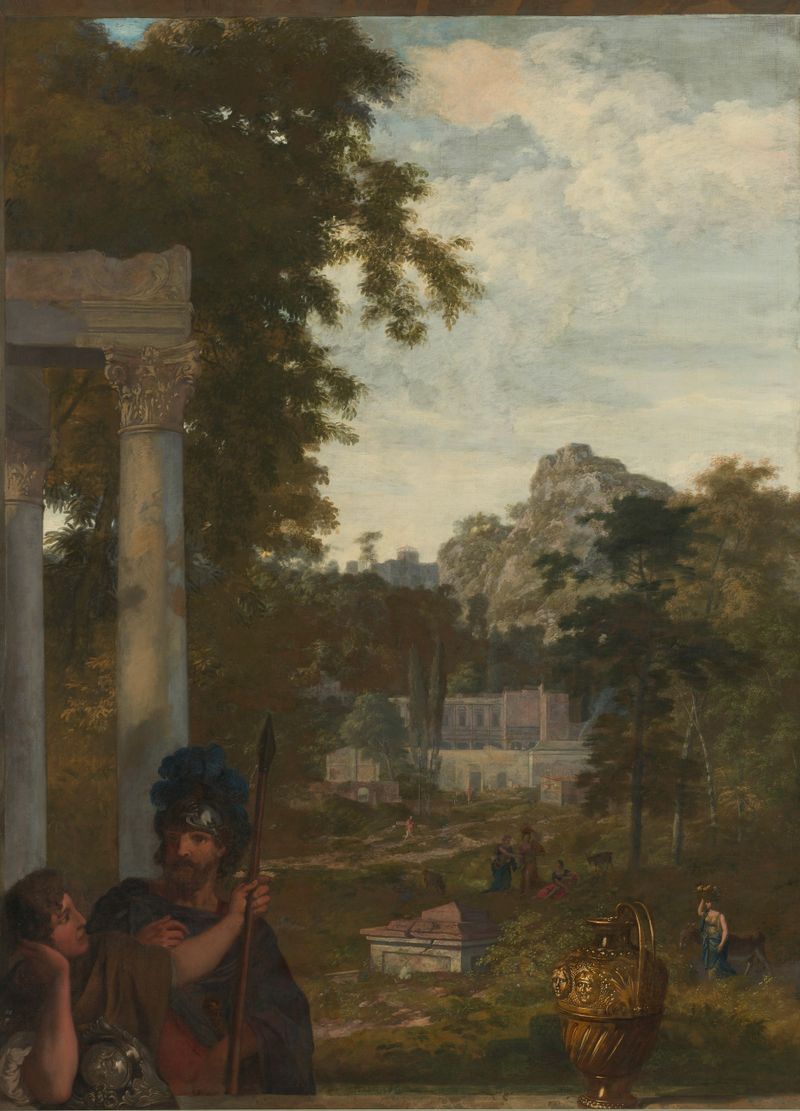
Italian Landscape with two Roman Soldiers
Gerard de Lairesse
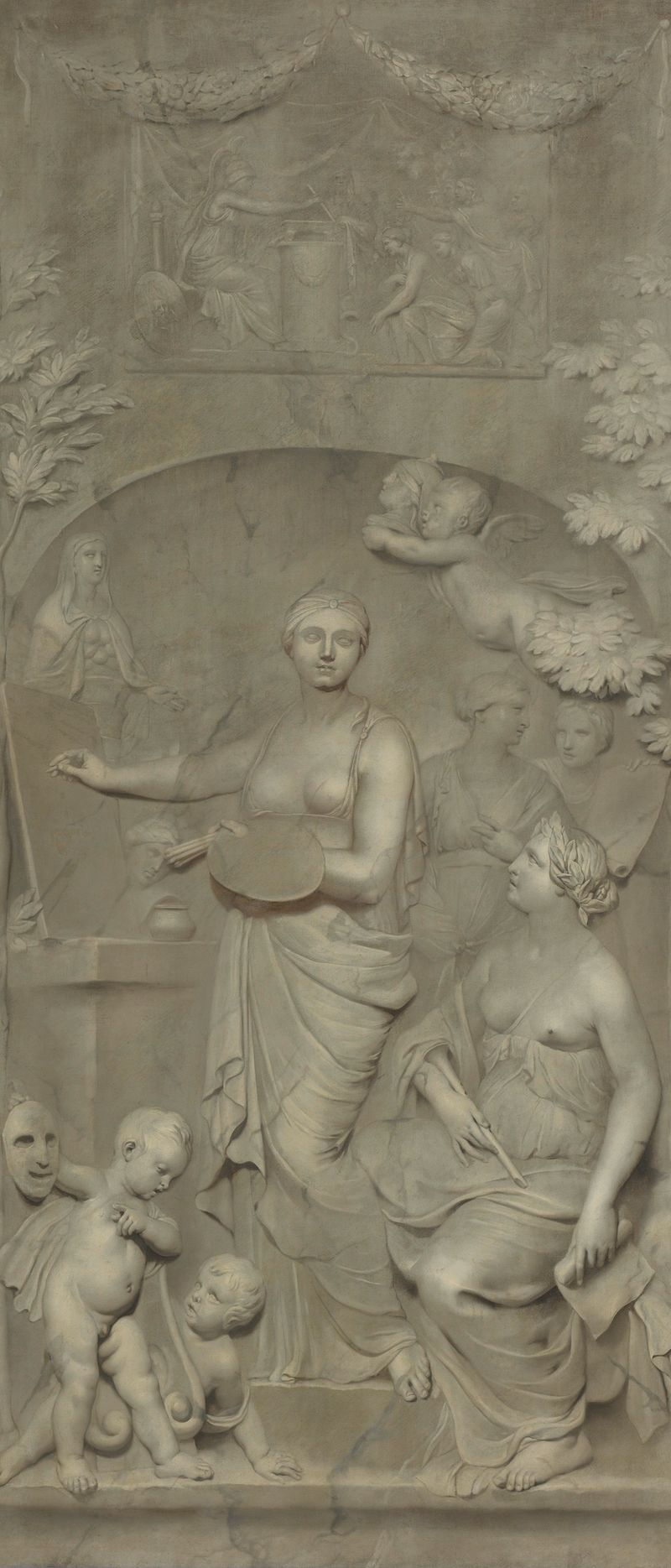
Allegory of the Arts
Gerard de Lairesse

Selene and Endymion
Gerard de Lairesse