Allies Day, May 1917 — History & Analysis
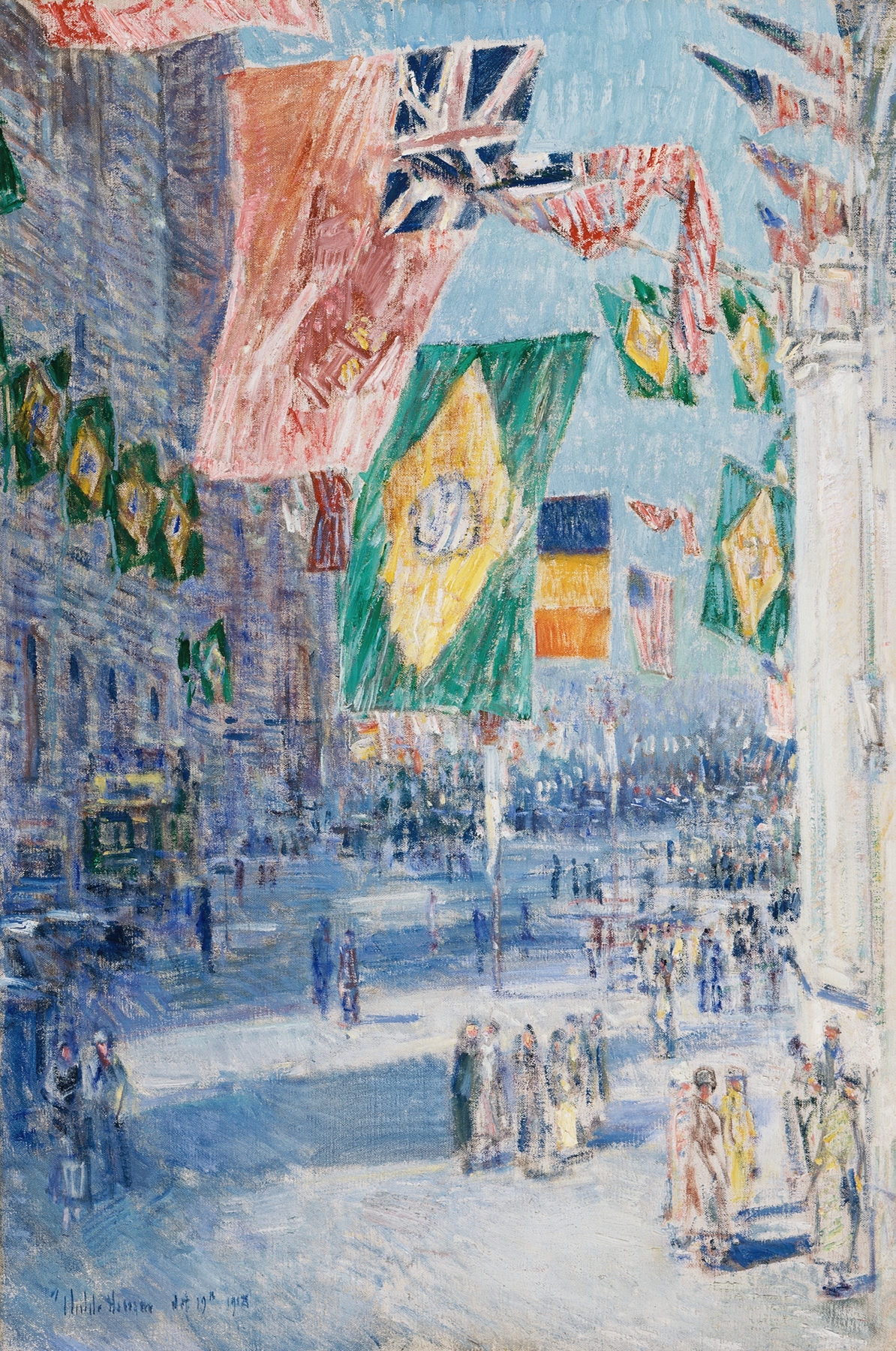
Did the painter know this moment would outlive them? The fluttering flags and jubilant faces captured in Allies Day, May 1917 speak to a time when the spirit of unity infused the air, illustrating a collective yearning for hope and solidarity amidst the throes of war. Look to the left at the vibrant array of American flags, their bold colors stark against the muted tones of the cityscape. Notice how the dynamic placement of the figures, moving through the bustling street, draws the eye towards the rhythmic motion of the celebration.
The dappled sunlight breaks through the clouds, casting lively shadows that imbue the scene with energy, capturing a moment where time seems to stand still, yet pulse with life. Within this lively tableau, tensions simmer beneath the surface. The contrasting colors of the flags symbolize not only national pride but also the diverse alliances formed in the face of adversity. The animated expressions reflect both the joy of togetherness and an undercurrent of uncertainty, reminding viewers of the sacrifices that lay behind this public display of unity.
Each figure, so distinct yet connected, breathes life into the canvas, echoing the movement of a populace rallying during tumultuous times. Childe Hassam painted this work during a period marked by both personal challenges and significant historical events. In 1917, he was living in New York City, surrounded by a bustling art scene defined by the effects of World War I on society. The mood was one of urgency and patriotism; this piece emerged as part of his series celebrating American identity and involvement in the war, capturing a fleeting yet powerful moment in history that resonates even today.