Am Waldrand — History & Facts
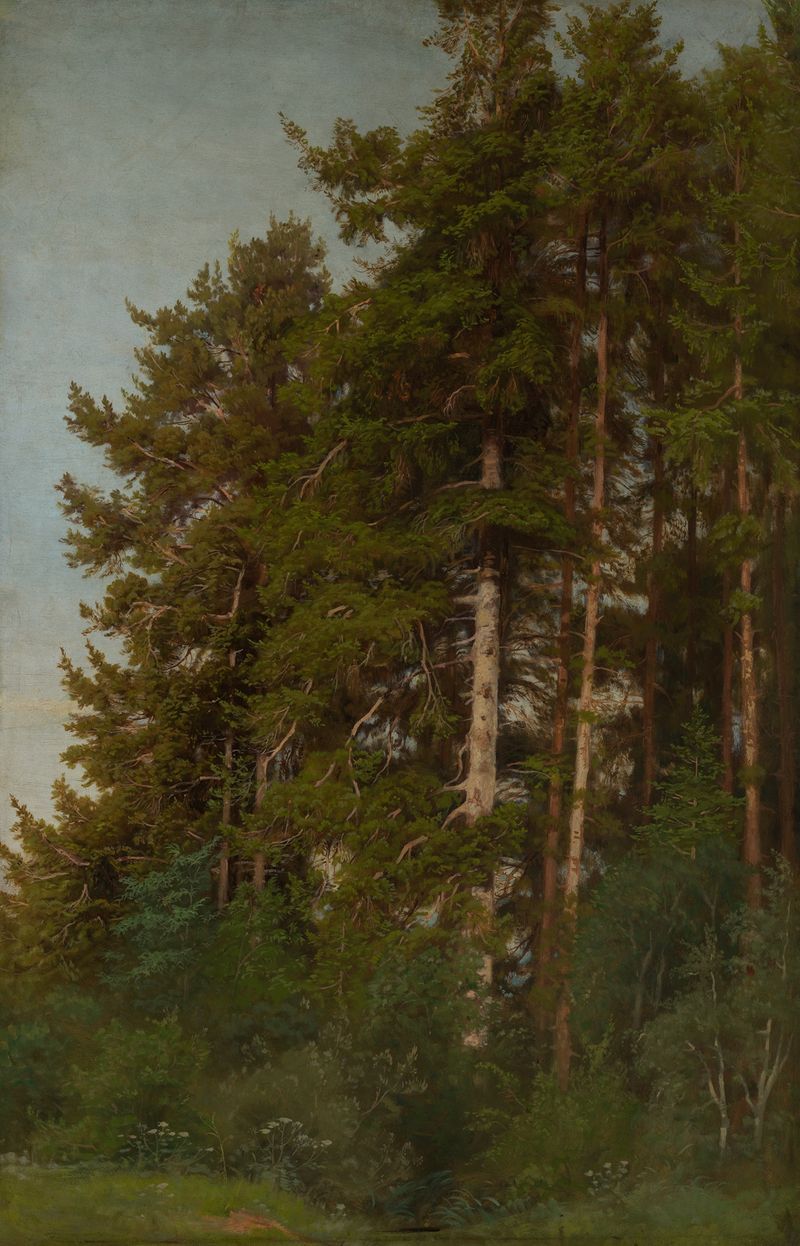
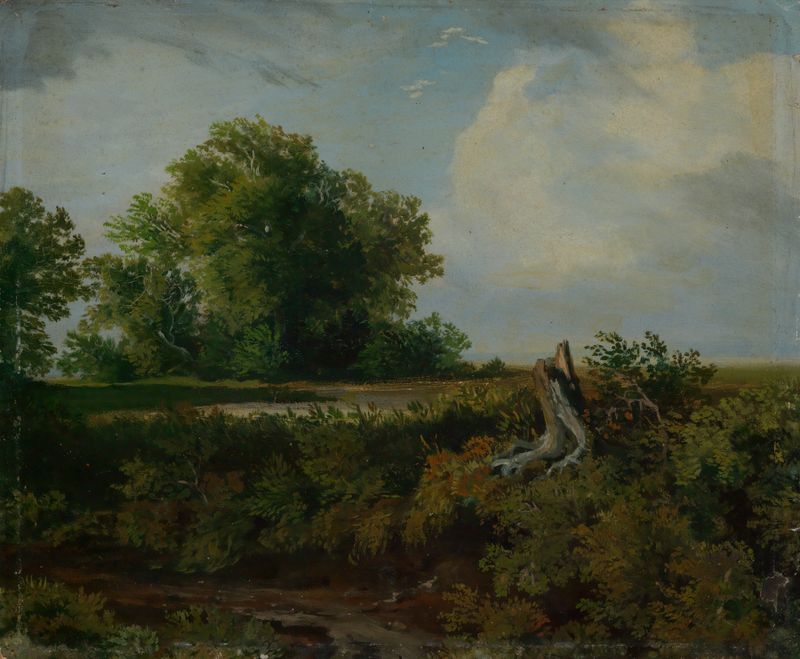
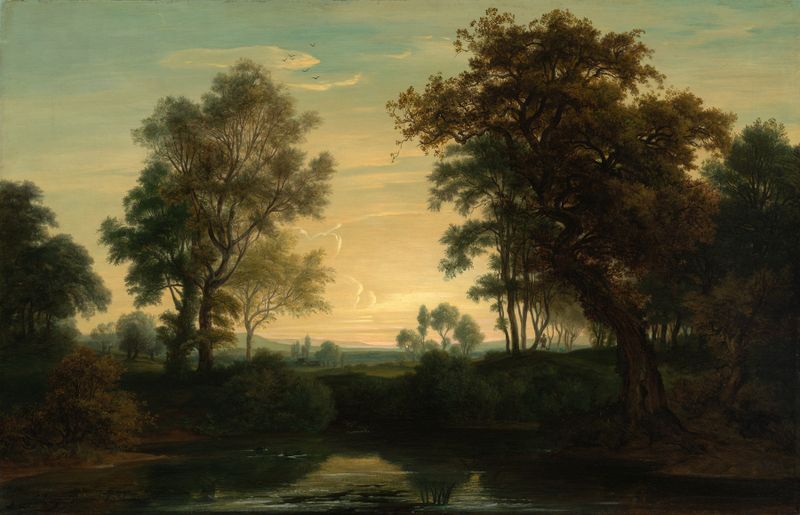
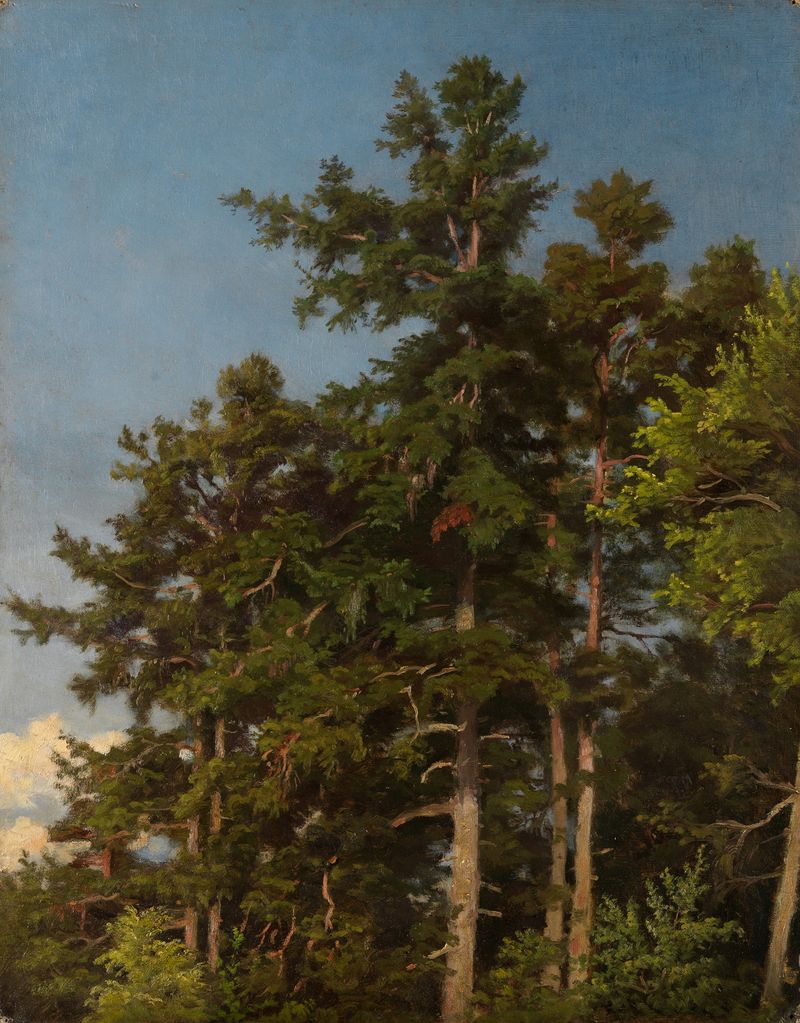
What lies in the stillness of a lonely landscape awaits the beholder's gaze, beckoning for contemplation amid the vast emptiness that often fills our lives. Look to the left of the canvas, where a quiet grove of trees rises, their trunks standing tall yet aloof, as if whispering secrets to the wind. The muted palette of greens and browns invites a sense of tranquility, while the delicate brushwork reveals the intricacies of each leaf and shadow. Notice how the light gently filters through the branches, casting dappled shadows on the forest floor, guiding your eyes through the subtle transitions of color.
The overall composition, with its wide horizon, emphasizes the profound solitude the scene encapsulates. In this serene yet haunting work, the tension between the lushness of nature and the silence that pervades it evokes profound feelings of isolation and introspection. The stark absence of human figures amplifies the emptiness, challenging the viewer to confront their own solitude. The interplay of light and shadow further enhances this sensation, suggesting that even in vibrancy, there is an underlying void that speaks to existential truths. In the early 1860s, Emil Lugo painted this piece during a time of personal reflection and artistic exploration.
Living in a Europe where Romanticism was giving way to Realism, he sought to capture the emotionality of nature, marking his place in the transition of art movements. This piece embodies his desire to reflect on nature's beauty and the poignant silence that often accompanies it, encapsulating a moment of clarity suspended in time.